The Supreme Court cleared the way Monday for construction of President Trump's 90,000-square-foot White House ballroom to keep going, voting 5-4 to lift the injunction that would have frozen work above ground. The Court did not hold the project legal. It held that the preservation group suing to stop it probably has no business being in federal court at all, and Chief Justice John Roberts wrote a dissent saying the majority got Article III backward.
What the Court actually decided
The ruling came on the emergency docket in National Park Service v. National Trust for Historic Preservation in the United States, No. 26A203, an unsigned per curiam opinion issued Aug. 31. Solicitor General D. John Sauer filed the stay application on Aug. 13. Roberts entered an administrative stay on Aug. 21 and referred the matter to the full Court, which granted relief ten days later.
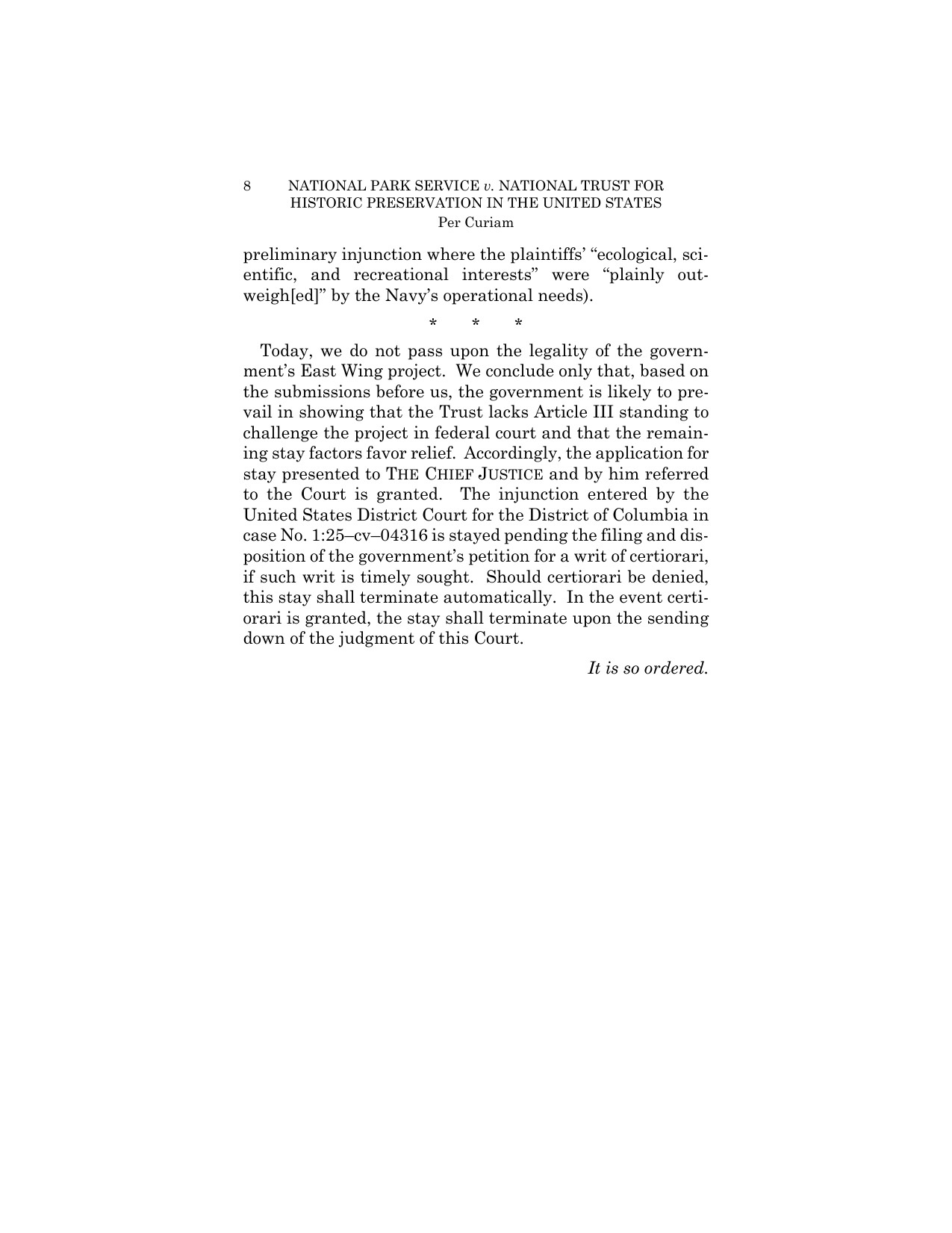
A stay application asks a narrow set of questions, and the Court answered them narrowly. Whether Trump may build a ballroom on federal park land without an act of Congress is not among them, and the majority said as much in its final paragraph.
The whole case turned on one woman's declaration
The National Trust for Historic Preservation sued in December 2025, after the East Wing had already come down. For an organization to get into court, at least one of its members has to be able to sue in her own right. The Trust rested that showing on executive committee member Alison K. Hoagland, a professor of history and historic preservation who lives in Washington and expects to visit the neighborhood around the White House about once a month.
Her declaration says the finished ballroom would injure her "aesthetic, cultural, and historical interests" because she finds the "scale," "height," and "massing" of the design distasteful. The majority answered that federal courts cannot hear that. Quoting FDA v. Alliance for Hippocratic Medicine from 2024, the opinion says "distress at or disagreement with the activities of others is not a basis under Article III for a plaintiff to bring a federal lawsuit." Take the other view, the Court warned, and virtually every citizen gets to challenge virtually every government action he dislikes.
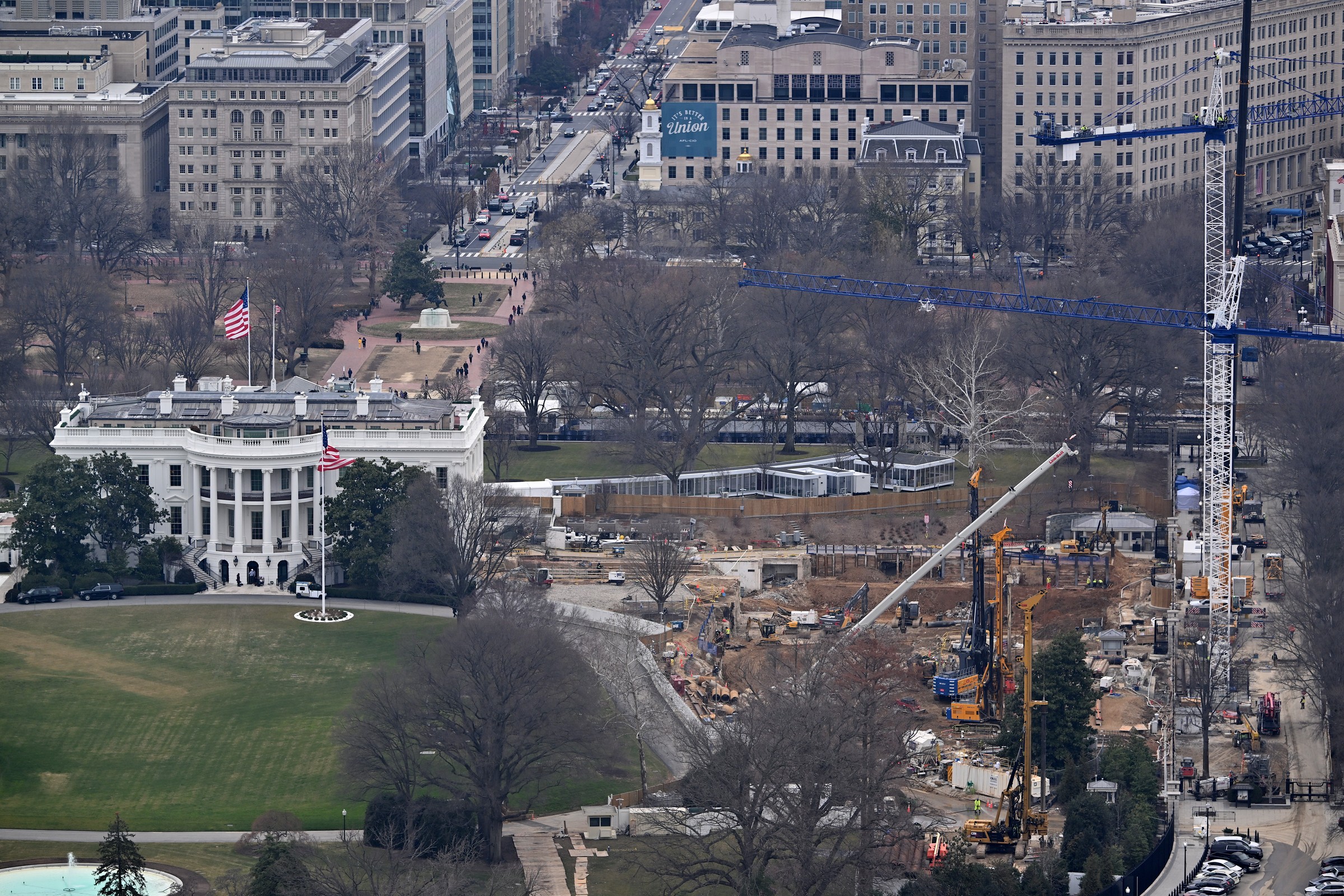
The White House on Jan. 14, 2026, with the East Wing demolished and ballroom construction under way on the east side of the grounds. The government told the justices on Aug. 13 that the project was "65% complete in its entirety." (Photo by G. Edward Johnson, CC BY 4.0, via Wikimedia Commons)
Why Roberts broke with the Court's conservatives
Roberts wrote for himself and Justices Sonia Sotomayor, Elena Kagan and Ketanji Brown Jackson. Because the opinion is unsigned, the five in the majority are identified by subtraction rather than by signature, and Roll Call named them as Clarence Thomas, Samuel Alito, Neil Gorsuch, Brett Kavanaugh and Amy Coney Barrett.
His merits argument is short and statutory. Congress has barred construction of any "building or structure" on federal park grounds in the District of Columbia "without express authority of Congress," 40 U.S.C. §8106, and the ballroom is going up on President's Park. The government's fallback is 3 U.S.C. §105(d)(1), which funds "improvement" of the Executive Residence. Roberts notes that this year's appropriation under that section was $2,475,000 for routine maintenance and safety work, which he says likely does not authorize spending hundreds of millions in private donations to raze the East Wing.
The sharper passage is about standing, and it is aimed at the majority's own precedents. The Court has long said a person can sue over the pollution of a river he swims in or the loss of an animal species he wants to observe. Roberts asks why the White House is different.
"With the Court's rejection of Hoagland's standing today, however, it now is the case that 'I want to look at a crocodile' can adequately answer the ever critical 'what's it to you?' question of Article III standing, while 'I want to look at the White House' cannot."
Roberts, C. J., dissenting, page 4
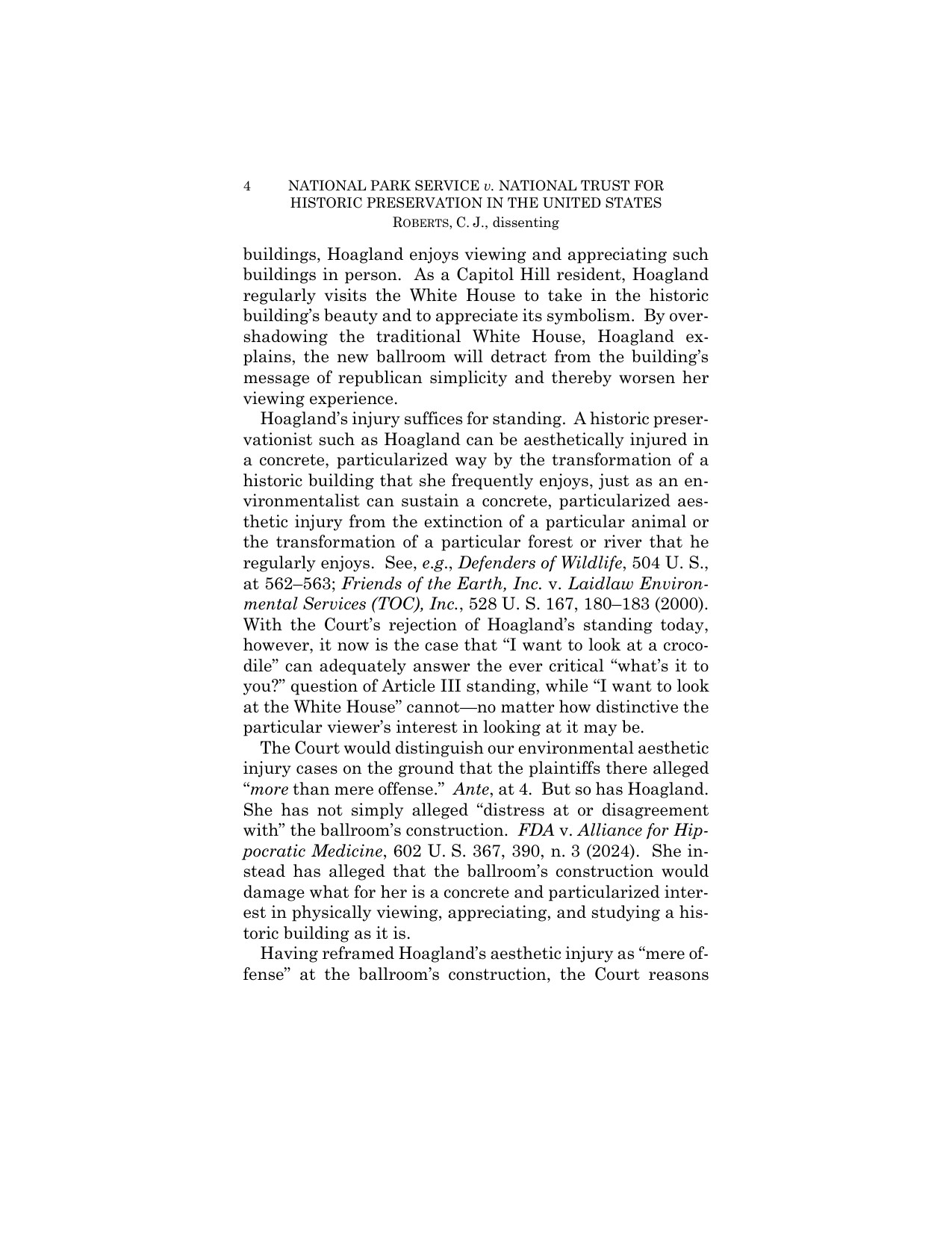
Page 4 of the Roberts dissent, rendered from the slip opinion. He ends the opinion by writing that "Today's decision is no victory for the separation of powers." (Supreme Court of the United States, public domain)
The national security record the majority leaned on
On the equities, the government did not argue from the podium. It filed declarations from the Director of National Intelligence, the CIA director, the FBI director, the Secret Service director, and the secretaries of State, Homeland Security and the Army, all describing the East Wing work as a single project that cannot be split cleanly into below-ground and above-ground halves. The Secretary of the Army told the Court that the height and mass of the ballroom are "crucial" to shield the planned underground military installation "from kinetic impacts," and that without them "engineers would need to dig impractically deep."
Roberts pushed back in a footnote. The government told the district court that its below-ground secure work was "driven by national security concerns independent of the above-grade construction," and Judge Richard Leon's injunction barred only the ballroom, not the bunker or the above-ground work needed to protect it.
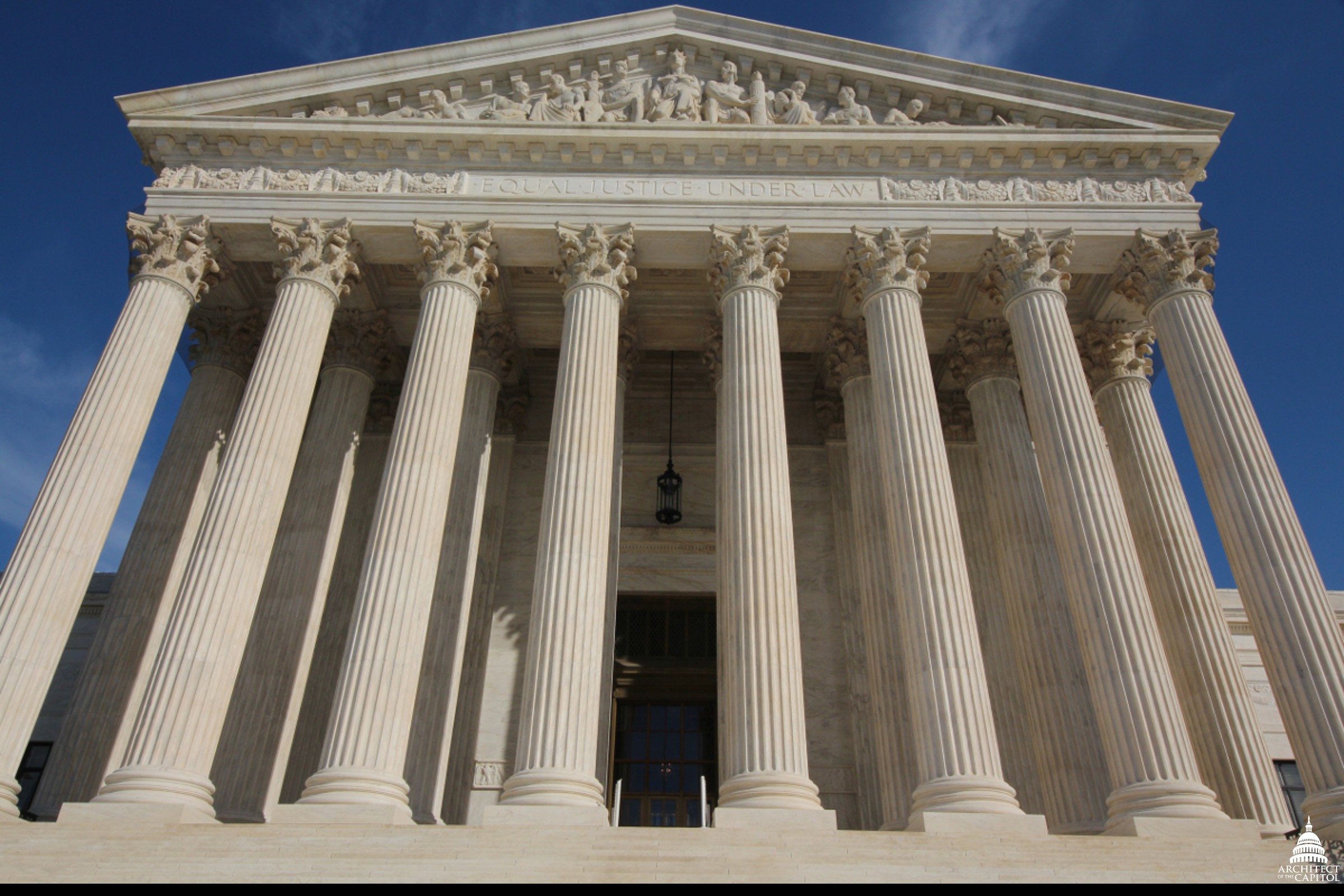
The Supreme Court Building in Washington. Monday's order was the second action in this case in ten days, after Chief Justice Roberts entered an administrative stay on Aug. 21. (Architect of the Capitol, public domain, via Wikimedia Commons)
A stay is not a verdict, and conservatives should say so plainly
There is a real win here, and it is bigger than a ballroom. A majority of the Court just said that being offended by what the government builds is not an injury a federal judge may fix. That reasoning reaches well past the East Wing. It also matches the pattern in this Court's other emergency-docket work this summer, including the Aug. 24 order in the mail-voting case, where the justices lifted an injunction on standing and ripeness grounds without blessing the policy underneath it.
What Monday's order does not do is settle whether the ballroom is lawful. The stay lasts only until the government files a certiorari petition and the Court disposes of it. If review is denied, the stay dissolves on its own. If it is granted, the stay runs until the Court's judgment comes down. Judge Neomi Rao's dissent from the D.C. Circuit's Aug. 7 decision is the best roadmap available for the government's merits case, arguing that "improvement" in §105(d)(1) carries its real-property meaning and covers permanent structures.
The National Trust is not conceding. In a statement issued the same day, president and CEO Brent Leggs said: "We are deeply disappointed in the Supreme Court's ruling today and respectfully disagree with the majority's opinion on standing." He called it "noteworthy that the majority did not weigh in on whether the ballroom project was in fact legal," said the group was "pleased with Chief Justice Robert's strong dissent," and said it will urge the justices to take the certiorari petition up quickly.
Practically, the calendar may decide this before the Court does. The government told the justices the project was 65 percent complete and "moving quickly toward total completion," and the Trust's own filing quoted the administration's projection that the structure "should be substantially finished by November 2026." A merits ruling that lands after the last beam is set will be a ruling about a building that already exists.