Starting Tuesday, handing a 3D-printable gun file to almost anyone in New York is a crime. The same law sets up a ban on selling any 3D printer in the state that cannot screen your files first, and it hinges on one finding: whether the blocking technology works.
What becomes a crime in New York on August 25
New York's gun package was signed May 27 inside the state budget, Chapter 55 of the Laws of 2026. Most of it takes effect on the ninetieth day after it became law, which lands Tuesday. The New York State Association of Chiefs of Police puts that same date on the digital-file provisions.
Two new subdivisions land in Penal Law section 265.10. Subdivision 11 makes it a class A misdemeanor to knowingly sell, transfer, distribute or sell access to "digital firearm manufacturing code" to anyone lacking both a New York gunsmith license and a federal firearms license. Subdivision 12 covers possessing that code with intent to manufacture illegally.
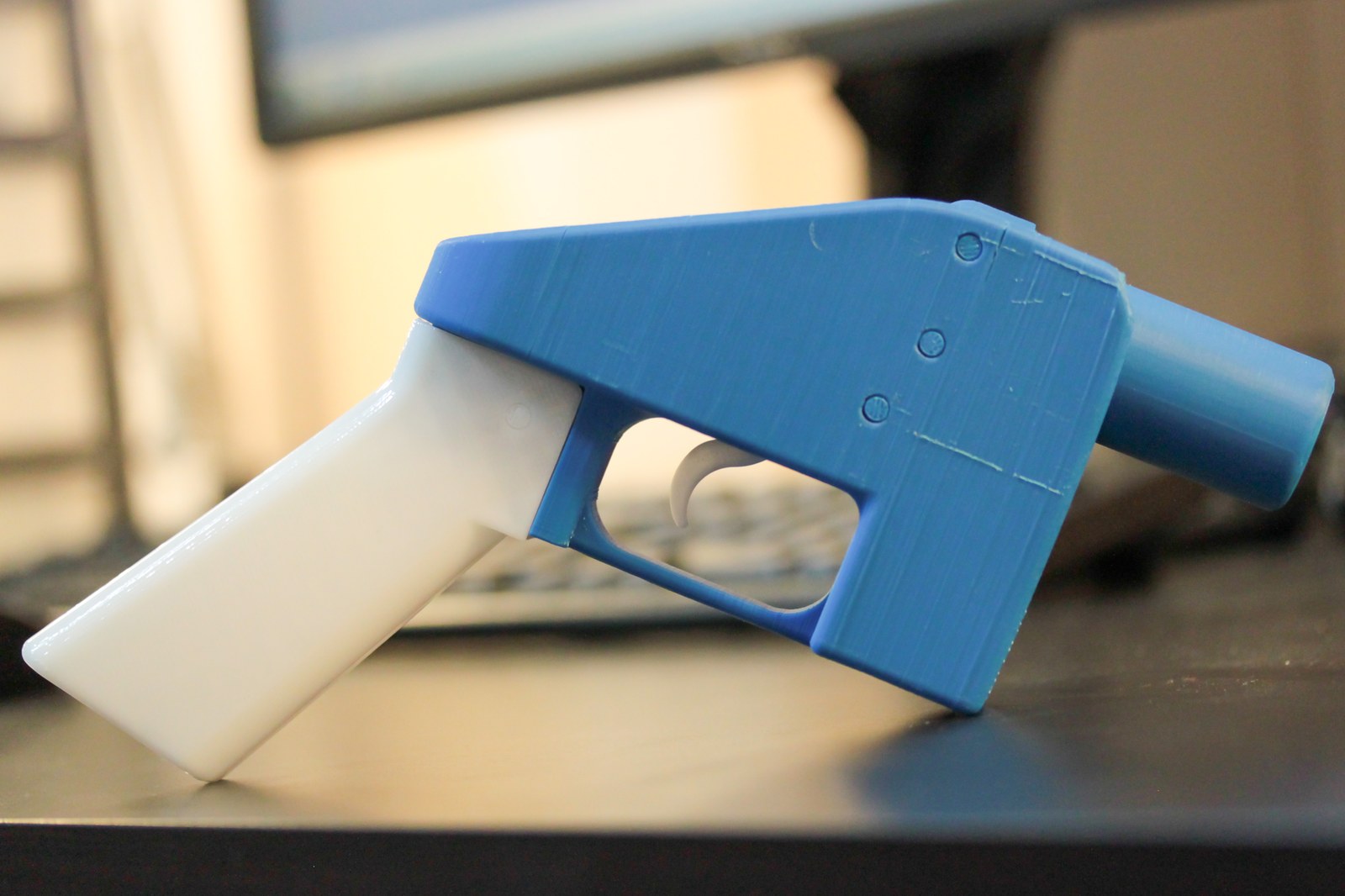
The Liberator, the single-shot pistol Defense Distributed released as a downloadable file in 2013 and the design that started the fight over gun code. File photo taken May 16, 2013. (Photo by Vvzvlad via Wikimedia Commons, CC BY-SA 3.0)
The definition is the part worth reading twice. New Penal Law 265.00(39) reaches any CAD file or other code "stored and displayed in electronic format as a digital model" that could program a 3D printer or a CNC mill to produce a firearm, ghost gun, unfinished frame or receiver, silencer or major component. Mere possession by itself is not the offense, and there is no violation if neither party is in New York.
The printer ban is the bigger half, and it needs one finding to switch on
Subpart B of the same chapter adds Executive Law section 837-aa and a new General Business Law section 396-eeee. The operative sentence is short: nobody may sell or deliver any 3D printer in New York unless it is equipped with "blocking technology."
"Three-dimensional printer" covers any machine that renders an object from a digital design file by additive manufacturing, plus any machine that modifies one by subtractive manufacturing. A desktop CNC mill sits inside that definition. So does the machine a high school robotics lab bought last fall. The only exemption runs to licensed gunsmiths who also hold a federal firearms license, and only with written authorization from the attorney general.
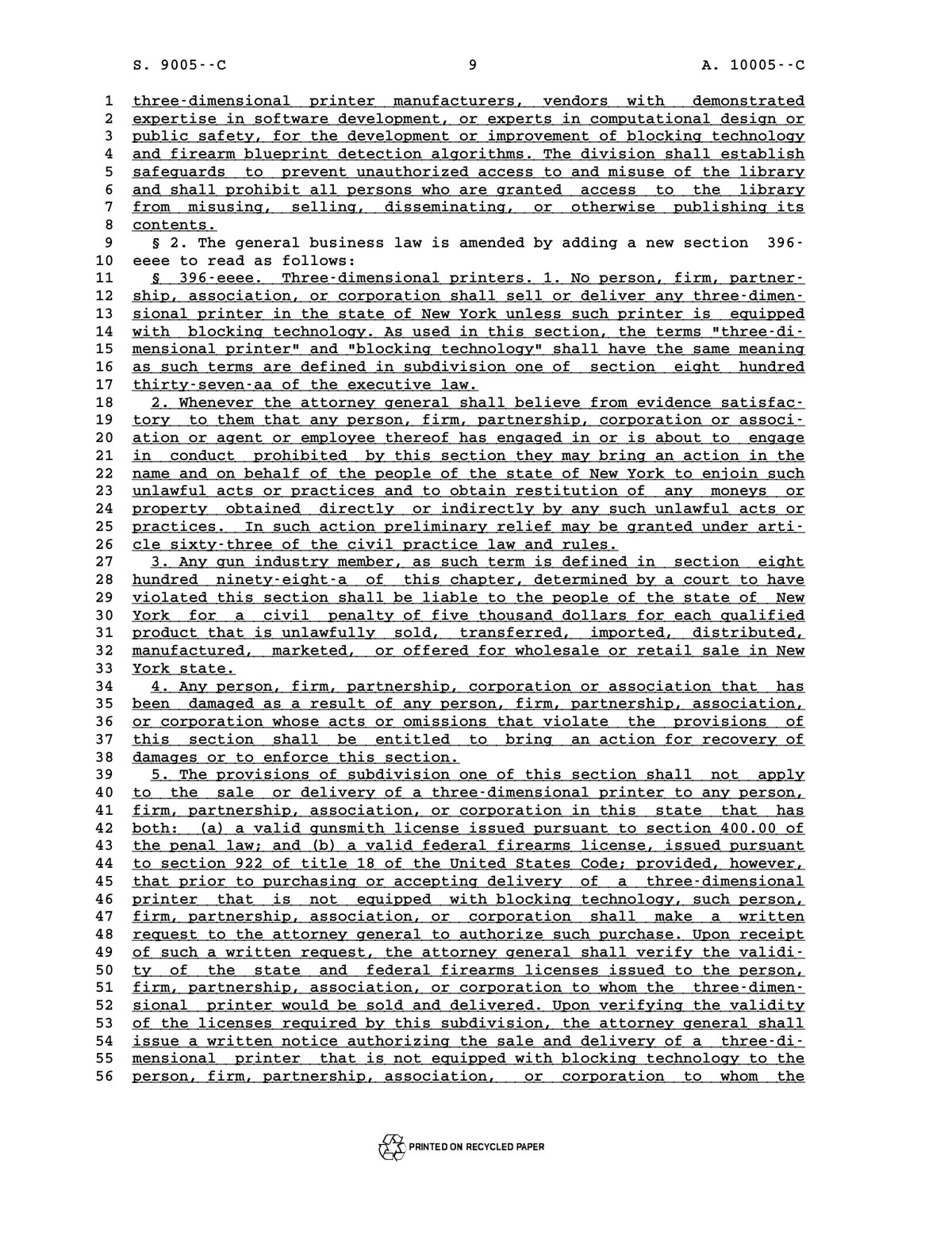
Here is the switch. Section 837-aa orders the Division of Criminal Justice Services, the Department of State and SUNY to convene a working group within ninety days, which also means by Tuesday. It gets up to a year to recommend performance standards. If it reports that a printer mandate is not technologically feasible, no rules are required until it says otherwise. No public notice of its membership has appeared.
A startup in Mumbai says the feasibility question is already answered
On August 21, Stephen Gutowski of The Reload published an interview with Rachit Bhojani, a 23-year-old print-farm operator in Mumbai whose startup Sentinel claims to have built exactly that technology. "If someone wanted to deploy this, I can deploy tomorrow," Bhojani said.
Sentinel runs on the printer rather than in the cloud, he said, and compares geometry instead of matching known files, which he claims lets it flag designs it has never seen. He put his testing near 99.9 percent accuracy across roughly a million files. Then he named the obstacle: Bambu Lab and Creality were "very impressed," but without a mandate "there is no need for them to add the additional cost."
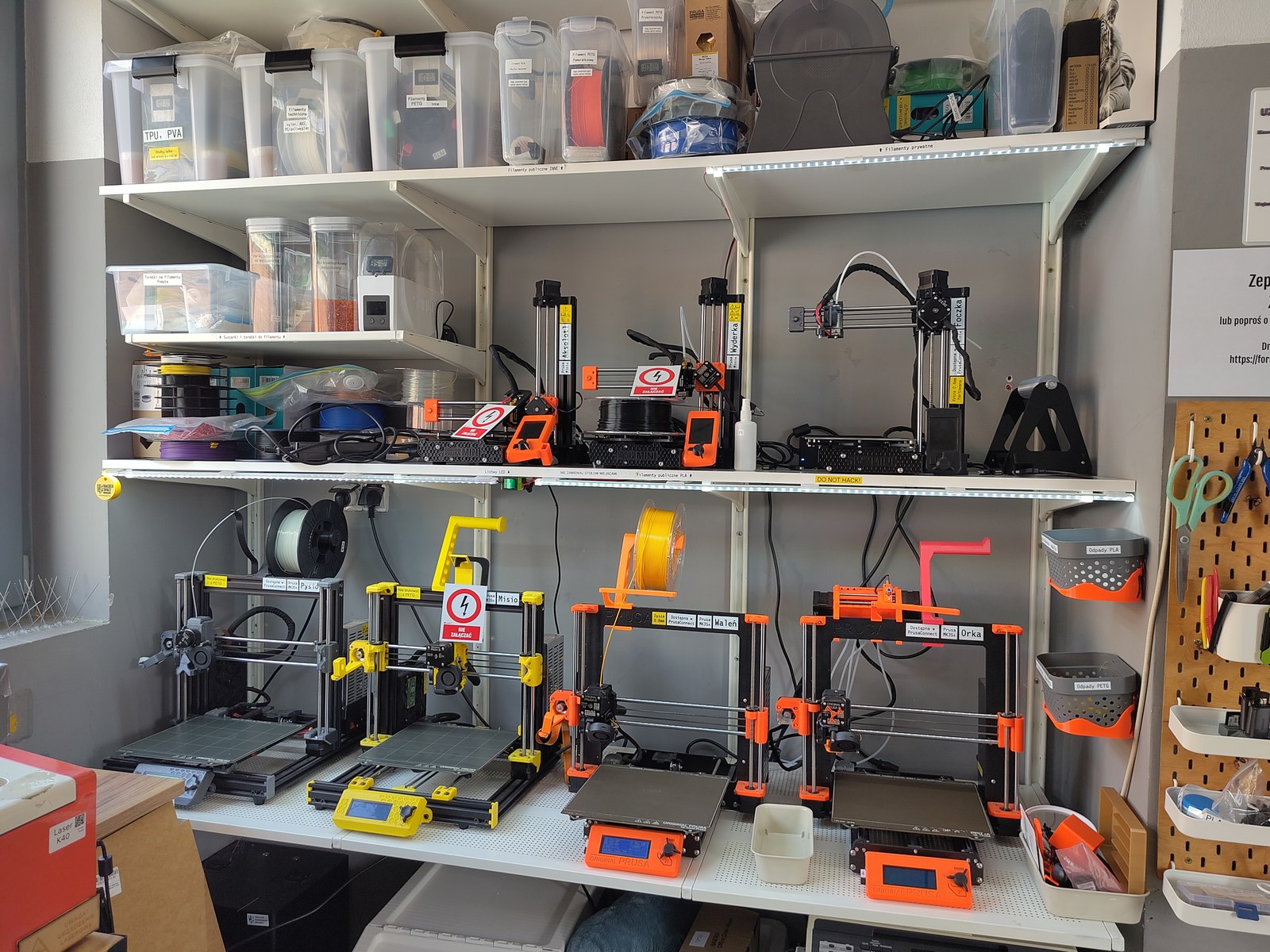
A small print farm of four Prusa MK3S+ and three Prusa Mini machines at Hackerspace Wroclaw, photographed April 5, 2026. Operators of shared printers at libraries, makerspaces and schools are the customers Sentinel says it is built for. (Photo by Majabojarska via Wikimedia Commons, CC BY 4.0)
The people who actually print gun parts say it will not stop anyone
The Reload took the claims to four named figures in the printed-firearms world. Matthew Larosiere of The Gatalog Foundation allowed that a geometry filter could catch common designs, then said the demo video "is pretty clearly AI-generated as well as AI-voiced" and that catching "anything gun-shaped if it's novel" is unrealistic. Designer Mr.Snow.Makes was blunter: "it won't actually slow down any criminals."
Rob Pincus of the Gun Makers Match said Sentinel "doesn't really seem to understand the topic thoroughly enough to achieve what they are promising." Cody Wilson of Defense Distributed called it "dead internet, vibeslop vibes," then conceded he believes it would work.
None of that is a defense, because neither statute requires the technology to stop a determined person. New York asks only for standards that reduce the risk of circumvention. The Electronic Frontier Foundation tracked the same softening in California, where the standard fell from effectively preventing "a technically skilled user" from evading the algorithm to "substantially reduce the likelihood of foreseeable circumvention attempts."
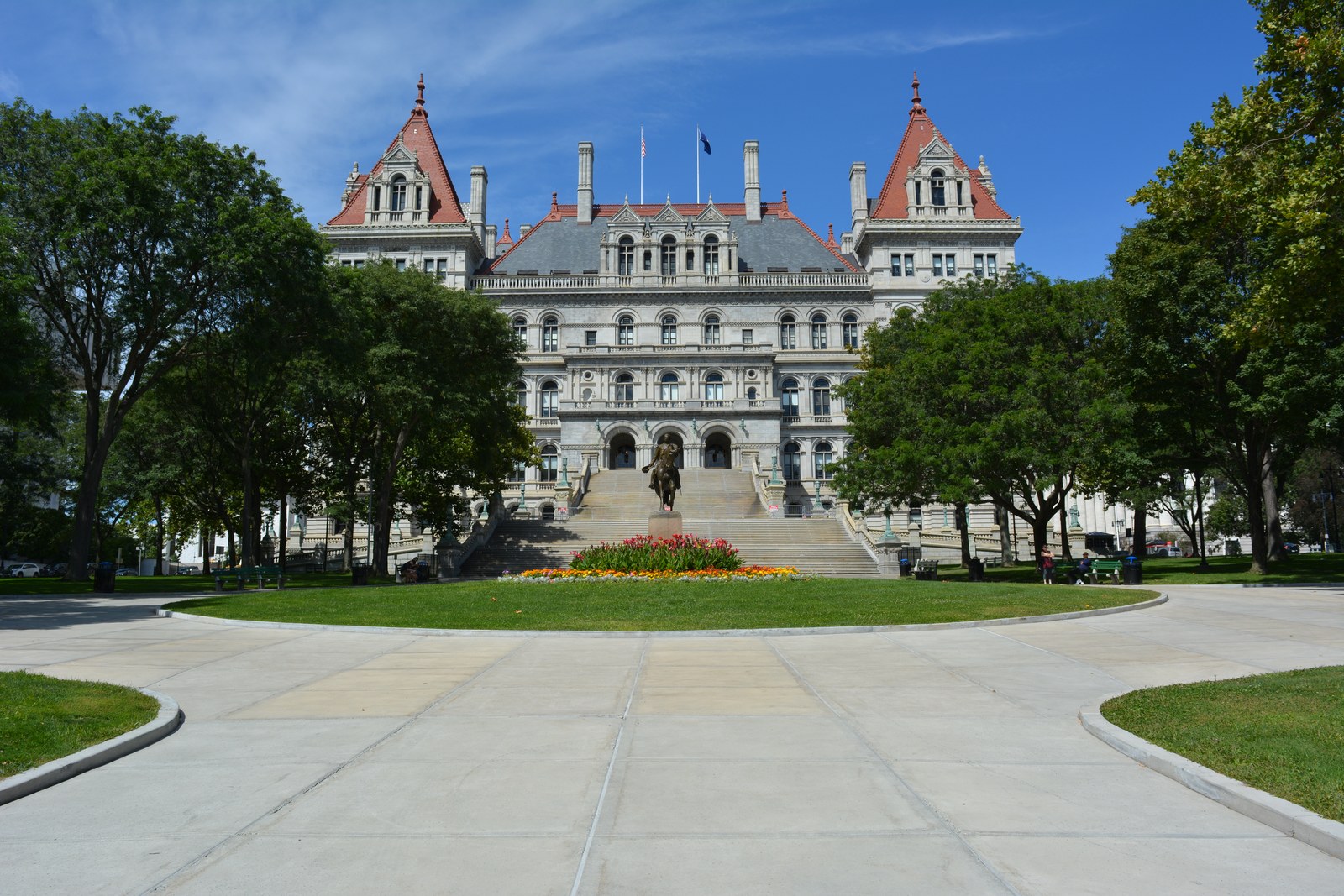
The New York State Capitol in Albany, where the 3D printer mandate passed inside the state budget rather than as a standalone gun bill. File photo taken September 2, 2017. (Photo by Shaunfrombrooklyn via Wikimedia Commons, CC BY-SA 4.0)
California votes on its own version before the session runs out
Assembly Bill 2047, by Assemblymember Rebecca Bauer-Kahan, sits on the California Senate's third reading file right now. The Assembly passed it 58 to 19 in May, and the Senate amended it August 17 and sent it to third reading a day later, per the bill history. The Legislature's 2026 calendar makes August 31 the last day to pass bills. NRA-ILA flagged it Friday as one of six anti-gun bills still alive on the floor.
California's version is slower and lands in the same place. Under the August 17 text, the Department of Justice sets performance standards by September 2028, manufacturers self-attest by March 2029, DOJ publishes an approved make-and-model list by June 2029, and on December 1, 2029 selling an unlisted printer becomes unlawful at up to $25,000 per violation.
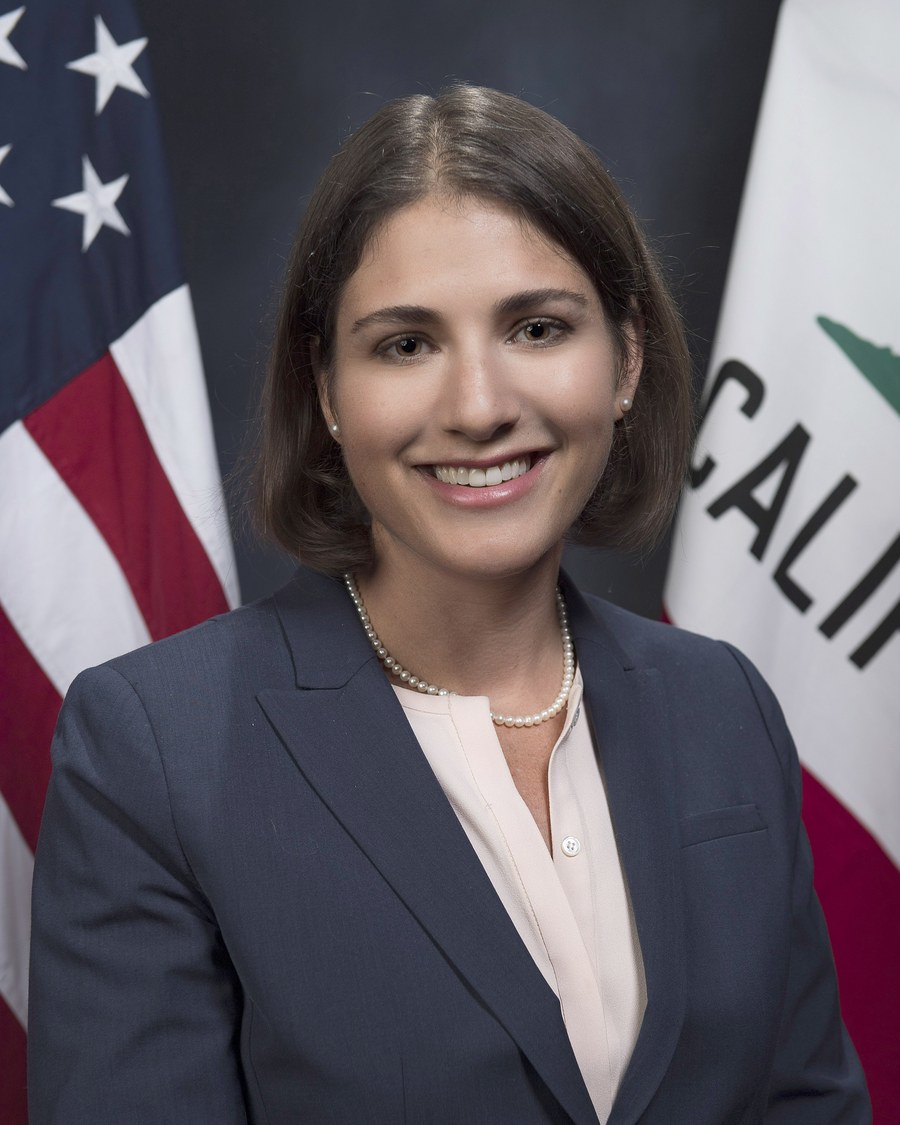
Assemblymember Rebecca Bauer-Kahan of Orinda, author of AB 2047, the California Firearm Printing Prevention Act. Official California State Assembly photo, public domain.
Two outlets described that bill differently on Friday. The Reload said lawmakers "appear to have gutted its most aggressive provisions." NRA-ILA called it a restriction on selling printers without a detection algorithm. The text supports both in part: the 2029 ban survives, the criminal exposure does not.
This is not the Glock ban lawsuit
Chapter 55 has two halves and only one is in court. The convertible-pistol provisions, which define a Glock-pattern handgun by its cruciform trigger bar and reach dealers after May 31, 2027, drew a federal challenge from the Second Amendment Foundation, the NRA and the Firearms Policy Coalition that we covered on August 23, The Firing Pin, LLC v. James.
Nobody has sued over the printer and gun-file half. No complaint, no restraining order, no injunction. The NRA framed the problem in January as speech as much as guns, asking whether Gov. Kathy Hochul has "the authority to ban books, videos, diagrams, blueprints, instructions, and lectures" about firearm design. The nearest precedent cuts against that. A Third Circuit panel threw out the challenge to New Jersey's file ban this January, Judge Cheryl Krause writing that "purely functional code with no actual or intended expressive use" is not covered. Defense Distributed has asked for rehearing.
Who this covers, and who it does not
Getting this wrong is a criminal matter, so be precise. In New York, starting Tuesday, sending gun design files to someone in the state who lacks both a gunsmith license and a federal firearms license is a class A misdemeanor, and so is holding those files with intent to manufacture illegally. If neither party is in New York, the transfer provision does not reach you.
The printer sales ban is not in effect anywhere. You can walk into a store in New York today and buy a machine with no blocking software in it, and that holds until a working group finds the technology feasible, the state writes rules, and another year passes. In California nothing has been signed, and the earliest ban date in AB 2047 is December 1, 2029.
Federal law is unchanged. Building a firearm for your own use remains lawful federally if you are not a prohibited person, the gun is detectable, and it is not made for sale. Other states are not unchanged. New Jersey has criminalized distributing gun files for years, and Washington's governor signed a printing and file-sharing ban in March. Colorado's died only because then-Gov. Jared Polis promised a veto. Check your own state's code, and if you run a shared printer for other people, talk to a lawyer licensed where you live before Tuesday.
The whole fight is over whether "it works" ever has to be true
New York built its printer ban behind a technology gate, then wrote the gate so the standard is circumvention risk rather than circumvention. California downgraded its own the same way and handed the definition of adequacy to a private standards body. So the decisive call in New York is not a vote. It is a report from a working group nobody has named yet, weighing a claim from a vendor who has never shipped.
Header photo: consumer fused-filament 3D printers with printed parts, via pxhere and Wikimedia Commons, CC0 public domain dedication.