The Trump administration's final fuel economy rule landed Monday, and it is tougher on automakers than the version it proposed last December. The 34.9 mpg target is a little higher, and the yearly increases are steeper than what was proposed. Even so, NHTSA now says the rule cuts about $1,290 off the price of an average new car, up from the $900 it promised in the proposal.
The Final Rule Is Here, and It Moved
Transportation Secretary Sean Duffy released the rule on September 28 under the banner "Freedom Means Affordable Cars." The Department of Transportation's announcement says it will "Reduce the average cost of a new vehicle by $1,300 for American families" and save Americans $138 billion. NHTSA Administrator Jonathan Morrison signed it on September 25. It takes effect 60 days after it is printed in the Federal Register.
On Sunday, PatriotAddict worked through the December proposal, since that was the only official text anyone could check. We ended that piece with a list of things to watch for Monday. We have now read the signed final rule that NHTSA posted, and several of those numbers changed.

NHTSA Administrator Jonathan Morrison, who signed the final CAFE rule on September 25, 2026. (U.S. Department of Transportation official portrait, public domain, via Wikimedia Commons)
Did the 34.5 MPG Target Survive? Not Quite
The proposal pointed to a combined fleet requirement of about 34.5 mpg for model year 2031. The final rule says its standards "would correspond to a combined industry fleetwide average of roughly 34.9 mpg." That figure is in Table I-2 of the preamble. The Biden-era rules it replaces were aiming for 50.4 mpg, per Roll Call.
A bigger change sits in the growth rates. The final rule describes the December proposal as rising "0.25 percent per year through MY 2031" after 2027. The final version raises passenger car standards 0.90 percent a year through 2029 and light trucks 0.51 percent a year, then both climb 1 percent a year in 2030 and 2031. That is still a long way from the Biden rules, which called for 2 percent a year on passenger cars. It is also a real step up from what the administration first put on the table.
A Tougher Rule With a Bigger Discount
This is the part the headlines skipped. You might expect stricter standards to mean smaller savings. The rule says the opposite. In December, NHTSA estimated the proposal would cut up-front vehicle costs "by approximately $900." The final rule puts that figure at "approximately $1,290," which it calls "cutting by more than half" the cost buyers would face under the old standards. That is about 43 percent more savings per car for a rule that asks more of automakers.
The net benefit figure moved the same way. The proposal claimed $24.0 billion in net benefits to society at a 3 percent discount rate. The final rule's Table I-4 shows $41.8 billion for the same model-year view. The rule itself explains that NHTSA rebuilt the analysis after the comment period. It moved the base fleet from model year 2022 data to 2024 data, swapped in fuel price forecasts from the 2026 Annual Energy Outlook, and changed its payback assumptions. The preamble does not break down how much of the jump comes from each of those changes, so we can't either.
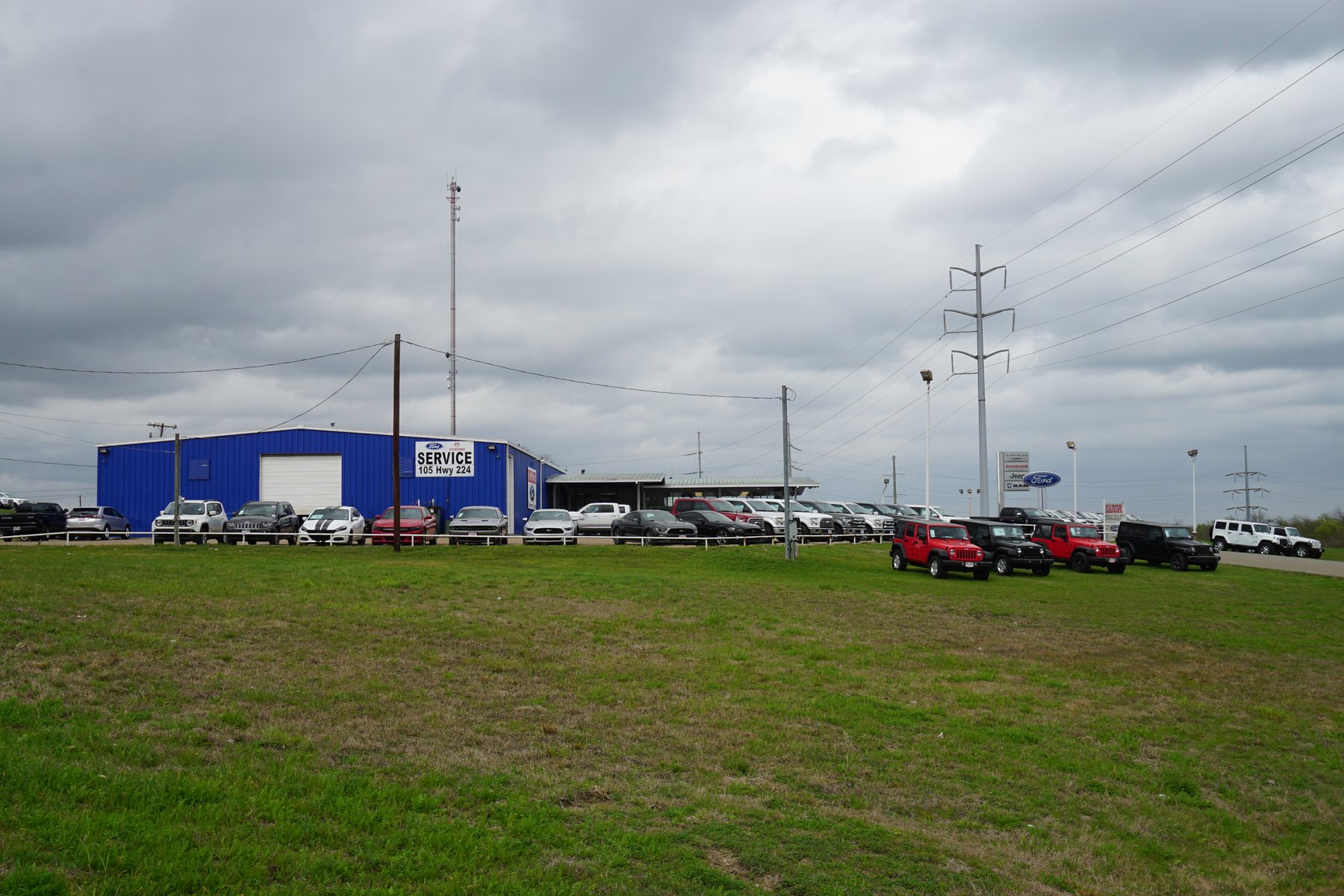
Jeeps and trucks on a dealership lot in Commerce, Texas. (Michael Barera, CC BY-SA 4.0, via Wikimedia Commons)
Where the $138 Billion Actually Comes From
Duffy's announcement says the rule will "Save the American people $138 billion over the next five years." The closest figure in the rule's summary tables is $137.5 billion in avoided costs. That number is in Table I-4, but it doesn't cover five calendar years. It covers every car and light truck built through model year 2031, over the full life of those vehicles. The rule notes that some 2031 models are expected to stay on the road until 2070.
The same row of that table shows the other side of the ledger. Against the $137.5 billion in avoided costs, NHTSA books $95.8 billion in benefits that go away. Much of that is fuel the old, stricter standards would have saved. In the proposal, lost fuel savings alone came to $53.9 billion. That is how you get the $41.8 billion net figure. The rule is still a clear win on the government's own math. The honest version of the pitch is $41.8 billion net, counted over decades, not $138 billion in five years.
The EV Credit Market Ends, With a Softer Landing
Both versions kill the program that lets automakers buy compliance credits from each other, starting with credits earned in model year 2028. The final rule is blunt about why. It says trading "has also resulted in a windfall for EV-exclusive manufacturers that sell credits to other non-EV manufacturers." DOT's release says the program "artificially propped up the EV industry at the expense of traditional automakers."
What changed is the transition. The final rule says it "provides additional transition time beyond that proposed" in December. Credits earned through model year 2027 can still be bought and used for five model years after they were earned, so a 2027 credit stays good through 2032. Automakers that already signed credit deals get to use them. They just can't count on new ones.
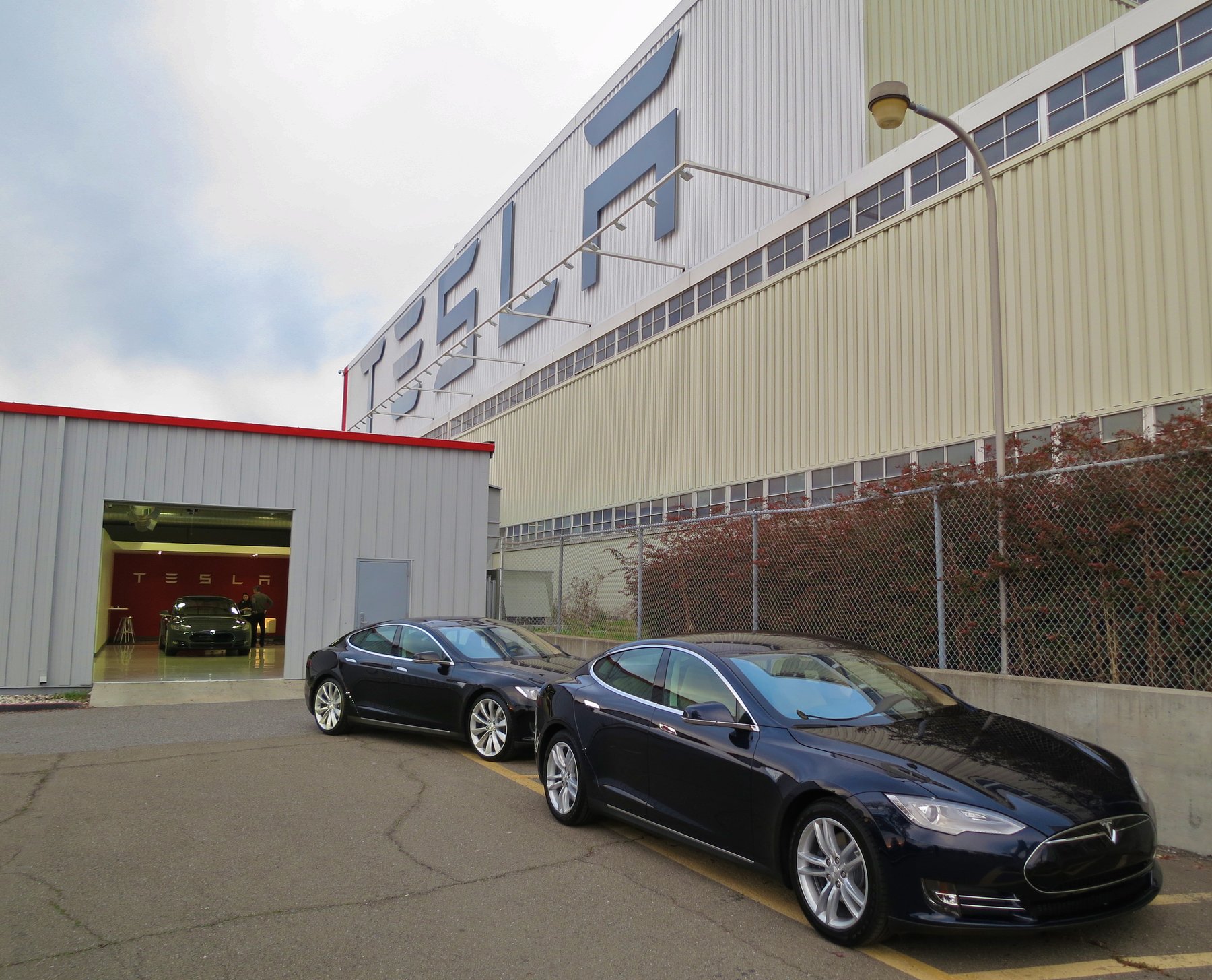
New Tesla sedans awaiting pickup at the company's Fremont, California factory in 2012. (Steve Jurvetson, CC BY 2.0, via Wikimedia Commons)
Tesla is the obvious loser. Roll Call reported that Tesla shares fell after Monday's announcement. Tesla reported $2.76 billion in automotive regulatory credit revenue for 2024 and $146 million in the second quarter of 2026, according to Yahoo Finance. Those totals cover every credit program, not only CAFE, so Monday's rule alone doesn't wipe out that whole stream.
Official record
National Highway Traffic Safety Administration, "The Safer Affordable Fuel-Efficient (SAFE) Vehicles Rule III for Model Years 2022 to 2031 Passenger Cars and Light Trucks," Final Rule, signed September 25, 2026, Docket NHTSA-2025-0491, RIN 2127-AM76. The Federal Register version has not been published yet.
"NHTSA estimates that this final rule will reduce the average up-front vehicle costs due to CAFE standards by approximately $1,290, cutting by more than half what consumers might expect to pay as a result of increased requirements under the No-Action Alternative."
NHTSA final rule preamble, page 30
Read the signed final rule (PDF, nhtsa.gov) · Final Regulatory Impact Analysis (PDF) · view the docket
Your Crossover Gets Reclassified, but Not Until 2030
The rule also rewrites which vehicles count as "light trucks." Today, many all-wheel-drive crossovers and three-row family haulers qualify as trucks because of how they're built on paper, which gives them easier mileage targets. Under the new definitions, a vehicle has to show real off-road or cargo ability to stay in the truck fleet. DOT says that flips the fleet from about 70 percent light trucks to about 70 percent passenger cars.
The proposal would have started that switch in model year 2028. The final rule pushes it to 2030, a change NHTSA says it made "in response to manufacturer comments regarding lead time and planning cycles." It is also why the light truck requirement in Table I-2 drops from 30.6 mpg in 2029 to 26.2 mpg in 2030. The truck standard isn't getting easier on any one pickup. The fleet is losing the lighter crossovers that used to pull its average up.
What It Means at the Pump and on the Lot
The Environmental Defense Fund told Roll Call the rule would cost the average driver about $1,400 more in gas. EDF attorney Andy Su called it "a sharp U-turn that will mean wasted gas." That estimate comes from an advocacy group, not NHTSA, and the agency's own tables still score the rule as a net gain. NHTSA also projects the fleet will actually average 40.2 mpg in 2031, well above the 34.9 mpg floor, because buyers keep paying for efficiency on their own.
The industry is on board. "Today's final rule is an appropriate course correction," said John Bozzella, president of the Alliance for Automotive Innovation, per Roll Call. Roll Call also points out that 2022 through 2026 models are already built and some 2027s are coming off the line, so buyers will mostly see the effect starting with the 2028 model year.
The bottom line is better for car buyers than Sunday's numbers suggested. The administration raised its own bar and still found an extra $390 a car in savings. The $138 billion line in the press release needs an asterisk. The $1,290 figure has one too, because it depends on NHTSA's updated modeling. It is still in the signed rule, and it is bigger than what was promised in December.
Top photo: Transportation Secretary Sean Duffy, official portrait. (U.S. Department of Transportation, public domain, via Wikimedia Commons)