The Justice Department let the clock run out. A Texas federal judge's ruling knocking out National Firearms Act registration for suppressors and short-barreled rifles took effect at midnight, and the government never asked for a stay. Now comes the harder question, and it is the one nobody online seems to be answering straight: who does this actually cover?
What Judge Hendrix actually ruled
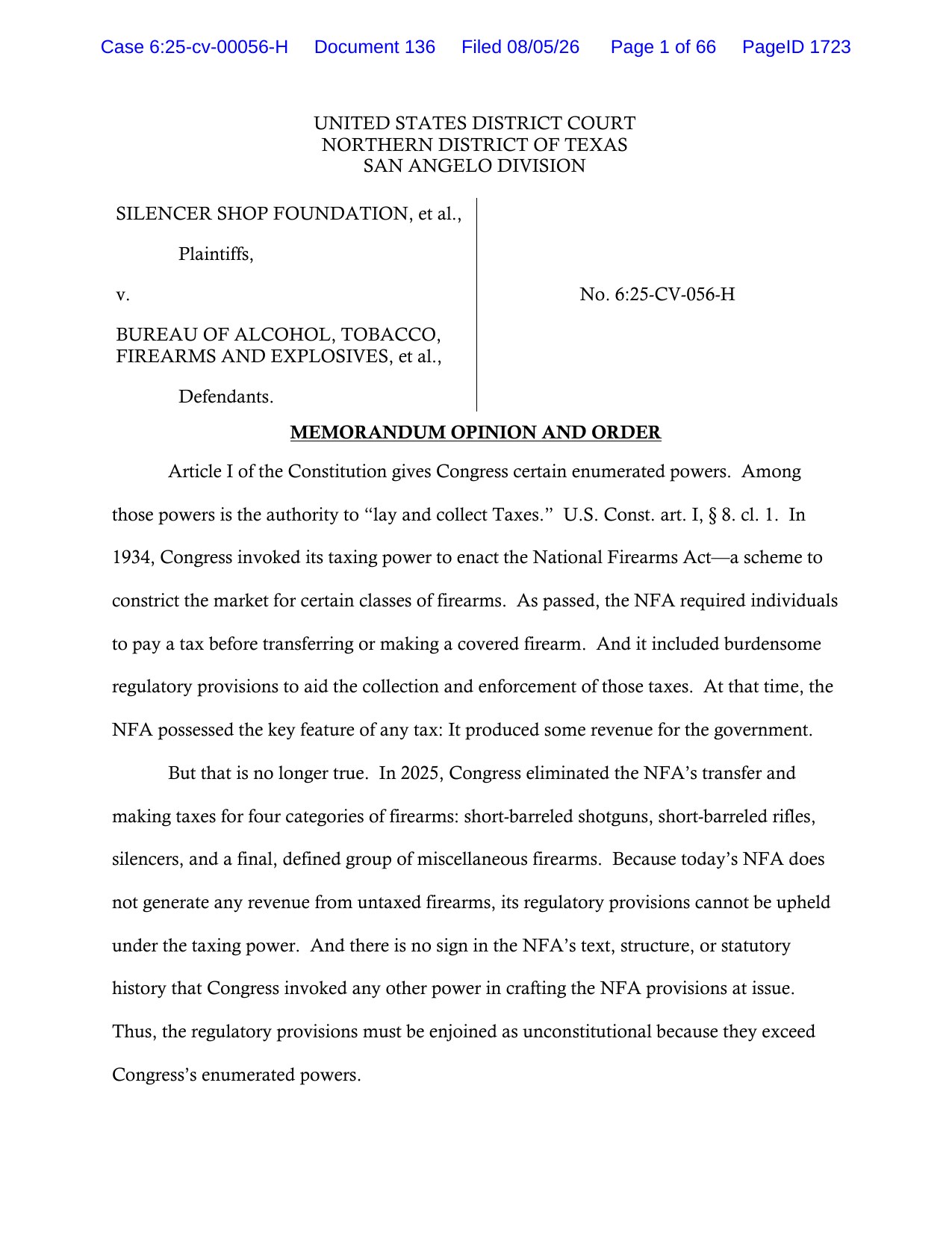
On August 5, U.S. District Judge James Wesley Hendrix of the Northern District of Texas held that the NFA's registration and approval requirements for suppressors, short-barreled rifles, short-barreled shotguns and "any other weapons" exceed Congress's constitutional authority. The reasoning is not what most people assume. The NFA was passed in 1934 under Congress's power to tax, and the registration paperwork existed to help collect that $200 tax.
Then the One Big Beautiful Bill Act of 2025 cut that tax to zero for those four categories. Hendrix's 66-page opinion puts it plainly: "Because today's NFA does not generate any revenue from untaxed firearms, its regulatory provisions cannot be upheld under the taxing power." No tax, no taxing-power hook, no registration scheme.
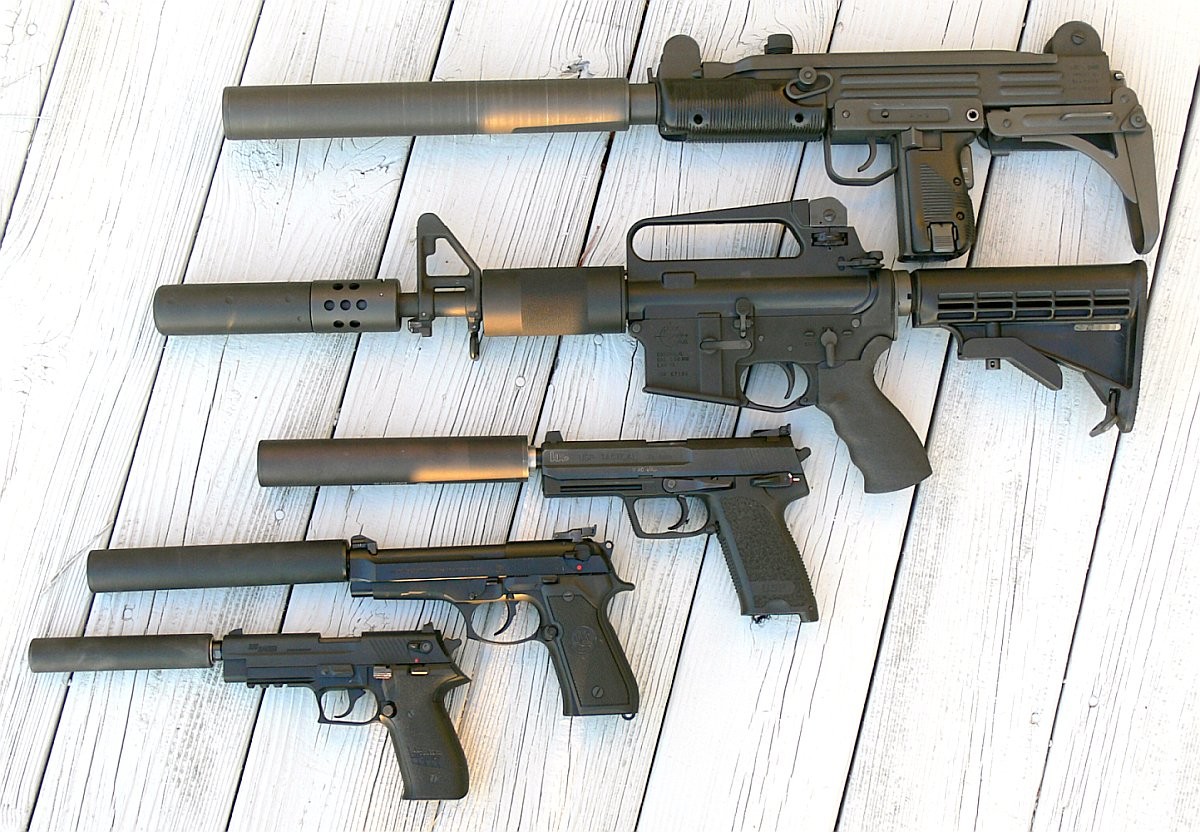
Suppressed firearms of the kind covered by the NFA's registration scheme. Suppressors, short-barreled rifles, short-barreled shotguns and "any other weapons" are the four categories Congress zeroed the tax on in 2025. (Cortland via Wikimedia Commons, public domain)
The government's backup argument failed too
Justice Department lawyers had a fallback ready. If the taxing power no longer holds the NFA up, they argued, the Commerce Clause can. Hendrix rejected it across roughly ten pages of the opinion, and his answer was blunt: "Here is the problem: Congress did not invoke the Commerce Clause in enacting the NFA."
The court walked through the statute's text, structure and history looking for the interstate-commerce language Congress normally writes into commerce-power legislation. It found that language in exactly two NFA provisions, neither of them at issue here, which the court read as proof Congress knew how to use the commerce power and chose not to for the rest. "For these reasons, the challenged NFA provisions may not be sustained under the Commerce Clause," Hendrix wrote.
One thing this ruling is not: a Second Amendment decision. Buried on page 65 is a line worth reading twice. "At the parties' urging, the Court does not reach the plaintiffs' Second Amendment claims." The plaintiffs won on enumerated powers, not on the right to keep and bear arms.
Who this covers, and who it does not
This is the part that matters most. Getting it wrong is not a technicality, it is federal felony exposure. The injunction is not nationwide. It binds the government only as to the plaintiffs in the two consolidated cases, plus, where it applies, their agencies, political subdivisions, members and customers, current and future.
Covered, per the court's order: the Silencer Shop Foundation plaintiffs, which include Gun Owners of America, Gun Owners Foundation, the Firearms Regulatory Accountability Coalition, Palmetto State Armory, SilencerCo Weapons Research and 15 states, and the Jensen plaintiffs, which include the Texas State Rifle Association, the Citizens Committee for the Right to Keep and Bear Arms, FPC Action Foundation and Hot Shots Custom. The NRA's own explainer notes that protection generally flows downstream through the chain of commerce, so customers of a covered dealer are likely covered even without a membership card.
Not covered: everyone else. A gun owner who belongs to none of those organizations and buys from a dealer who is not a plaintiff or a member of a plaintiff group is in the same legal position as before August 5. There is also a wrinkle inside the ruling itself: the injunction reaches "any other weapons" only for the Silencer Shop Foundation plaintiffs, because the court found the Jensen plaintiffs lacked standing on those.
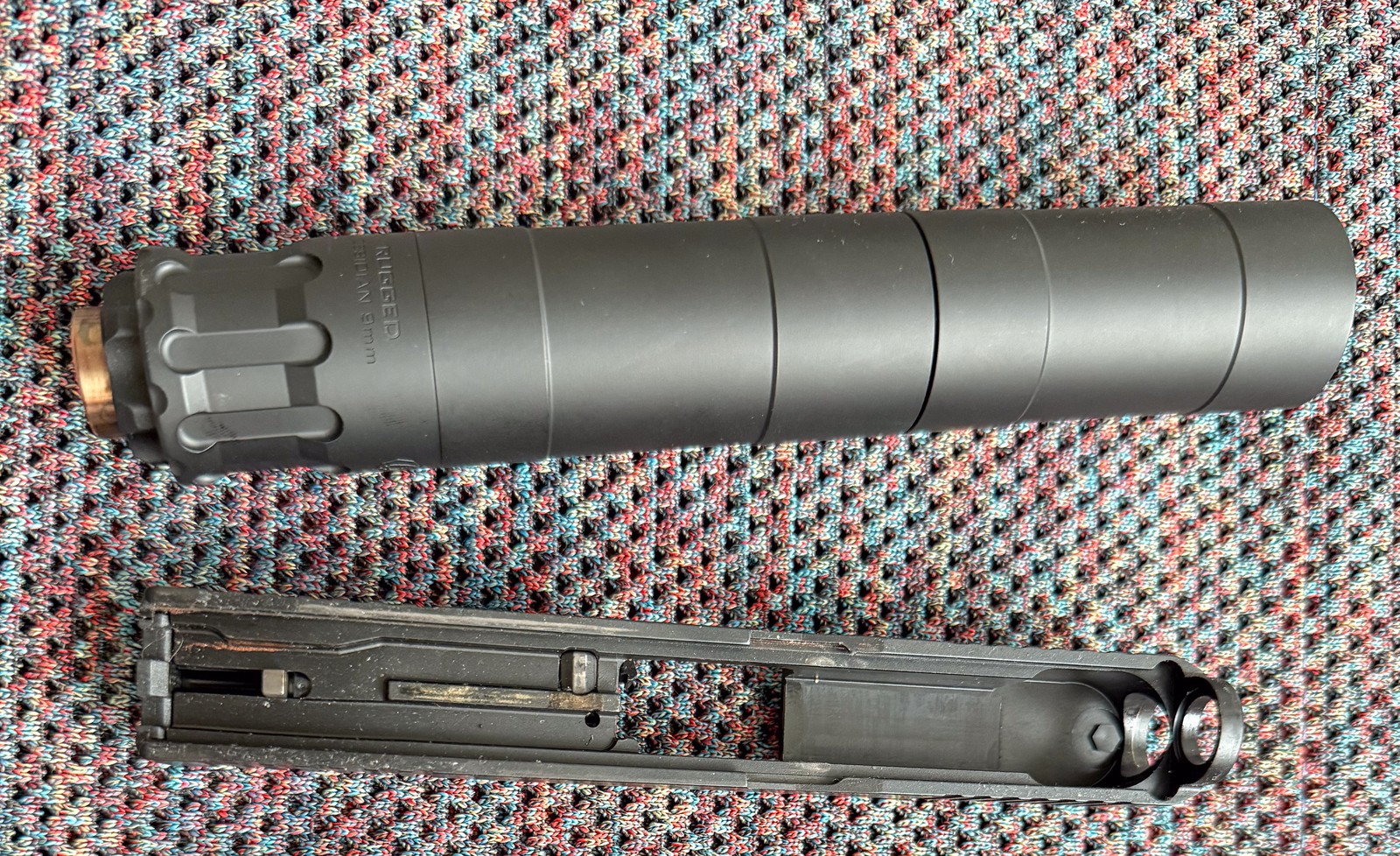
A Rugged Obsidian 9mm suppressor alongside a disassembled Glock slide and threaded barrel. Suppressors are the item drawing the most attention after the ruling, and the most confusion. (Photo by Tony Webster via Wikimedia Commons, CC BY 2.0)
State law is untouched. Several states ban suppressors or short-barreled rifles outright, and by TheGunMag's count at least 15 states still require NFA paperwork as a matter of state law. A federal injunction against federal enforcement does nothing about any of that. Neither does it touch other federal statutes still on the books, including the restrictions on dealers delivering short-barreled rifles and shotguns under 18 U.S.C. 922(b)(4) and the interstate transport rules under 922(a)(4), both of which the NRA flags as still enforceable. Machine guns and destructive devices are not covered at all, because Congress never zeroed their tax.
This is not the ghost gun case
Two Texas federal judges struck down two different federal gun rules in the same month, and the two stories are already getting mashed together online. They are separate cases with separate reasoning. Judge Reed O'Connor's decision, which we covered on August 20, killed the ATF's 2022 "Frames and Receivers" rule on Second Amendment and vagueness grounds. Different judge, different case, different rule, different constitutional theory.
Hendrix's ruling never reaches the Second Amendment at all. If you are trying to figure out what you can lawfully do this week, the O'Connor decision is not the one that governs suppressors and short-barreled rifles.
Not appealing a stay is not the same as surrendering
Hendrix stayed his own order for seven days so the government could seek relief on appeal. That window closed at the end of the day on August 12, the injunction took effect August 13, and the Justice Department never filed. Republican Rep. Andrew Clyde of Georgia posted on X that he had received confirmation the DOJ would not appeal at all. The NRA is more cautious, noting that reports from unnamed federal sources saying no appeal is coming remain unconfirmed, and a DOJ official told the Daily Caller News Foundation that people frequently conflate an appeal with a request for a stay.
The department's actual on-record statement is far more careful than the celebration suggests. "The Department respects Americans' Second Amendment rights and is currently assessing the impact of the court's ruling," a spokesperson told CBS News. DOJ still has weeks left on the clock to file a regular appeal, and it has kept defending the NFA in two parallel cases in Missouri and Kentucky. The NRA's own warning is worth quoting: an injunction can be dissolved or stayed with very little notice, and acting in reliance on it "carries risk precisely because of this possibility."
There is a second vulnerability nobody on the winning side is advertising. The whole ruling rests on the tax being zero. A future Congress that restores a transfer tax on suppressors, even a nominal one, would hand the registration scheme back its constitutional footing. The confusion this has created among gun owners is not an accident of bad reporting. It comes from the shape of the ruling itself.
Gun groups celebrated, then immediately asked for a rulebook
Gun Owners of America and Silencer Shop moved fast. At 12:01 a.m. Central on August 13, they transferred suppressors to two GOA members and announced it publicly, calling it "the first time since the NFA was enacted on June 26, 1934, that Americans can lawfully acquire suppressors without complying with the federal registration scheme." Erich Pratt, GOA's senior vice president, called it "truly one of the greatest Second Amendment victories in the last 100 years."
Within 24 hours, the Jensen plaintiffs sent DOJ and ATF a letter with five direct questions, including whether the government will issue compliance guidance and how it will treat items made or transferred while the injunction is in effect if that injunction is later stayed or dissolved. "It's much better to get answers straight from the source than to rely on second- and third-hand information online," Second Amendment Foundation founder Alan Gottlieb said of the letter. Phil Milks of the firearms-compliance firm Orchid was blunter, writing that most social media posts claiming the NFA is dead and everything can now be transferred without NFA forms "are wrong."
ATF, for its part, says it is still processing forms "consistent with applicable law, regulations, and agency policy," and told NPR that anyone with questions about how the ruling affects their particular circumstances "should consult with their attorney for legal advice."
The bottom line for gun owners
A federal judge just found that a 92-year-old registration regime lost its constitutional foundation the moment Congress stopped taxing it, and the Justice Department declined to fight that finding on an emergency basis. That is real, and it is a serious win. It is also narrow, reversible, and dependent on facts about your own membership, your dealer and your state that no article on the internet can answer for you.
Check your state law. Check whether you are actually inside the covered class. Talk to a lawyer licensed where you live before you do anything you cannot undo. The people who won this case are telling you the same thing, and they are the ones with the most reason to say otherwise.