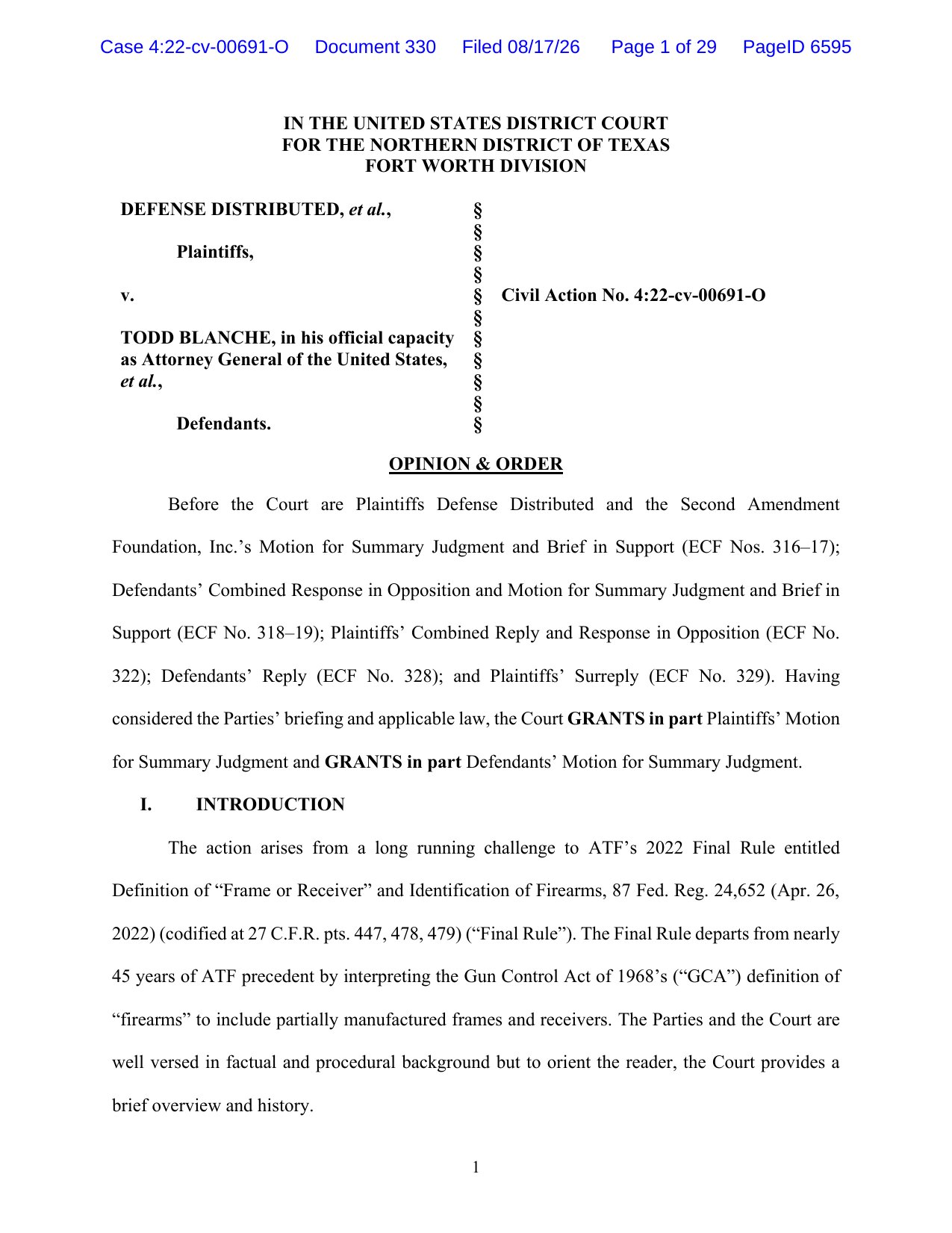
A federal judge in Texas just tore up one of the Biden administration's signature gun control rules, and he didn't stop at a technicality. U.S. District Judge Reed O'Connor ruled Monday that the ATF's 2022 "ghost gun" rule violates the Second Amendment outright, on top of being too vague for anyone to actually know what it banned.
What the ATF rule actually did
The rule, formally titled "Definition of 'Frame or Receiver' and Identification of Firearms," rewrote what counts as a "firearm" under the 1968 Gun Control Act. Unfinished frames and receivers, the raw blocks of metal or polymer that need extra work before they can fire a shot, suddenly had to be serialized, sold only by licensed dealers, and background-checked like a finished gun. O'Connor's opinion notes the rule broke from roughly 45 years of ATF's own prior practice.
Defense Distributed, the Texas company known for its 80% lower kits and 3D-printed gun files, sued along with the Second Amendment Foundation. Their argument was blunt: Americans have built their own guns since the founding, and the government can't quietly redefine "firearm" to make that illegal.
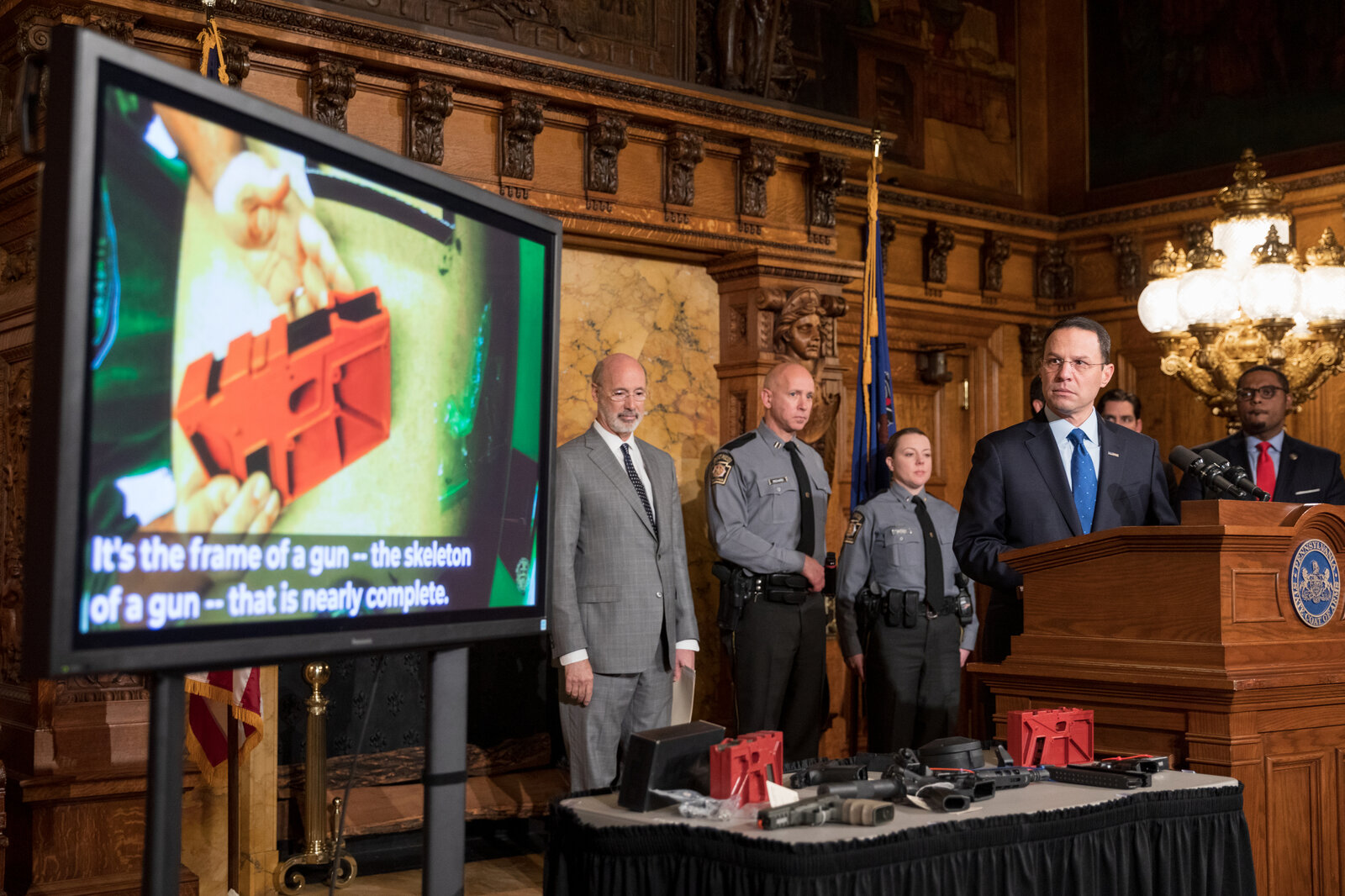
An unfinished "80%" frame, the kind of component ATF's rule tried to regulate as a finished firearm. (Governor Tom Wolf/Flickr, CC BY 2.0)
Why this already went to the Supreme Court once
This isn't O'Connor's first time on this rule. He blocked it nationwide back in 2023, ruling that ATF had exceeded its authority under the Gun Control Act. The Supreme Court reversed him 7-2 in March 2025, in an opinion written by Justice Neil Gorsuch, holding that ATF was within its statutory rulemaking power when it wrote the rule.
That ruling settled a narrow question. It never touched whether the rule was actually constitutional. O'Connor's decision this week picks up exactly where the Supreme Court left off, and lands on the opposite outcome for a different reason.
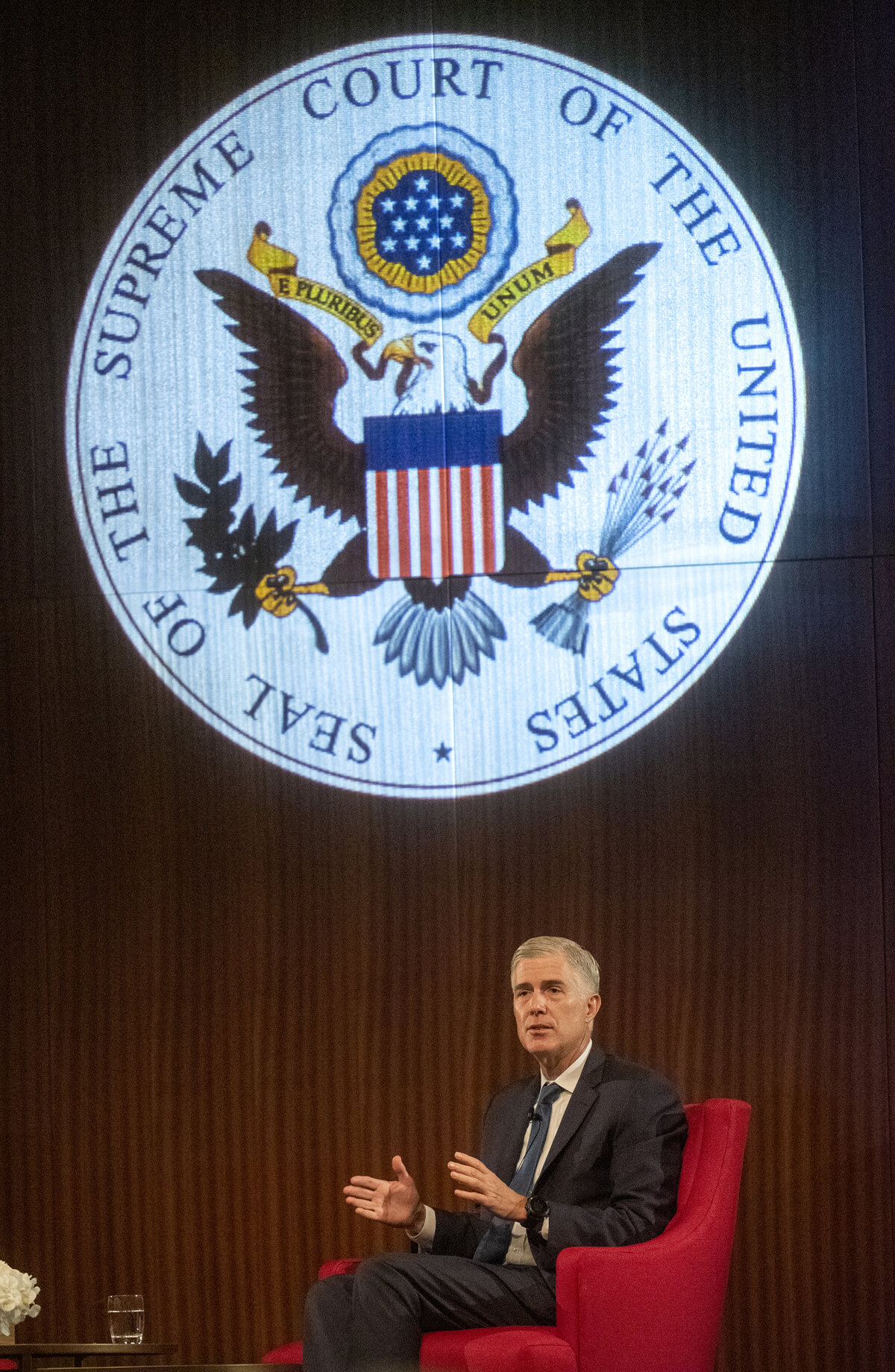
Justice Neil Gorsuch, who wrote the Supreme Court's March 2025 opinion upholding ATF's authority to write the rule, seen in 2019. (Jay Godwin/LBJ Presidential Library, public domain)
Gun rights groups call the rule a mess
The Second Amendment Foundation didn't hold back. Executive Director Adam Kraut said the rule "was such a mess that it not only violated the Second Amendment but was so terribly drafted that it managed to be ruled unconstitutionally vague." He added that it was "written in such a vague and vaporous manner as to chill that protected conduct by making it impossible to even know what was legal and what wasn't." (Washington Examiner)
O'Connor didn't just declare the rule dead in theory. He entered a permanent injunction barring the government from enforcing it against Defense Distributed, SAF, and SAF's members over specific named products, including Defense Distributed's M1911 80% frame kit and its unfinished receiver and grip module.
The twist: Trump's own DOJ was defending Biden's rule
Here's the part that doesn't fit the easy narrative. The Justice Department, under the current administration, kept defending the Biden-era rule in court this year, asking O'Connor to toss the gun rights groups' claims for lack of standing. It's one of the rare moments the Trump DOJ has stood on the opposite side of a case from Second Amendment advocates.
What happens next
The DOJ can appeal to the 5th Circuit, and from there the case could head back to the Supreme Court for a second round, this time on the constitutional question instead of the statutory one. The justices are already sitting on a bigger fight over "assault weapons" bans in Connecticut and Cook County, Illinois, that could be argued as soon as December.
For now, the permanent injunction stands. Defense Distributed and the Second Amendment Foundation got exactly what they spent years in court asking for, and it took a second trip through the system to get there.