Federal Reserve Chairman Kevin Warsh told the Kansas City Fed's Jackson Hole symposium Friday that inflation is running 3.7 percent over twelve months and 4.1 percent over six, and that if the Fed cannot be confident it is falling, "we have work to do." He never used the word hike. Traders priced one anyway, and August 2026 just became the most expensive August at the pump on record.
What Warsh actually said, and the word he never used
The speech is titled "In Our Time," runs sixteen pages, and went up on federalreserve.gov at 8:02 a.m. Eastern. Warsh spent most of his 100th day as chairman on artificial intelligence and on his objection to forward guidance, joking that his outline was a trail map, "just don't call it forward guidance."
Then he got to prices. The summer readings beat expectations, he said, but "do not tell me that underlying trends have meaningfully improved." He broke the PCE index into its 199 components: 54 percent rose more than 3 percent over the past year, against 32 percent in the two decades before COVID.
Official record
Federal Reserve Board, In Our Time, keynote remarks by Chairman Kevin M. Warsh, Jackson Hole, August 28, 2026.
"There is one signal nobody can miss: The responsibility for 65 months of sustained, elevated inflation sits squarely with the central bank. And that is where it belongs. Here is my standard: We must be confident that underlying inflation is moving to our objective, clearly and at sufficient speed. Otherwise, we have work to do." — Chairman Kevin Warsh, page 15
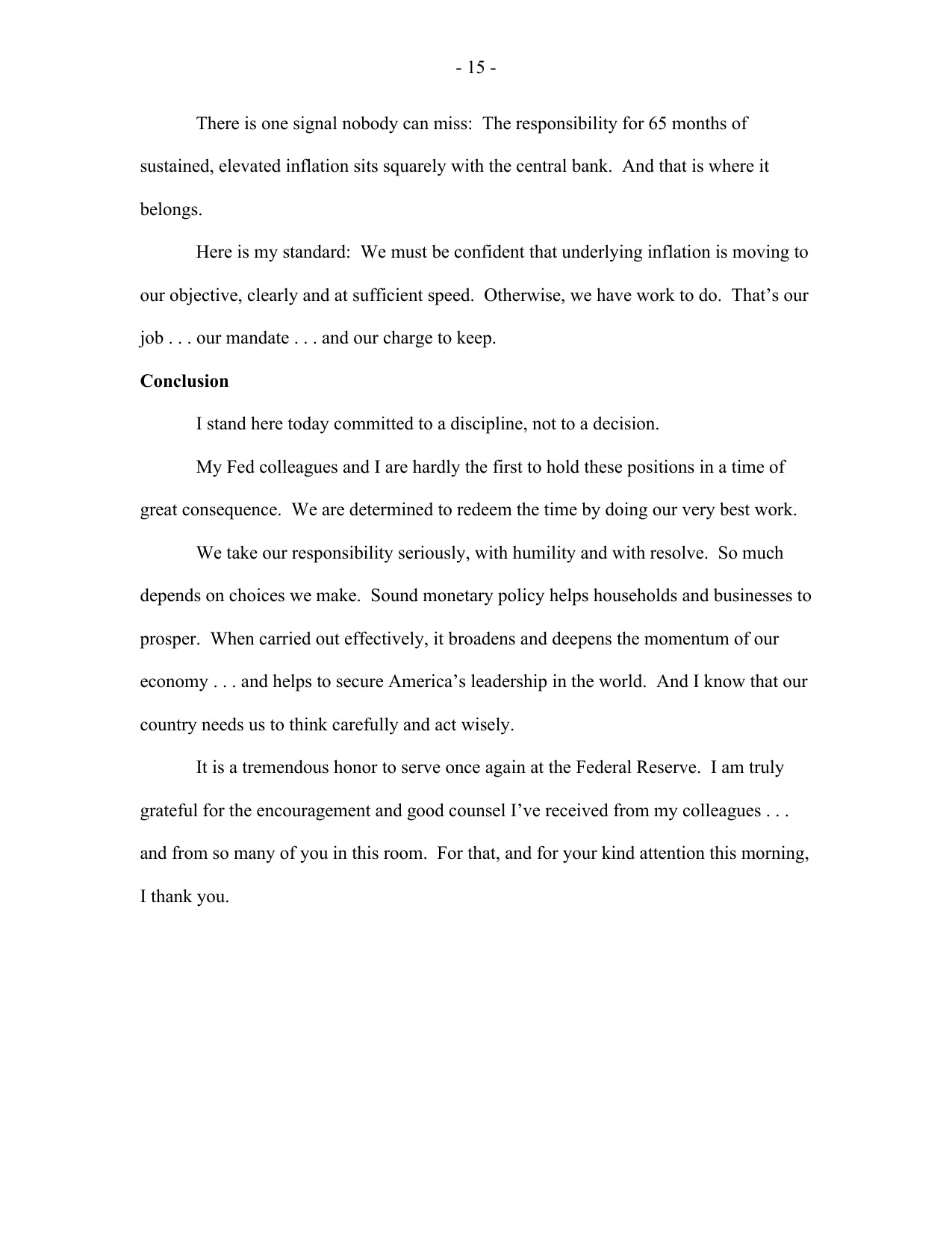
Read or download the full 16-page speech (PDF) · 2026 speeches on federalreserve.gov
The line that moved the market was not "work to do"
One sentence does more work than the headline quote. Warsh cited tight corporate credit spreads and easy bank lending standards, then wrote that "on balance, I would be hard pressed to describe broad financial conditions as restrictive." A central banker saying policy is not restricting anything, while naming inflation as his predominant focus, has given away direction without promising a date.
Jon Faust, a Johns Hopkins economist who advised Jerome Powell, told the Associated Press that Warsh "found a way to convey that if necessary he would support raising rates." Michael Strain of the American Enterprise Institute told the same reporter the chairman has talked tough before without moving.
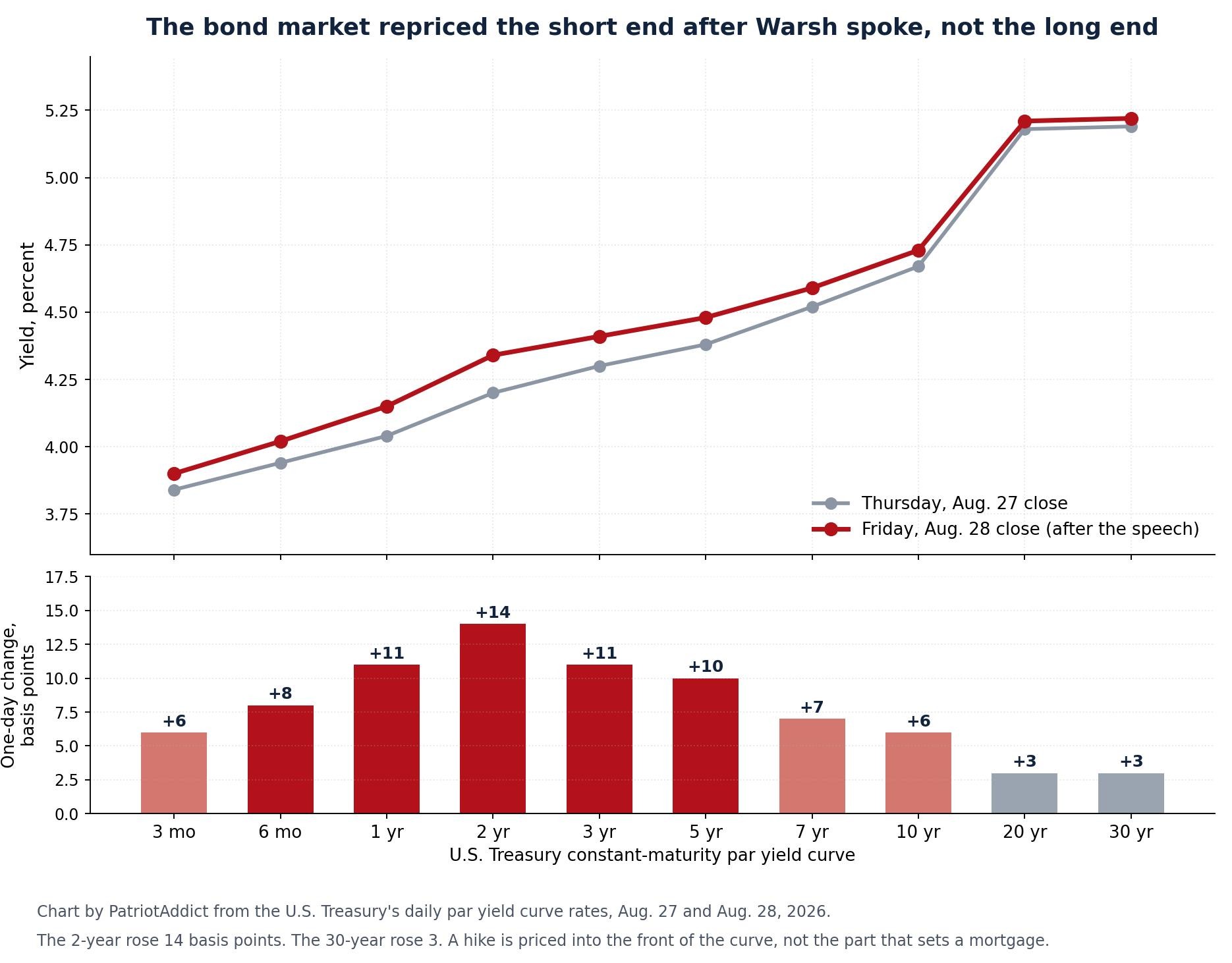
Chart built by PatriotAddict from the U.S. Treasury's daily par yield curve rates for Aug. 27 and Aug. 28, 2026. The two-year rose to 4.34 percent from 4.20, one of the largest single-day moves of the year in that maturity. The 30-year rose three basis points.
A hike hits your credit card. It leaves your mortgage alone.
Benzinga put the CME-implied odds of a September increase at 59 percent against 35 percent Thursday, and the AP described the same market as roughly a coin flip, up from about a third. The Federal Open Market Committee meets September 15 and 16.
The prime rate behind most variable credit card APRs moves with the federal funds rate almost mechanically. The Fed's G.19 release put the rate on card accounts assessed interest at 22.15 percent and revolving balances at $1,351.1 billion in June. A quarter-point pass-through on that pile runs about $3.4 billion a year, paid by the people carrying it.
A mortgage is a different animal. Freddie Mac's survey put the 30-year fixed at 6.66 percent for the week ended August 27, and that rate tracks the long end of the curve, which barely flinched Friday. Anyone claiming a September hike sends mortgage rates up sharply is arguing with the chart above.
| Measure | Reading | As of | Source |
|---|---|---|---|
| Regular gasoline, national average | $4.085 a gallon | Week of Aug. 24, 2026 | EIA, EMM_EPMR_PTE_NUS_DPG |
| Diesel, national average | $5.652 a gallon | Week of Aug. 24, 2026 | EIA, EMD_EPD2D_PTE_NUS_DPG |
| PCE price index, 12 months | 3.7 percent | July 2026 | BEA release 26-39 |
| 30-year fixed mortgage | 6.66 percent | Week ended Aug. 27, 2026 | Freddie Mac PMMS |
| 30-year Treasury | 5.22 percent | Aug. 28, 2026 | Treasury par yield curve |
| New car loan, 60-month, banks | 7.14 percent | Second quarter 2026 | Federal Reserve G.19 |
| Credit cards, accounts assessed interest | 22.15 percent | Second quarter 2026 | Federal Reserve G.19 |
| Federal funds target range | 3.50 to 3.75 percent | Set July 29, 2026 | FOMC statement |
This is the most expensive August at the pump, with one caveat
AAA's national average was $4.0898 on Friday against $3.2081 a year earlier, a gap of about 88 cents. In its Thursday release the club wrote that "for the first time ever, the national average in August has been above $4 per gallon every day."
We checked that against the government's own numbers rather than take it on faith. The Energy Information Administration's weekly retail price of regular came in at $4.079, $4.006, $4.049 and $4.085 across the four August weeks, an average of $4.055 against $3.975 for all of August 2022, the old record. The claim holds. The caveat: the most expensive August week EIA has ever posted is still $4.192, the week of August 1, 2022. Record month, not record week.
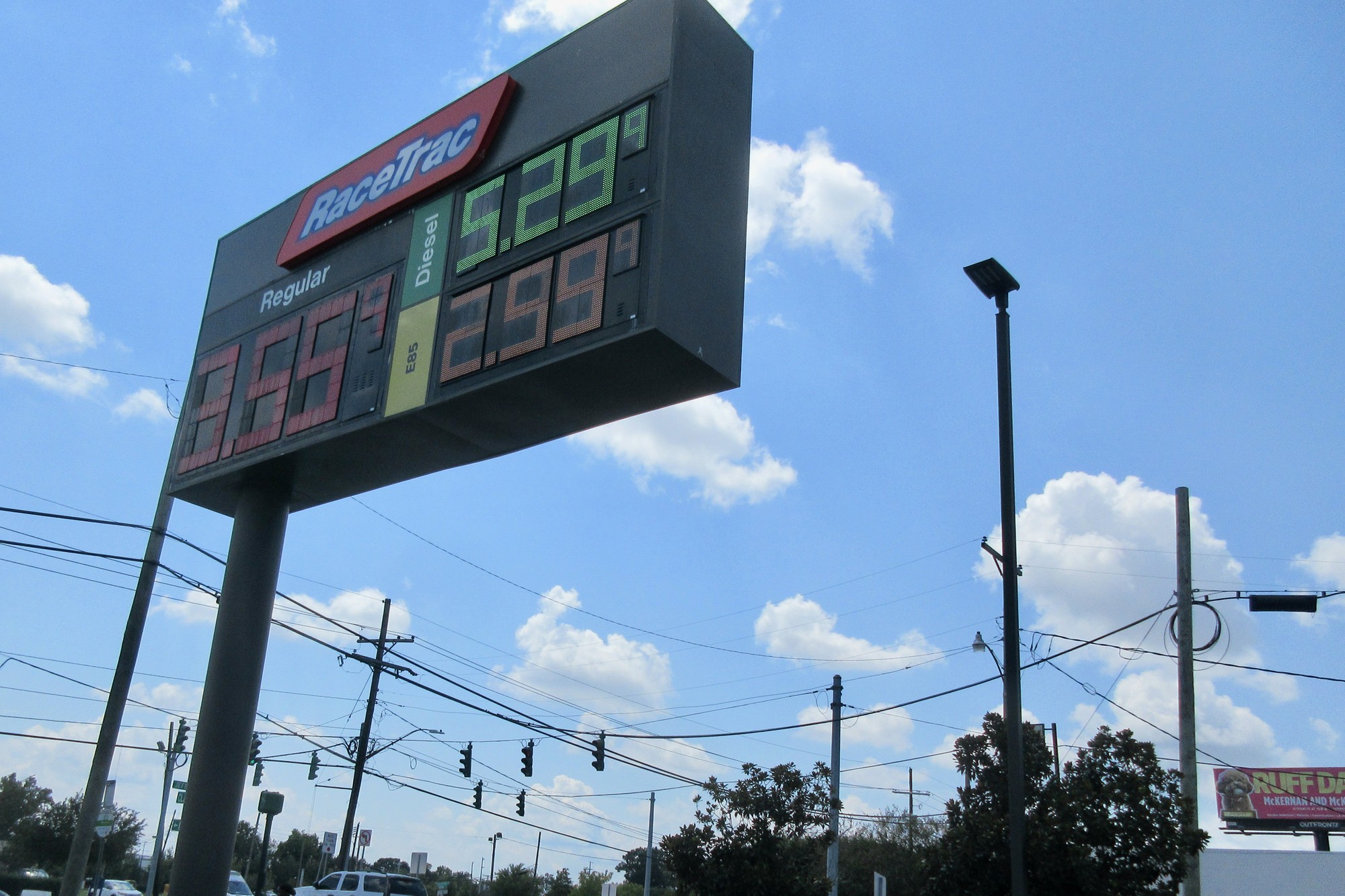
The price board at a RaceTrac on Jefferson Highway, Jefferson Parish, Louisiana, photographed Aug. 28, 2026, the morning Warsh spoke. Photo by Infrogmation of New Orleans via Wikimedia Commons, CC BY-SA 4.0. Louisiana is one of AAA's ten cheapest markets at $3.69, which is why regular reads $3.559 here while the national average sits above $4.08.
Diesel, the number that quietly reprices a grocery cart, hit $5.652 in the same EIA week against $4.578 in early July, with crude near $80 because the Strait of Hormuz is still closed.
Trump picked this man, and said out loud why
In a February interview with NBC's Tom Llamas, before the confirmation vote, the president was asked whether Warsh understood he wanted rates lower. Trump said he did, then added, "I mean, if he came in and said, 'I want to raise them.'" Llamas asked whether that would have cost him the job. "He would not have gotten the job," Trump answered. "No."
The position has not softened. On "Meet the Press" this summer Trump called Warsh "fantastic" and said he wanted him "to do whatever he wants," then added that "there's no reason to raise interest rates."
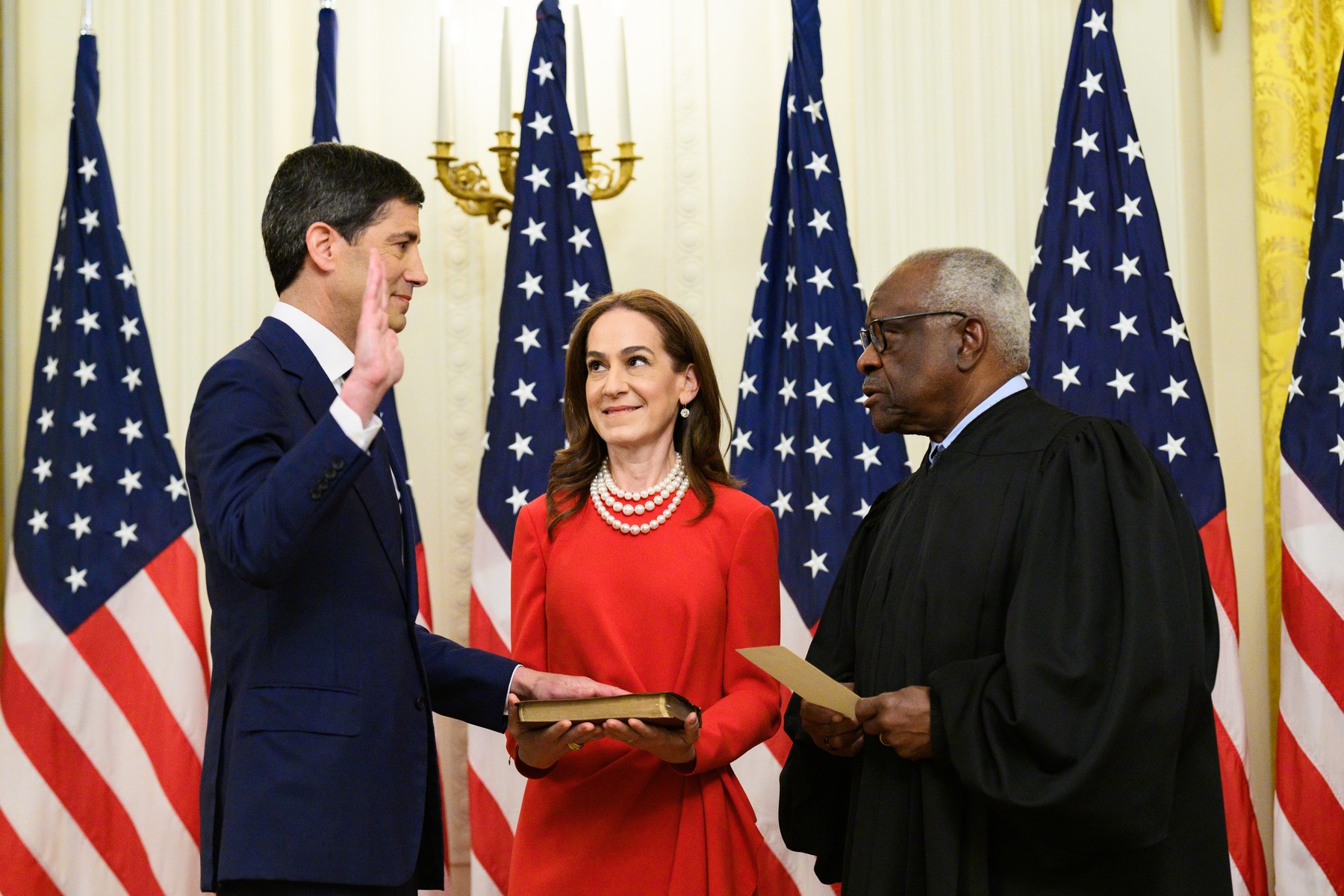
Kevin Warsh is sworn in as the 17th chairman of the Federal Reserve by Justice Clarence Thomas at the White House, May 22, 2026. Official White House photo, public domain, via Wikimedia Commons. Friday was Warsh's 100th day in the job.
What to watch between now and September 16
Beth Hammack, Neel Kashkari and Lorie Logan already dissented in July, and the July 29 FOMC statement records all three as having "preferred to raise the target range for the federal funds rate by 1/4 percentage point at this meeting." The next meeting lands September 15 and 16, seven weeks before the midterms, with a fresh Summary of Economic Projections attached. August CPI and the August PCE report both print first.
The honest read is narrow. Warsh did not promise a hike, and anyone quoting him as though he did is filling in a blank he left empty on purpose. What he did was remove the excuse. He said the Fed is at fault, he said conditions are loose, and he named the standard he will be judged against. If September's data does not move, his own speech says what comes next.