The Trump administration is moving deportation flights to Haiti from once a month to once a week, according to internal documents obtained by the New York Times and reported on August 28, 2026. About 335,000 Haitians lost their legal status when Temporary Protected Status ended this summer, and at one plane a week the arithmetic says clearing that group takes more than three decades.
Two flights have already gone. DHS announced on August 24 that 162 Haitians were flown home on August 20, and Secretary Markwayne Mullin listed the criminal convictions of more than a dozen of them by name. A second plane landed at Cap-Haitien on August 27 carrying 57 people, according to Human Rights Watch monitors the Times cited.
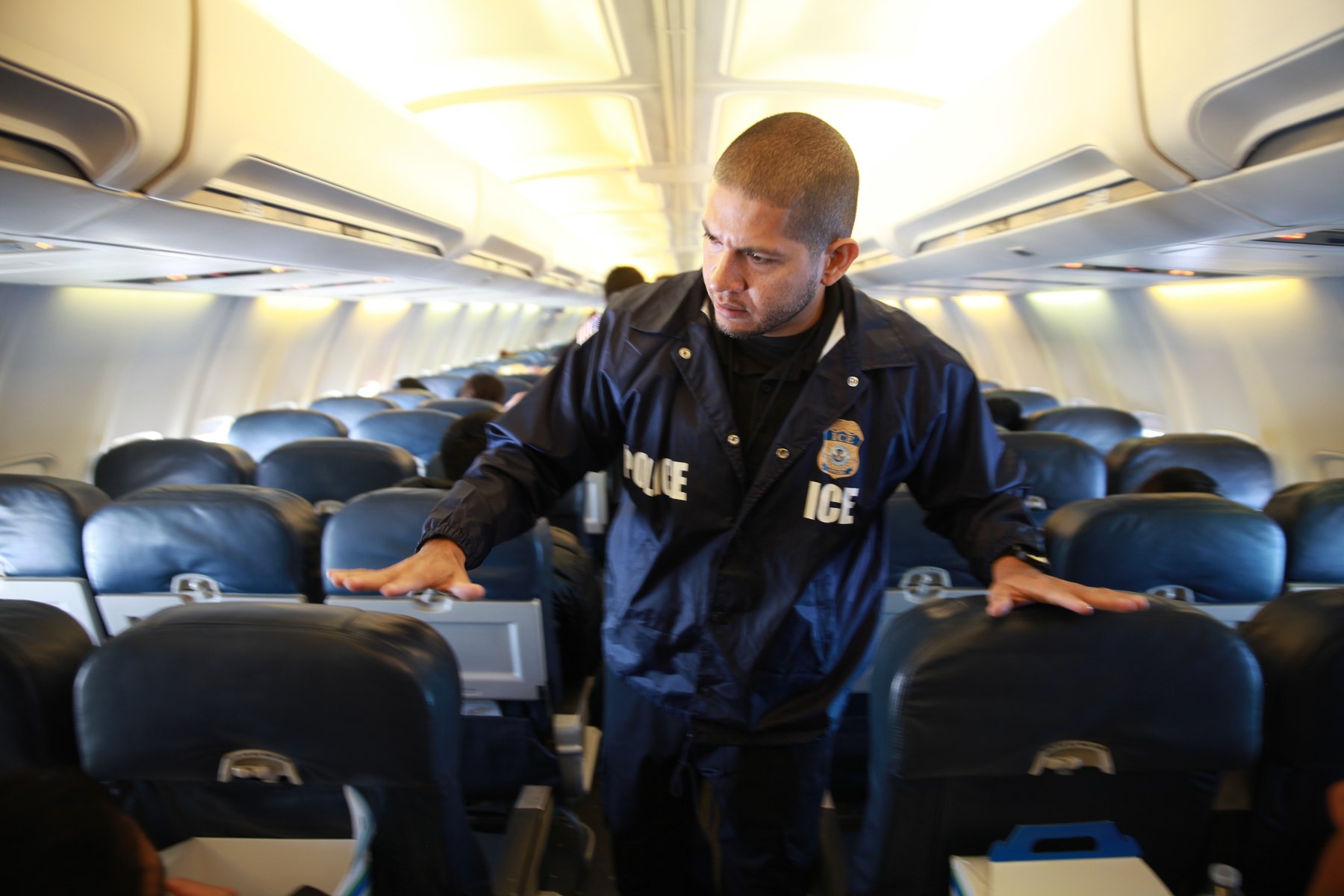
File photo: an ICE Enforcement and Removal Operations officer works the cabin of a removal flight. This image, and the photo at the top of this article, are ICE file photos. Neither is from any of the Haiti flights described here. (U.S. Immigration and Customs Enforcement, via Wikimedia Commons, public domain)
Start with the real population number, not a round one
Most coverage says "more than 300,000." The precise figure comes from DHS. In the Federal Register notice terminating the designation, the department wrote that it "estimates that there are approximately 352,959 nationals of Haiti ... who hold Temporary Protected Status under Haiti's designation." A footnote on the same page adds that as of November 10, 2025, roughly 18,068 of them had also been approved as lawful permanent residents, so they keep a green card regardless.
Subtract them and you get 334,891 people whose only status was TPS. That is the number a removal program has to work through. The Supreme Court cleared the way in Mullin v. Doe on June 25, 2026, and USCIS made the termination effective July 27, voiding every A12 and C19 work permit tied to it.
Official record
Termination of the Designation of Haiti for Temporary Protected Status, 90 FR 54733 (Nov. 28, 2025), FR Doc. 2025-21379 · Federal Register
"Based on the Department's review, the Secretary has determined that there are no extraordinary and temporary conditions in Haiti that prevent Haitian nationals (or aliens having no nationality who last habitually resided in Haiti) from returning in safety." — DHS, 90 FR 54733
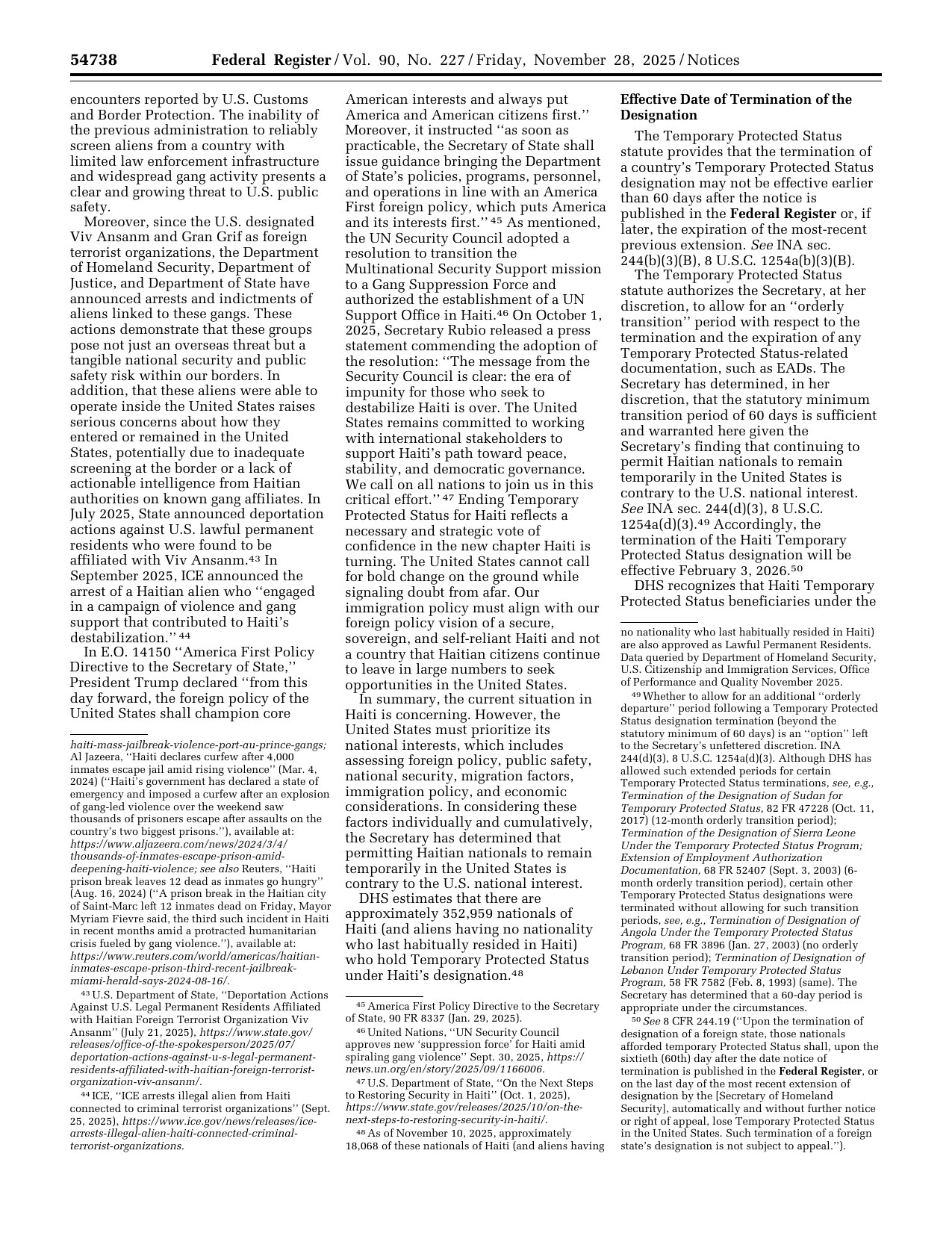
Page 54738, where the 352,959 estimate and the 18,068 green card footnote appear. Read or download the full 7-page notice (PDF) · official govinfo copy
How many people actually fit on one of these planes?
Reason's Eric Boehm ran this math on August 28 and gave the government every benefit of the doubt, assuming 200 deportees on every plane. That is a generous ceiling. ICE says its charter division stages 12 aircraft total, across Arizona, Texas, Louisiana and Florida, for every removal destination on earth.
The two real Haiti flights carried 162 and 57. That averages 109.5 people a plane.
Fifty-two flights a year, and what they clear
One flight a week is 52 flights a year. At Boehm's optimistic 200 per plane, that is 10,400 removals in a year. Divide 334,891 by 10,400 and the answer is 32.2 years. At the actual observed average of 109.5, a year of weekly flights moves 5,694 people, and 334,891 divided by 5,694 is 58.8 years.
Run it the other direction and the number gets starker. To empty the list in a single year at 200 seats a plane, ICE would need 1,675 flights to Haiti, which works out to 32 flights a week. It has 12 charter aircraft total. Under the old once-a-month cadence at the observed load, the job takes about 255 years.
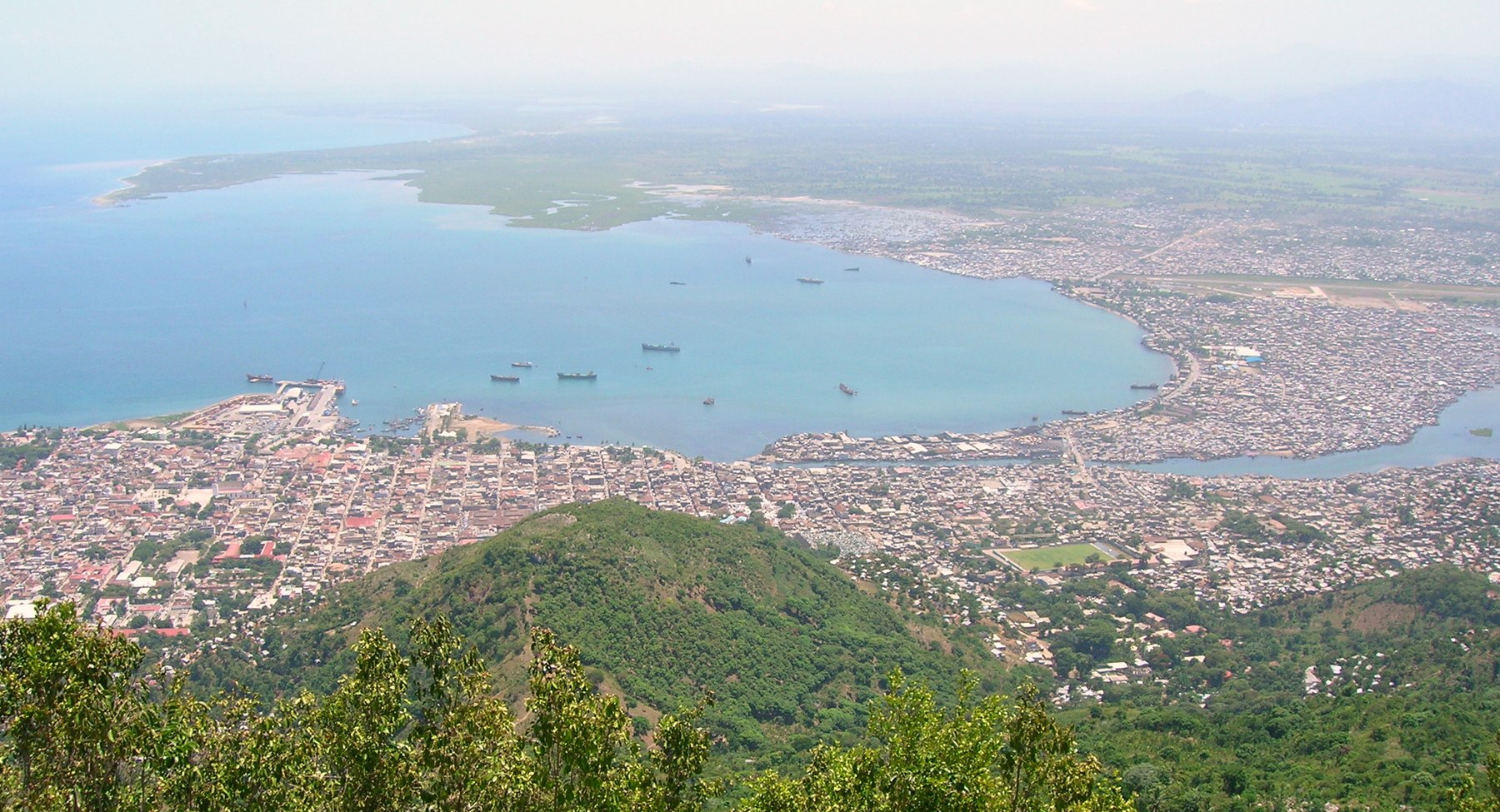
Cap-Haitien, Haiti, seen from Morne Jean, with the harbor at center. Deportation flights from the United States now land here rather than in the capital. (Photo by Remi Kaupp, via Wikimedia Commons, CC BY-SA 3.0)
Frame it against the calendar instead. From today to Inauguration Day in January 2029 is about 125 weeks. At 200 a flight with no cancellations, that is 25,000 people, or 7.5 percent of the group.
Why the planes land on the north coast and not in the capital
The flights go to Cap-Haitien, on the north coast, because Port-au-Prince is not usable. The Federal Aviation Administration bars U.S. air carriers from Toussaint Louverture International Airport, a restriction the State Department repeats in its own advisory. Gangs control roughly 70 percent of the capital and the surrounding area, according to JURIST.
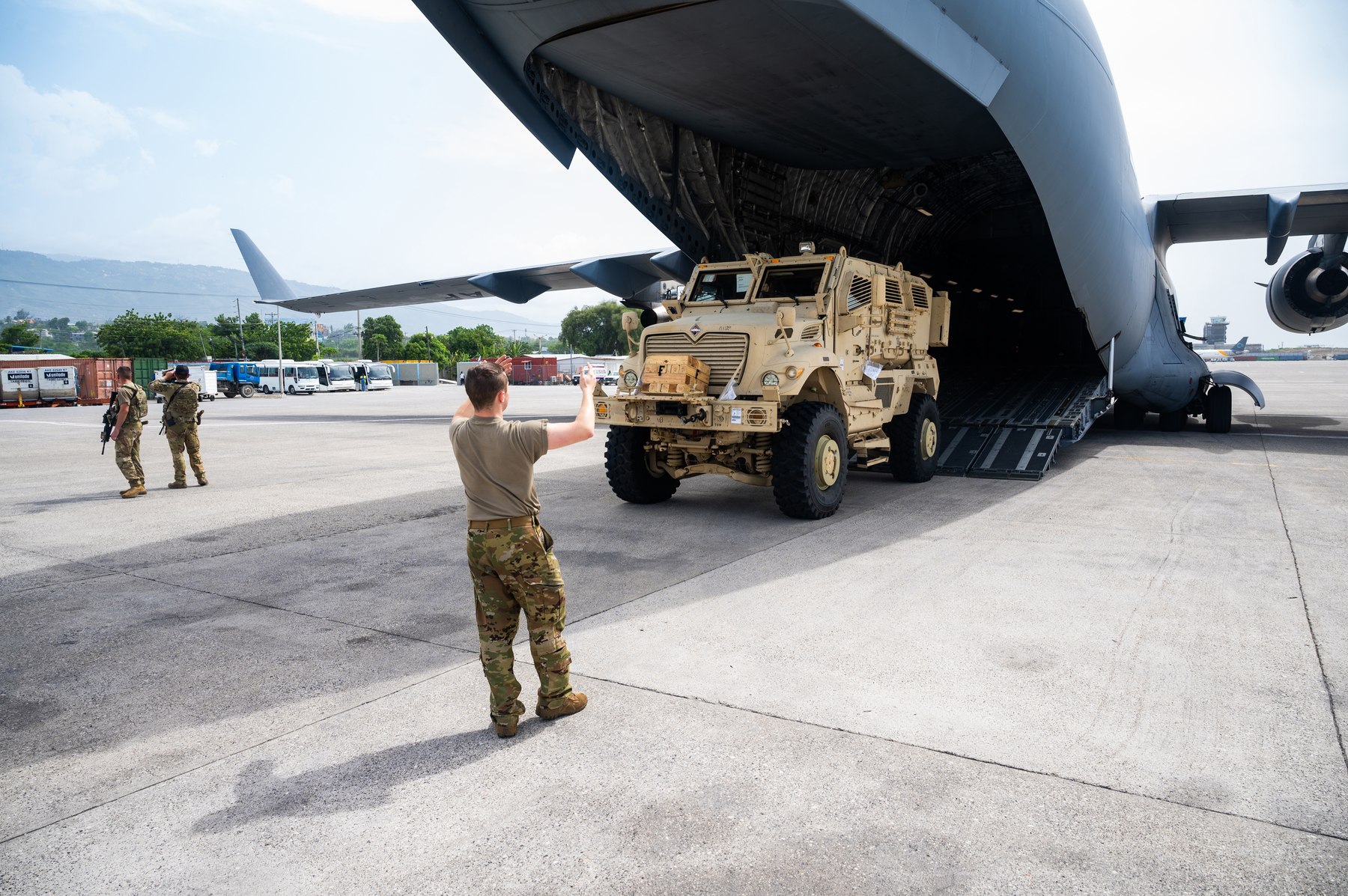
A U.S. Air Force loadmaster offloads an MRAP armored vehicle at Toussaint Louverture International Airport in Port-au-Prince on July 7, 2024, part of a delivery to the Multinational Security Support mission. Commercial and charter deportation flights do not use this airport. (U.S. Air Force photo by Senior Airman Mitchell Corley, public domain)
The government is telling itself two things at once
The Federal Register notice says there are no conditions in Haiti preventing a safe return. The State Department's Haiti advisory, reissued July 10, 2026 with no change in level, is Level 4, Do Not Travel, flagged for crime, kidnapping, terrorism, unrest and limited health care. It notes that Haiti has been under a national state of emergency since March 2024 and that U.S. government employees are barred from leaving the embassy for non-essential travel.
That same DHS notice concedes the point in its own text. It cites the U.N. Secretary-General's August 2025 report that 1.3 million Haitians, about 12 percent of the population, had been driven from their homes, and it quotes then-Acting U.S. Ambassador Dorothy Shea saying the United States "remains concerned about escalating levels of violence in Haiti." The International Organization for Migration now puts displacement near 1.5 million. A gang massacre in Kenscoff killed 47 people days after the first flight landed.
What the administration is actually counting on
Removal flights were never the whole plan. DHS is pushing self-deportation through the CBP Home app, offering a paid flight and a $2,600 exit bonus to anyone who reports their own departure, and permanent inadmissibility to anyone who waits to be arrested. That policy, not the charter schedule, is what would have to move six figures of people.
The honest read is that weekly flights are a signal. They tell 335,000 people the clock is running and that leaving on your own terms beats leaving in handcuffs. Whether that works is a real question. The arithmetic is not: 52 planes a year does not clear 334,891 people, and anyone selling the flight schedule as the mechanism is selling something it cannot deliver.