A federal appeals court in Richmond has upheld an order barring immigration agents from enforcement actions at a named list of Quaker meetinghouses, a Sacramento gurdwara and Cooperative Baptist congregations, holding the plaintiffs are likely to win under the Religious Freedom Restoration Act. The Fourth Circuit ruled 3-0 on Aug. 18 that DHS burdened those congregations' religious exercise when it scrapped the old "protected areas" limits, and that the government forfeited its best defense by never making it.
Conservatives fought for RFRA. It just cut the other way.
The Religious Freedom Restoration Act is the statute that won Hobby Lobby its contraception-mandate case in 2014. Congress passed it 97-3 in the Senate in 1993 to undo Employment Division v. Smith, which held that neutral laws of general application do not bend for religious objectors. For thirty years it has been the sharpest tool religious conservatives own.
Senior Judge Barbara Milano Keenan's opinion runs on exactly that authority. She quotes Burwell v. Hobby Lobby for the proposition that Congress meant "very broad protection for religious liberty," and Ramirez v. Collier for the point that RFRA gives more protection than the First Amendment does. She cites Holt v. Hobbs for the rule that where a less restrictive option exists, the government has to take it, and anchors the strict-scrutiny burden in Gonzales v. O Centro Espirita, the unanimous 2006 ruling for a small church whose sacramental tea federal agents had seized.
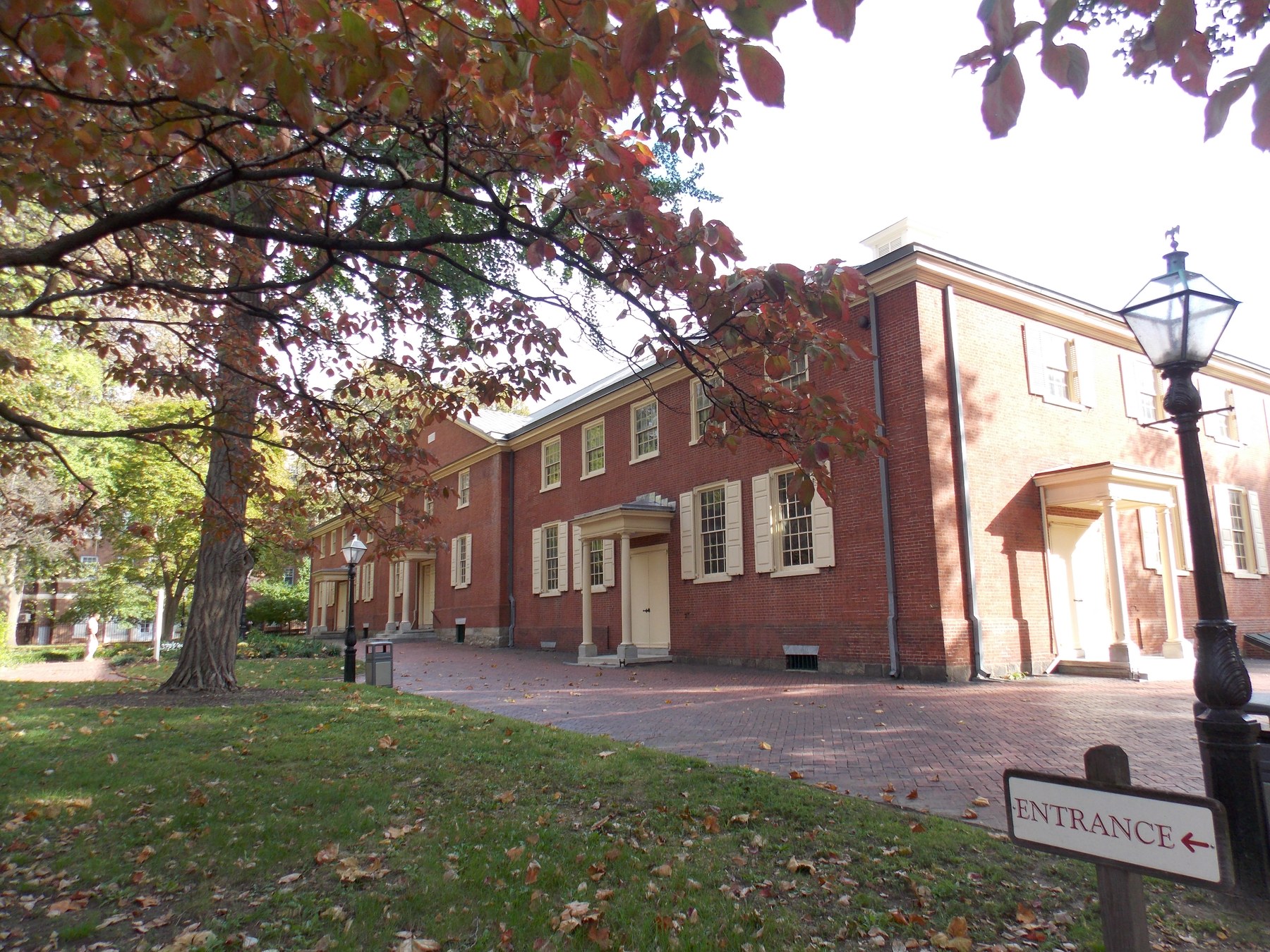
Arch Street Friends Meeting House in Philadelphia. Philadelphia Yearly Meeting of the Religious Society of Friends is the lead plaintiff in the case. Photo by Farragutful via Wikimedia Commons, CC BY-SA 4.0.
What the panel actually held
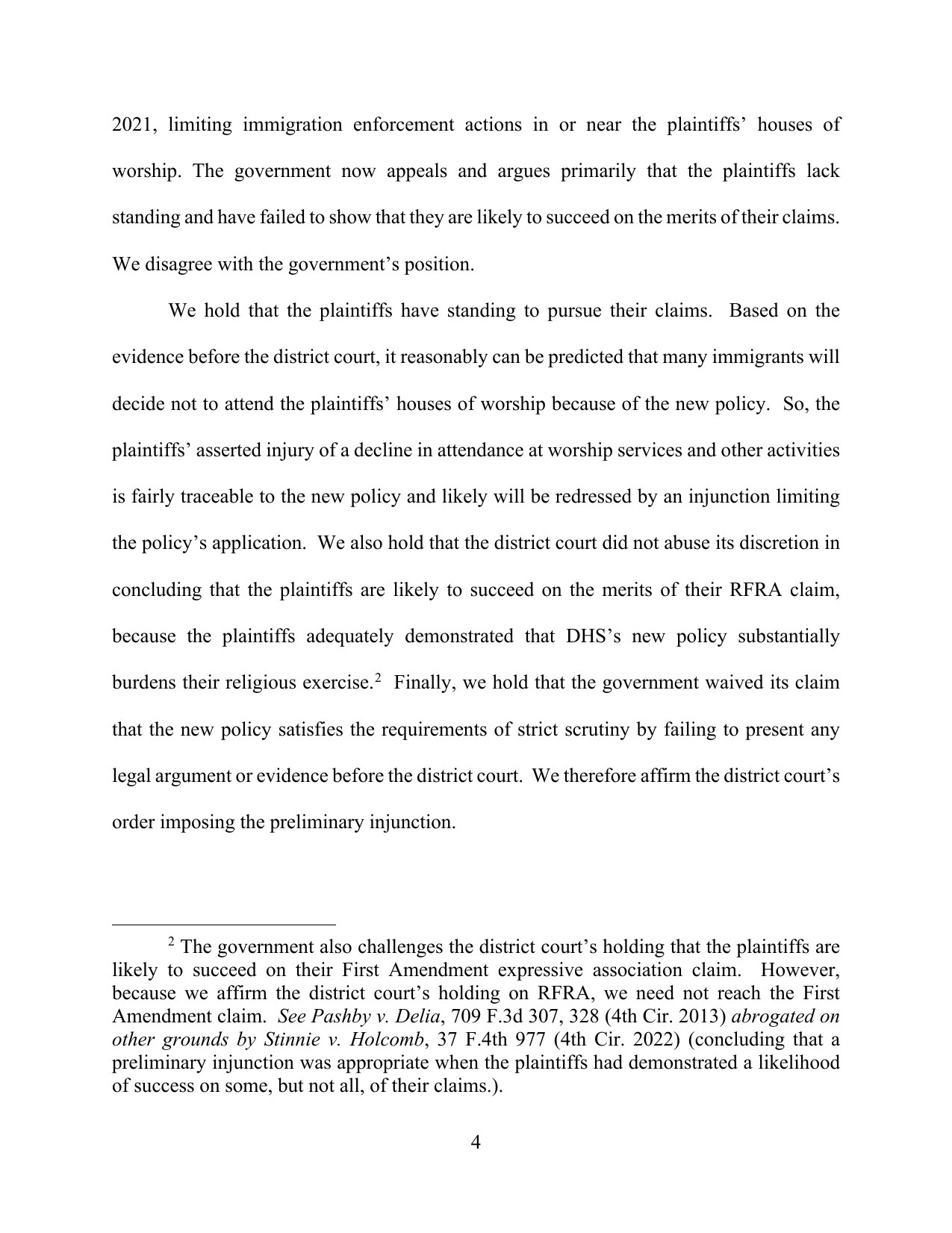
Three things. The congregations have standing, because falling immigrant attendance is the predictable effect of the policy rather than speculation. They are likely to win on RFRA, because the threat of enforcement pressures them to abandon beliefs they hold. And the government waived any strict-scrutiny defense by never presenting one to the district judge.
Keenan never reached the First Amendment claim. Having affirmed on RFRA, the panel said it did not need to decide whether the policy also violates the plaintiffs' right of expressive association, and left that open.
Official record
Philadelphia Yearly Meeting of the Religious Society of Friends v. U.S. Department of Homeland Security, No. 25-1512 (4th Cir. Aug. 18, 2026), published opinion, 40 pages, on appeal from D. Md. No. 8:25-cv-00243-TDC.
"We also hold that the district court did not abuse its discretion in concluding that the plaintiffs are likely to succeed on the merits of their RFRA claim, because the plaintiffs adequately demonstrated that DHS's new policy substantially burdens their religious exercise. Finally, we hold that the government waived its claim that the new policy satisfies the requirements of strict scrutiny by failing to present any legal argument or evidence before the district court." — Senior Judge Barbara Milano Keenan, slip op. at 4
Read or download the full 40-page published opinion (PDF) · view the appellate docket
Who sued, and what the record says happened to them
Eight plaintiffs. Six Quaker meetings: the Philadelphia, New England, Baltimore and New York yearly meetings, plus Adelphi Friends in Maryland and Richmond Friends in Virginia. Sikh Temple Sacramento, a gurdwara serving roughly 30,000 Sikhs, about 90 percent of them first- or second-generation immigrants. And the Cooperative Baptist Fellowship, more than 1,400 congregations. They filed in Greenbelt, Maryland on Jan. 27, 2025, and Judge Theodore Chuang granted the injunction on Feb. 24, 2025.
The sworn declarations carried the case. One CBF congregation reported attendance at its English-as-a-second-language program fell 66 percent. Rev. Dr. Jeff Hayes of Oakland Baptist said immigrant congregants "are now afraid to come to our sacred space." CBF leadership began telling churches they could lock their doors, cutting against a belief that the doors stay open. Judge G. Steven Agee, a George W. Bush appointee and former Virginia Supreme Court justice, wrote separately to add that the lost donations alone are a pocketbook injury.
Read the scope. This is not a nationwide shield for churches.
Agee's concurrence exists mainly to say so. The injunction covers only the properties the plaintiffs identified to the district court. Any other congregation that wants the same protection has to file its own suit and build its own record. Schools, hospitals and the other locations in the old 2021 policy get nothing here.
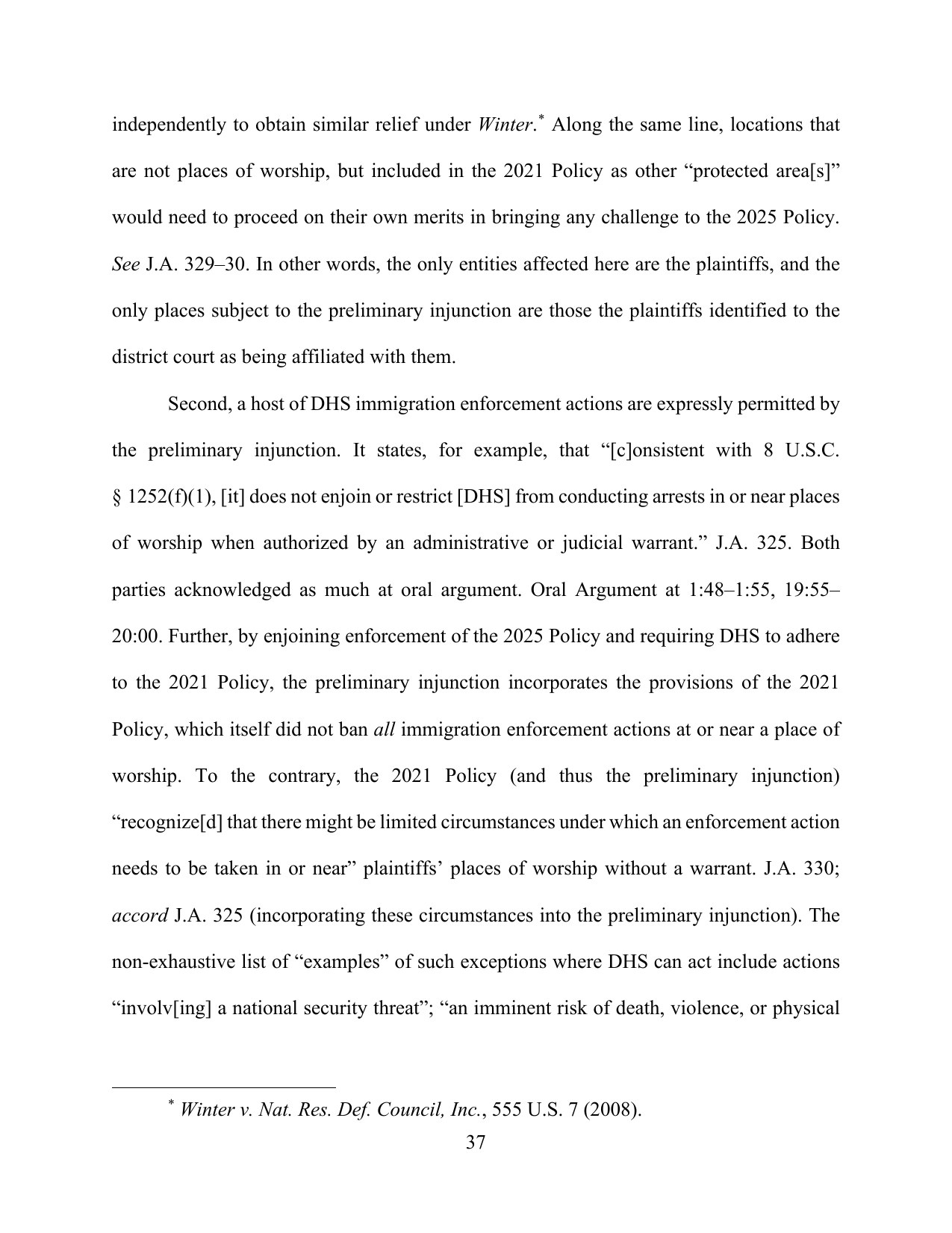
Page 37 of the opinion, where Judge Agee spells out what the injunction does not do. Source: U.S. Court of Appeals for the Fourth Circuit, public record.
What agents can still do at the plaintiffs' own properties is a longer list than the headlines suggest. Arrests with an administrative or judicial warrant are expressly untouched. So are actions involving a national security threat, an imminent risk of death or violence, hot pursuit of someone who poses a public safety threat, or an imminent risk that evidence will be destroyed. The order restores a 2021 approval process that never banned enforcement outright.
The government lost this on the merits by refusing to argue the merits
Under RFRA, once plaintiffs show a substantial burden, the burden flips to the government to prove a compelling interest pursued by the least restrictive means. DHS never tried. Its entire filing below argued that the plaintiffs lacked standing and that strict scrutiny did not apply, and Agee writes that the district judge repeatedly invited the department to argue in the alternative and was repeatedly refused. On appeal DHS finally offered "uniform enforcement of the Nation's immigration laws," raising it for the first time in a court that does not hear new arguments. Judge Pamela Harris said it at oral argument, and Agee quoted her: "It's very hard to win a case without evidence or legal argument."
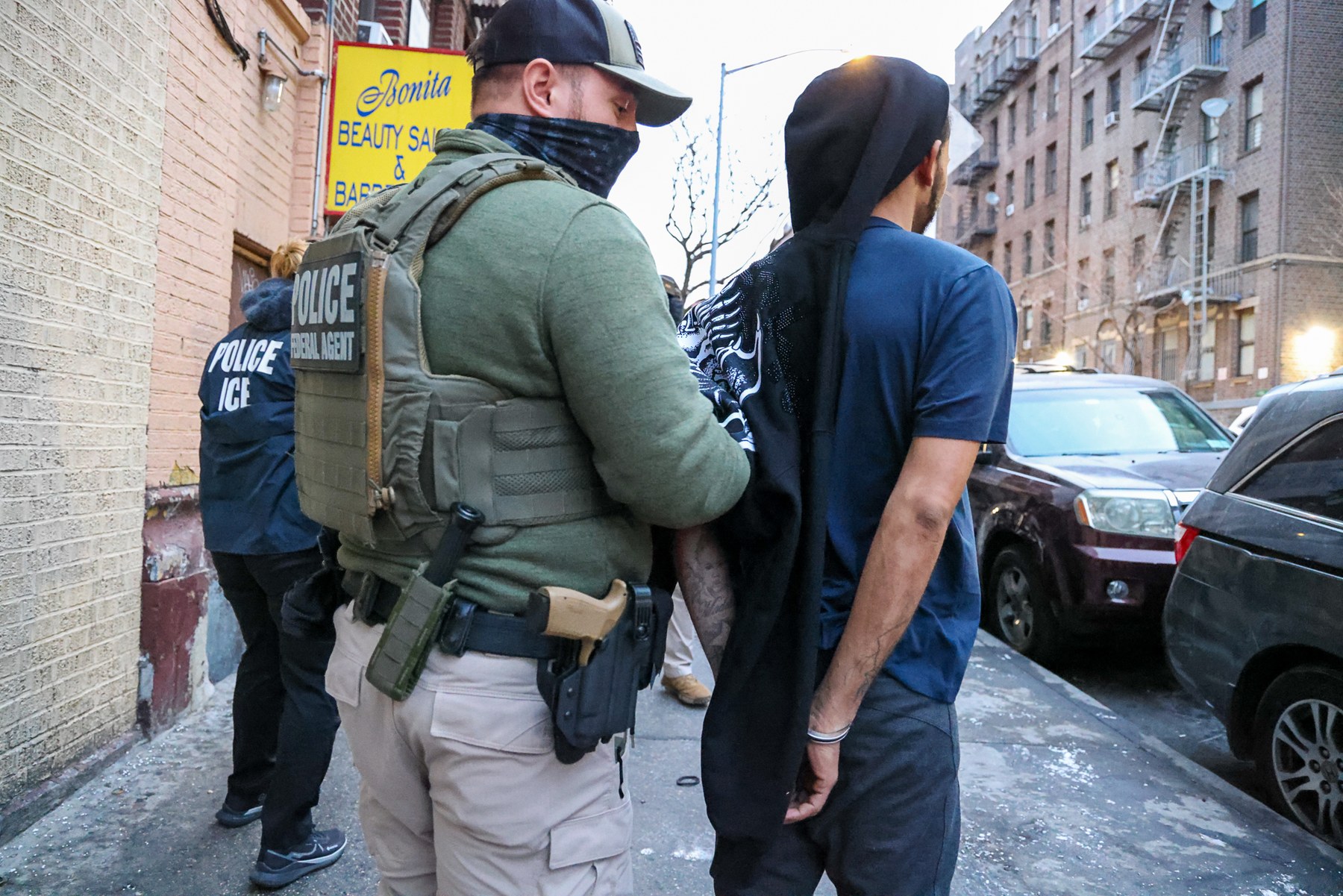
ICE Fugitive Operations officers during a targeted enforcement operation in New York City, January 2025. This is a file photo and is not connected to any house of worship. Source: U.S. Immigration and Customs Enforcement, public domain, via Wikimedia Commons.
Both of our commitments are in this case, and they are pulling apart
There is no honest way to write this as a clean win or a clean outrage. The Rutherford Institute, represented by Harvard Law School's Religious Freedom Clinic, filed a brief backing the Quakers. The Federation for American Immigration Reform filed for the government. Those two are usually on the same team.
The administration's underlying complaint was not invented. Announcing the January 2025 rescission, DHS said criminals would no longer be able to hide in America's schools and churches to avoid arrest. Whether a location-based rule lets a wanted man escape a lawful arrest by choosing where to stand is a serious question, and it deserved a real argument backed by evidence. The department never made one, and a statute conservatives wrote is the reason it lost.
The case now returns to Judge Chuang on the merits, where DHS gets a second chance to build the record it skipped. As of the last update to the appellate docket, no petition for rehearing had been entered. Anyone who has spent years insisting RFRA means what it says should think hard before deciding it means less this week.
Header photo: the Lewis F. Powell Jr. United States Courthouse in Richmond, Virginia, home of the U.S. Court of Appeals for the Fourth Circuit. Photo by Acroterion via Wikimedia Commons, CC BY-SA 4.0.