

President Trump, Xi Jinping and Vladimir Putin signed a four-paragraph "Declaration toward Peace" in Shenzhen on Thursday that tells the International Criminal Court it "must not abuse" its jurisdiction. None of their three countries has ever joined the court. It still has an arrest warrant out for Putin, and as of today, it has had one out for Israeli Prime Minister Benjamin Netanyahu for exactly two years.
What did the three leaders actually sign?
The White House posted the full text on Nov. 19. It runs five short paragraphs. The leaders pledged to "reform the UN," to "increase the production and supply of refined petroleum products," and to "conduct a dialogue on reducing nuclear risks and preventing the proliferation of nuclear weapons."
The court language is the sharpest line in it. The three heads of state "recognized that the principle of state consent and respect for immunities of State officials are of paramount importance, and concurred that the International Criminal Court and other similar bodies must not abuse their jurisdiction."
Trump was pleased with the day. "On a scale of zero to 10, I think it was a 12," he told NBC News by phone on Thursday, according to Fox News' live coverage.
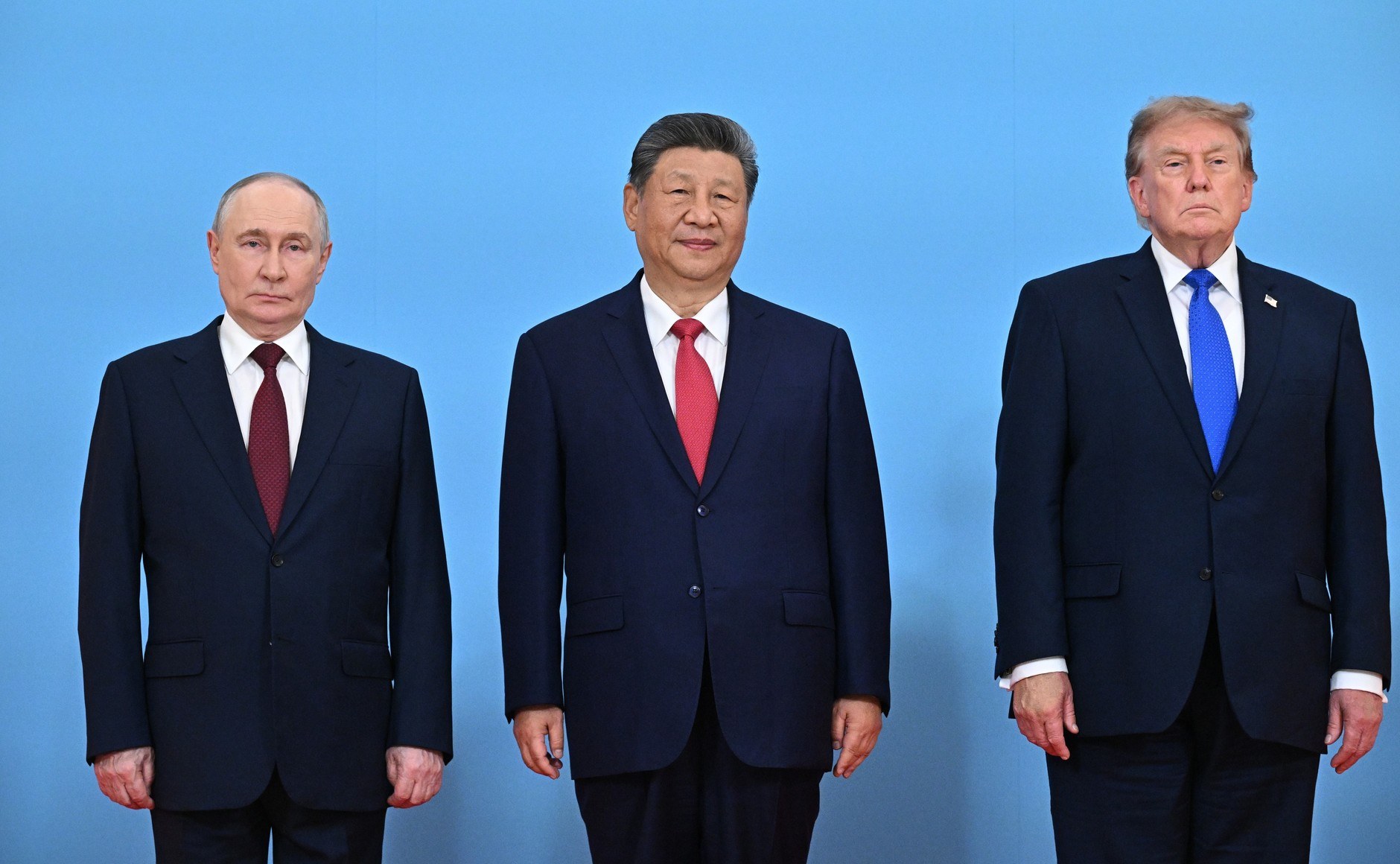
Vladimir Putin, Xi Jinping and Donald Trump at the trilateral meeting in Shenzhen, China, on Nov. 19, 2026. Photo via the Kremlin's official website, licensed CC BY 4.0.
Why would Washington sign a shot at the ICC?
Because that has been U.S. policy since the first weeks of this term. On Feb. 6, 2025, Trump signed Executive Order 14203, which found that the court "has engaged in illegitimate and baseless actions targeting America and our close ally Israel" and declared a national emergency over any ICC effort to investigate or arrest protected Americans and allies. The order cites the 2002 American Servicemembers' Protection Act, which warned that the Rome Statute exposes U.S. troops, and even the president, to prosecution by a court America never agreed to.
The State Department went further in July. Its July 13 announcement said "the ICC poses an intolerable threat to U.S. sovereignty" and listed visa bans, more sanctions and pressure on partners to withdraw. At the United Nations on Sept. 22, Trump called the court an "out-of-control institution" and said, "I call on all nations that are members of the ICC to officially resign from this rogue institution immediately," as Khaleej Times reported.
Official record
Executive Order 14203, "Imposing Sanctions on the International Criminal Court," signed Feb. 6, 2025, and published in the Federal Register on Feb. 12, 2025 (90 FR 9369). Page 1 is shown below.
"The ICC has no jurisdiction over the United States or Israel, as neither country is party to the Rome Statute or a member of the ICC." Executive Order 14203
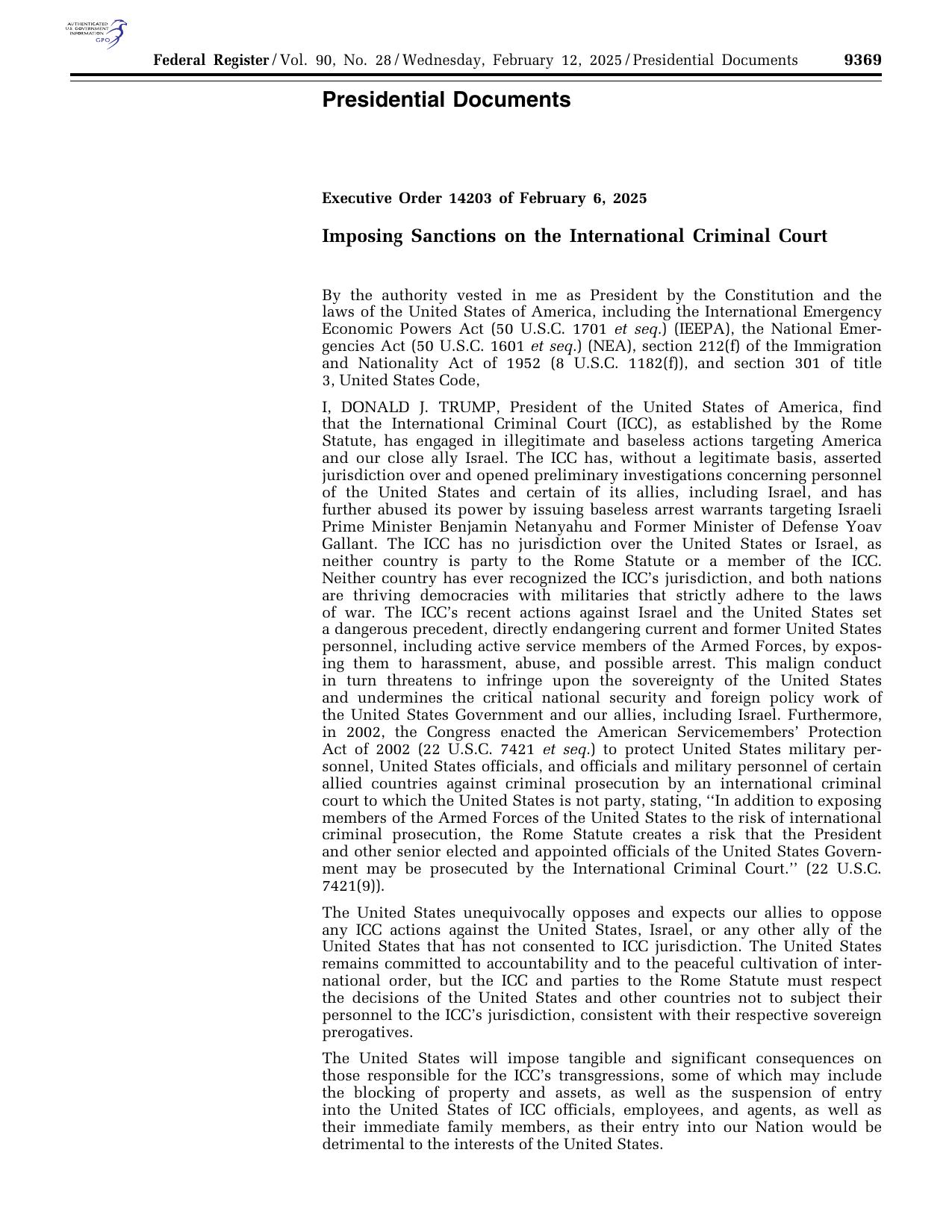
Read or download the full 5-page order (PDF) or view it on GovInfo.
Who gets cover from that sentence?
Not American soldiers alone. ICC judges issued an arrest warrant for Putin on March 17, 2023, accusing him of the unlawful deportation of Ukrainian children. On Nov. 21, 2024, the same court issued warrants for Netanyahu and former Israeli Defense Minister Yoav Gallant. Trump said in July that Netanyahu "will not be arrested, in any way, shape, or form, while in the United States of America," according to JURIST.
So the same paragraph that backs Israel's prime minister also backs the man whose army is still hitting Ukraine. Russian overnight strikes on Kyiv bridges killed eight people around the summit, Mayor Vitali Klitschko said, according to the BBC.
Putin made no secret of whose side he sees the clause on. At his closing press conference in Shenzhen, he said the leaders discussed "the International Criminal Court, which is clearly overstepping its mandate and making political rather than legal decisions. By and large, all sides are in agreement on that," according to the Kremlin transcript. Asked about reforming the court, he answered, "ICC reform was not on the table."
The immunity line also sits awkwardly next to a case in a Manhattan courtroom. Newsweek pointed out that Nicolás Maduro, captured by U.S. forces in Caracas on Jan. 3, is asking a federal judge to throw out his charges on head-of-state immunity grounds. Expect his lawyers to quote Thursday's text.
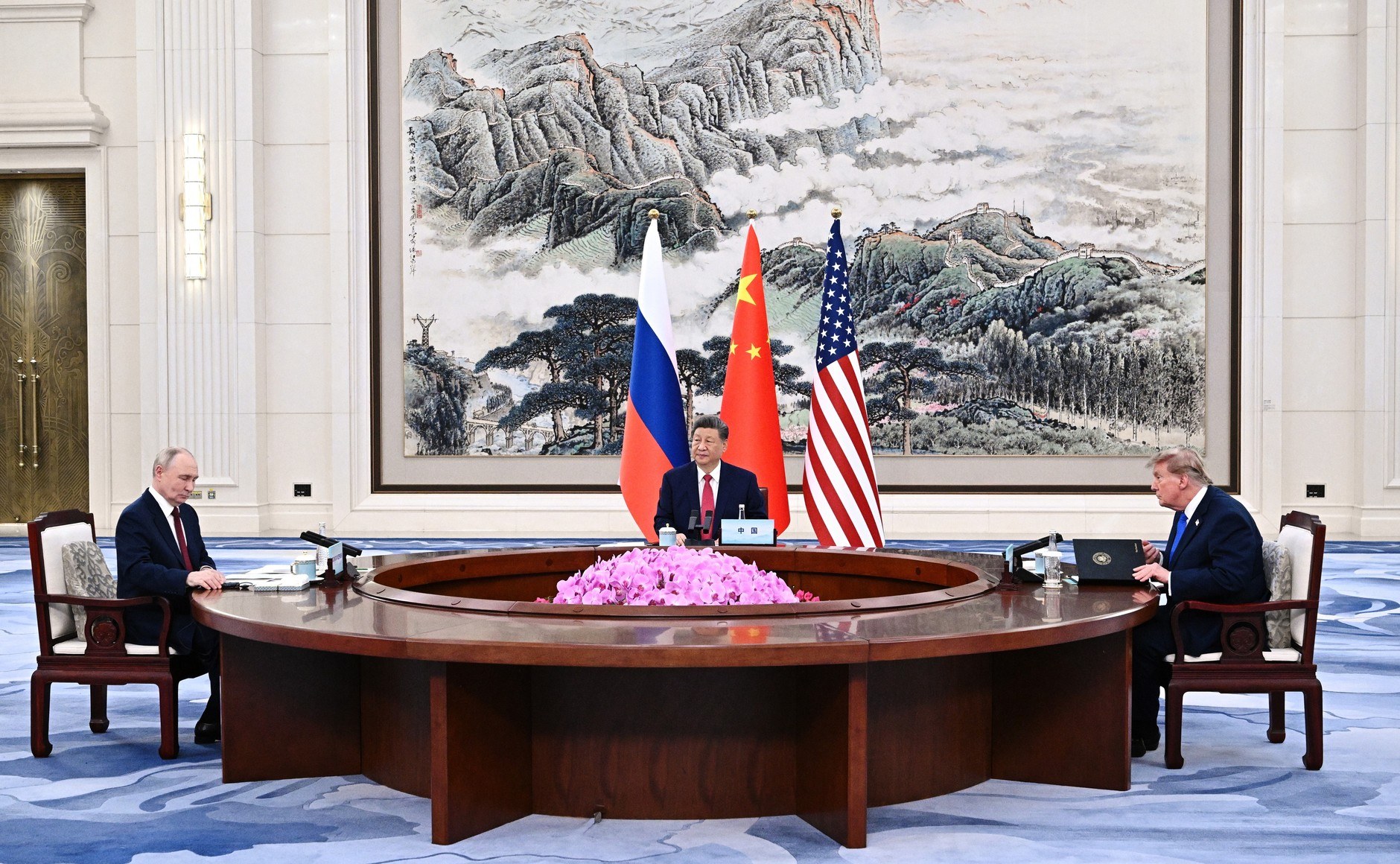
The three leaders' round-table session in Shenzhen on Nov. 19, 2026. Photo via the Kremlin's official website, licensed CC BY 4.0.
Did anyone push back?
The United Nations did, the same day. A U.N. spokesperson said "the pillar of the rule of law ... must be reinforced and not weakened," Anadolu Agency reported. Ukraine's foreign minister, Andrii Sybiha, wrote that "Shenzhen is not the Yalta of Putin's dreams," IntelliNews reported. The declaration does not mention Ukraine at all.
Some of the sharpest words came from Trump's own party. Sen. John Curtis, R-Utah, told the BBC he was "encouraged" by the nuclear commitment but said "Vladimir Putin and Xi Jinping are not our friends," according to the same IntelliNews report.
Is the nuclear pledge anything new?
The words are not. "A nuclear war cannot be won and must never be fought" is the line Ronald Reagan and Mikhail Gorbachev used in 1985, and the five permanent Security Council members repeated it in a joint statement on Jan. 3, 2022. Russia invaded Ukraine 52 days later, as Newsweek noted.
The new piece is a three-way "dialogue" with no date, venue or agenda. The last U.S.-Russia limit on deployed strategic weapons, New START, expired on Feb. 5. Trump was candid about the odds on the flight home. "It's very hard for somebody to say 'We have 4,000 nuclear weapons, we'll give up half,'" he said, as quoted by Reuters in the Fox News live blog.
What happens next?
On the court, the declaration changes nothing on paper. The ICC answers to the countries that ratified the Rome Statute, not to the three that refused. What it does change is the company America keeps on the issue. Washington's case against the ICC is about protecting U.S. troops and an ally that never consented to the court's reach. Putting it in a joint text with the one leader the court has charged over stolen children hands The Hague's defenders their easiest talking point.
On the bombs, watch for a date. Until the three governments name a time and place for the nuclear talks, the most concrete promise in Shenzhen is more refined fuel.
Top photo: Vladimir Putin, Xi Jinping and Donald Trump at the trilateral meeting in Shenzhen, China, on Nov. 19, 2026. Photo via the Kremlin's official website, licensed CC BY 4.0.















