President Trump on Saturday rejected Iran's seven-day plan to reopen the Strait of Hormuz, telling reporters Tehran only wants a deal "because they are losing so badly." Iran's president says the plan is the June Islamabad memorandum "broken down into stages." We read that memorandum line by line. It asks the United States to pay first, and it promised free passage through Hormuz for 60 days only.
What Did Trump Actually Turn Down?
Foreign Minister Abbas Araghchi announced the plan on Friday at the United Nations in New York, saying Iran had passed "a concrete seven-day plan" to Washington through Qatar. If "the necessary conditions are met," he said, the strait could reopen and normal shipping resume within a week.
The conditions all fall on the American side. According to Al Jazeera's summary of Araghchi's briefing, which cites The New York Times, the United States would release about $12 billion in frozen Iranian assets, lift oil sanctions and end its naval blockade of Iranian ports. Fighting would stop on every front, including Lebanon. Araghchi estimated the U.S. steps would take four or five days. Only then, on day seven, would the strait open and talks on a "final deal" begin.
Trump answered on Saturday morning before leaving for Tennessee. "I'm rejecting their deal," he told reporters, adding that the U.S. has "total control of the Hormuz Strait" and that "last night we had 29 ships come out." He called the offer one that "would not be acceptable." Earlier that morning he posted "IRAN CAN NOT HAVE A NUCLEAR WEAPON!!!" on Truth Social, CBS News reported.
Is This Really Just the June Deal Again?
Iran's own president says so. In an interview recorded Thursday and airing today on CBS's "Face the Nation," Masoud Pezeshkian told moderator Margaret Brennan that the new plan follows "the same path, with the same objectives" as the June memorandum. "The requests that were included in that memorandum and MOU have now been broken down into stages," he said, according to the CBS transcript.
That matters, because the June text is public. The 14-point Islamabad Memorandum of Understanding, signed remotely by Trump and Pezeshkian on June 17, is posted in full by the American Presidency Project at UC Santa Barbara. Every demand Araghchi listed on Friday maps onto a paragraph in it.
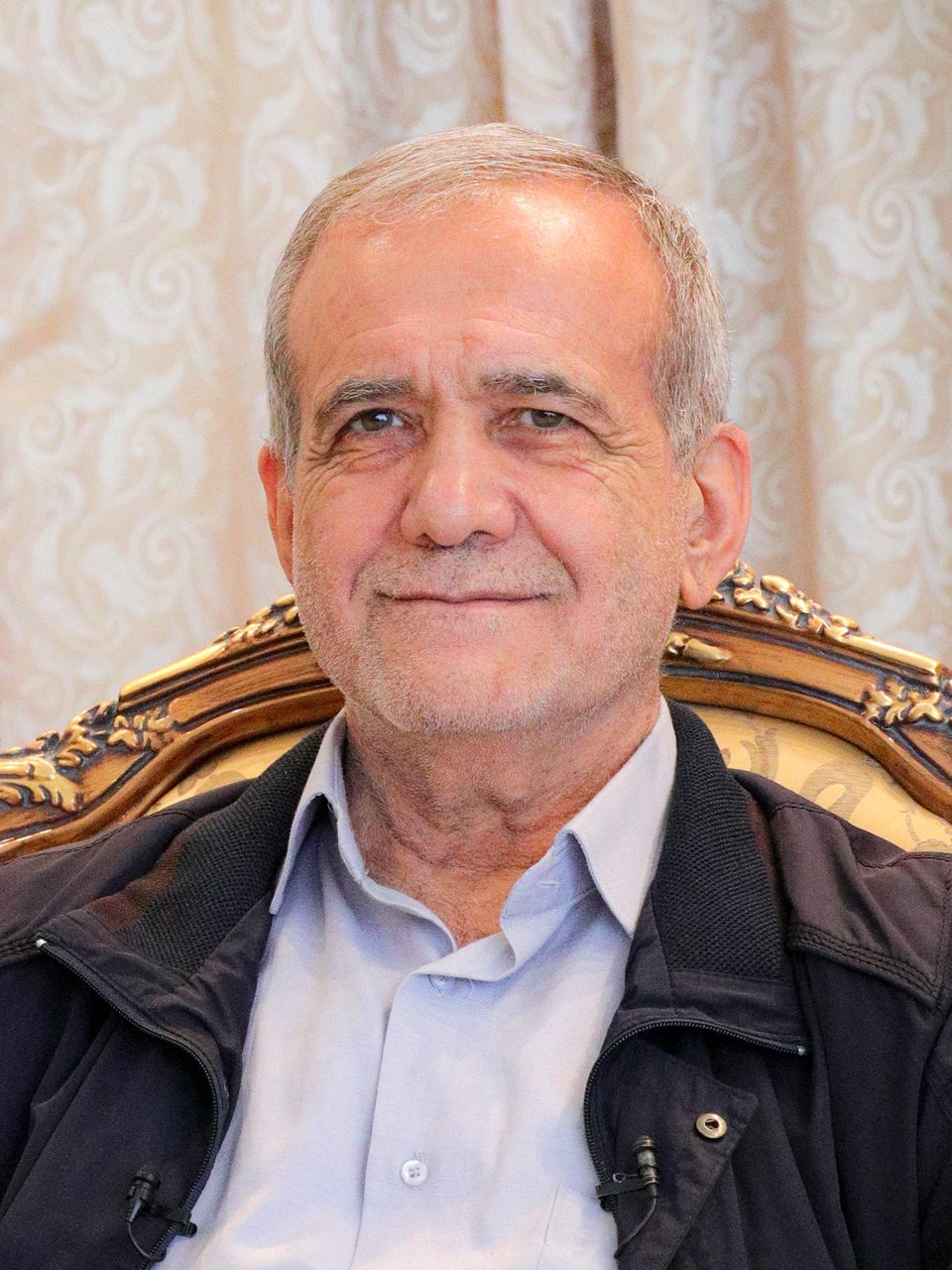
Iranian President Masoud Pezeshkian, pictured in 2024, told "Face the Nation" the new plan is the June memorandum "broken down into stages." (khamenei.ir via Wikimedia Commons, CC BY 4.0)
What Does the June Memorandum Say, Paragraph by Paragraph?
Paragraph 4 required the United States to "begin the removal of its naval blockade" the moment the memorandum was signed and to "fully end the naval blockade within 30 days." Paragraph 10 required Treasury to issue waivers for Iranian crude oil exports "immediately upon the signing." Paragraph 11 required Washington to make Iran's frozen funds "fully available for use." Paragraph 1 declared an end to military operations "on all fronts, including in Lebanon."
Put those next to Friday's offer. The blockade, the oil waivers, the frozen money and the Lebanon ceasefire are the same four items. What changed is the clock, and it only got shorter for one side. The blockade wind-down that could take up to 30 days in June is squeezed into four or five days now.
Iran's own obligation moved the other way. Under paragraph 5 of the June text, ship traffic was to "immediately start" upon signing, at the same time the U.S. began lifting the blockade. Under Friday's plan, the strait opens only on day seven, after the U.S. steps are done. Al Jazeera's Gabriel Elizondo put it plainly: Iran is "condensing the timeline and changing the sequence."
The part about nuclear talks did not change. Paragraph 13 of the memorandum says talks on the "final Deal" would start only after implementation of paragraphs 1, 4, 5, 10 and 11 had begun, with "the continuing implementation of these measures." America delivers, and then Iran negotiates. Friday's plan keeps that order and runs it faster.
Official record
Islamabad Memorandum of Understanding Between the United States of America and the Islamic Republic of Iran, June 17, 2026, paragraph 5. Full 14-point text via The American Presidency Project.
"Upon the signing of this MoU, the Islamic Republic of Iran will make arrangements using its best efforts for the safe passage of commercial vessels, with no charge for 60 days only, from the Persian Gulf to the Sea of Oman, and vice versa."
Islamabad Memorandum, paragraph 5
The American Presidency Project labels its copy a "draft" document, and the date and place lines in its version are blank. The paragraph wording matches the text reproduced elsewhere after the June 17 signing.
Why Do the Words "60 Days Only" Matter So Much?
Iran's side of the June bargain was narrow. Paragraph 5 promised "best efforts" for safe passage "with no charge for 60 days only." It did not promise free passage after that. The same paragraph handed Iran and Oman the job of defining "the future administration and maritime services in the Strait of Hormuz."
Iranian officials said openly what that meant. Al Jazeera reported in July that Iran intended to introduce transit fees once the 60-day window closed, and that Trump called any fees "unacceptable." The Islamic Revolutionary Guard Corps also demanded that ships use Tehran's designated routes and warned that vessels that didn't could be attacked.
Brennan asked Pezeshkian the direct question: "Will Iran charge money for passing through that strait?" He never answered it. He talked instead about routes "supposed to be determined between Iran and Oman," and said a ship passing outside them "was supposed to coordinate with them." That is a claim to manage an international waterway, and he made it on American television.
Did Iran Really Agree to Let Inspectors In?
CBS ran its web story under the headline that Pezeshkian "says Iran would allow nuclear inspectors." The full transcript is less generous. When Brennan asked whether Iran would let U.N. inspectors in "now," Pezeshkian said "That is absolutely correct," then spent his answer on the U.S. and Israeli strikes on Iran's nuclear sites.
Pressed again, with Brennan citing an IAEA finding of 440 kilograms of 60 percent enriched uranium, he gave the same three words and then added the condition. Inspections are something "we can reach accords and agreements vis-à-vis that specific topic within the negotiations," he said. "Not for them now to come and inspect those existing frameworks again."
So the offer is inspections as a future bargaining chip, after the blockade is gone and the money is released. The June memorandum handled the uranium the same way. Paragraph 8 put the stockpile on a schedule "that will be mutually agreed upon," with "down blending on-site" as the minimum, all inside the final deal. That deal never came. The IAEA Board referred Iran to the U.N. Security Council this month for safeguards noncompliance.
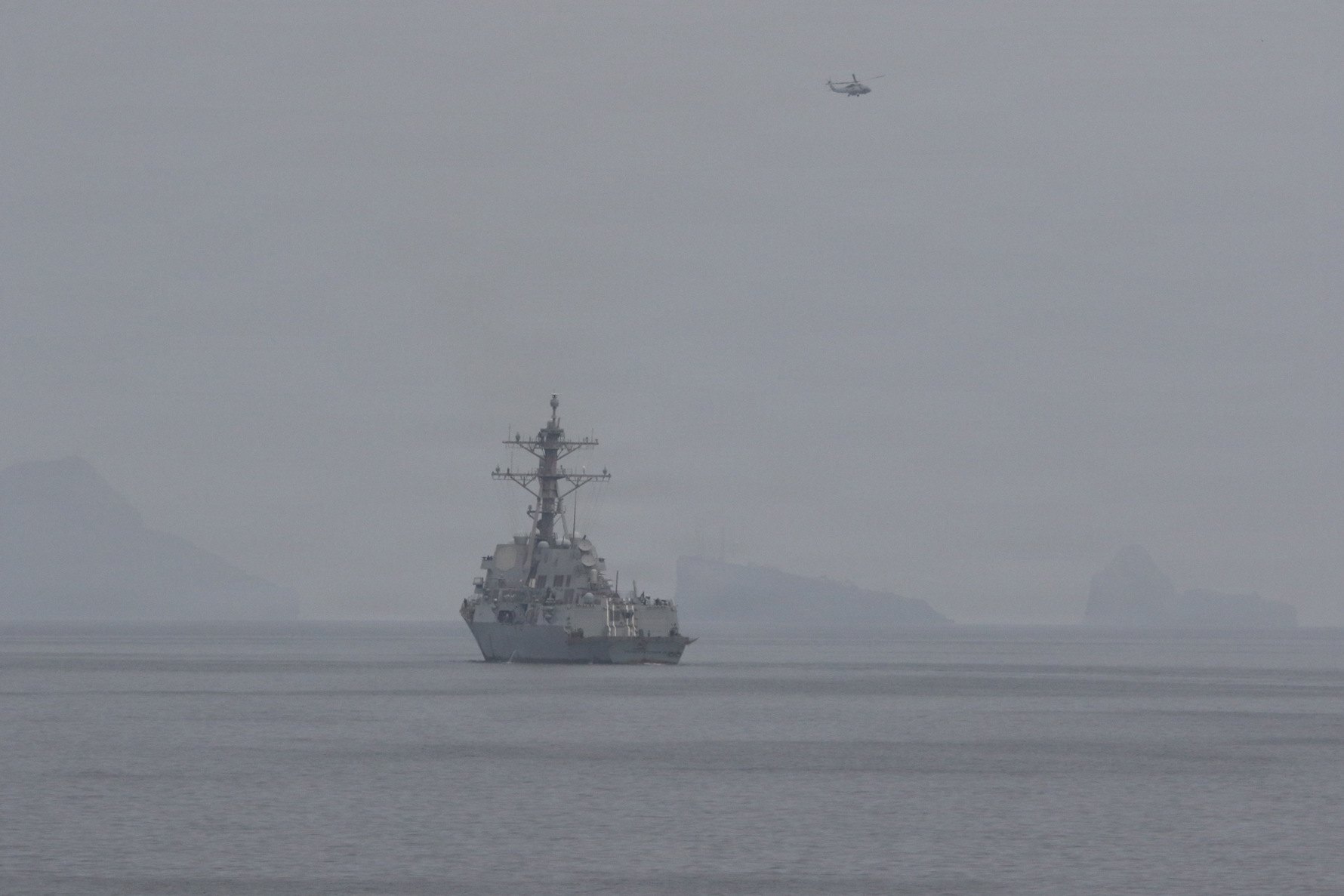
A U.S. Navy guided-missile destroyer operates in the Strait of Hormuz on April 11, as U.S. Central Command began setting conditions for mine clearance. (U.S. Central Command photo via DVIDS and Wikimedia Commons, public domain)
What Else Was Inside the Memorandum Tehran Wants Back?
Pezeshkian told reporters Thursday, per CBS News, "We wish Americans to return to the MoU before the midterms." Returning to the MoU means returning to all of it, including two paragraphs that got little attention this week.
Paragraph 6 committed the United States, "with regional partners," to develop a plan "with at least USD 300 Billion, for the reconstruction and economic development of the Islamic Republic of Iran." Paragraph 7 committed Washington to terminate "all types of sanctions" on Iran, including U.N. Security Council resolutions and IAEA Board resolutions, on a schedule set in the final deal. Neither paragraph appears in the headlines about a "seven-day plan." Both sit in the document Iran's president says the plan is built on.
Why Is Trump Holding Out?
Because he tried the June version and watched it fall apart. After the signing, CENTCOM lifted the blockade and the U.S. issued a 60-day general license for Iranian oil sales, records compiled on Wikipedia show. Within three weeks, at least five commercial ships had been attacked in and around the strait, and Trump said the truce was "over." Central Command reinstated the blockade on July 14, and it has redirected 122 vessels since then as of Friday, CBS News reported, citing CENTCOM.
Secretary of State Marco Rubio said this week's mediated talks in New York produced no breakthrough, and a U.S. official told Al Jazeera that Washington is in no hurry to respond. The Wall Street Journal, citing unnamed U.S. officials, reported that Trump told aides he expects a renewed bombing campaign after the November midterms. That is a single anonymously sourced report, and the White House has not confirmed it.
The cost at home is real. Brent crude was trading near $103 a barrel on Friday, according to CBS, and Iran knows gas prices are a midterm issue. Pezeshkian said as much by tying his offer to the election calendar.
What Happens Next?
Qatar is still passing messages, and both sides say the door is open. But the gap is plain on paper. Iran's plan puts every American concession in days one through five and every Iranian nuclear commitment after day seven. The June memorandum did the same thing over 30 days, and its promise of free passage ran out after 60.
Trump told the General Assembly on Tuesday that the only thing driving his decision is that "Iran will never have a nuclear weapon," per Al Jazeera, and Washington wants the nuclear file on the table now, not after the money moves.Iran's president went on "Face the Nation" and confirmed the order has not changed on his end. Until one side moves, the blockade stays, and so does the standoff in the strait.
Top photo: President Donald J. Trump signs the Islamabad Memorandum of Understanding at the Palace of Versailles on June 17, 2026, with Secretary of State Marco Rubio standing behind him and French President Emmanuel Macron seated at right. (Official White House photo by Daniel Torok via Wikimedia Commons, public domain)