President Trump signed a new executive order and a proclamation on September 18 extending his fight against H-1B visa abuse for another year, and the White House fact sheet released the same day leads with a striking number: a 92 percent drop in H-1B applications from the outsourcing firms he blames for replacing American workers with cheaper foreign labor. What that fact sheet does not mention anywhere is that a federal appeals court blocked the $100,000 fee at the center of this fight two months ago, and it still cannot be collected today.
What the new order actually changes
The executive order does not touch the fee itself. It orders the Secretaries of State, Labor and Homeland Security to start coordinating with the Secretaries of Commerce and Education and the Small Business Administration when they review H-1B petitions, pulling in wage, industry and academic data that used to sit in separate agencies. It also tells those three secretaries to weigh whether a sponsoring employer has laid off, or plans to lay off, American workers in similar roles before approving a visa. The Department of Labor's Wage and Hour Division has 30 days from the order to start combing back through old labor condition applications for grounds to act against employers.
Signed alongside it was a separate proclamation that does the heavier lifting: it extends the $100,000 H-1B entry fee, first imposed in September 2025, through September 21, 2027. Without it, the original restriction was set to lapse on September 20.
The numbers the White House is bragging about
The proclamation itself, not just the press release, lays out the case the administration is making. The largest IT staffing and outsourcing firms cut their combined H-1B registrations from 24,946 to 2,055, a 92 percent drop, since the fee took effect. Consular processing requests, the visas actually used to bring workers into the country, fell almost 97 percent. And the mix of who gets selected shifted upward: registrants with at least a U.S. master's degree rose from 45.1 percent of the pool to 66.1 percent, while jobs in the top two wage tiers accounted for 46.3 percent of selections against just 17.8 percent for the bottom tier.
More than 700 petitions have had the $100,000 payment attached since the fee first went into effect, according to the proclamation's own count. The administration reads all of this as proof the policy is doing exactly what it set out to do.
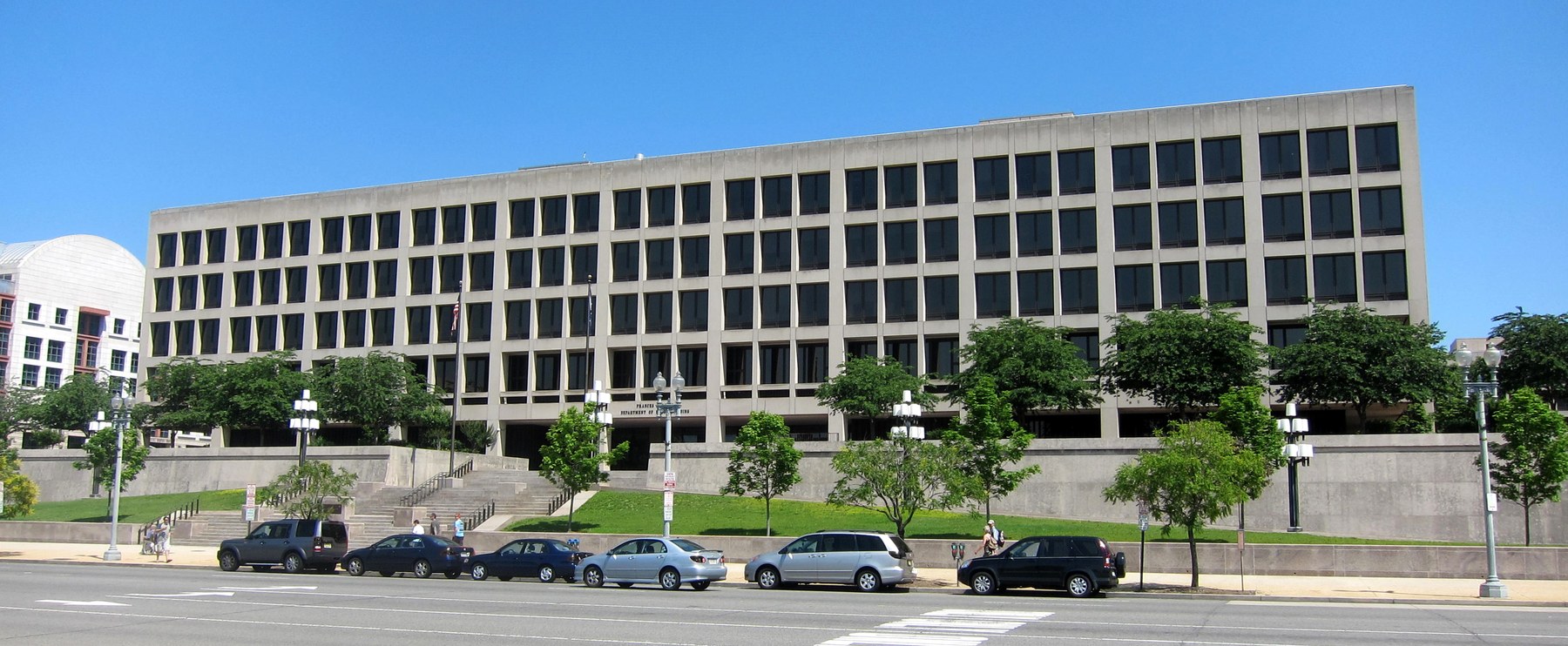
The Frances Perkins Building, home to the Department of Labor, whose Wage and Hour Division has 30 days under the new order to review old H-1B labor filings. (Wikimedia Commons, AgnosticPreachersKid, CC BY-SA 3.0)
Where the wage-gap numbers actually come from
The executive order is blunter than the fact sheet about why this matters to American workers specifically. It puts the wage gap between H-1B holders and comparable U.S.-born workers "starting at $9,000 and climbing as high as $20,000 in H-1B reliant industries," despite a statutory requirement that H-1B workers be paid the same as their domestic peers. The order quotes one company warning its own shareholders that limits on cheap H-1B labor could force it to hire "local" workers, which "may only be available at higher wages," as evidence of what employers were counting on.
It also repeats a line from a foreign government official that has circulated in immigration policy circles for years: that the H-1B program "has become the outsourcing visa" in the eyes of at least one other country's own foreign minister. Beyond wages, the order accuses some H-1B-reliant firms of submitting fraudulent diploma-mill degrees to qualify workers for specialty occupations, and of misrepresenting job duties and pay to avoid hiring Americans in the first place.
The court fight the announcement leaves out
None of this appears in the White House's own account of the last twelve months: a federal judge already ruled the fee illegal, and an appeals court has kept that ruling in force since July.
A coalition of state attorneys general sued over the fee in the U.S. District Court for the District of Massachusetts in December 2025. On June 8, 2026, Judge Leo Sorokin vacated the policy implementing the fee, ruling that neither of the immigration statutes the administration relied on gives the executive branch authority to impose what amounts to a $100,000 tax. Sorokin briefly stayed his own ruling days later while the government sought emergency relief, which temporarily put the fee back in force. That reprieve ended on July 24, 2026, when the First Circuit Court of Appeals denied the government's request to keep the fee active during its appeal, finding the government had not shown it was likely to win. The fee has not been collected since.
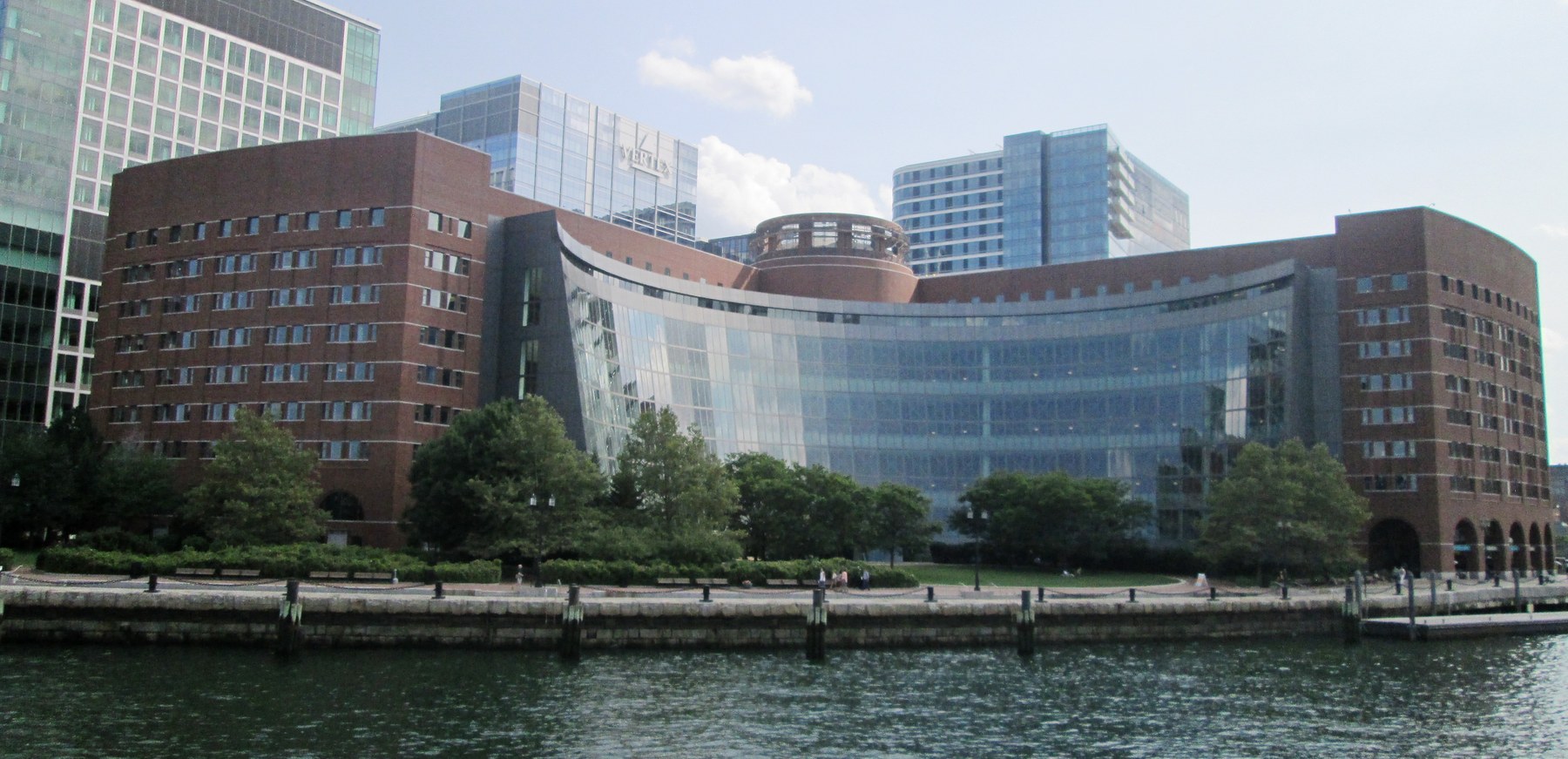
The John Joseph Moakley U.S. Courthouse in Boston, home to the federal district court and the First Circuit Court of Appeals that have kept the H-1B fee blocked since July. (Wikimedia Commons, Beyond My Ken, CC BY-SA 4.0)
Official record
Presidential Proclamation, Restriction on Entry of Certain Nonimmigrant Workers, signed September 18, 2026. No standalone PDF had been posted to the Federal Register as of publication; the White House's own text is the primary source below.
"Although the 2025 Proclamation and subsequent rulemaking have had the desired effects, the underlying conditions precipitating their issuance persist and, without an extension of the 2025 Proclamation, it is highly likely that progress will halt and program abuse will resume, undermining American workers and posing a threat to the labor market that would be detrimental to the interests of the United States." — Section 1 background, 2026 Proclamation
Why the fee still is not being collected right now
There is a legal wrinkle here that most coverage of Friday's signing skipped past. The courts did not strike down the proclamation itself. What Judge Sorokin vacated was the agency policy implementing it, the only thing the states actually asked a court to set aside under the Administrative Procedure Act. The proclamation was never enjoined. That is almost certainly why Trump could simply extend it again on September 18 without offering a new legal theory: on paper, nothing stops the paperwork from existing even while the payment mechanism sits blocked.
For employers filing new H-1B petitions with a worker still overseas, that distinction has real consequences right now. As of this week, U.S. Citizenship and Immigration Services is not supposed to be demanding the $100,000 payment for petitions covered by the Massachusetts ruling, even though the proclamation authorizing it just got renewed for another year. A separate case in Washington, D.C., where a different judge upheld the fee back in December 2025, is still working its way through the D.C. Circuit, meaning two federal appeals courts could end up disagreeing outright, a split that tends to end up in front of the Supreme Court.
The graduates this is supposed to help are still waiting
The administration's own document is candid about the part of the story that has not turned around yet. The proclamation puts the unemployment rate for recent college graduates at 5.7 percent as of June 2026, barely down from 5.8 percent when the fee first took effect in September 2025. Underemployment, meaning graduates working jobs that do not require a degree, actually rose over that same stretch, from 41.8 percent to 42 percent. The Federal Reserve Bank of New York's own tracking of the college labor market shows the same pattern independently.
Put those two facts next to each other and the administration's pitch gets more complicated than the fact sheet lets on. The policy has clearly changed corporate behavior, outsourcing firms are filing a fraction of the H-1B paperwork they used to, and the mix of visas granted has shifted toward higher pay and higher skill. What it has not yet done, by the government's own numbers, is meaningfully move the unemployment or underemployment rate for the young American graduates the whole policy is built around helping.
What happens next
The original restriction was due to expire on September 20, and the new proclamation pushes that date out to September 21, 2027, regardless of how the litigation resolves in the meantime. The merits of the government's appeal are still pending before the First Circuit, and the administration could still ask the Supreme Court for emergency relief to put the fee back in force before then. Until one of those things happens, the practical reality is stranger than either side's press release: the fee is legally extended for another year and functionally uncollectible today, at the same time.