A federal appeals court told the Trump administration Friday that it can't keep shipping migrants off to countries they've never set foot in without warning them first. Homeland Security's response, delivered on social media less than a day later, amounted to a shrug: the removals aren't stopping.
What the First Circuit actually decided
The U.S. Court of Appeals for the First Circuit, based in Boston, ruled September 18 in D.V.D. v. Department of Homeland Security that migrants facing removal to a "third country" (a country that isn't their homeland and wasn't named anywhere in their original deportation order) have to get real notice of where they're being sent and a genuine chance to argue they'd be tortured or persecuted there before it happens.
The panel of Judges Lara Montecalvo, Jeffrey Howard, and Seth Aframe didn't split on the core holding. Writing for the court, Judge Aframe put it plainly: "An individual's right to contest removal to a country based on a fear of persecution in that country means little if one does not receive prior notice of the intended removal destination and a meaningful opportunity to contest that destination."
It's worth being straight about who signed onto that language. Montecalvo and Aframe are both Biden appointees, confirmed to the First Circuit in 2022 and 2024. Howard, the third vote, was nominated by George W. Bush and confirmed 99-0 back in 2002. All three signed the same opinion. This wasn't two Democrat-appointed judges outvoting a Republican one.
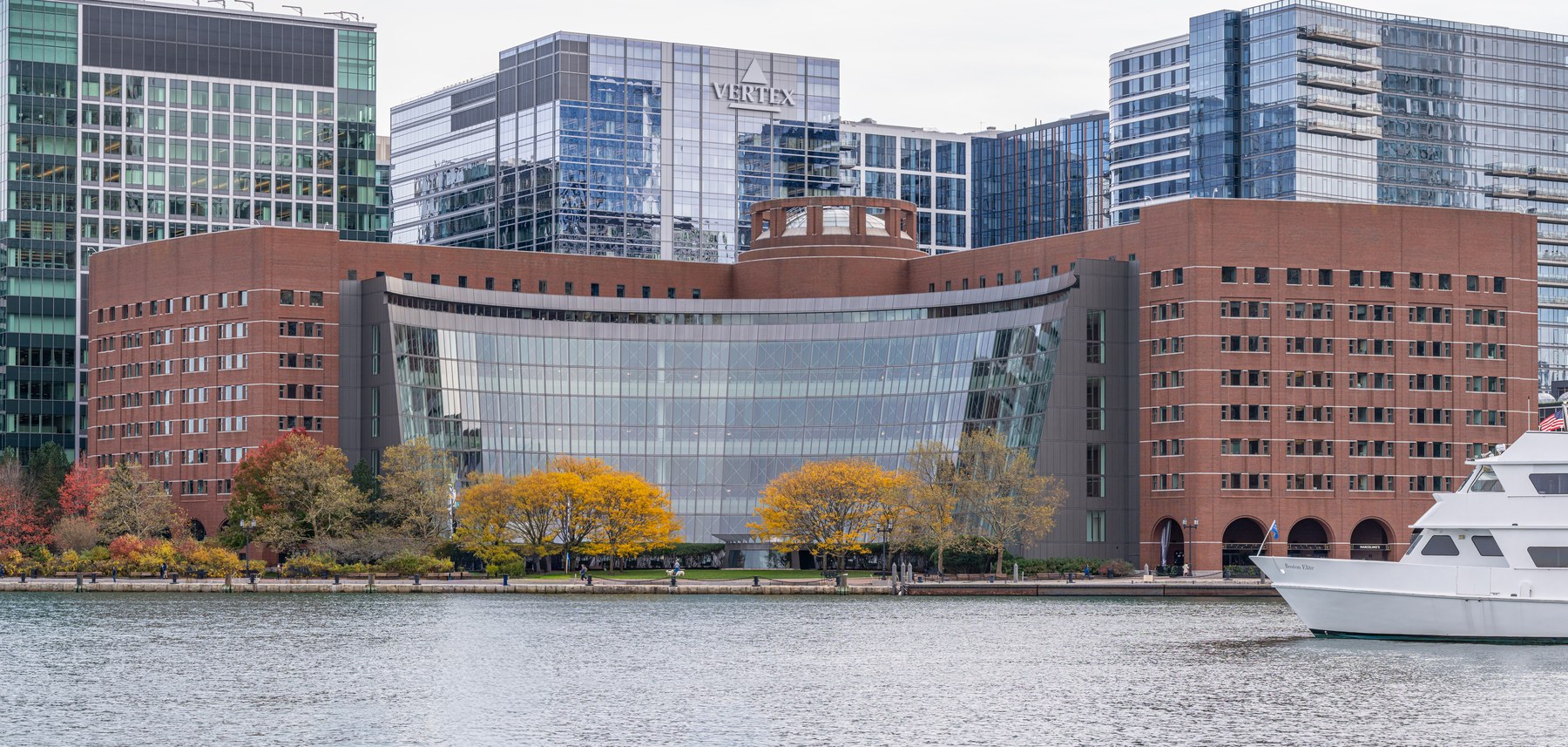
The John Joseph Moakley U.S. Courthouse in Boston, where the First Circuit Court of Appeals is based. (Ajay Suresh / Wikimedia Commons, CC BY 4.0)
The part of the ruling DHS actually won
Here's what most of Friday's headlines skipped over: the ruling wasn't a clean loss for the administration. The plaintiffs had also argued DHS must first attempt to deport someone to a country actually named in their removal order, or to a country where they're a citizen or national, before trying anywhere else. The First Circuit threw that claim out entirely.
"We agree with DHS that this claim must be dismissed, and the declarations based on this claim vacated, because the representative plaintiffs lack Article III standing," the panel wrote, tossing what the opinion calls the class's "sequencing" claim for good. That's a real, if quieter, win for Homeland Security buried under coverage built around the word "rejects."
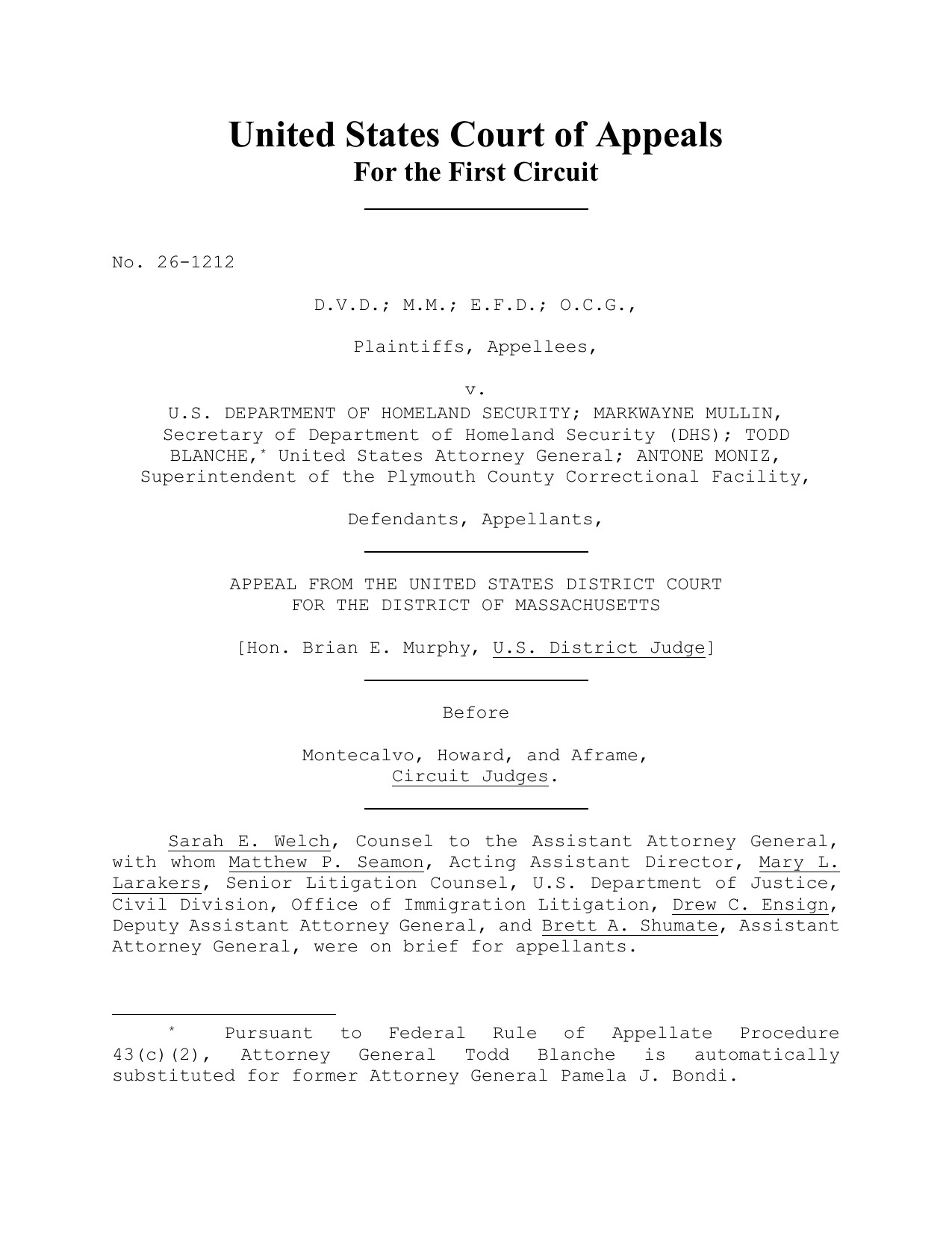
The opinion's cover page also quietly confirms a personnel change that hasn't gotten much attention: Attorney General Todd Blanche has been substituted in as a defendant for former Attorney General Pam Bondi, per a footnote citing Federal Rule of Appellate Procedure 43(c)(2). The case caption still lists DHS Secretary Markwayne Mullin by name, since he oversees the agency actually carrying out the removals.
DHS's answer: the deportations don't stop
DHS General Counsel James Percival didn't wait for a formal statement. He posted on X late Friday: "The third country deportation policy continues, as the First Circuit's ruling is not currently in effect. If you claim fear in your home country, DHS has the right to send you elsewhere," as CBS News reported.
That's not spin. The ruling doesn't come with an immediate enforcement order, and the administration has already signaled it plans to appeal, most likely straight to the Supreme Court. Given that the justices have already weighed in on this exact case twice, in June and July of 2025, both times siding with the administration on emergency applications, there's real precedent for DHS's confidence that a third trip to One First Street won't go badly for them either.

DHS Secretary Markwayne Mullin, named as a defendant in the case. (Department of Homeland Security, public domain)
The National Immigration Litigation Alliance, which represents the plaintiffs, read the same ruling in exactly the opposite way. Executive director Trina Realmuto told CBS the panel "clearly held that the government cannot evade protections against persecution and torture by simply changing the deportation destination," adding that class members have spent over a year being sent to countries "they had never been told they could be removed to." Both sides are reading the same 55 pages and walking away certain they won.
A fight that's already been to the Supreme Court twice
This case has been grinding through the courts since early 2025, when U.S. District Judge Brian Murphy in Boston first blocked rapid third-country removals after DHS tried to send a group of migrants to South Sudan, a country the State Department itself considers too dangerous for most American personnel. The Supreme Court stayed Murphy's order in June 2025, then clarified in July that the stay applied in full, clearing the way for eight men to be deported to South Sudan despite the ongoing litigation.
Murphy went on to rule again in February 2026 that DHS's entire third-country removal framework was unlawful under the Administrative Procedure Act, and the First Circuit initially stayed that order too, in March, before Friday's opinion mostly upheld it. It's been a genuine back-and-forth, not a straight line, and Friday's ruling is just the latest lap.
Who actually ends up on these flights
The named plaintiffs in the case aren't abstractions. One of them, identified in the opinion only as O.C.G., is a Guatemalan man who had already won a form of protection from an immigration judge, called withholding of removal, that specifically barred sending him back to Guatemala over fear of persecution there. DHS removed him to Mexico anyway, and Mexican authorities then deported him on to Guatemala, the very country a U.S. judge had ruled off-limits.
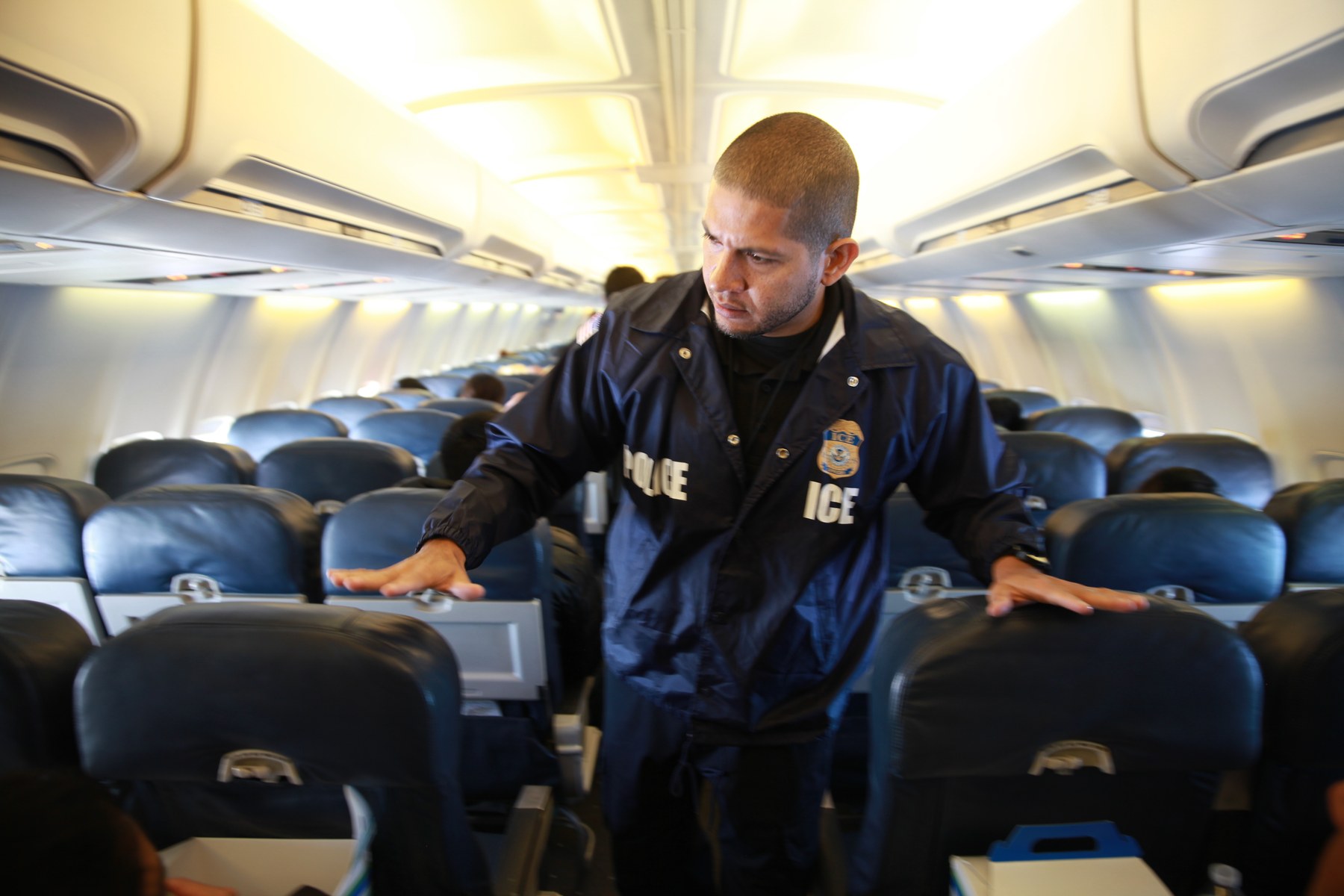
An ICE Enforcement and Removal Operations officer aboard a removal flight. Photo illustrates standard ICE Air operations, not the specific flights named in this case. (ICE, public domain)
According to CBS News, more than 25,000 migrants have been deported to third countries under this administration, with roughly 80 percent of them sent to Mexico. The government has struck third-country removal agreements with more than 30 nations, including Liberia, where a group of Latin American deportees, citizens of Brazil, Colombia, Guatemala, Honduras, and Venezuela among them, told CBS this week they'd been dropped off with no advance word they were headed to West Africa at all. One of them, a Honduran man named Elvis Rodriguez Venturas, told CBS News, "I'm concerned. I feel far away, on the other side of the world." That's precisely the kind of case Friday's ruling is aimed at preventing going forward, assuming it survives the appeal DHS is already gearing up for.
None of this started as a Trump administration invention out of nowhere. Sending deportees to a country other than their own has legal precedent going back decades, and the underlying rationale, that a person with no legal right to stay in the United States still has to go somewhere, isn't in serious dispute. What's been litigated for over a year is narrower: how much warning that person gets, and whether they have a real chance to say a specific destination would get them killed, before a plane leaves the ground.
What happens next
Nothing about Friday's ruling forces DHS to pause a single flight today. The agency's own general counsel said as much within hours. What it does is set up round three at the Supreme Court, on a narrower question than before: not whether third-country removals can happen at all, but how much notice and process a migrant is owed before they do.
That's a real fight, and not a small one. But it's worth being honest about what actually shifted here. DHS lost the notice-and-opportunity piece it already expected to lose given Murphy's track record, and it won outright on the broader "sequencing" theory that could have forced the agency to justify every third-country removal against a longer list of alternatives first. Two sides can call that a win. Only one of them has to keep running the deportation flights while the appeal plays out, and Secretary Mullin's department has already said it intends to.