A federal grand jury in the Dallas area unsealed a seven-count indictment on Sept. 10 against a Venezuelan gang leader known as "Nairobi," charging him with providing material support to a foreign terrorist organization, narcotics trafficking and money laundering. The timing is not an accident. Colombian police dragged him out of a Bogota apartment two weeks earlier, and the man he answered to is already dead.
The man they call "Nairobi"
Luis Saul Paez Nieto, 39, goes by "Paez" or "Nairobi" depending on which country's police file you read. Colombia's National Police, working with the GAULA anti-kidnapping unit, the Attorney General's office, Peruvian organized-crime investigators and the DEA, tracked him to a residential building in the Fontibon district of Bogota after seven months of surveillance. He was arrested there on Aug. 27, according to the Colombian National Police's own announcement.
He had been in Colombia for about a year, Colombian authorities said, running Tren de Aragua's operations in Peru from there. Investigators tie him to arms and drug shipments moving through Venezuela, Peru, Chile, Bolivia and Ecuador on their way north. He also has a personal history with the gang's founder that goes back further than any of that: according to police, Paez Nieto helped stage the 2023 breakout from Venezuela's Tocoron prison alongside Hector Guerrero Flores, known as "Nino Guerrero," through a series of tunnels dug under the cell block.
What the indictment actually charges
The Northern District of Texas grand jury accused Paez Nieto of providing material support to a designated foreign terrorist organization, conspiring to launder money and trafficking cocaine, methamphetamine and ketamine into the United States, according to CWB Chicago's reporting on the unsealed filing. The indictment describes him as a trusted facilitator who moved money and orders for Guerrero Flores and for a Peru-based faction responsible for the drug shipments.
It also lays out how the gang runs its business day to day. Local cells send a cut of whatever they steal, extort or smuggle up to leadership. Members who come up short get threatened, beaten or killed, the filing says. Revenue comes from drug trafficking, illegal gold mining, gun running, human smuggling, sex trafficking, kidnapping, robbery, ATM jackpotting and extortion, a spread that reads less like a street gang's rap sheet and more like a cartel's balance sheet.
Paez Nieto faces up to 20 years on each of the two terrorism counts and another 20 for the money-laundering conspiracy. The drug counts carry sentences ranging from 10 years to life.
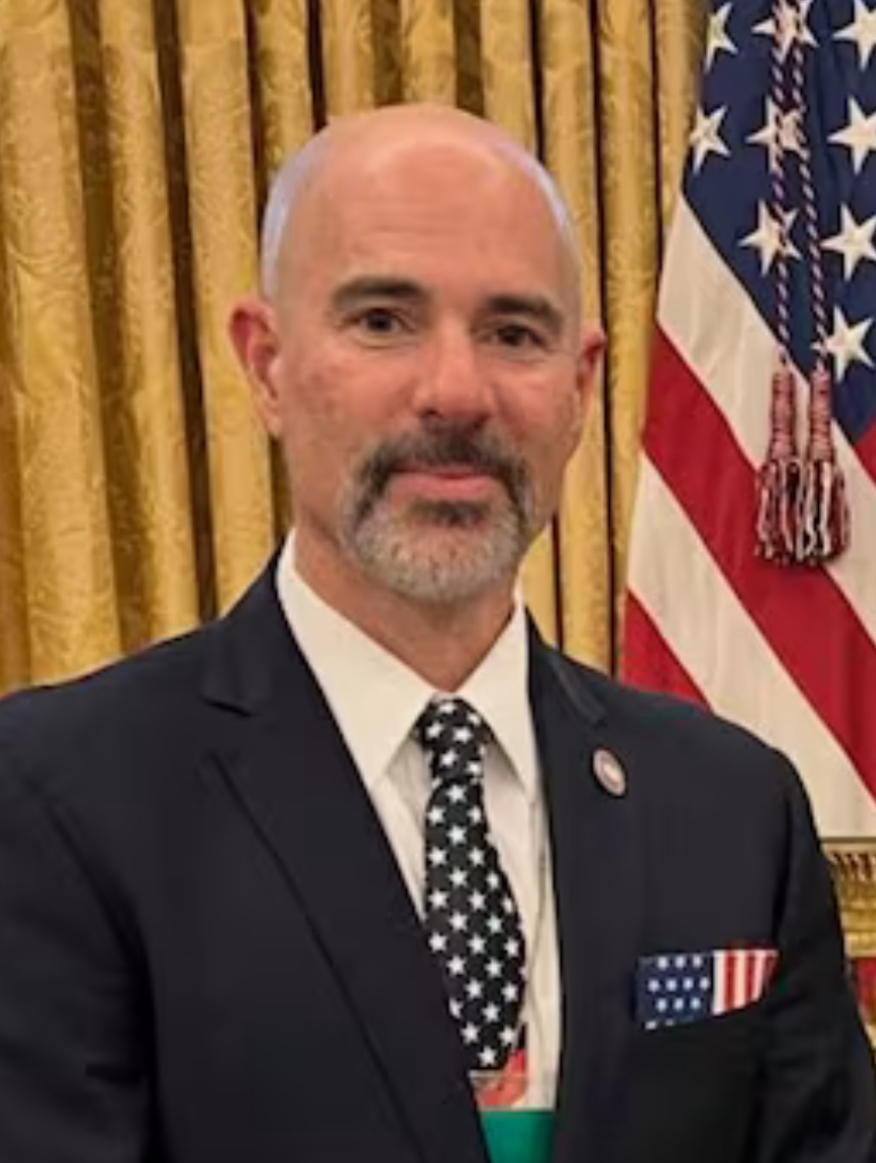
DEA Administrator Terry Cole, who said the arrest "hits TdA where it hurts." Official White House photo, public domain.
DEA Administrator Terry Cole framed the arrest as proof that the agency's partnership with Bogota is paying off. "This arrest hits TdA where it hurts and demonstrates what determined partnerships can do," Cole said in a statement after the Colombian raid. "DEA is proud to stand with Colombia." U.S. Southern Command, which coordinates military cooperation across Latin America, issued its own praise the same day, tying the arrest to the Americas Counter Cartel Coalition that Colombia joined in mid-August.
The boss he worked for is already dead
Guerrero Flores did not live to see any of this. American and Venezuelan forces killed him in a strike on a house in Las Claritas, in Venezuela's Bolivar state, on the night of June 12, according to CNN's reporting on the operation. He had been on the run since Venezuelan authorities retook Tocoron prison in 2023, and investigators say he was sheltering under the protection of another senior TdA figure, Yohan Jose Romero, when the strike hit.
That leaves a hole at the top of an organization the State Department still considers a live threat. Guerrero Flores built Tren de Aragua from a prison protection racket into an operation with reach across seven or eight countries, and somebody has to run the parts of it he built. Federal prosecutors and Colombian police both describe Paez Nieto as one of the men positioned to inherit pieces of that network, not just a courier who happened to get caught.
Hector Rusthenford Guerrero Flores, alias "Nino Guerrero," in the State Department's own reward-notice photo. The department's page for him is now marked "(Deceased)." Photo: U.S. Department of State, public domain.
Official record
State Department, Reward for Information: Hector Rusthenford Guerrero Flores, Narcotics Rewards Program, originally offering up to $5 million, now archived and marked deceased.
"Tren de Aragua is a terrorist cartel that exploits our borders to bring murder, drugs, and chaos into American communities." — Deputy Attorney General Todd Blanche, Justice Department announcement on the broader TdA prosecution effort
The same Justice Department release puts a number on that effort: more than 260 alleged TdA members federally indicted since January 2025, across five U.S. Attorney's offices working under Joint Task Force Vulcan, the unit originally built to dismantle MS-13.
Chicago said this gang was a myth. It wasn't.
Tren de Aragua's American footprint has been argued over since it first showed up in headlines. In October 2023, the Chicago Police Department, citing intelligence from the Cook County Sheriff's Office, warned officers the gang had a presence in the city's migrant population. The Chicago Sun-Times pushed back within weeks, reporting "scant evidence" of any real TdA presence among the roughly 20,000 Venezuelan migrants who had arrived by then, based on a review of police reports involving shoplifting and domestic violence arrests.
Two years later, prosecutors in Chicago and Dallas have tied TdA members to murders, kidnappings, human trafficking and gunrunning in the city, exactly the pattern the Sun-Times said the evidence didn't support. Paez Nieto's indictment does not touch Chicago directly. But it lands in a federal court system that has spent the past two years building the exact case file Chicago's own newspaper said didn't exist.
How a prison gang became a hemisphere-wide problem
Tren de Aragua traces its roots to Tocoron, a Venezuelan prison the gang effectively ran as its own compound, complete with a restaurant, a bar and a swimming pool, before authorities retook it in 2023. From there it followed the same migration routes that carried millions of Venezuelans out of the country and into Colombia, Peru, Chile and eventually the United States. The State Department designated it a foreign terrorist organization and Specially Designated Global Terrorist on Feb. 20, 2025.
That designation is what makes Paez Nieto's terrorism counts possible at all. Before the designation, prosecutors could only charge TdA members with the underlying crimes: trafficking, kidnapping, murder. Now providing "personnel and services," including simply being a member who does the gang's work, is itself a federal terrorism offense carrying decades in prison.

Attorney General Pam Bondi. Her Justice Department has made Tren de Aragua prosecutions a standing priority, arguing the gang is "not a street gang" but a structured terrorist organization. Official DOJ portrait, public domain.
Bondi's Justice Department has said as much publicly and repeatedly. In an earlier case against another high-ranking TdA figure charged in the Southern District of Texas, she put it this way: "TdA is not a street gang, it is a highly structured terrorist organization that put down roots in our country during the prior administration." Whether or not every reader agrees with that framing of blame, the underlying claim, that TdA operates with a command structure sophisticated enough to warrant terrorism charges rather than ordinary racketeering counts, is now the working theory of half a dozen U.S. Attorney's offices at once.
What happens next
Paez Nieto remains in Colombian custody pending extradition proceedings, the standard path for TdA leaders captured abroad before they answer to the Texas indictment in person. He will join a growing docket. Federal prosecutors in the Southern and Northern Districts of Texas alone have four separate TdA cases running, and the Justice Department's nationwide count keeps climbing every few months.
None of it puts Guerrero Flores back in charge, and none of it undoes the argument over whether Chicago, and cities like it, should have listened sooner to the warnings their own police departments issued in 2023. What it does confirm is that the gang survived losing its founder. Someone still has to run the routes, collect the cuts and keep the cells in line. Federal prosecutors just told a jury, in writing, who they think that someone was.