President Trump sent the Senate a nomination on September 14 that fills a job his own administration left open for 20 months: Ambassador at Large for International Religious Freedom. His pick is Jane "Cissie" Graham Lynch, granddaughter of Billy Graham and daughter of Samaritan's Purse CEO Franklin Graham. The reason the post sat vacant for so long, according to NBC News, has less to do with policy than with a North Carolina Senate primary that ended three years ago.
Official record
"Nominations Sent to the Senate," The White House, Sept. 14, 2026.
"Jane Lynch, of North Carolina, to be Ambassador at Large for International Religious Freedom." — the full 42-name nomination batch transmitted to the Senate that day
Read the full transmittal on whitehouse.gov. No standalone PDF or Congress.gov nomination number (PN) had posted as of publication; the referral is public record on the White House's own site.
What This Ambassador Actually Does
The job was created by Congress in the International Religious Freedom Act of 1998. Whoever holds it becomes the executive branch's top official on the subject, advising the president and the secretary of state directly on which governments are jailing pastors, bulldozing churches, or locking up religious minorities, and what the United States plans to do about it. The office is separate from the U.S. Commission on International Religious Freedom, an independent watchdog agency that monitors the same problem from outside the State Department.
Six people have held the ambassadorship since 1999, according to Baptist News Global's rundown: Robert Seiple under Bill Clinton, John Hanford under George W. Bush, Suzan Johnson Cook and David Saperstein under Barack Obama, Sam Brownback in Trump's first term, and Rashad Hussain under Joe Biden. Every one of them was Senate-confirmed within roughly a year of being picked. Lynch's nomination breaks that pattern only because of what happened to the person Trump tried to put there first.
Who Cissie Graham Lynch Is
Lynch has worked for Samaritan's Purse and the Billy Graham Evangelistic Association since 2010, most recently as communications director, and traveled with both organizations to document religious persecution abroad. She served on the Executive Evangelical Advisory Board of Trump's Faith Advisory Council during his first term and spoke at the 2020 Republican National Convention, where her remarks on transgender athletes in girls' sports drew a rebuke from the Human Rights Campaign, which called the comments "dehumanizing," according to NBC News's coverage of that speech at the time.
Her father made the nomination public himself. "Cissie is uniquely qualified for this. She has traveled the world and been a student of this issue for many years," Franklin Graham wrote, adding that she has "a broad worldview and knowledge of the issues facing religious freedom today," in a statement carried by the Christian Post. Lynch answered on X that she would consider it "a great honor and privilege" to serve, asking supporters to pray that she would have wisdom if confirmed.
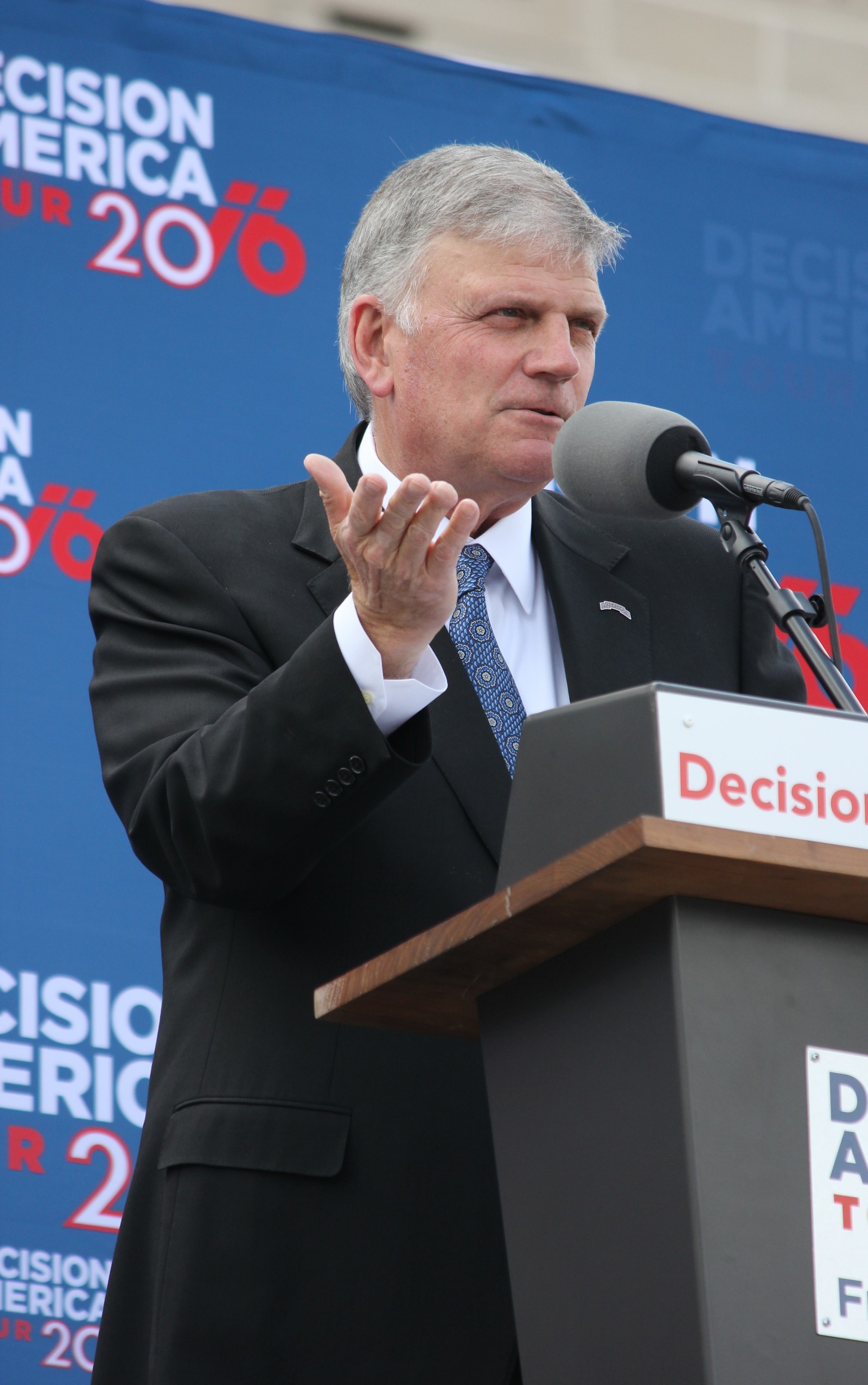
Franklin Graham, Cissie Graham Lynch's father and CEO of Samaritan's Purse, at a 2016 Decision America Tour stop in Lincoln, Nebraska. Photo by Matt Johnson via Wikimedia Commons, CC BY 2.0.
Why This Job Sat Empty for the First 20 Months of Trump's Second Term
Trump did not wait until this month to try filling the post. He nominated former North Carolina congressman Mark Walker, a Baptist minister who chaired the Republican Study Committee, on April 10, 2025. On Truth Social that day, Trump wrote that Walker would "work incredibly hard to expose Human Rights Violations, champion Faith, and help us secure Life Saving Results." Walker never got a confirmation hearing. His nomination expired automatically when the Senate adjourned at the end of 2025, a fate Baptist News Global confirms befell him without a floor vote of any kind.
That is not how noncontroversial State Department nominations usually go. Senate Foreign Relations Committee Chairman Jim Risch confirmed 67 of Trump's nominees through the panel last year, with 78 expected by year's end. Walker was one of only 25 who did not make it, and NBC News reported he waited eight months without so much as a hearing date while people nominated well after him were already sworn in.
The North Carolina Grudge Behind the Delay
NBC News, citing a Trump administration official and two other Republican sources, reported that one senator worked behind the scenes to keep Walker's nomination from ever reaching a hearing: Ted Budd, Walker's own home-state colleague. The two North Carolinians ran against each other in the bitterly contested 2022 Republican Senate primary to replace retiring Sen. Richard Burr. Budd, backed by Trump's endorsement, won. Walker went on to endorse Budd in the general election anyway.
A Washington lawyer who works with the Foreign Relations Committee did not mince words to NBC News, calling it "an open secret in Washington that Ted Budd has decided to turn a lifesaving human rights post into collateral damage of unresolved intraparty politics." Ben Carson, who serves with Walker in a Wednesday Bible study of current and former Cabinet officials, told NBC he suspects "a few people in the Senate who may have a grudge" over old primary wounds.
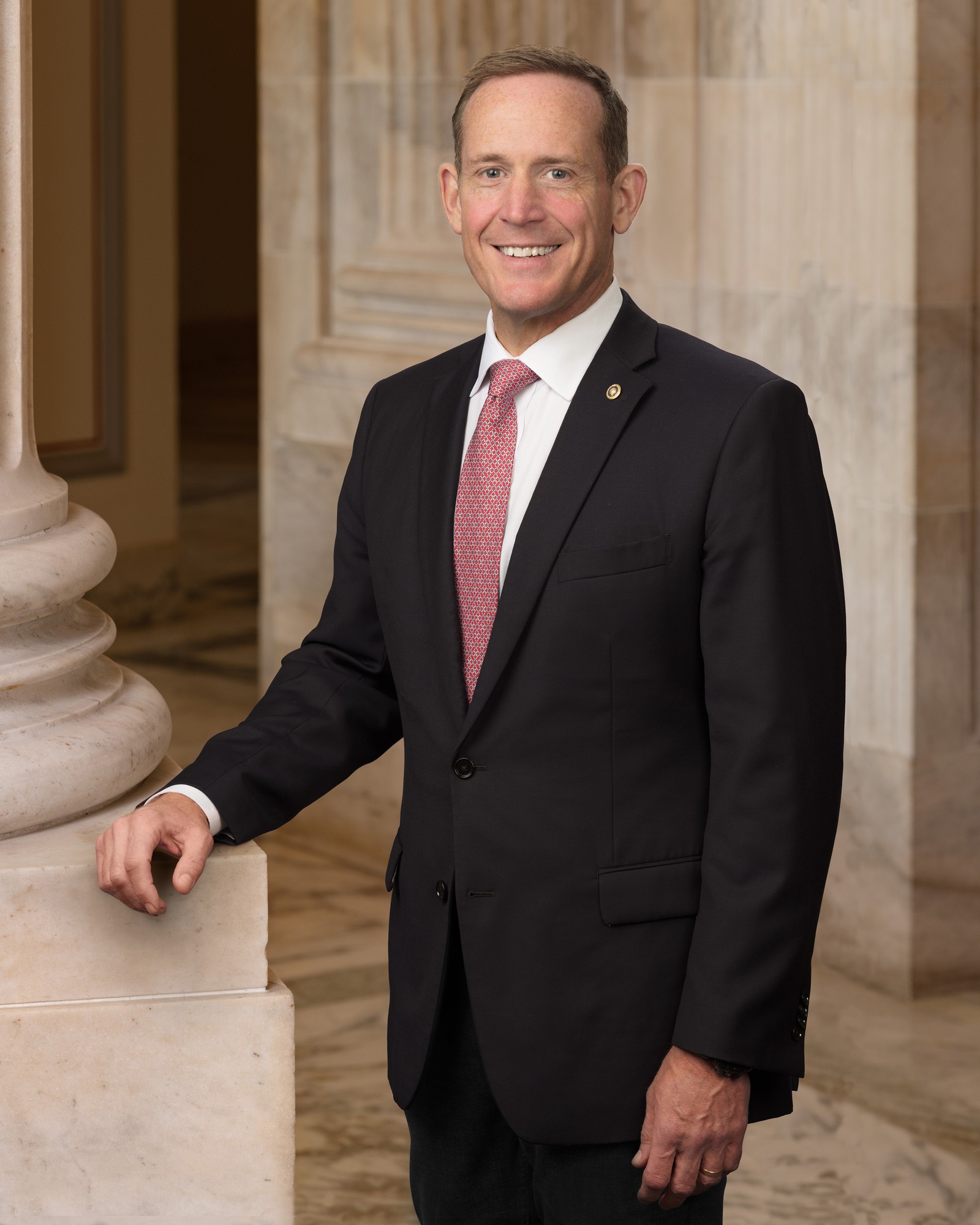
Sen. Ted Budd, R-N.C. His office denies deliberately blocking Mark Walker's nomination but says he has other concerns about the pick. Official Senate portrait, public domain.
Budd disputes the characterization directly. His spokesman told NBC that Budd "is not a member of the Senate Foreign Relations Committee" and "would vote in favor" if Walker's nomination reached the floor. Budd later told NBC on the record that he is "not the problem here" and would support the president's nominee in a vote, while adding he wants to "make sure the president has someone qualified" and taking a jab at Walker's 2022 primary finish: "I wouldn't consider somebody who had 8% of the vote a political rival." Committee Chairman Risch, for his part, told Breitbart his panel moves nominations "in consultation with the priority given by the White House," and said flatly of Walker's, "This nomination does not fit in either category."
Walker's Own Words While He Waited
Walker did not go quietly. "Many have reached out for help, and my being delayed from fighting for people imprisoned, tortured and killed simply for their faith, has been quite frustrating," he told NBC News in a statement last year. Trump himself was asked about the holdup in the Oval Office and said he was unaware of a problem, calling Walker "a high-quality person." A White House spokeswoman said at the time that the president "wants all of his nominees confirmed as quickly as possible, including Mark Walker."
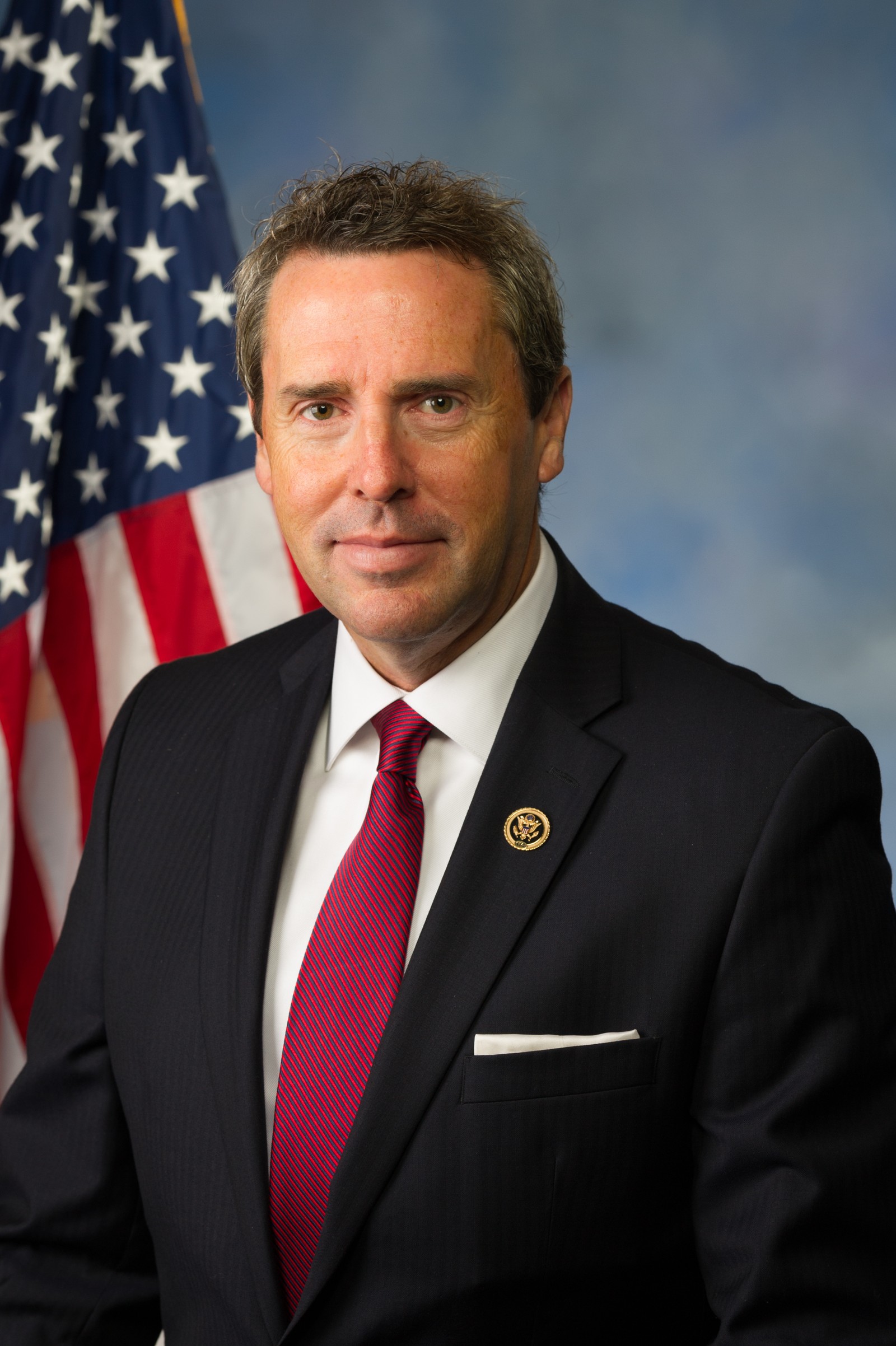
Former U.S. Rep. Mark Walker, R-N.C., Trump's first choice for the ambassadorship. His nomination expired without a Senate hearing at the end of 2025. Official congressional portrait, public domain.
None of that moved the needle before the Senate calendar ran out. Walker's nomination died with the session, and he took a subordinate post advising the State Department on global religious freedom rather than the Senate-confirmed ambassadorship itself. Isaac Six has run the office's day-to-day operations as its senior official since July 2025, per Baptist News Global, while the ambassador's chair sat empty through last Christmas, this year's Easter, and Rosh Hashanah, which begins Friday.
A Fuller Bench: Three New Commissioners Alongside Her
Trump did not stop at the ambassadorship. The same week, he named three new commissioners to the separate U.S. Commission on International Religious Freedom: Bishop Robert Barron of the Diocese of Winona-Rochester, former Turkish-detained missionary Andrew Brunson, and former Domestic Policy Council Director Joe Grogan. USCIRF said in a statement that the appointments give the nine-seat, bipartisan commission its full complement of members for the first time in years.
"President Trump's announcement is a vital step in advancing the human right of freedom of religion or belief abroad," USCIRF Chair Asif Mahmood said in the commission's release, adding that USCIRF "calls for a swift confirmation process for IRF Ambassador-Designate Lynch." Vice Chair CeCe Heil called the new slate proof that "USCIRF's full bipartisan composition further supports our efforts to advance religious freedom abroad for all."
What Happens Next
Lynch's nomination still needs Senate confirmation, and no hearing date has been set. Republicans hold 53 seats to Democrats' 47, meaning a party-line vote could confirm her without a single Democratic vote, the same math that got Sam Brownback across the finish line in 2018 when Vice President Mike Pence broke a tie. Whether Budd's stated support survives contact with an actual floor vote, and whether Chairman Risch schedules a hearing any faster than he did for Walker, are the two real open questions.
What is not in question is the cost of the delay already spent. Every month without a Senate-confirmed ambassador is a month religious minorities overseas, Christian, Muslim, Jewish, Baha'i, and otherwise, went without America's top advocate speaking for them by name in Washington. Franklin Graham's daughter now inherits that in-box on top of her own confirmation fight. The Religious Freedom Institute, which welcomed her nomination this week, put it plainly: the global state of persecution does not pause for Capitol Hill's grudges, even when Capitol Hill does.