American consumer confidence just fell to its lowest level since 2014, and the government's own hiring data shows where the pain is landing first. Job openings at businesses with fewer than 10 employees dropped by 335,000 in August, more than the entire private-sector decline. Every larger size class of employer posted more openings, not fewer.
Confidence Fell Off a Cliff in September
The Conference Board reported Tuesday that its Consumer Confidence Index fell 6.7 points to 81.9, down from 88.6 in August. Economists polled by Reuters had expected 89.2, according to Quartz. It was the lowest reading since 2014.
Both halves of the index broke lower. The Present Situation Index fell 7.9 points to 109.3. The Expectations Index, which measures the six-month outlook, slid 5.9 points to 63.6 for its third straight monthly decline.
"Consumer appraisals of current business conditions became negative for the first time since September 2024," said Dana Peterson, the Conference Board's chief economist. The board also noted that confidence fell among Democrats, Republicans and Independents alike. This is not one party's voters sulking about an election.
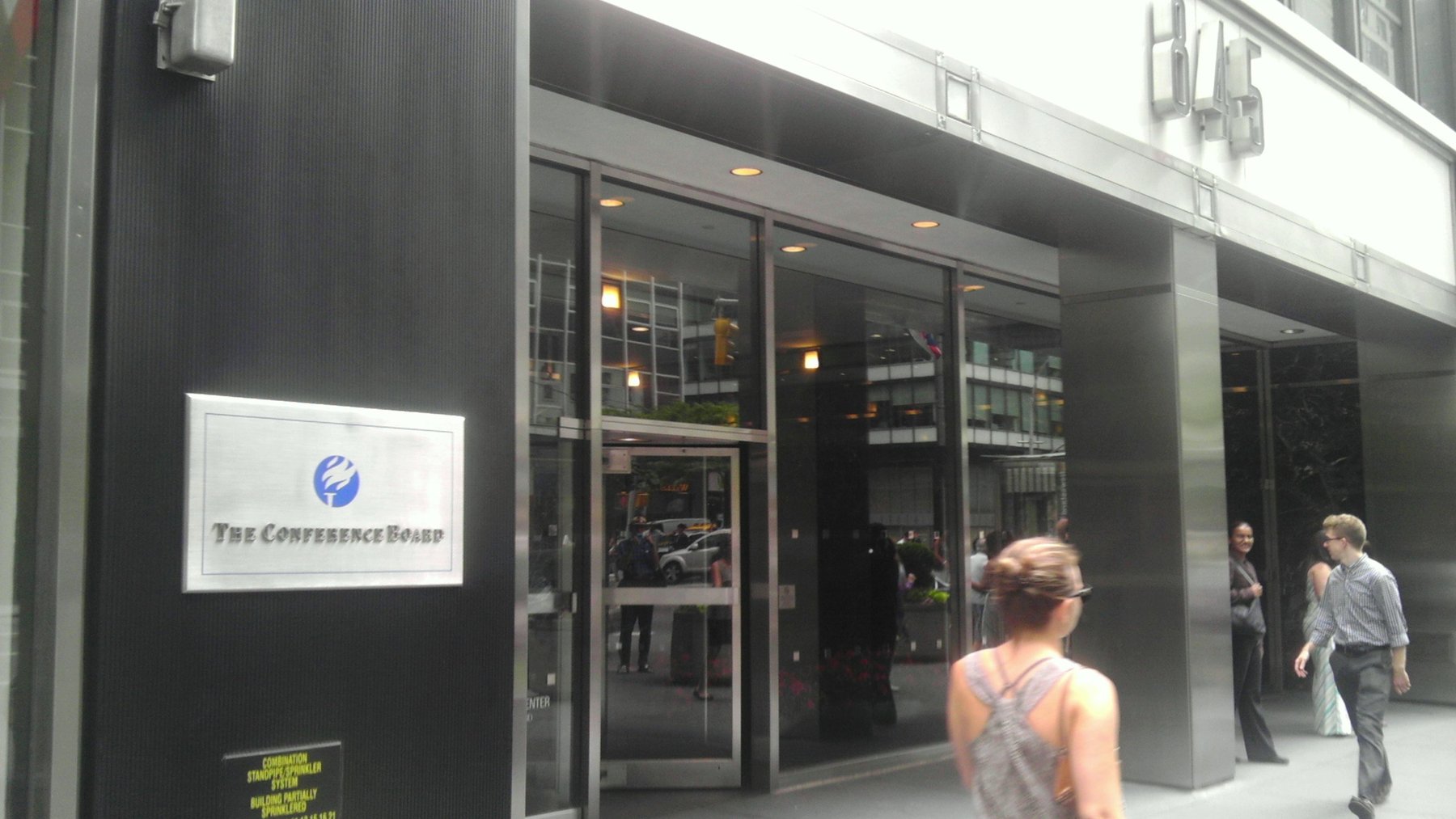
The Conference Board's entrance at 845 Third Avenue in Manhattan. (Photo: Jim Henderson, CC0, via Wikimedia Commons)
Gas Prices Are What People Are Writing In About
The survey lets people write in, in their own words, what is driving their view of the economy. Peterson said references to prices, "and oil and gas prices in particular, rose to new heights, reflecting September's surge in fuel costs." Mentions of war and conflict eased but stayed elevated.
That lines up with the government's own price data. The Bureau of Labor Statistics' August CPI report showed consumer prices up 3.4 percent over 12 months, with the energy index up 16.3 percent. Food was up 2.7 percent. When the gas bill is the number that jumps, people feel it every time they fill up.
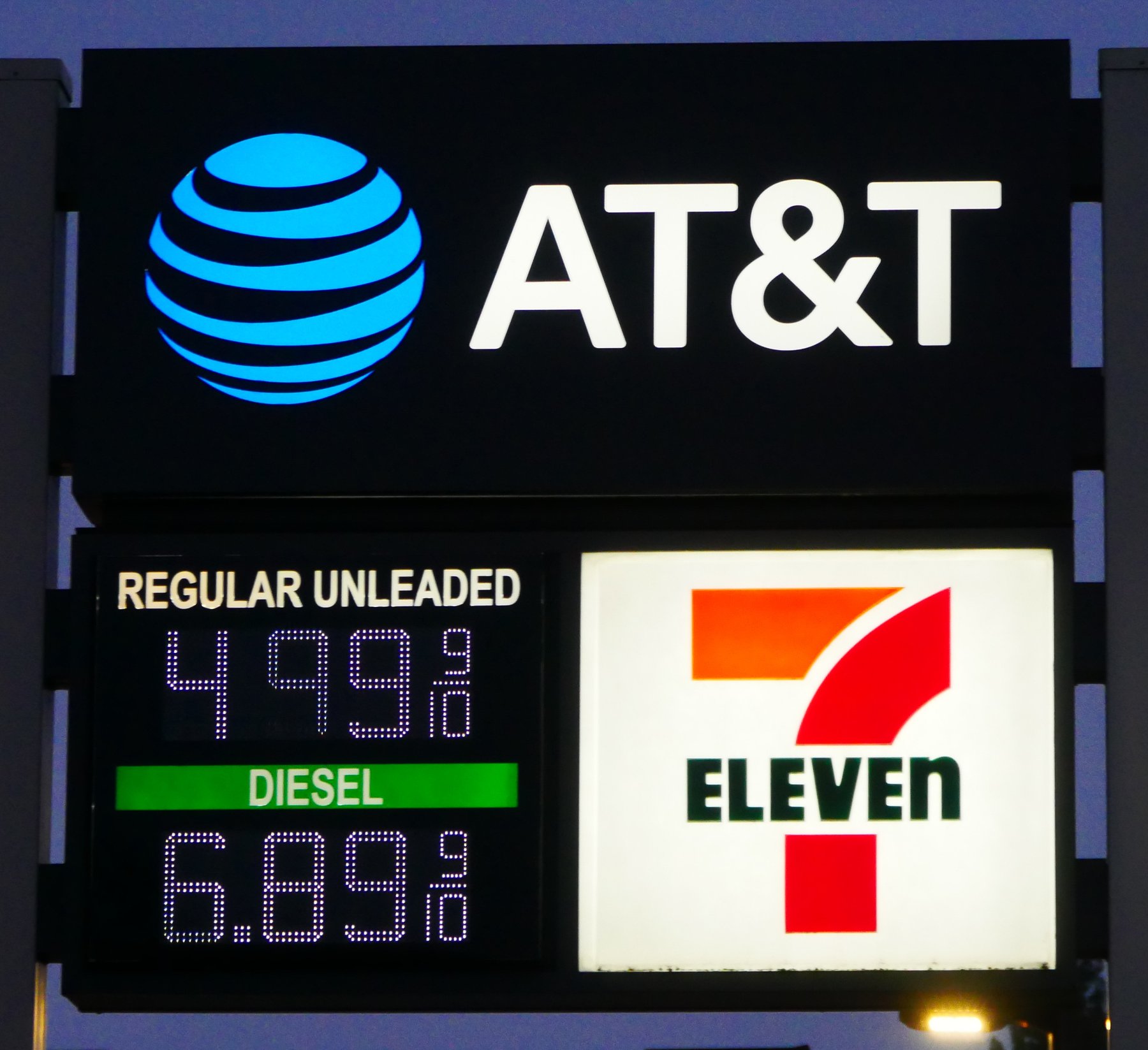
A 7-Eleven price sign in Eugene, Oregon, on September 26, 2026: regular unleaded at $4.99 and diesel at $6.89 a gallon. (Photo: Rick Obst, CC BY 4.0, via Wikimedia Commons)
Consumers also expect it to get worse. Average 12-month inflation expectations rose to 6.1 percent and the median to 5.1 percent, each up 0.3 points. The average expectation is nearly double the actual 3.4 percent CPI reading. The share of people expecting higher interest rates jumped 5.2 points to 68.4 percent, after a survey window that ran September 1 to 23 and took in the Federal Reserve's rate hike.
The Job Market Is Close to a Tipping Point in People's Minds
The Conference Board's "labor market differential" is simple. It takes the share of people who say jobs are "plentiful" and subtracts the share who say jobs are "hard to get." In September, 23.6 percent said plentiful and 21.9 percent said hard to get. That leaves a gap of just +1.7 points, down 2.5 in a month.
Looking ahead, it is already negative. Only 14.0 percent expect more jobs to be available in six months, while 28.4 percent expect fewer. Their own wallets look worse, too. The share of people calling their family's current finances "bad" overtook the share calling them "good," only the second time that has happened since the question was added four years ago.
What the Government's Hiring Data Shows That the Headline Missed
The same morning, BLS released its August Job Openings and Labor Turnover Survey. The headline read like a non-event. Openings were "little changed at 7.1 million," hires "changed little at 5.2 million," and quits and layoffs were flat.
The size-class table tells a sharper story. In Table 7, private-sector openings fell by 214,000 from July to August. Establishments with 1 to 9 employees accounted for a drop of 335,000 on their own, from 1,385,000 to 1,050,000. Their openings rate fell from 6.0 percent to 4.3 percent in a single month.
Add up every other size class and they rose. Businesses with 10 to 49 workers added 27,000 openings. Those with 250 to 999 added 67,000, and the two largest classes together added 27,000. Mid-sized firms with 50 to 249 workers were down just 1,000. By our arithmetic from the table, employers with 10 or more workers posted about 120,000 more openings in August than in July. The entire net decline, and then some, came from the smallest shops.
Official record
U.S. Bureau of Labor Statistics, Job Openings and Labor Turnover, August 2026 (USDL-26-1547), released September 29, 2026. Table 7: levels and rates by establishment size class and the full news release.
"In August, the job openings rate decreased for establishments with 1 to 9 employees, while the hires, quits, layoffs and discharges, and total separations rates showed little or no change."
BLS JOLTS news release, August 2026
Main Street Stopped Posting Jobs. It Didn't Start Firing.
That is the only size class the release says moved. The rest of the table says the smallest employers are pulling back carefully. Their hires ticked up 7,000 to 702,000, though the hires rate slipped from 3.2 to 3.0 percent. Layoffs and discharges at those shops were 222,000, and the layoff rate dipped from 1.0 to 0.9 percent.
So the corner hardware store and the family diner are not handing out pink slips. They are holding off on the next hire. The 1,050,000 openings small establishments reported in August are exactly the number they reported in August 2025, which erases a year of gains in one month.
One more figure deserves caution. Quits at the smallest establishments jumped 112,000, from 308,000 to 420,000, the largest move in any size class. It could mean workers at tiny shops are leaving for bigger employers that are still hiring. It is a single preliminary month, and BLS revises these numbers, so we would not lean hard on it yet.
ADP Called It "a Strong Report." Paychecks Tell Another Story.
Wednesday's ADP National Employment Report showed private employers adding 90,000 jobs in September, after a revised 36,000 in August. "It's a strong report," said ADP chief economist Nela Richardson. Small establishments with fewer than 50 employees added 23,000 of those jobs, so September at least did not repeat August's small-business slide in payroll terms.
The pay data is less cheerful. ADP says median base pay rose 3.2 percent from a year earlier, and 3.0 percent for people who stayed in their jobs. Put that next to the 3.4 percent CPI and the typical worker who did not switch employers is falling behind prices. ADP measures pay over 12-month intervals through September while CPI runs through August, so the comparison is approximate. The direction is clear anyway.
ADP's own release breaks out pay growth for firms with 50 to 249 workers, 250 to 499 workers and 500-plus. It lists no figure for firms under 50.
What Comes Next for Main Street
Put the three releases side by side and the picture is consistent. Families are paying more for fuel and expecting more inflation. The smallest employers just posted the sharpest one-month pullback in openings of any size class. Raises are trailing prices for workers who stay put.
None of that is a recession on its own. Layoffs stayed low, and ADP's September count was better than August's. But small businesses usually feel fuel costs and borrowing costs before big companies do. They did not wait for the official jobs data to decide. They stopped posting help-wanted ads in August, and their customers told the Conference Board in September exactly why.
Top photo: Main Street in downtown Barre, Vermont. (Photo: Kenneth C. Zirkel, CC BY 4.0, via Wikimedia Commons)