Senate Democrats say they want to fund the government by the Dec. 11 deadline and simply stop paying for President Trump's Iran war. Sen. Michael Bennet's own letter to colleagues spells out the method: refuse to end debate on "any package that includes another cent for his war." With Republicans holding 53 Senate seats, that is a shutdown threat in plain English.
What did Bennet actually ask his colleagues to do?
Bennet, a Colorado Democrat, sent a one-page "Dear Colleague" letter dated Nov. 7, addressed to both parties. Most of it is a case against the war: higher gas, grocery and fertilizer prices, munitions spent faster than they can be replaced, and a conflict he says Trump "is losing." The operative sentence is in bold type: "We must refuse to invoke cloture on any package that includes another cent for his war."
Cloture is the 60-vote motion that ends a Senate filibuster. A stopgap spending bill cannot pass the Senate without it. So the request is to filibuster any government funding bill that does not cut off the war. Bennet sent it four days after a midterm that, by HNGN's count, gives Democrats at least 255 House seats in January. Why wait for the majority when the deadline hands you leverage now?
Official record
Letter from Sen. Michael F. Bennet (D-Colo.) to "My Dear Republican and Democratic Colleagues," dated Nov. 7, 2026, published on his Senate website. The full one-page letter is shown below.
"I believe we would abdicate our responsibility if we voted to provide billions of additional dollars for President Trump's war of choice in Iran. We must refuse to invoke cloture on any package that includes another cent for his war." Sen. Michael Bennet
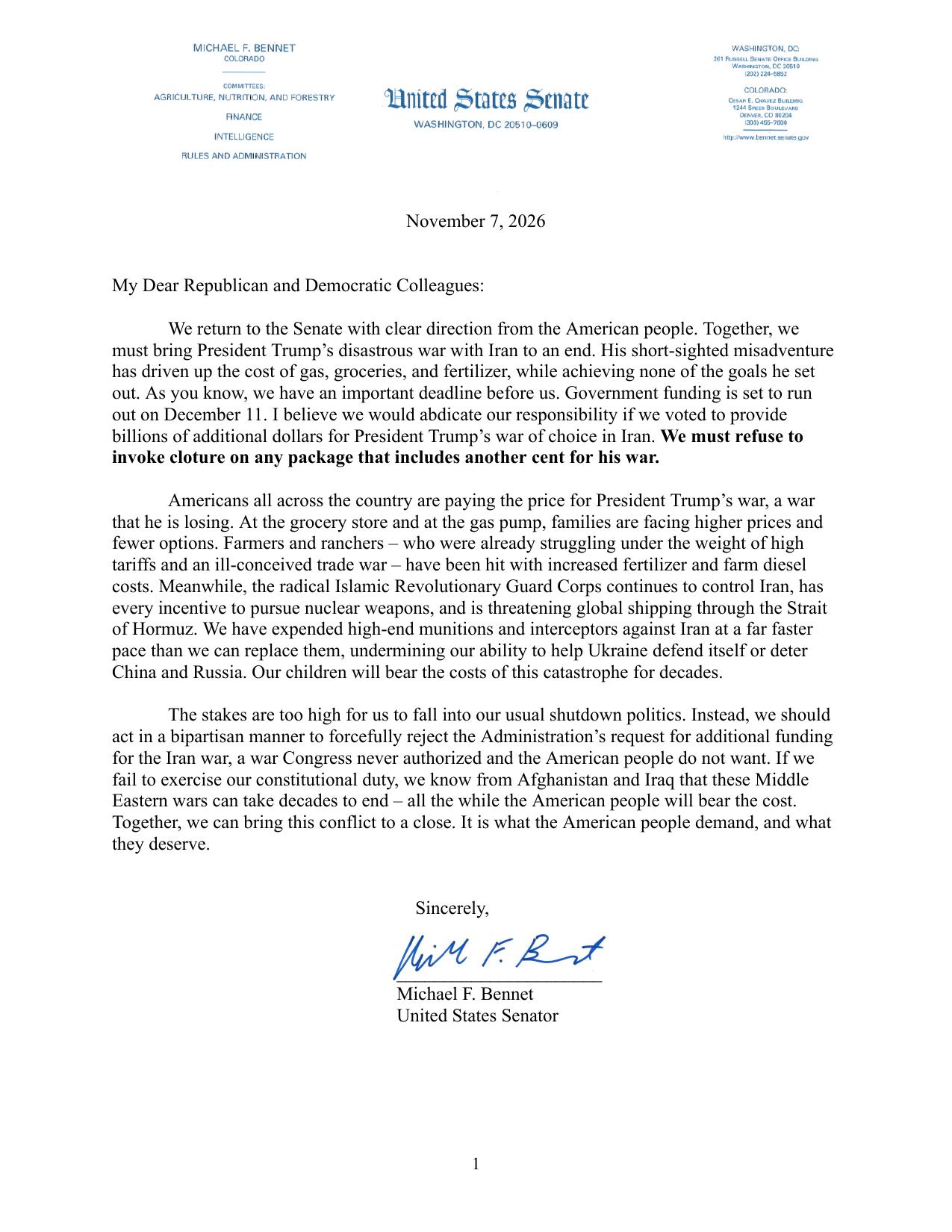
Read or download the letter (PDF) or view the original on bennet.senate.gov.
"Fund the government," or block the bill?
Five days later, Bennet, Bernie Sanders, Chris Van Hollen and Tammy Duckworth put out a joint statement with a softer final line: "When we vote on appropriations, we intend to fund the government and stop funds for this war." The same statement says "any short-term package must include language" restricting the administration from using appropriated money to continue the war.
Both documents say the same thing. The letter is just more honest about the mechanics. Bennet even writes that "the stakes are too high for us to fall into our usual shutdown politics," one paragraph after asking colleagues to block the only bill that keeps the lights on. Sen. Tim Kaine of Virginia is drafting the restriction language and told WBUR, "What we want to do is cut off funding for the war, unless the president is able to convince Congress to authorize it."
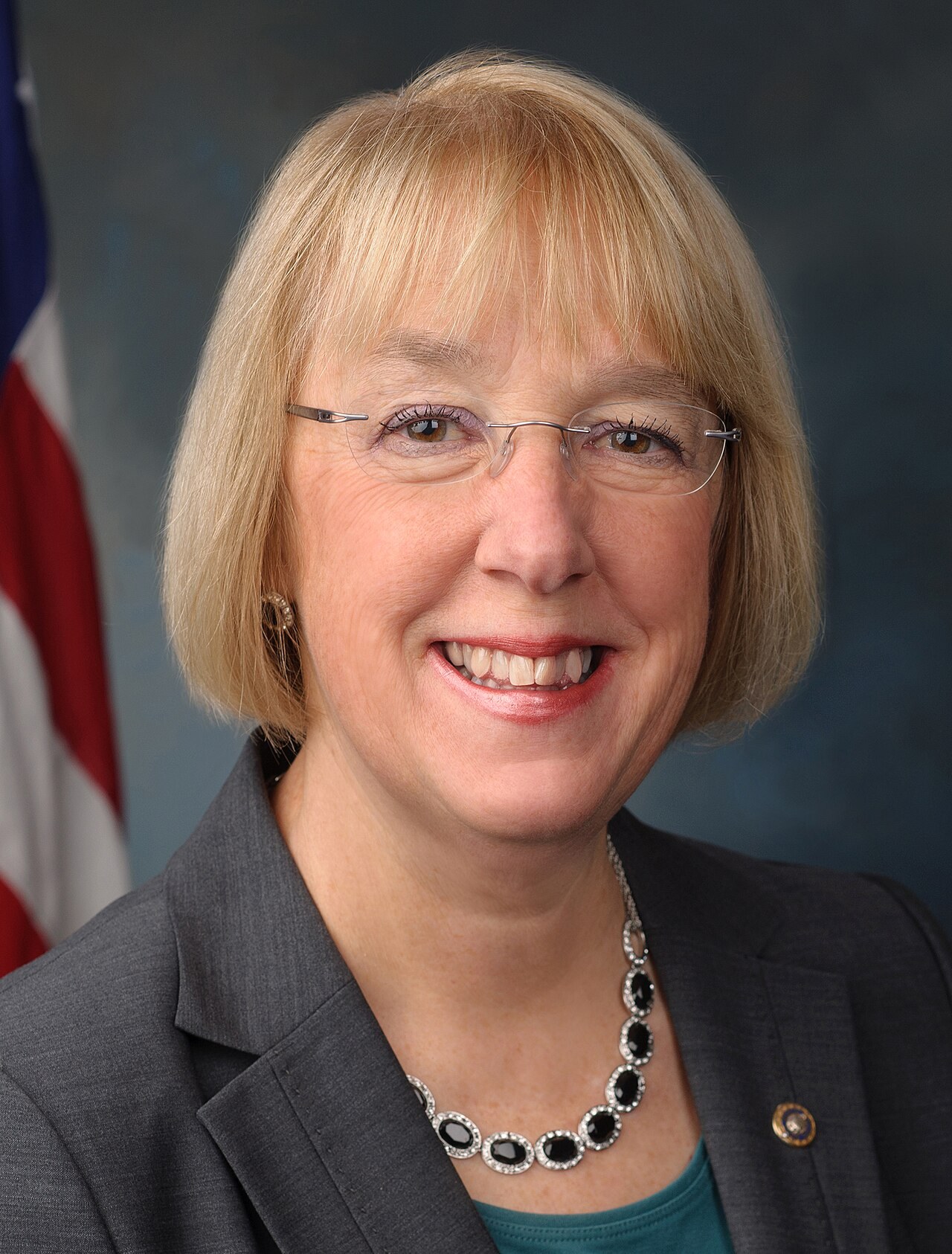
Sen. Patty Murray of Washington, the top Democrat on the Senate Appropriations Committee, who will set the party's spending strategy. Official portrait, 113th Congress (public domain, via Wikimedia Commons).
Are Democrats united behind a shutdown?
No, and that is the part the leadership has not settled. Sen. Patty Murray of Washington, the top Appropriations Democrat, backs a short-term bill into the new year. "We are not going to accept their supplemental funding that funds the war," she told The Washington Sun, without committing to a war rider on the stopgap itself. House Minority Leader Hakeem Jeffries has deferred to Murray and Rep. Rosa DeLauro.
Others want no part of a December standoff. "I do not think we should have a government shutdown," said Sen. Chris Coons of Delaware, the top Democrat on the defense spending subcommittee. Sen. Mark Warner of Virginia worried aloud about "another government shutdown over the holidays" in a state packed with federal workers. Retiring Rep. Steny Hoyer called it "not a good tactic."
Rep. Adam Smith, the top Armed Services Democrat, made the most practical point: Trump has been running the war on existing Pentagon money, so refusing new dollars would not necessarily stop operations, the Sun reported. In other words, a shutdown could furlough federal workers without ending a single operation in the Gulf.
Where do Republicans stand?
Republicans hold the majority until Jan. 3, but 53 seats leave them seven votes short of cloture. "I think getting a deal under those circumstances will be pretty complicated," Senate Majority Leader John Thune said, HNGN reported Tuesday, adding that he wants both national defense and the rest of government funded.

Senate Majority Leader John Thune of South Dakota, shown speaking in Las Vegas in October 2023. Photo by Gage Skidmore via Wikimedia Commons (CC BY-SA 2.0).
The White House is pushing the other way. Defense Secretary Pete Hegseth has called for at least $350 billion in new Pentagon money through a party-line reconciliation bill, saying "the Department of War must be funded to meet the moment," CBS News reported. Thune said in late October that such a bill "takes 50 votes, which right now we don't have." Senate Democrats have told him that pressing it would endanger the Dec. 11 talks, according to HNGN.
What happens between now and Dec. 11?
The deadline is 23 days out. The likeliest path, according to States Newsroom and HNGN, is another short stopgap that kicks full-year spending to the new Congress. The fight is over what rides on it. Rep. Ro Khanna has pointed to 1973, when Congress used a funding bill to cut off combat in Southeast Asia, Responsible Statecraft reported.
That history cuts both ways. Trump can veto any rider that ties his hands as commander in chief, and if Democrats then refuse cloture on a clean bill, the shutdown that follows will be one their own letter asked for in bold print. Readers should keep Bennet's sentence handy when the blame game starts in December.
Top photo: Sen. Michael Bennet of Colorado on a U.S. Capitol balcony, 2022, released by his Senate office (public domain, via Wikimedia Commons).