The Trump administration told the Supreme Court on Thursday afternoon that ballots start moving in North Carolina on Friday and that once they do, "there is no retrieving them." That same afternoon, North Carolina's own elections director stood in front of reporters in Raleigh and said his state's ballot envelopes were already approved by the Postal Service and all 100 counties were ready to mail. Both statements are true, and the gap between them is the whole case.
Solicitor General D. John Sauer's emergency application, docketed as No. 26A297, United States Postal Service v. California, asks the justices to freeze Judge Indira Talwani's August 27 temporary restraining order and to grant an immediate administrative stay while they think about it. Justice Ketanji Brown Jackson, who handles emergencies out of the First Circuit, ordered a response by 10 a.m. Tuesday and has granted nothing yet. We covered the underlying order when it came down last week.
The two states in the government's emergency window are the two least likely to have a problem
Sauer's irreparable-harm argument runs on a clock with exactly two hands. Page 4 of the application says that before the order expires on September 10, "two States" will begin sending ballots to voters, "the first as soon as September 4." North Carolina mails Friday because N.C. Gen. Stat. 163-227.10(a) requires absentee ballots to be available 60 days before a statewide general election. Alabama follows on September 9.
Alabama is an intervenor on the government's side, defending the rule. Sauer says so himself, and adds that it "unsurprisingly has never argued that it would be impossible to comply." North Carolina sits on the other side of the caption, a plaintiff state represented by Attorney General Jeff Jackson. It is also the state the Solicitor General cites, on page 25 of his own brief, to prove that compliance is easy.
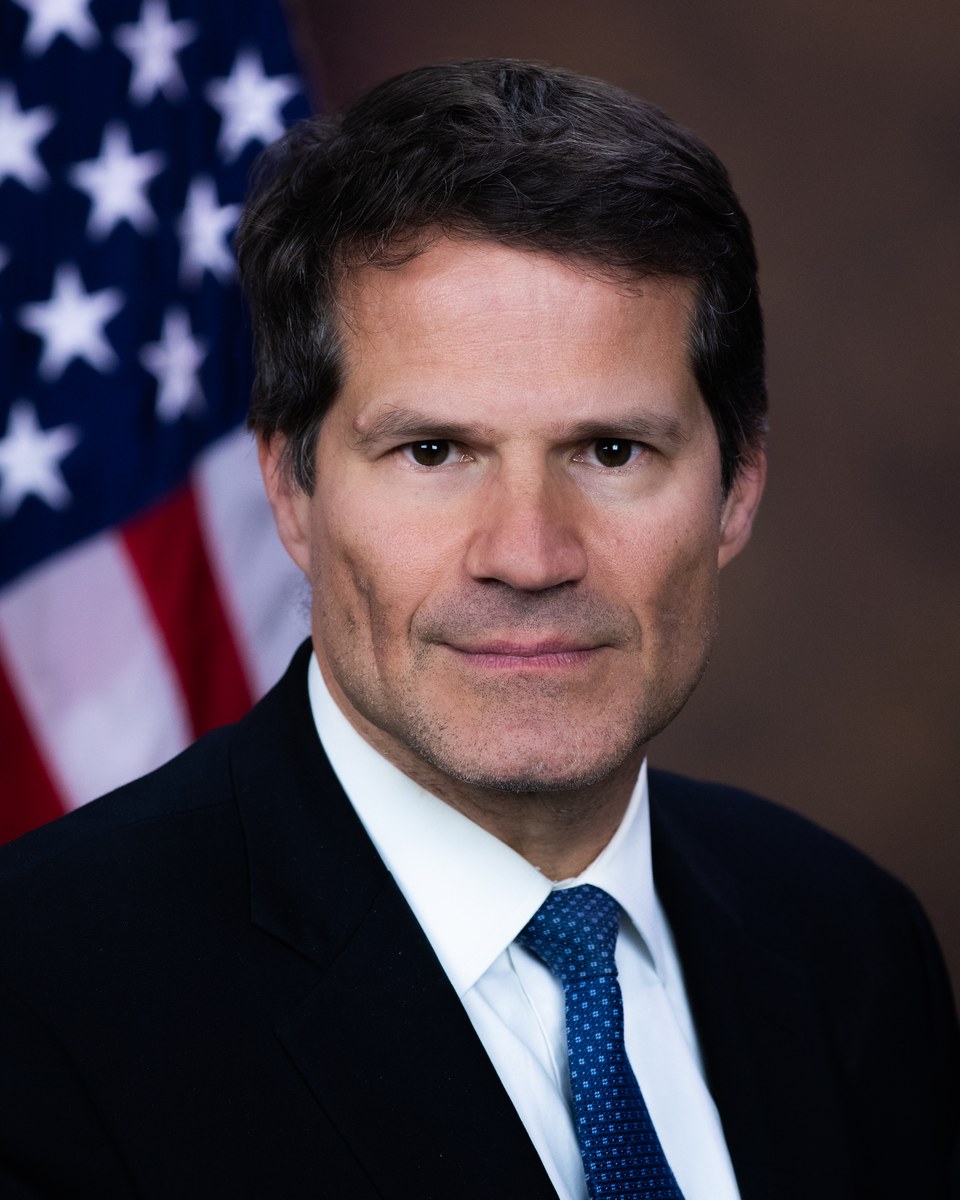
Solicitor General D. John Sauer, who signed the September 3 emergency application in No. 26A297. He is the same lawyer who won the Supreme Court's August 24 stay in Trump v. California. (Official portrait, U.S. Department of Justice, public domain, via Wikimedia Commons.)
The quote he pulls is the North Carolina board saying it "is confident" that its counties will send absentee ballots "starting September 4, as required by state law," and that the process "will happen flawlessly and smoothly." Executive Director Sam Hayes went further, telling WUNC that "North Carolina was already compliant with the best practices that the Postal Service is trying to codify through their rules." All 100 county boards are prepared to start, he said at the same news conference, per NC Newsline.
So the state whose Friday deadline is the entire basis for skipping the normal appellate process is the state saying it has no problem. That cuts hard for the administration on the merits. It does not build an emergency.
The Postal Service told a different court, the same afternoon, that its portal does not work yet
The rule at 91 FR 54966 has two moving parts. States must get their outbound ballot envelope designs approved, and states must upload every mail voter's name, address and unique barcode into a new USPS Federal Ballot Mail Portal before those ballots are accepted for mailing. Envelopes are the easy half. The portal is the half that decides whether a ballot moves.
At Thursday's hearing Talwani said she still had no idea how any of it would work. "I'm here 70 days before the election and I have nothing from USPS telling me how this will happen," she said, according to CBS News, and gave the Justice Department until 3 p.m. to put something in the record. USPS Chief Customer and Marketing Officer Steven Monteith then filed a declaration saying the agency anticipated making the portal available "for voluntary use by sometime next week," first reported by Democracy Docket. Its September 1 public statement said the same thing, that USPS "is now finalizing the portal."
Within the hour, the Solicitor General was telling the justices in Washington that a September 4 mailing would cause harm that can never be undone. The 48-page application never mentions that the portal is not running.
The states caught it. In an opposition filed Thursday night, 24 attorneys general wrote that the applicants "make no effort to explain how they could possibly be entitled to emergency relief to effectuate a Rule that they currently lack the technological capacity to administer." Their sharper line: the order the administration wants stayed "only prohibits USPS from enforcing requirements as to a Portal that does not exist yet."
Official record
Application for a Stay of the Order Issued by the United States District Court for the District of Massachusetts and Request for an Immediate Administrative Stay, United States Postal Service v. California and Trump v. League of Women Voters of Massachusetts, No. 26A297 (U.S. Sept. 3, 2026). Filed by Solicitor General D. John Sauer. The North Carolina passage is on page 25.
"Once those ballot envelopes enter the mailstream, there is no retrieving them; ordinary appellate review thus 'would come too late' to cover those ballots." (Application at 4)
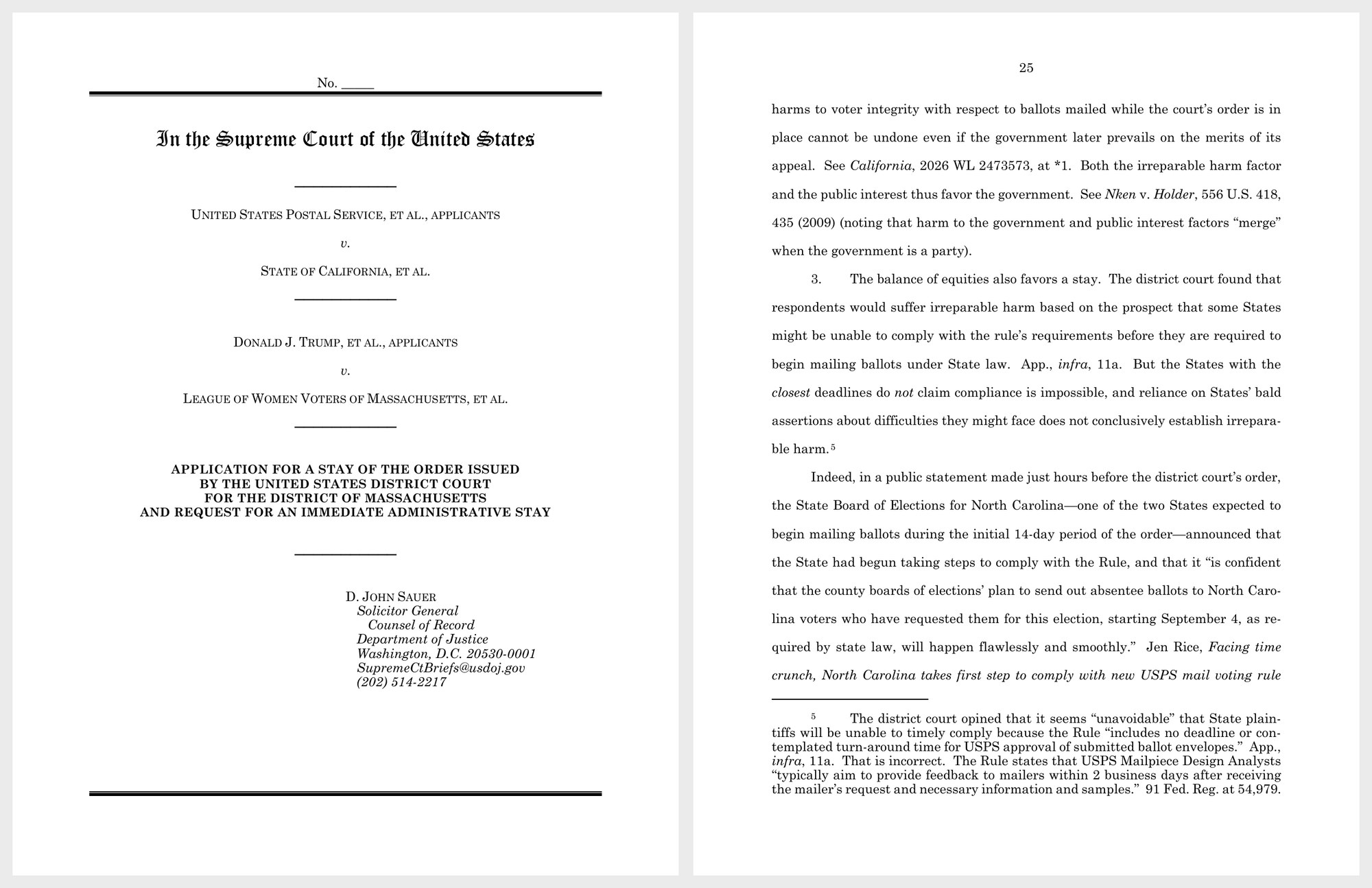
Read or download the full 48-page application with appendix (PDF) · the same filing on supremecourt.gov · the states' opposition · the full docket
The Republican who chairs Wisconsin's elections agency is saying what the blue states are saying
It would be easy to file this under partisan noise. Then read what Don Millis has been writing. Millis is the Republican chairman of the Wisconsin Elections Commission, and on June 29 he and Ann Jacobs, the commission's former Democratic chair, sent a joint letter to Postmaster General David Steiner asking him to drop the proposal, reported by the Milwaukee Journal Sentinel. Only three facilities that handle Wisconsin mail can read the required barcodes.
Their second objection should stop anyone who assumes this rule helps Republicans. Millis and Jacobs wrote that voters in the more rural, "red" parts of the state are the least likely to have a 24-hour drop box or extended clerk hours, and are therefore "much more reliant upon the mail, making it more likely that their ballots run the risk of arriving late." In a sworn declaration filed in this case, the commission's Republican chair told the court that compliance would be "virtually impossible" for Wisconsin, which started mailing September 1 and must finish by September 17.
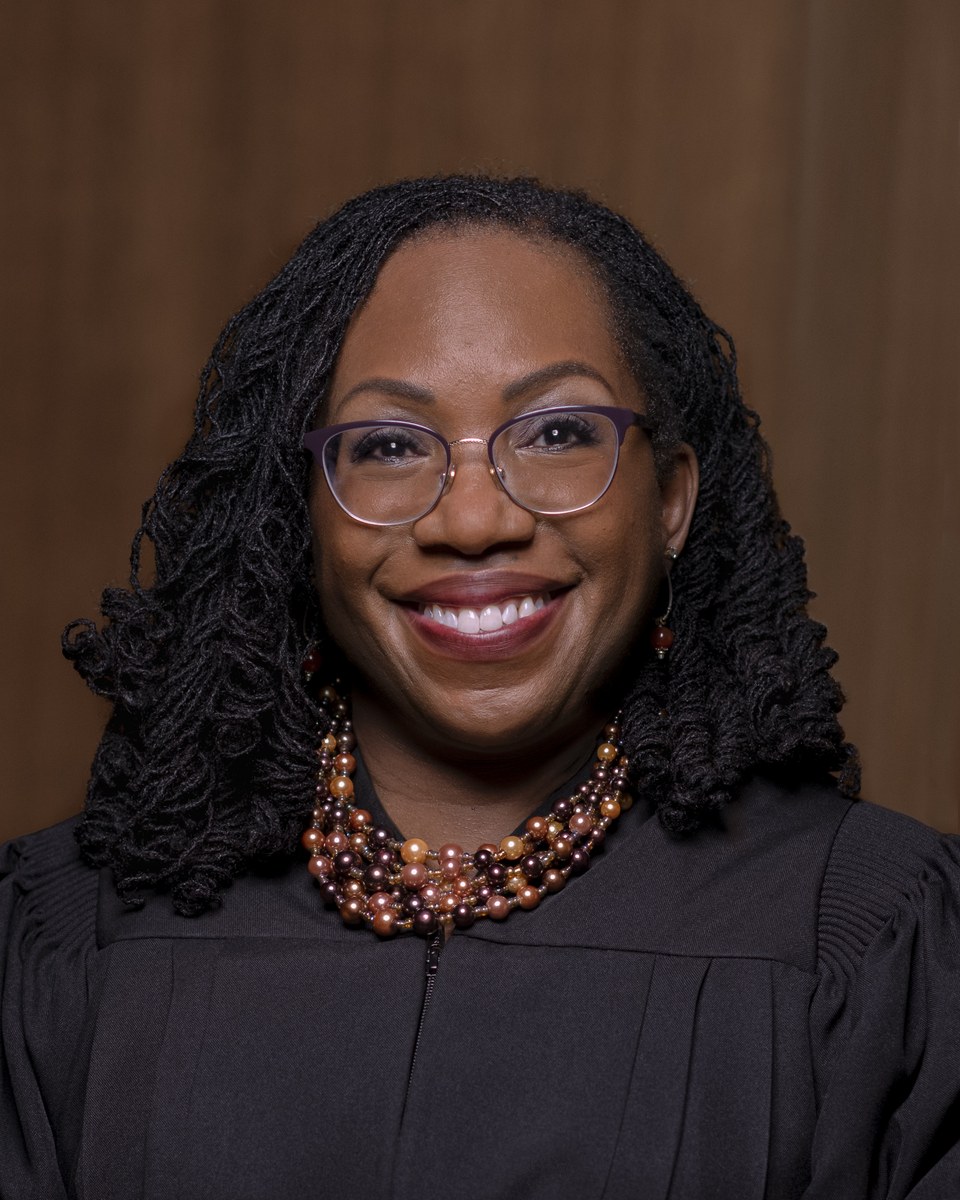
Justice Ketanji Brown Jackson is the circuit justice for the First Circuit, which puts No. 26A297 on her desk first. She ordered a response by 10 a.m. Tuesday and has not granted the administrative stay. (Photograph by Fred Schilling, Collection of the Supreme Court of the United States, public domain.)
The case for the rule is stronger than the case for the emergency
Give the administration its due. Unique barcodes, automation-compatible envelopes and the Election Mail logo are not inventions of 2026. USPS has recommended them for years in Kit 600, its Official Election Mail Guide, and the final rule states at 91 FR 54979 that mailpiece design analysts "typically aim to provide feedback to mailers within 2 business days." Jason Snead of the Honest Elections Project told Fox News Digital the rule is "largely premised on best practices that are already in place." North Carolina just proved him right.
Attorney Gregory Teufel made the other fair point in the same piece. Talwani's earlier injunction is part of why USPS is building this in September rather than April, so "those are expenses and difficulties created in part by the court itself." None of that answers the question in front of Justice Jackson. A stay application is a request for extraordinary relief based on harm that cannot wait, and the harm described here is a system the government cannot yet switch on, in two states that are not complaining.
The order they want frozen may not exist by Tuesday
Talwani's August 27 order expires on its own on September 10 under Rule 65(b)(2). She heard argument on a full preliminary injunction Thursday morning, declined to rule from the bench, and said she wants to get something out fast. The moment she does, the temporary order dissolves and the application on Jackson's desk concerns a piece of paper that binds nobody. The government's own lawyer conceded in open court that a preliminary injunction ruling would moot the appeal.
There is one more wrinkle the administration put in writing itself. It filed an emergency stay motion in the First Circuit on August 31. Responses were due September 1, replies went in around 1 p.m. on September 2, and as of Thursday's filing, at page 8, "the court of appeals has not acted on the pending stay motion." Justice Department lawyer Michael Velchik told Talwani that morning they would go straight to the Supreme Court regardless. They gave a fully briefed federal appeals court about 26 hours.
Chain of custody on a ballot envelope is a real idea, and the people who dismiss it as voter suppression are not arguing in good faith. But an election-integrity rule earns nothing by being forced into the mailstream on an untested portal 60 days out, over the objection of the Republican who runs Wisconsin's elections, on an emergency theory built around a state that already complied. The administration had from March 31 to build this. It is now asking nine justices to cover the difference in five days.
As of Friday morning, Judge Talwani had not issued her preliminary injunction ruling and Justice Jackson had not acted on the administrative stay request. Hero image: Solicitor General D. John Sauer takes the oath of office in the Oval Office on April 10, 2025, as President Trump watches. Official White House Photo by Joyce N. Boghosian, public domain, via Wikimedia Commons.