Headlines on Tuesday said the Supreme Court "lets" the Trump administration "end judges' power to pause deportations." The Court's actual order is one sentence long, gives no reasons, and does not touch the legal question. It refused to freeze a Texas judgment while a fight over who may appeal it plays out, and the Justice Department's own brief says that judgment does not reopen a single closed case.
What the Court actually wrote
The docket entry for No. 26A500, City of Baltimore v. Texas, reads in full: "Application (26A500) for stay presented to Justice Alito and by him referred to the Court is denied." No opinion, no noted dissent. RedState called it another win for the administration, while VisaVerge put "end judges' power" in its headline and then described a narrower action in its own text.
The applicants are Baltimore, New Haven, Columbus and a legal-services group, Centro Legal de la Raza. They asked the Court to pause a nationwide judgment that threw out a 2024 Justice Department rule on "administrative closure," the practice of taking a deportation case off an immigration judge's active calendar without deciding it.
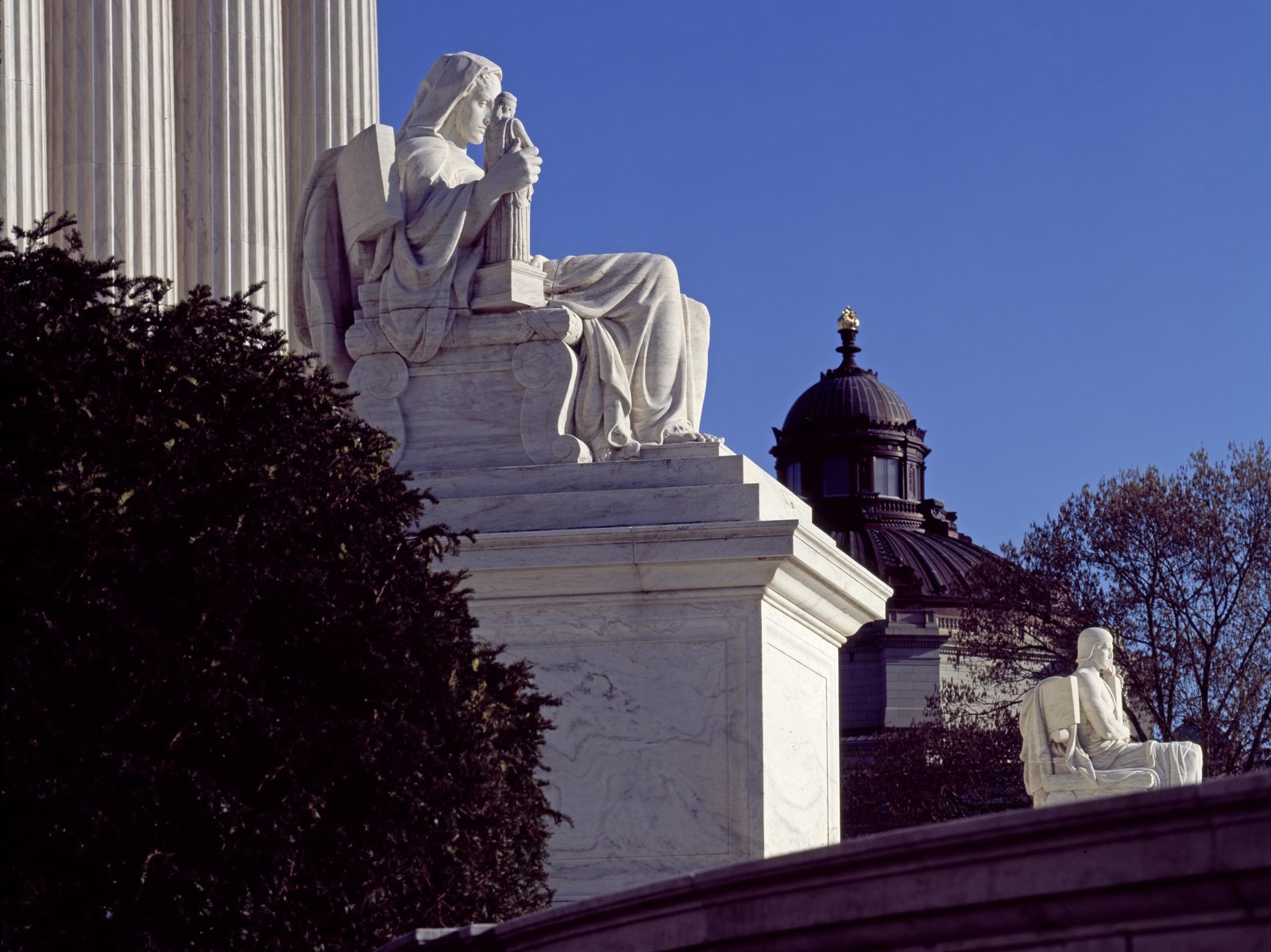
The "Contemplation of Justice" statue beside the Supreme Court's entrance steps. Photo by Carol M. Highsmith, Library of Congress (public domain).
How the rule ended up in Texas court
Texas sued over the 2024 rule this summer. The Trump Justice Department agreed the rule was unlawful, and Chief Judge Reed O'Connor entered an agreed judgment the same day, per the applicants' filing. The judgment declares that "no statute authorizes immigration judges to indefinitely administratively close" cases, vacates the rule, and bars the department from adopting a similar one without express statutory authority, according to the government's brief.
That is a real policy win. Closure was meant to be a pause, but the brief cites Attorney General Barr's 2018 finding that closed cases stay closed for years: an average of 15 years before an immigration judge. It also cites growth from nearly 172,000 closed cases in January 2013 to over 268,000 in January 2017.
The cities were not parties. They tried to join the case six weeks later, on Aug. 7, to appeal. O'Connor ruled they lacked standing, and the Fifth Circuit refused to pause his judgment, as SCOTUSblog reported.
Official record
Federal Respondents' Response in Opposition, City of Baltimore v. Texas, No. 26A500 (filed Oct. 22, 2026, Solicitor General D. John Sauer).
"That judgment operates prospectively and does not require the recalendaring of any matters that are currently administratively closed." — Federal Respondents' brief, p. 19
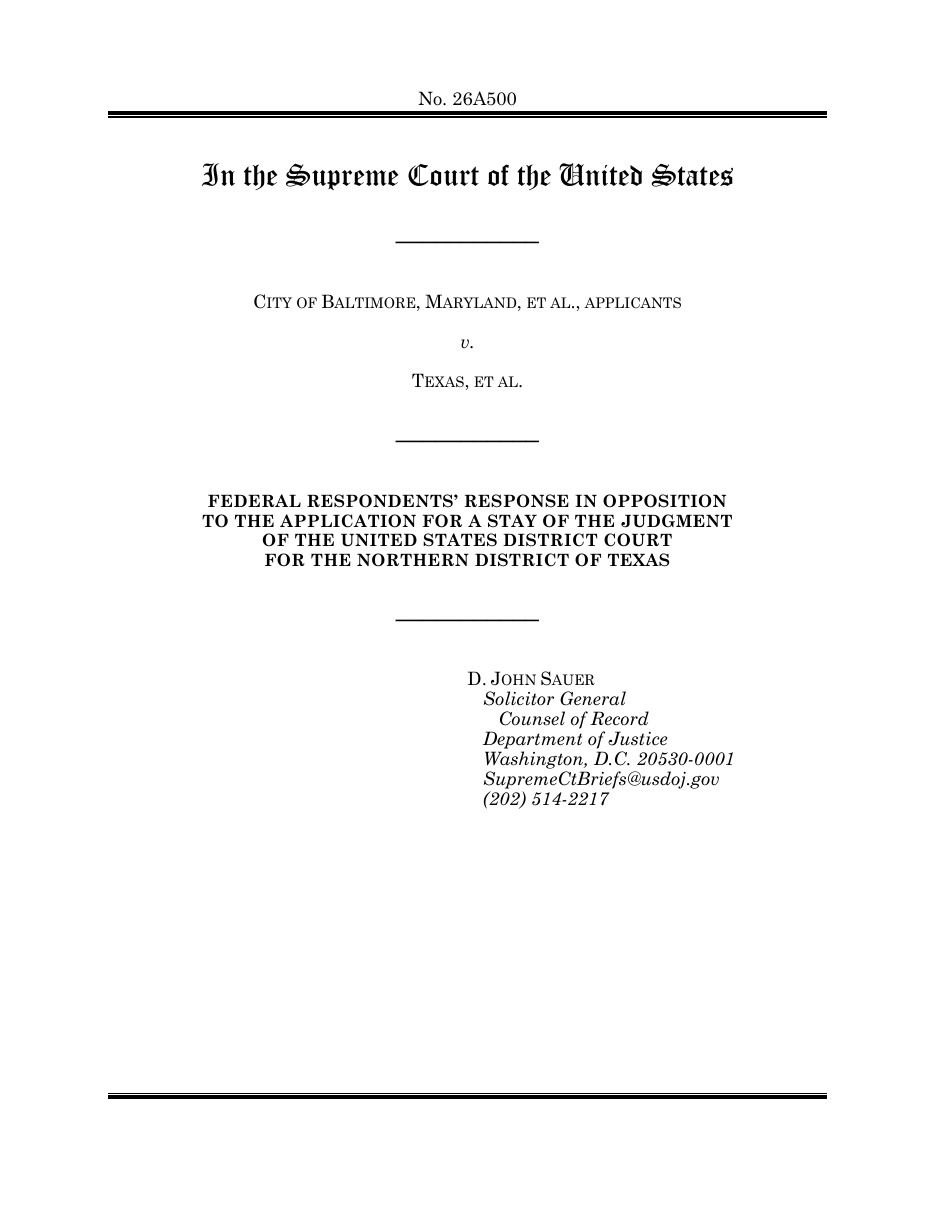
Read or download the full 28-page brief (PDF) · view the official docket
The headline claim versus the government's own brief
Read the brief and the "pause on deportations ends" story shrinks. The Solicitor General says the judgment applies "prospectively to prevent immigration judges from administratively closing new cases." Cases already closed stay closed unless a party moves to restore them. Centro Legal represents 80 to 100 people with closed cases, and the brief says it has not pointed to one that has returned to active status in four months.
The brief also lists tools the judgment leaves alone: continuances, and a DHS motion to dismiss while someone pursues relief elsewhere. For crime victims seeking U visas, it points to a USCIS process that can grant deferred action.
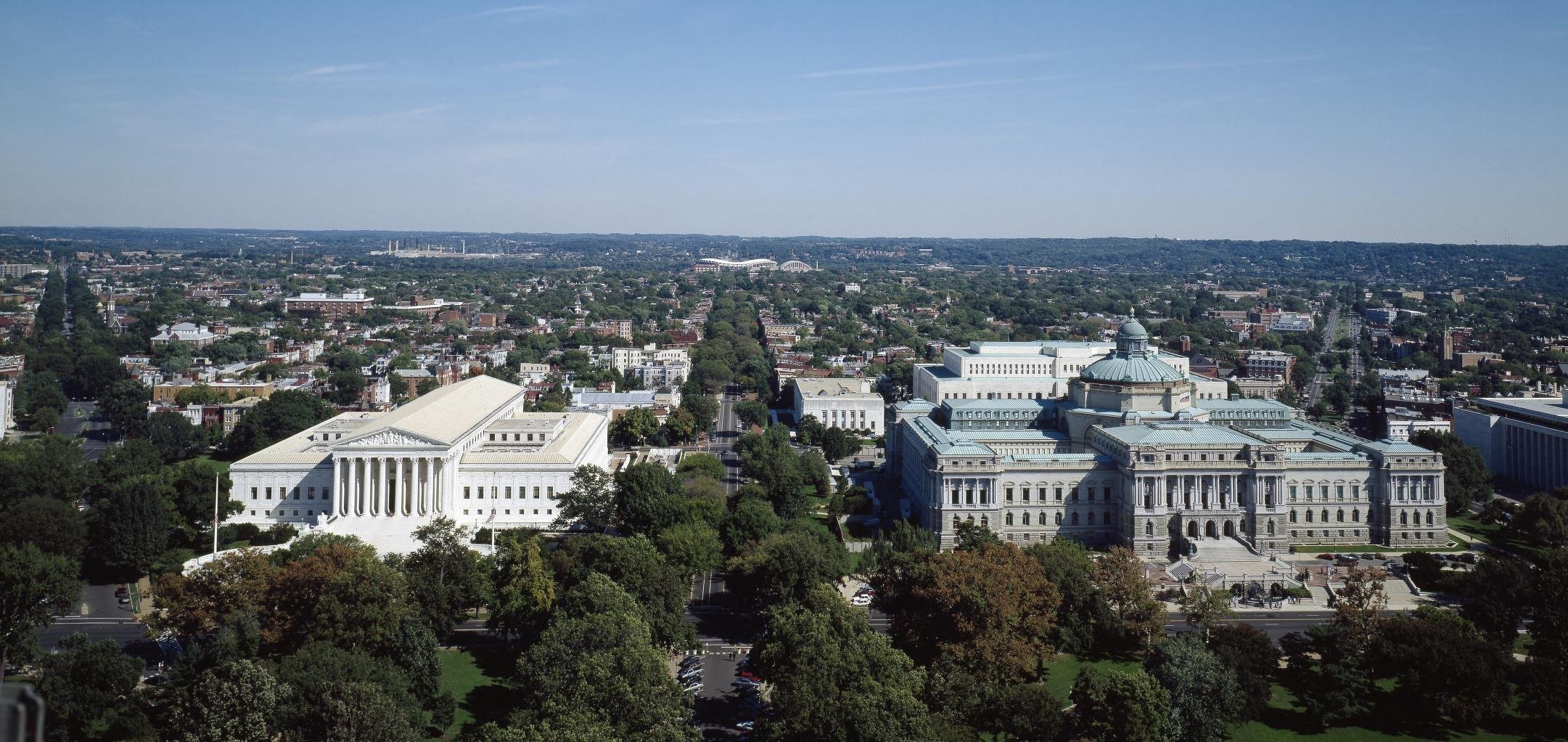
The Supreme Court building (left) and the Library of Congress from above. Photo by Carol M. Highsmith, Library of Congress (public domain).
What the other side says
The applicants' reply argues that reopening is "the predictable and intended consequence" of the judgment, since the parties sought it to "reduce the number of cases administratively closed." They cite a September 2026 Catholic Legal Immigration Network report of "another wave of motions to recalendar" filed by government attorneys. I could not open that report, so I cannot confirm it. The brief does not deny such motions exist; it says the judgment does not require them.
The cities also call the arrangement collusion, with the department declining to defend its own rule and accepting nationwide relief. Texas answers that the applicants' injuries rest on a long chain of uncertain events.
What is still open
Because the order has no reasoning, nobody can say the Court endorsed the standing argument, only that the Court declined to freeze the judgment for now. The cities' appeal over intervention, Fifth Circuit No. 26-10794, is still pending. Whether immigration judges ever had statutory authority to close cases indefinitely has not been decided by the Supreme Court. For readers who want the old closed-case pile worked through, the practical test is simple: watch whether DHS keeps filing motions to put those files back on the calendar. Counts floating around, such as 309,677 closed cases, come from secondary sites and I did not verify them against EOIR data.
Want gear that matches your convictions? Browse the PatriotAddict collection.