The Conference Board's October Consumer Confidence Index came in at 91.7, up 7.5 points and about 10 points above the 81.0 economists had forecast, and NewsBusters headlined it a jump that defied economists' predictions. The number is real. The release behind it is more guarded: confidence "remained on the long-term downward trend," shoppers cut their spending plans, and the gas relief the Board credits is 20 cents off its September high and still leaves pumps above $4.40.
What the index measured, and what it did not
The Conference Board reported the headline index at 91.7 (1985=100), up from a revised 84.2 in September. The Present Situation Index rose 8.6 points to 120.4. The Expectations Index, which looks six months out, rose 6.9 points to 72.6, which the Board describes as "only partially reversing three consecutive monthly declines." The survey ran October 1 to 21, online, through the panel company Toluna.
Coverage of the release notes that the Board has long treated an Expectations reading under 80 as a recession warning. At 72.6, the index is still well below that line, and the Board's own wording on the headline is that confidence "revived to June levels," not that it set a new high.
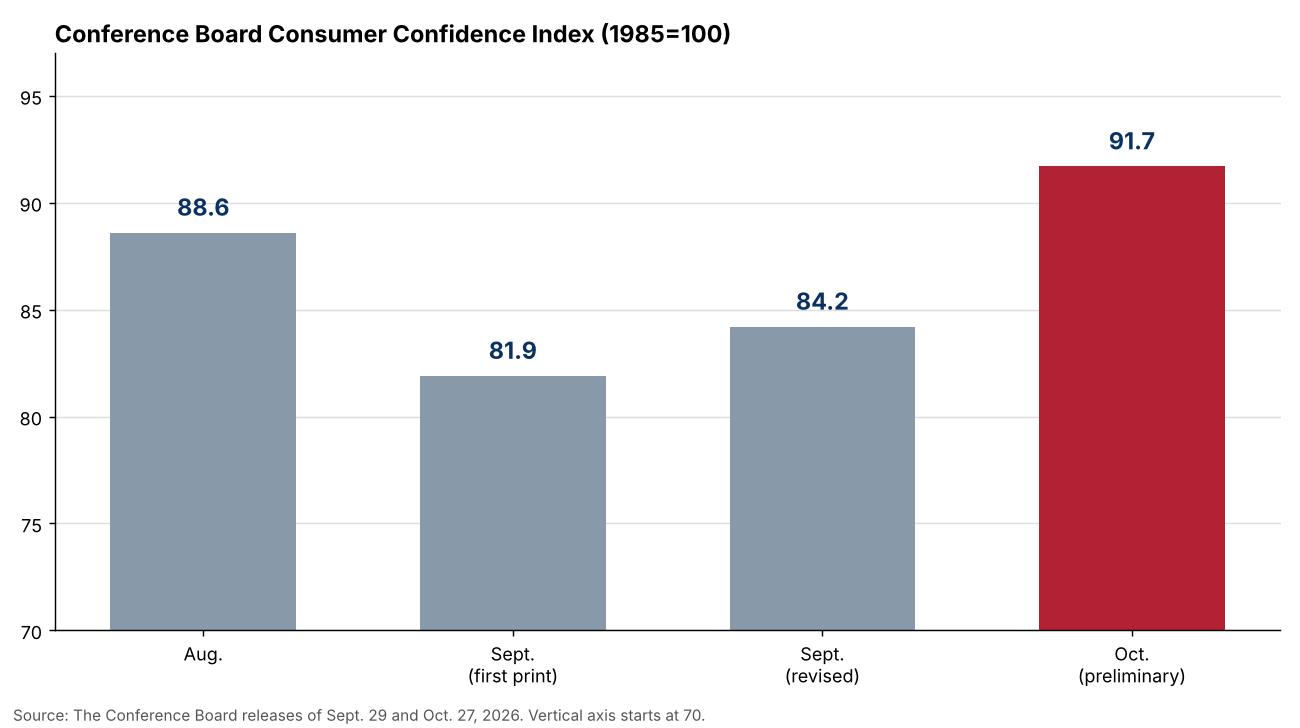
The Conference Board index for August through October. Chart by PatriotAddict from the Board's Sept. 29 and Oct. 27 releases; the vertical axis starts at 70.
A real beat, off a base that was revised up
The forecast comparison holds up. Coverage of the release, including NewsBusters, puts the economists' consensus at 81.0, which would have been a fall. I did not open the Reuters survey those figures trace back to, so treat 81.0 as reported, not independently confirmed.
The 7.5-point gain is measured from 84.2, and that base moved. The Board's September release first printed 81.9, a 6.7-point drop that CNBC reported as the lowest reading since 2014. Revisions added 2.3 points. October is also a preliminary number with a cutoff of October 21, so it can be revised the same way next month.
The gas explanation, checked against the pump
Senior economist Fergus McCormick tied the recovery to "retail gasoline prices easing from September to October." The government's weekly series from the Energy Information Administration shows the easing. The all-grades price hit $4.610 a gallon on September 21, its fall high, and stood at $4.405 on October 26, a drop of about 20 cents, or 4.4 percent.
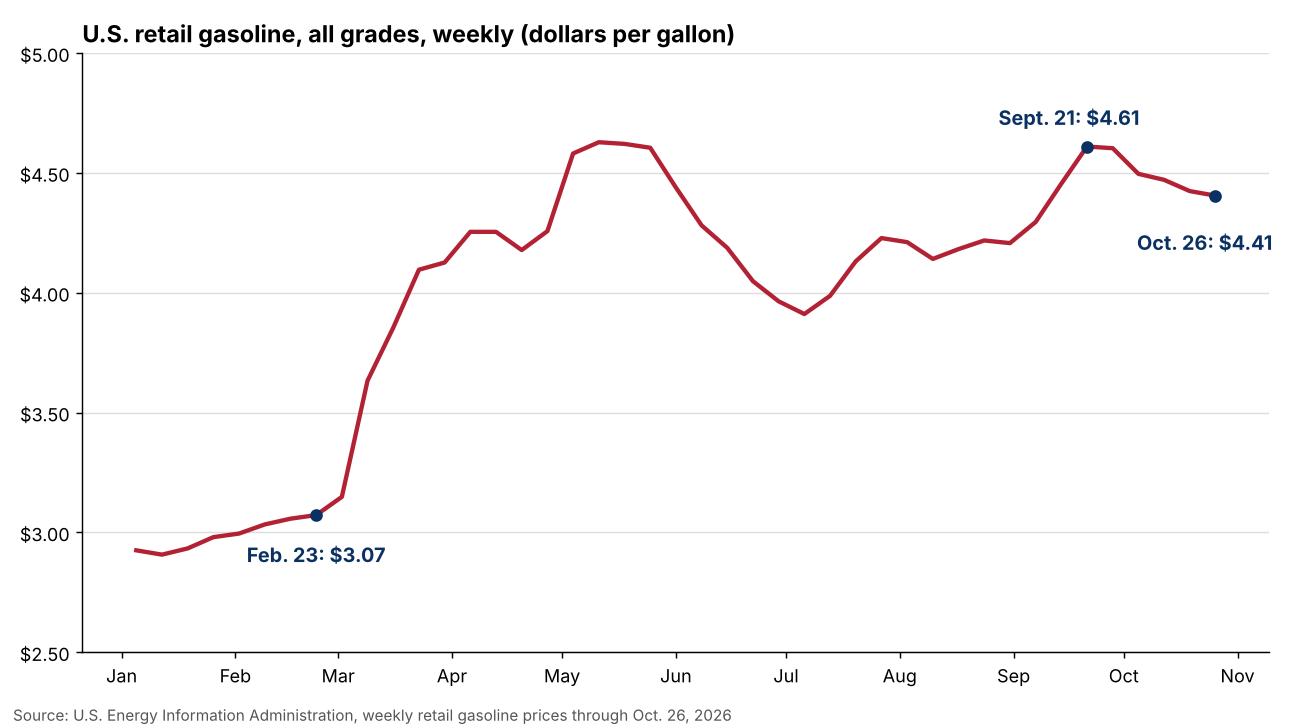
Weekly U.S. retail gasoline, all grades, 2026. Chart by PatriotAddict from Energy Information Administration data.
The same EIA table has gasoline at $3.072 on February 23, before the spring spike. Today's price is 43 percent above that. The Bureau of Labor Statistics reported that the gasoline index rose 9.1 percent in September alone and was up 34.2 percent from a year earlier, with overall CPI at 3.7 percent. A 20-cent retreat is a relief. It is not a return to the prices people remember.
The Board's write-in responses point the same way. McCormick said "references to prices, the high cost of food and groceries, and oil and diesel prices rose" in October, even as fuel eased.
Spending plans went the other direction
The part of the release that gets less attention is what consumers said they would buy. Planned spending on durable goods "dropped across the board," with expected purchases of electronics down by more than 1 percent. Spending plans for services were "generally lower," and hotel and airfare plans moderated. The share planning a vacation fell to 43.3 percent from 44.2 percent.
McCormick's explanation: this "likely reflected higher price levels and persistent inflation, which eroded consumers' purchasing power." Average 12-month inflation expectations dipped but sit at 5.8 percent, and consumers still expect higher interest rates. "Somewhat likely" remained the most common answer when asked about a recession in the next year.
Official record
The Conference Board, "US Consumer Confidence Increased in October," October 27, 2026, as distributed by PR Newswire.
"Yet, despite the increase in October, consumer confidence remained on the long-term downward trend that's persisted over the past few years." - Fergus McCormick, The Conference Board
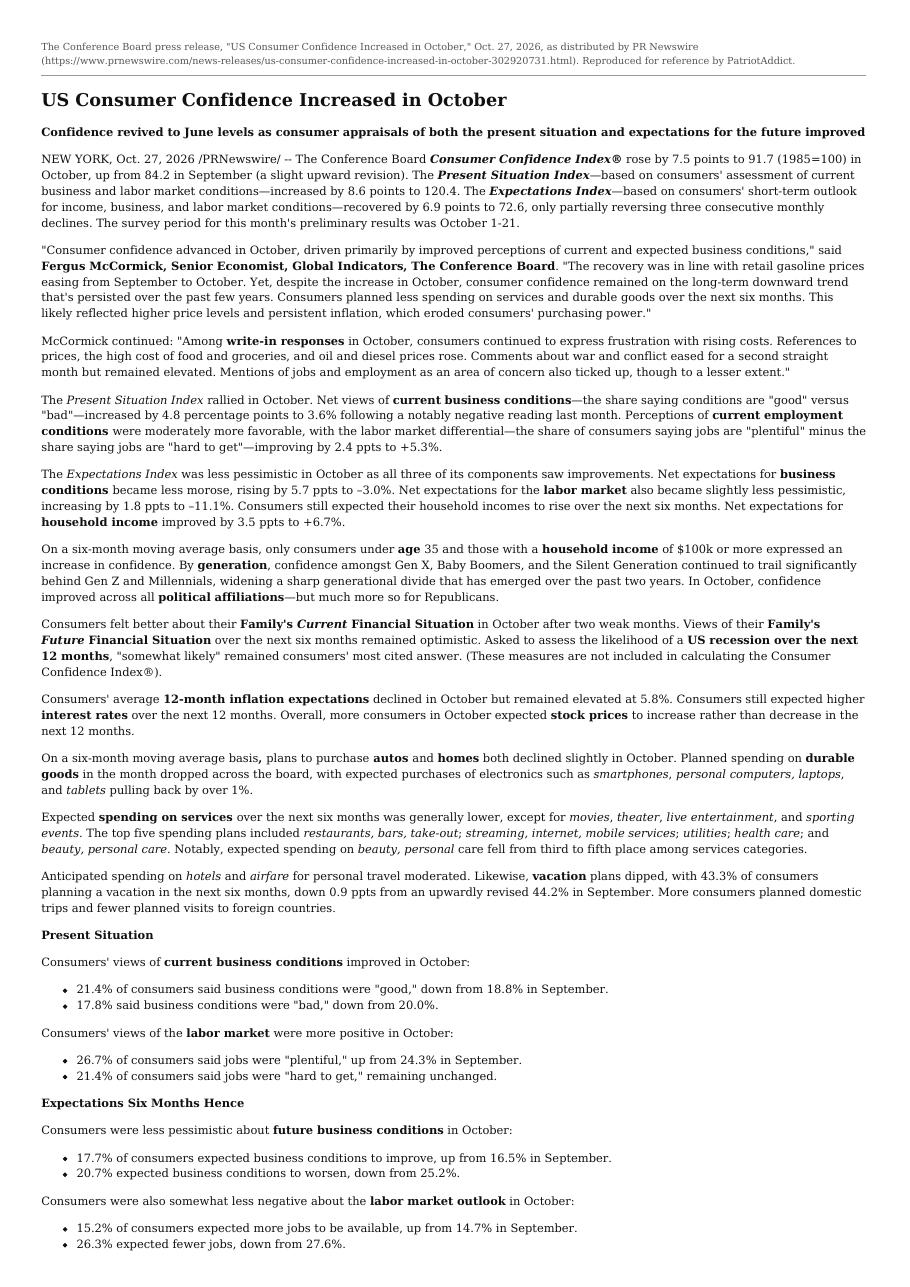
Read or download the full 2-page release (PDF) · view the original release
Who is actually feeling better
On a six-month moving average, the Board says only consumers under 35 and households earning $100,000 or more showed an increase in confidence. Gen X, Baby Boomers and the Silent Generation "continued to trail significantly behind Gen Z and Millennials," a gap the release calls a "sharp generational divide."
The release also says confidence improved across all political affiliations in October, "but much more so for Republicans." It gives no party-by-party figures, so the size of that gap cannot be checked from the public release.
What to watch next
One month of better numbers from a 12-year low is a rebound, and the Board's own economist declined to call it a turn. The next test is the November 24 release, which will carry a revised October figure and a survey window that opens after the Federal Reserve's meeting this week. If gas keeps slipping and spending plans follow, the headline will have earned its word. If the grocery and diesel mentions keep climbing, the October jump will look like a pause inside the same slide.