Treasury put the Iran sanctions on paper Monday, adding 78 names to the U.S. blacklist under the banner Operation Economic Outcast. Not one of them was a bank. Treasury Secretary Scott Bessent spent the afternoon warning that anyone still doing business with Tehran would meet "the full reach of American power," then told reporters he was not ready to aim it at the countries that actually keep the Iranian economy breathing.
This is the follow-up our Monday preview said would be needed. That piece ran before the 2 p.m. news conference and reported honestly that the legal vehicle, the target list, the effective dates and the wind-down periods did not yet exist in public. They exist now.
The real weapon was signed at 9:25 in the morning
Hours before Bessent reached the lectern at the Treasury Department, OFAC Director Bradley T. Smith digitally signed a single page. The timestamp embedded in the file reads 09:25:33 Eastern. That page, rather than the press conference, is the part of Monday that changed U.S. law.
It is a determination under Section 1(a)(i) of Executive Order 13902, the 2020 order that lets the Treasury Secretary declare whole sectors of Iran's economy off limits to the world. Smith declared five of them at once: aviation, digital assets, gold, shipping and technology. Any person anywhere who operates in one of those sectors is now exposed to U.S. sanctions, regardless of whether that person has ever touched an American bank.
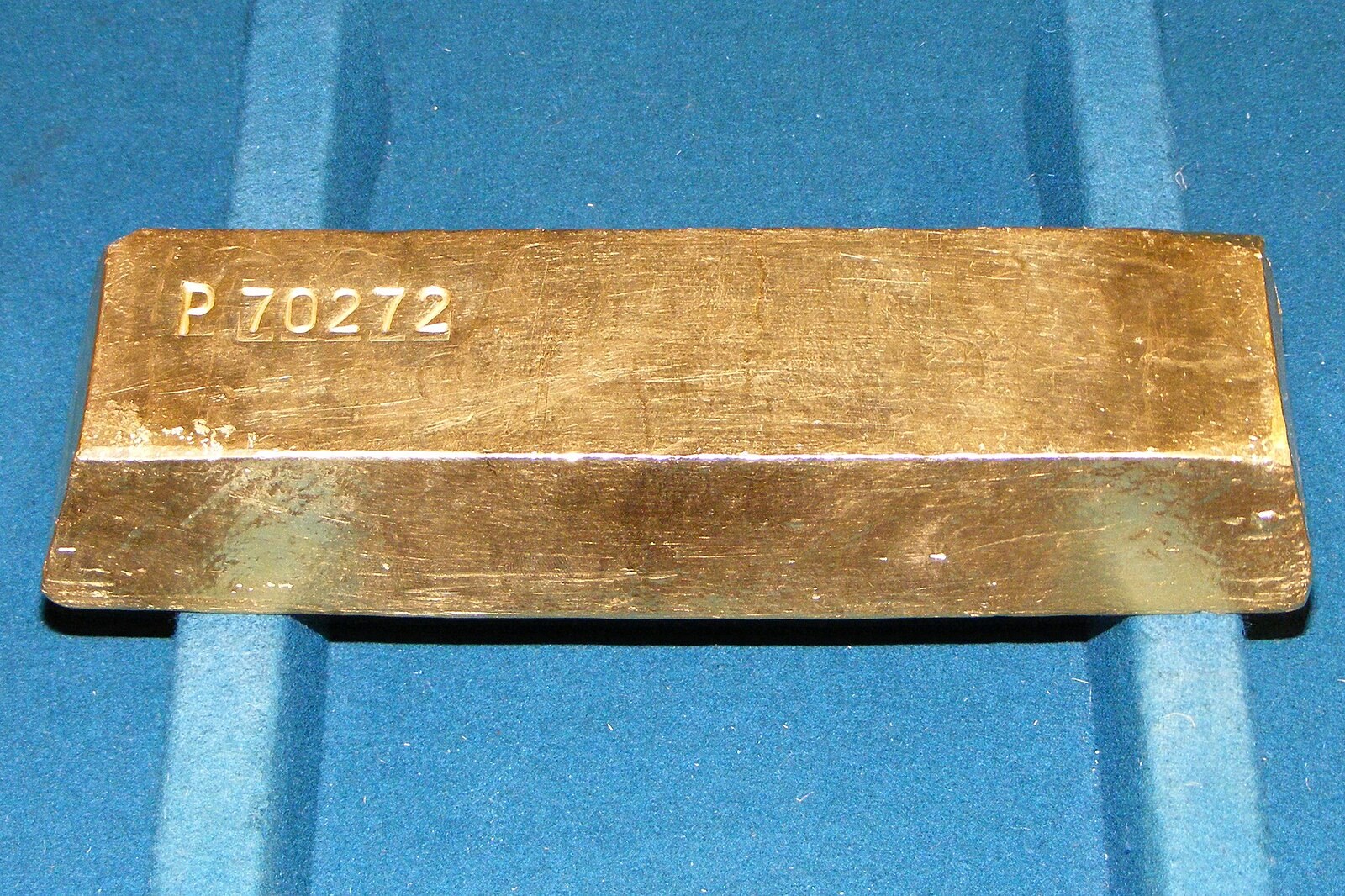
Gold is one of the five Iranian economic sectors OFAC opened to secondary sanctions on Aug. 24, 2026. Treasury says Tehran is buying bullion to prop up the collapsing rial. Pictured is a standard 400 troy ounce bar of the type used in bank settlement (file photo, 2009, Wikimedia Commons, public domain).
That language is narrower than the rhetoric wrapped around it. A sectoral determination creates authority. It does not designate anybody. Treasury's own press release says the department is "expanding the categories of Iran-related conduct that may be subject to secondary sanctions in the future." That last word is carrying most of the weight in the sentence.
Official record
Determination Pursuant to Section 1(a)(i) of Executive Order 13902, "Aviation, Digital Asset, Gold, Shipping, and Technology Sectors of the Iranian Economy," Office of Foreign Assets Control, effective Aug. 24, 2026. Posted on OFAC's Recent Actions page for that date.
"I hereby determine that section 1(a)(i) of E.O. 13902 shall apply to the aviation, digital asset, gold, shipping, and technology sectors of the Iranian economy. Any person determined to operate in these sectors shall be subject to sanctions pursuant to section 1(a)(i)." — Bradley T. Smith, Director, Office of Foreign Assets Control
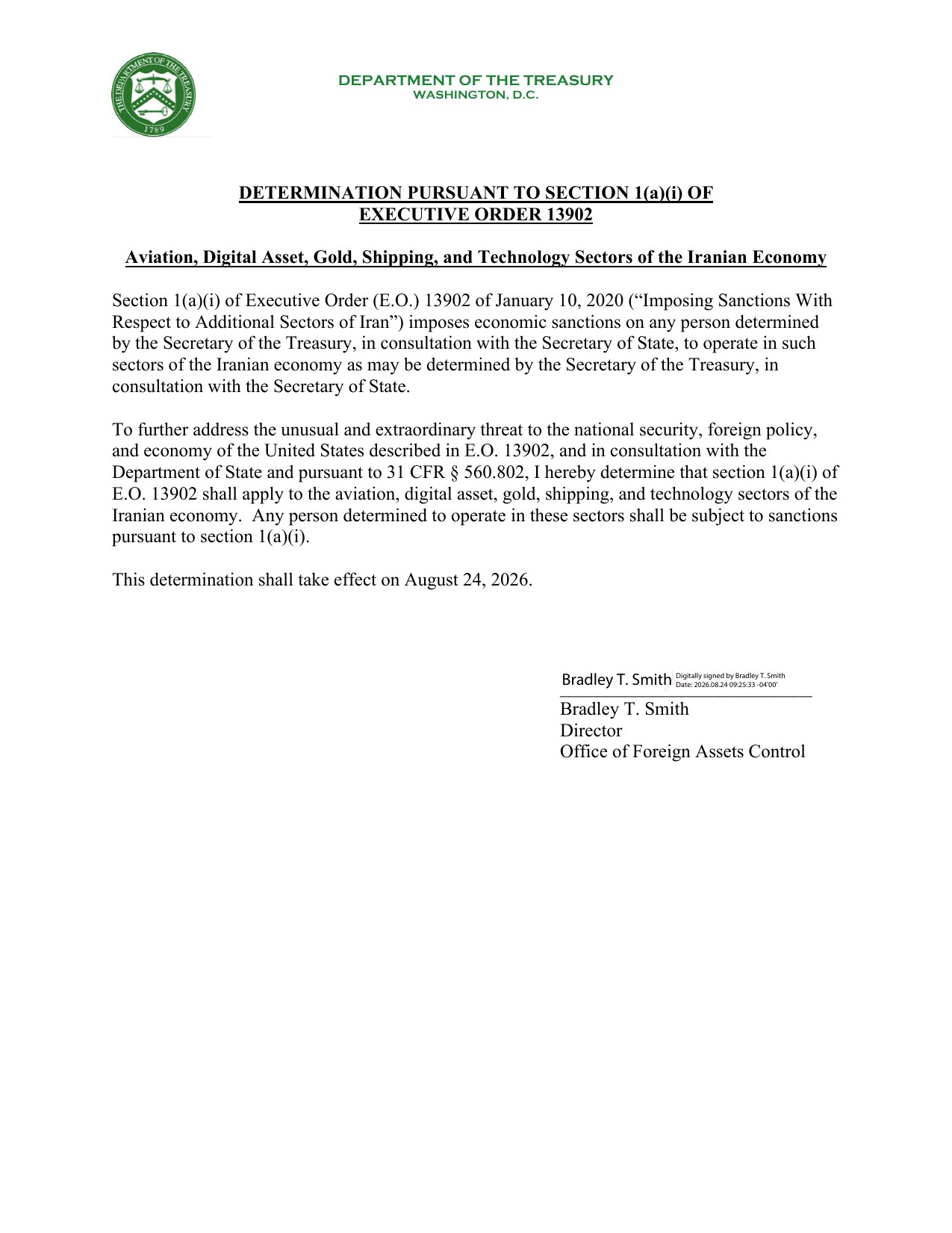
Read or download the full one-page determination (PDF) · view the original on OFAC's site
Seventy-eight new names, and three different counts of them
The published counts do not agree with one another. Bessent told reporters the United States was sanctioning "more than 60" individuals, vessels and entities, as Breitbart's John Carney reported from the room. Treasury's written release says OFAC "sanctioned nearly 60 entities, individuals, and vessels."
The actual SDN list update shows something different again: 24 individuals, 48 entities and 6 vessels added, for 78 new entries, plus 11 existing entries revised. The gap is not sloppiness. Eighteen of those 78 were made under Executive Order 13846, the authority the State Department uses against traders in Iranian oil and petrochemicals, and not one of the eighteen appears anywhere in Treasury's release. Three more are Iranian defense officials from State's separate action. Subtract the 21 and you land on 57, which is what "nearly 60" means.
One widely surfaced figure is simply not from this year. A Gulf News item headlined "US ramps up pressure on Iran with curbs on 700 entities," describing sanctions on 50 Iranian banks, 200 individuals and 65 aircraft, is a Bloomberg wire story dated Nov. 5, 2018. It quotes Treasury Secretary Steven Mnuchin. It has nothing to do with Monday, and anyone citing those figures for Operation Economic Outcast is eight years off.
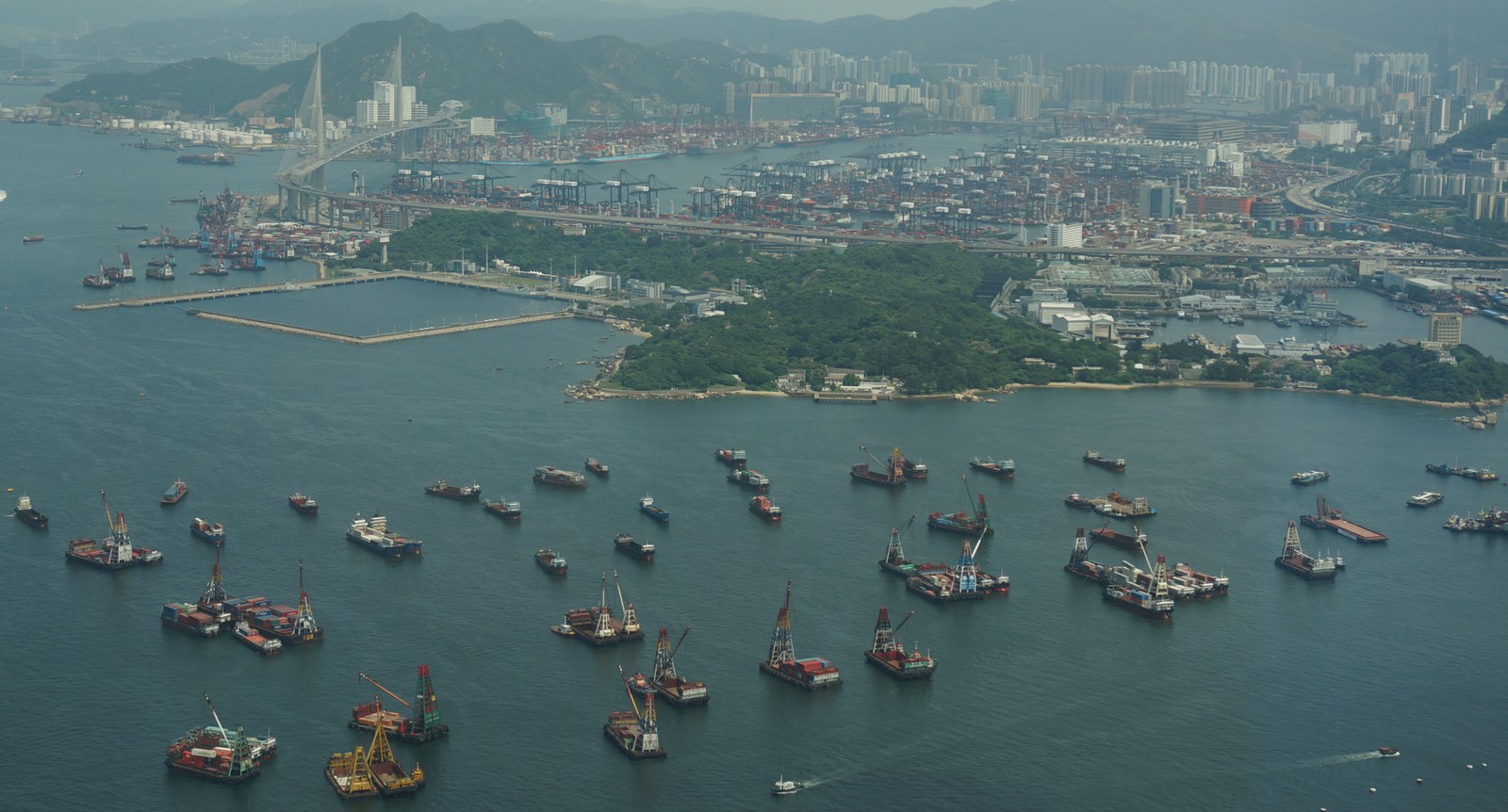
Seventeen of the 48 companies added to the SDN list Monday are registered in Hong Kong, several of them in Kowloon industrial blocks in Kwun Tong and San Po Kong rather than at the container terminals pictured here. Kwai Tsing container terminals, Hong Kong (file photo, February 2016, Andrew Smith via Wikimedia Commons, CC BY-SA 2.0).
The map of the network is worth more than the headcount. Treasury named Hong Kong front companies that moved payments for Iran's "shadow banking" exchanges, a Shenzhen procurement chain that bought laser optics and an accelerometer for Iran's Malek Ashtar University of Technology, a Singapore-and-Geneva commodities house called Wellbred that Treasury ties to oil magnate Mohammad Hossein Shamkhani, and six tankers flying Cameroonian, Vanuatuan, Gambian, Barbadian and false Botswanan colors. Wellbred's Swiss arm had bought a French cooking-oil refinery in 2024, which OFAC designated and then immediately covered with General License AA so it could keep operating.
No bank made the list
Our Monday piece set one explicit test: whether any Chinese bank would land on the SDN list. The answer is no, and it goes further than that. Searching the full Aug. 24 update turns up no bank of any nationality and no named exchange house. The closest Treasury came were four Hong Kong shell companies, Feili, Minvur, Feisu and Guska, which its own release describes as fronts for Iran's clandestine "shadow banking" networks.
Asked directly whether Chinese banks could be hit, Bessent told the room only that "no one is above the reach of U.S. sanctions," according to NPR. Carney reported that Bessent said he expects a major financial institution to be sanctioned later this week. That would be the real test. It has not happened yet.
The blow Bessent chose not to land
Nothing about Bessent's language was hedged. "Let there be no ambiguity as to the position of the United States: An economic engagement of any kind with this murderous regime will expose those responsible to the full reach of American power," he told reporters, per Carney's account from the Treasury Department. He called the campaign an "economic onslaught" and "economic asphyxiation of the regime."
The Washington Post ran Monday's story under the headline "Bessent unveils sweeping new Iran sanctions but delays toughest blow." The paper is paywalled and would not load for this article, but the framing is confirmed by outlets that were in the room. The Associated Press wrote that Trump's pledge of an economic D-Day "turned out to be new warnings," and quoted Bessent's answer when asked why no secondary sanctions had been imposed on Iran's trading partners: "Why would I want to blow up the global financial system?"
He would not name the countries. He would not give a deadline. Treasury's release promises only that "every country will be given a defined timeline to shut down the Iran-related activity we have identified," with no timeline made public. What Bessent offered instead was a threat with a date left blank: "We are level-setting with every country to tell them our expectations. We know who they are. They know who they are. So when the hammer of U.S. Treasury actions falls upon them, they will have no one to blame but themselves."
There is a defensible case for that restraint. Sanctioning a top-tier Chinese bank is not a paperwork exercise; it is a decision to disrupt dollar clearing for the world's second-largest economy while American consumers are already paying for this war at the pump. Axios reported that U.S. officials expect secondary sanctions to be the main line of effort against Iran at least until after the midterms. Giving allies a chance to comply before the hammer drops is how you build a coalition rather than a grievance. It is also, plainly, not what "D-Day" describes.
What Tehran said, and what it costs Americans
Iran's response arrived before the announcement did. Parliament Speaker Mohammad Bagher Qalibaf posted on X, shortly before Bessent spoke, that Iran's trading partners "have made it clear that they don't take these statements into account anywhere," according to the AP. Mohsen Rezaei, Iran's new security chief, told state television over the weekend that Tehran would answer in a "seismic manner" and warned Gulf states that any country joining the campaign would be treated as an enemy, NPR reported. The rial hit a record low of roughly 2 million to the dollar as markets opened Monday.
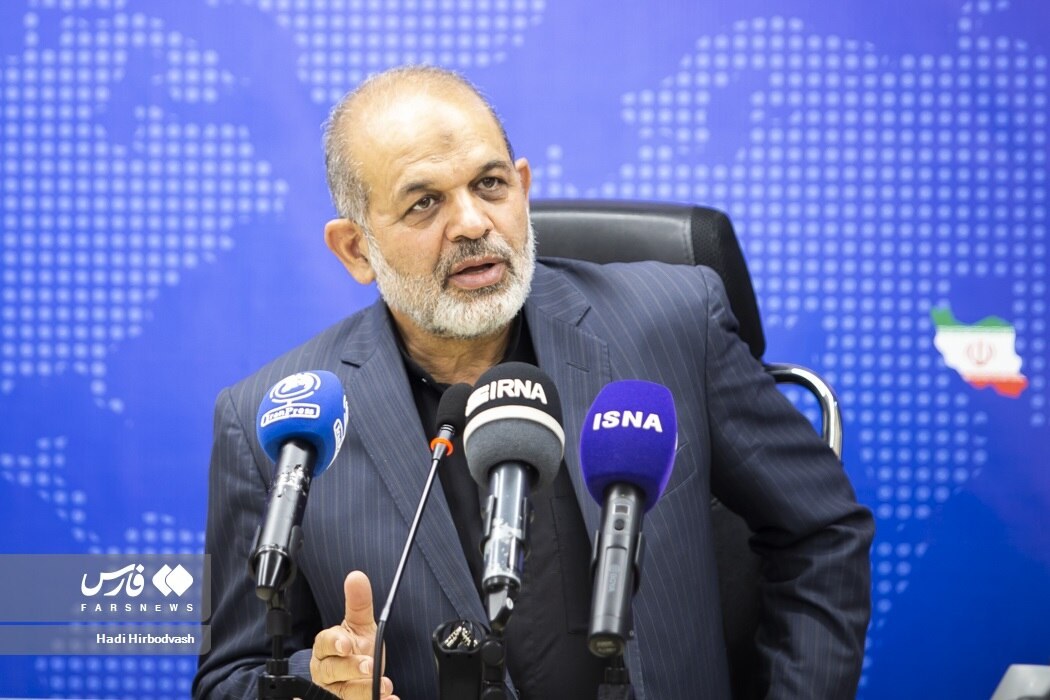
Ahmad Vahidi, former commander of the IRGC Quds Force and former Iranian interior minister, is one of seven Iranian defense figures the State Department moved against on Aug. 24. His SDN entry was amended rather than newly created. File photo from an August 2022 press conference (Hadi Hirbodvash / Fars News Agency via Wikimedia Commons, CC BY 4.0).
The piece of Monday that will reach American households fastest has nothing to do with oil. OFAC also issued a notice suspending five general licenses indefinitely, among them 31 CFR 560.550, the rule that has allowed noncommercial personal remittances to and from Iran. Iranian-American families sending money to relatives in Tehran have until 12:01 a.m. Eastern on Sept. 8 to wind those transfers down under General License BB. Academic exchanges and sports exchanges were suspended the same way.
That is the honest shape of Aug. 24. Treasury built a much bigger gun and fired a warning shot with it. The 78 names are real, and the five sectoral determinations stay on the books until somebody revokes them. The countries funding Iran's war, though, were sent phone calls instead of penalties. Whether that was patience or hesitation depends entirely on what OFAC posts next, and Bessent has put himself on the clock by promising a major financial institution this week.
Hero photograph: the U.S. Treasury Department, Washington, D.C., by Carol M. Highsmith, Library of Congress, public domain.