October's consumer price index rose 0.4%, a tenth above forecasts, and the coverage leaned on a 1% gain in gasoline. The Bureau of Labor Statistics' own tables say pump prices actually fell 0.7% in October before seasonal adjustment. The prices that rose no matter how you adjust them were at the meat counter and the restaurant table.
What did BLS report on Tuesday?
The October CPI release (USDL-26-1685), published at 8:30 a.m. ET on Nov. 10, says the index for all urban consumers "increased 0.4 percent on a seasonally adjusted basis in October," after 0.6% in September. Core prices, which leave out food and energy, rose 0.3% for the third month in a row. Food rose 0.5% and energy rose 0.7%.
Wall Street expected less. A Bloomberg survey median quoted by Business Standard before the release called for 0.3% overall and 0.2% core. Both came in a tenth higher. There is still no official 12-month rate, because BLS collected no October 2025 prices during the shutdown, which we covered before the release.
Did gas prices go up in October?
Not at the pump. Breitbart's write-up reported that gasoline rose 1% in October, and that is the seasonally adjusted number in the release. One paragraph later, BLS adds the other number.
Official record
Bureau of Labor Statistics, Consumer Price Index, October 2026 (USDL-26-1685), released Nov. 10, 2026.
"Before seasonal adjustment, gasoline prices decreased 0.7 percent in October." Bureau of Labor Statistics
Read the full release and the detailed Table 2 on BLS.gov.
Seasonal adjustment strips out price swings that repeat every year. Gas usually gets cheaper in the fall, so when it falls less than the usual amount, the adjusted index records a rise. Going from a 0.7% drop to a 1% gain means BLS's model was looking for a decline of roughly 1.7%. Electricity shows the same pattern in Table 2: down 0.7% unadjusted, up 0.9% adjusted.
That is standard practice, and it cuts both ways. In September, BLS's own release had gasoline up 9.1% adjusted but 6.5% before adjustment. BLS's seasonal adjustment FAQ says people "interested in analyzing general price trends in the economy should use seasonally adjusted indexes." For what a family paid in October compared with September, though, the unadjusted line is the one that matches the receipt. On that basis the whole CPI rose 0.2%, not 0.4%.
None of this makes gas cheap. Table A puts gasoline 37.4% above October 2025, one of the few 12-month figures BLS could publish this month.
Where did prices rise either way?
Food. Grocery prices rose 0.4% adjusted and 0.3% unadjusted. The release says "the beef index rose 0.9 percent," and Table 2 has beef and veal up 0.6% even before adjustment. Fruits and vegetables and dairy each gained 0.6% on the adjusted basis. Coffee was the one bright spot in the cart, down 3.7% unadjusted.
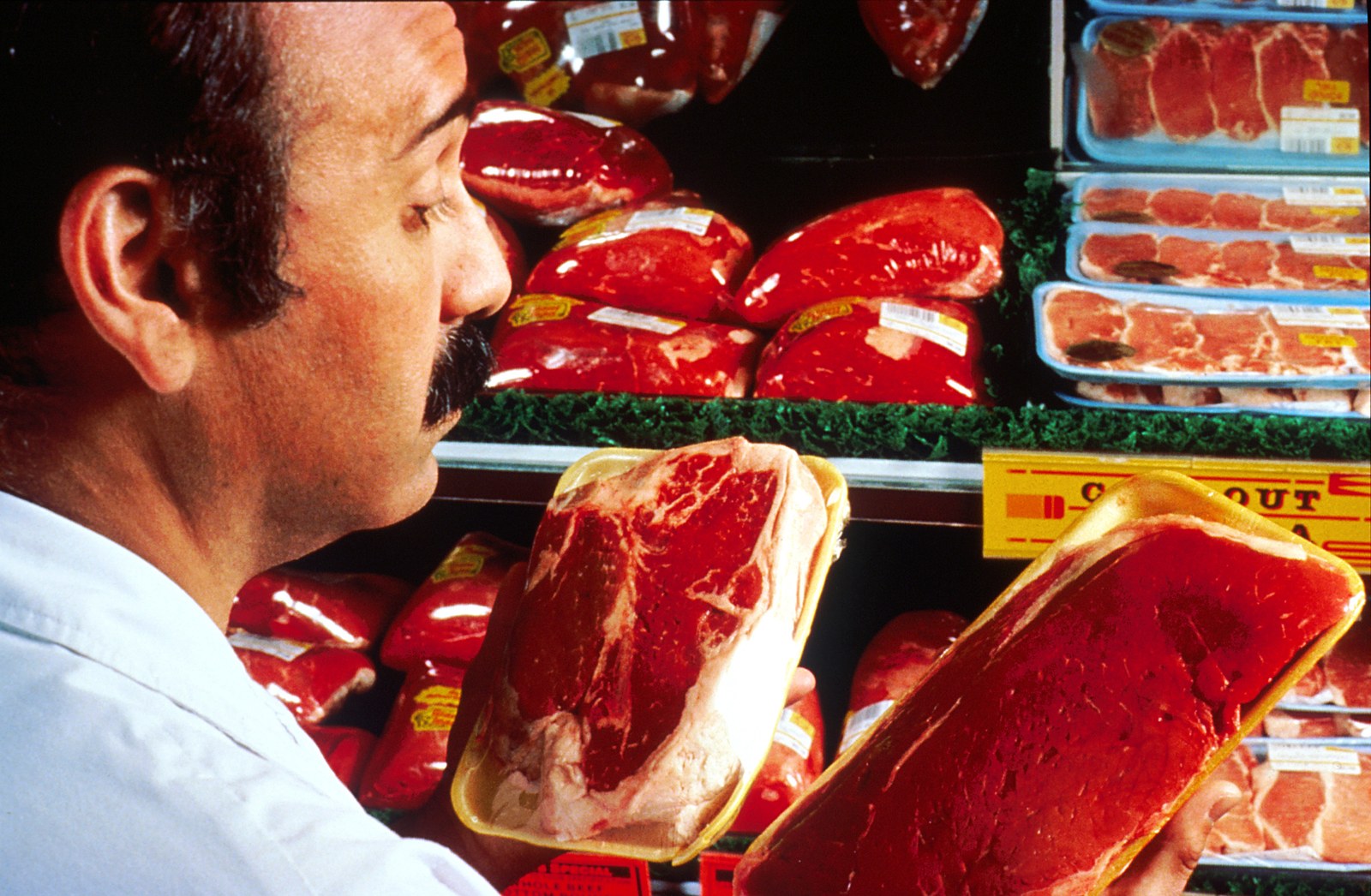
A shopper weighs two cuts of beef at a grocery meat case. The CPI's beef index rose 0.9% in October on a seasonally adjusted basis. Photo by Bill Branson, National Cancer Institute, via Wikimedia Commons (public domain).
Eating out cost more too. Food away from home rose 0.5% with or without adjustment, and full-service restaurant meals jumped 0.7%, according to Table 2. In BLS's Table A, the restaurant index had not risen more than 0.3% in any month from April through September.
What pushed core prices past forecasts?
Shelter rose 0.3%, and BLS says it accounted "for over thirty percent of the monthly all items increase." Car insurance rose 0.7% adjusted and 1.0% unadjusted. Recreation rose 0.8%. Hospital services climbed 0.8%. Used cars and trucks were the main offset, down 1.2%.
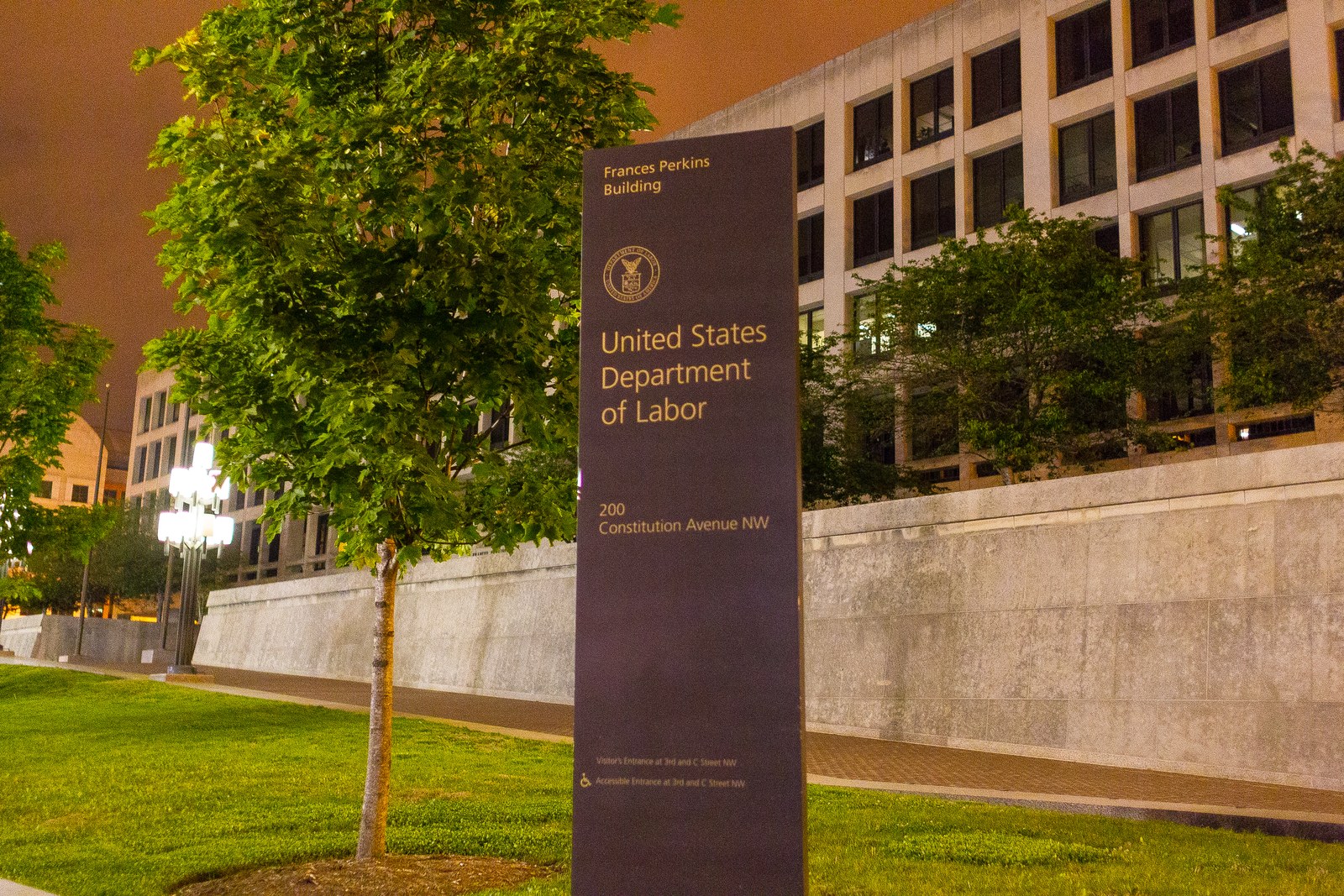
The Frances Perkins Building in Washington, headquarters of the Labor Department, which houses the Bureau of Labor Statistics. Photo by the U.S. Department of Labor via Wikimedia Commons, licensed CC BY 2.0.
Without an official annual number, analysts are filling the gap themselves. Economist Heather Long, quoted by Transport Topics, wrote that the data "implies about a ~4% inflation rate for the past year." That is her estimate, not a BLS figure. The last official reading was 3.7% for September, per the September release.
What happens next?
The Federal Reserve's next meeting is Dec. 8-9, and BLS says the November CPI comes out Dec. 10, the day after. So the Fed will decide with October's report as its last full CPI reading. Breitbart reported that bets on a rate hike at that meeting rose after Tuesday's numbers.
The honest read on October is narrower than the gas headline. Drivers did not pay more at the pump in October than in September. They paid more for steaks, dinners out and car insurance, and core inflation has now run at 0.3% a month since August. Gas offers some relief. The grocery bill is the one still going the wrong way.
Header photo: a gas price sign in Fort Pierre, South Dakota, in July 2022. Photo by Tony Webster via Wikimedia Commons, licensed CC BY 2.0, cropped.