Gov. Gavin Newsom announced Nov. 5 that he will commute all 548 California death sentences to life without parole, and the headlines say he did it. His own clemency page says the commutations "will not go into effect until the necessary legal steps are completed," and 382 of them need four votes from the California Supreme Court first.
What did Newsom actually sign?
Nothing that frees or changes a sentence yet. His clemency page lists an open letter, a request to the state Supreme Court, an explanatory statement and two lists of "intended" recipients. It does not say any commutation has been issued. The statement calls the plan a "proposed clemency action," and the governor's letter to the justices asks for a recommendation "by the end of this year so that I may act before the end of my term."
The numbers come from the Constitution. Article V, section 8 bars a governor from commuting the sentence of anyone twice convicted of a felony without a recommendation from the Supreme Court, four justices concurring. Newsom's office counted 382 condemned prisoners in that group. Law Dork and the law firm Horvitz and Levy both report the other 166 need no court sign-off. The filings I read name only the 382, so the 166 figure is subtraction from 548.
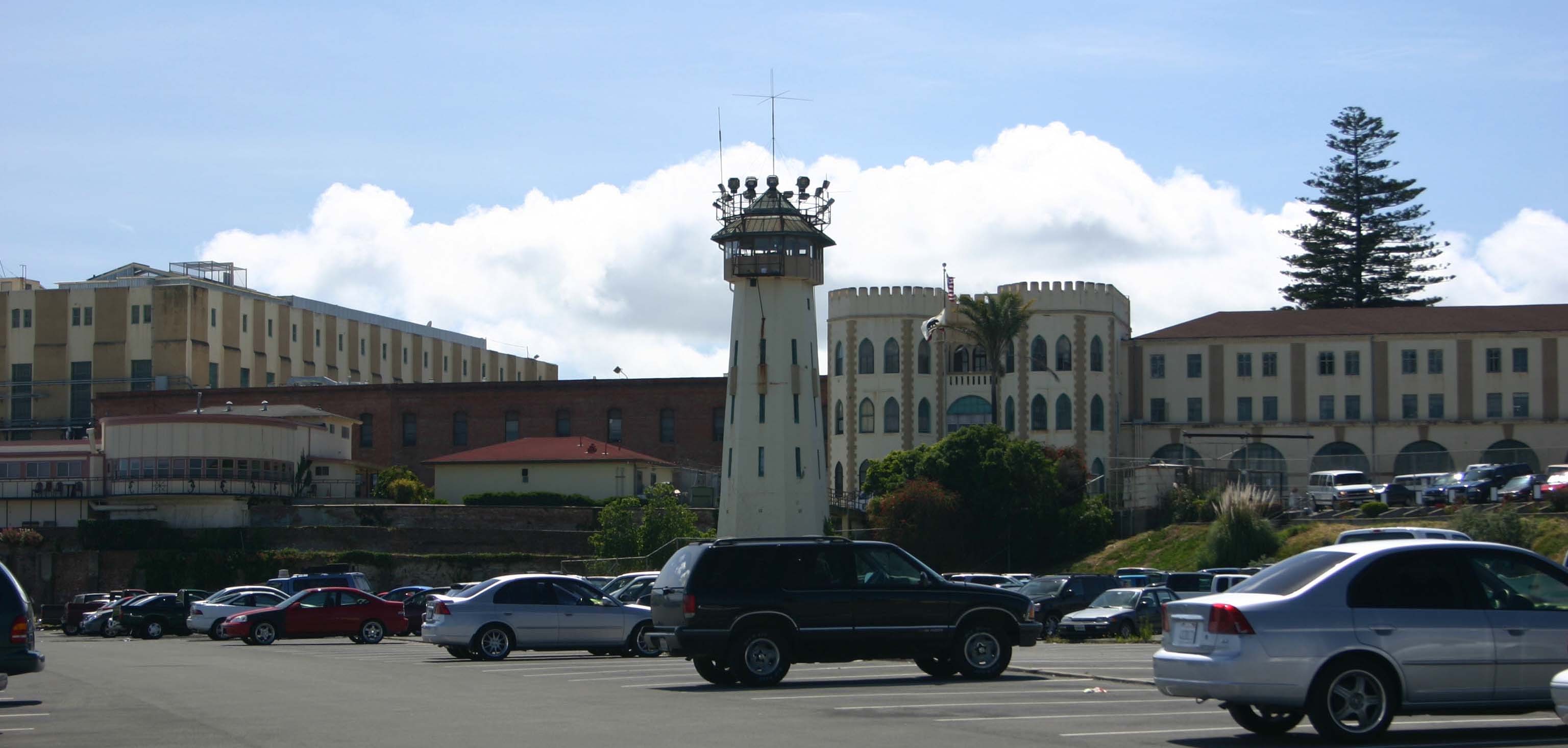
San Quentin State Prison, home to California's death row. Photo by Jjz3d83 (2005) via Wikimedia Commons (public domain).
What are the justices being asked to decide?
Less than the headlines imply, if the governor's reading holds. His explanatory statement quotes the court's own 2018 procedures to say its recommendation is "not a recommendation that the Governor grant" clemency but an "acknowledgment that the Governor may legitimately consider granting" it, reviewed for abuse of the power. The filing argues that giving one reason for all 548 cases is "neither arbitrary nor an abuse of power."
Official record
Governor Newsom's Explanatory Statement, "Proposed Death Penalty Clemency Action," filed with the California Supreme Court Nov. 5, 2026 (5 pages). Page 3 describes the court's role.
"Its clemency recommendation is 'not a recommendation that the Governor grant' clemency but rather an 'acknowledgment that the Governor may legitimately consider granting the application.'" — Explanatory Statement, p. 3, quoting the court's 2018 procedures
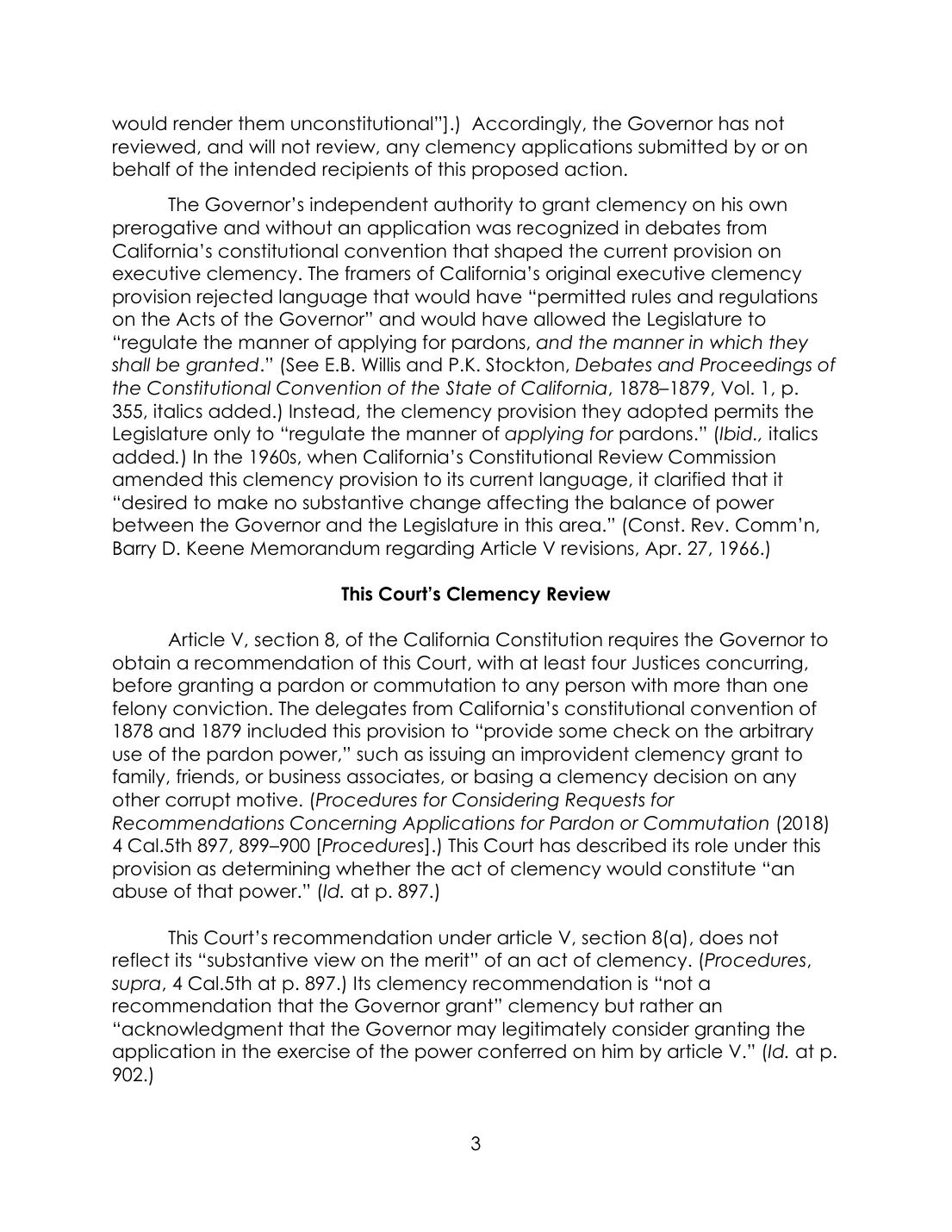
Read or download the full 5-page statement (PDF), also posted on the governor's clemency page.
What did the governor skip?
Individual review. The statement says he "did not consider information about their individual circumstances," beyond the fact of a death sentence and more than one felony. He read no clemency applications and filed no Board of Parole Hearings recommendations, arguing the Penal Code requires neither when a governor acts on his own. He sent only criminal-history summaries so the court could confirm who is "twice convicted."
On victims, the filing says the corrections department's victim services office will notify registered victims, and that the governor's office will "voluntarily" notify district attorneys because the statute requiring that notice covers applications, not this. San Bernardino County DA Jason Anderson told Fox News no victims' families had received notice. That is his claim, and I could not check it.
Who is lining up to sue?
Prosecutors. Riverside County DA Mike Hestrin said "there will be challenges" and that DAs are weighing options to take the fight "up to the Supreme Court," according to KESQ. Kern County DA Cynthia Zimmer said the action "will be challenged," and Orange County DA Todd Spitzer called it "mercy for the wolves," per Fox. CalMatters reports Criminal Justice Legal Foundation CEO Anne Marie Schubert pledged a challenge in the state Supreme Court too.
The legal theories reported so far are Marsy's Law notice, the voters' repeated rejection of repeal, and the missing parole-board step. Horvitz and Levy flags the last as the open question: the court could find a no-application commutation exceeds the governor's powers. No petition had been reported filed in the sources I read.
What the paperwork settles
It settles that the death penalty remains California law. Newsom's own letter says the action "does not repeal the death penalty" and that repeal belongs to the Legislature and voters. Los Angeles County DA Nathan Hochman made the same point to Fox and said his office will keep evaluating death-eligible cases. Newsom's letter also says prosecutors, juries and courts keep the power to seek new death sentences.
It does not settle whether four justices will say yes, or whether a court fight beats his January exit. The seven-seat court has one vacancy, per Law Dork, so four of the six sitting justices must agree. The court's recommendation carries no ruling on whether the whole plan is lawful, which is the question the DAs say they will bring. Governor-elect Xavier Becerra, CalMatters reports, has committed to extending the execution moratorium, so a stall here would not restart executions. It would leave 548 sentences in place, and families waiting.
Header photo: Governor Gavin Newsom, 2026 official portrait by Charles Ommanney, Office of the Governor, via Wikimedia Commons, public domain.