Minnesota state workers say they were surveilled, investigated and fired for flagging Medicaid fraud, and House Republicans have answered with the Medicaid Whistleblower Protection Act. The bill text tells a different story than the headlines: it creates no federal lawsuit, it puts the job of protecting whistleblowers back in state hands, and nothing in it takes effect until January 1, 2028.
Congress Finally Wrote a Bill for the Minnesota Whistleblowers
Rep. Mariannette Miller-Meeks, R-Iowa, introduced H.R. 10632 on September 28, with Reps. Kat Cammack of Florida and Michelle Fischbach of Minnesota as cosponsors. It was referred to the House Energy and Commerce Committee. Fox News Digital first reported the bill on Monday, tying it to the fraud scandal that has engulfed Gov. Tim Walz's Department of Human Services.
"No public servant should have to choose between their conscience and their livelihood," Miller-Meeks said. That line is lifted almost word for word from the last sentence of the Minnesota workers' own letter to Congress, which asked that "future public servants will not have to choose between their conscience and their livelihood."
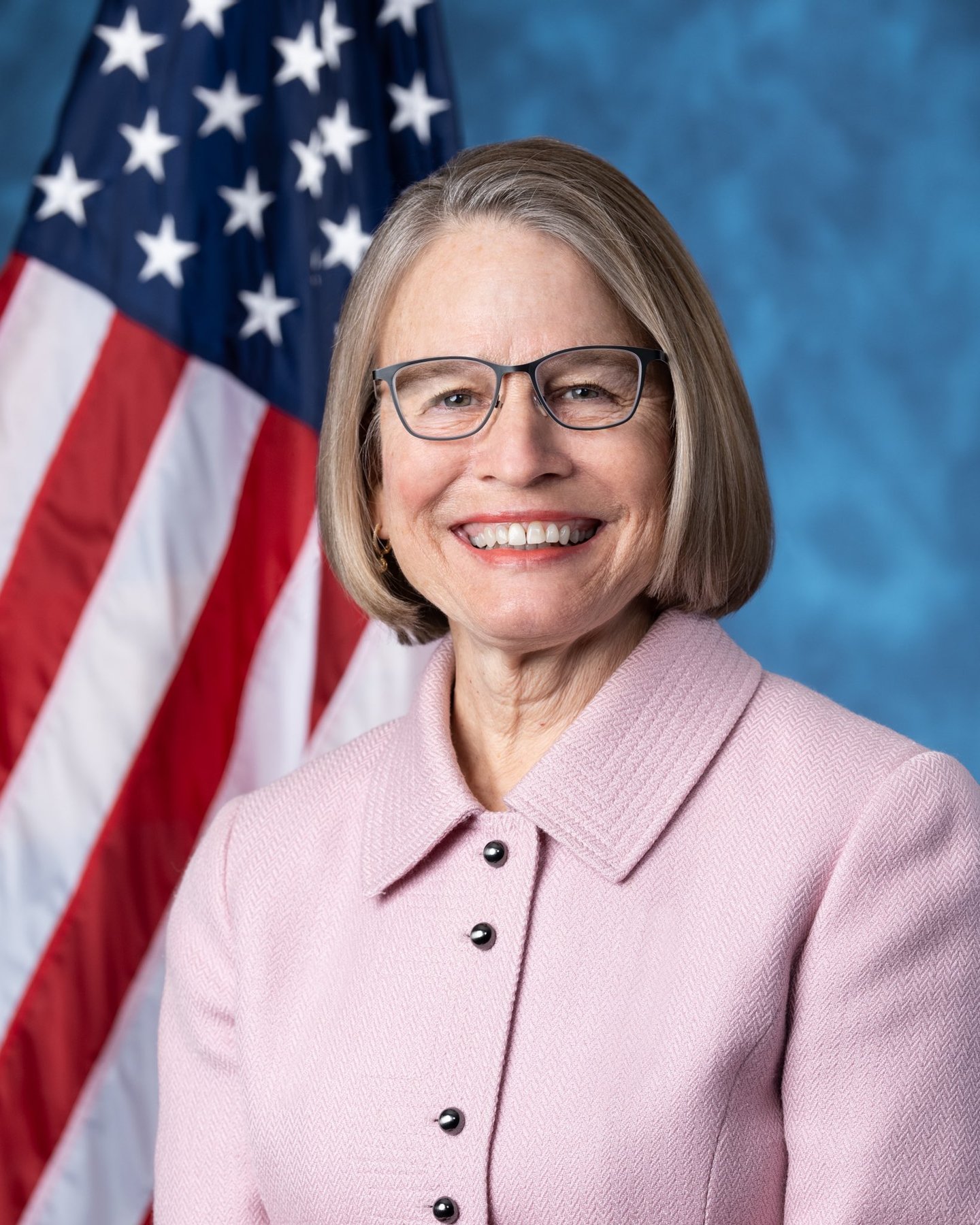
Rep. Mariannette Miller-Meeks (R-Iowa), sponsor of H.R. 10632. (U.S. House official portrait, House Creative Services, public domain, via Wikimedia Commons)
The bill is one of 14 in Chairman Brett Guthrie's "Continuing the Fight Against Fraud" package, released by Energy and Commerce Republicans on September 29. Miller-Meeks also sponsors the package's WALZ Act, which would have the HHS Inspector General review any 10 percent jump in Medicaid spending for fraud.
What the Minnesota Workers Said Happened to Them
The bill grows out of a seven-page letter that current and former Minnesota DHS employees sent to the House Oversight Committee on January 7, 2026. Miller-Meeks' office has posted it. Fox describes the signers as more than 30 people. The letter itself does not list names, and it explains why: the writers said they feared "the enormous harm that could come to us should we ever become exposed as whistleblowers."
What they describe is ugly. The letter says DHS ran keyword searches on employee messages and devices for words like "fraud," "double-billing" and "Medicaid fraud" to find out who was worried. It says some employees were investigated up to 11 times. One quoted warning reads, "Think about your home if you lose your job." Another worker who questioned contracts was asked, "Is there a racial animus behind it?"
Official record
"Collective Request for Congressional Oversight: Systemic Retaliation and Governance Failure at the Minnesota Department of Human Services (DHS)," submitted to the House Committee on Oversight and Government Reform, January 7, 2026 (7 pages), as posted by Rep. Miller-Meeks.
"These concerns were raised internally to leadership, Human Resources, Internal Audits, and the Commissioner. When internal systems failed, concerns were escalated to the Governor's Office and external oversight bodies including the Office of the Legislative Auditor."
Minnesota DHS employees' letter, page 1
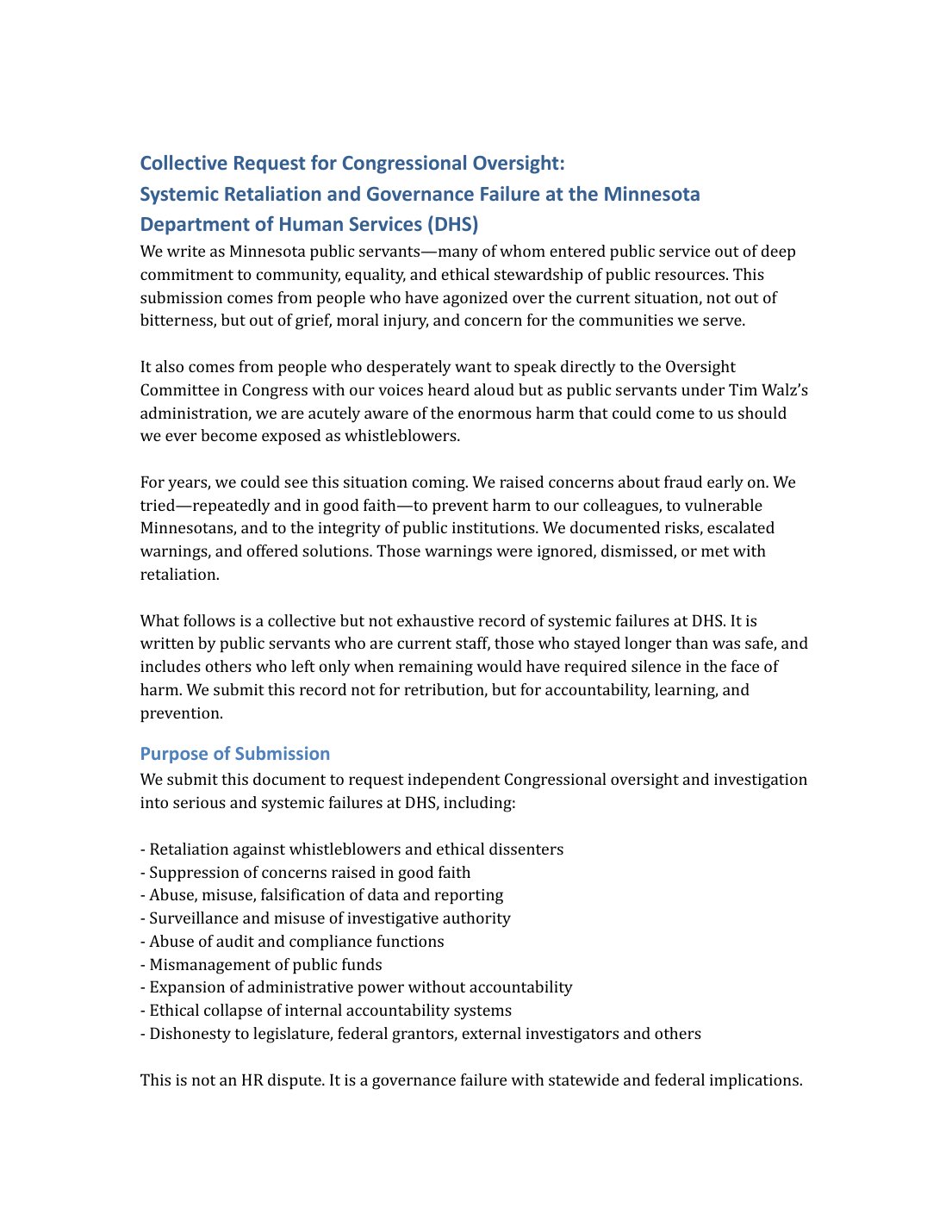
Read or download the full 7-page letter (PDF)
The letter points most directly at the Housing Stabilization Services program, which it calls "now infamous for fraudulent activity." The writers say staff sounded the alarm in late 2022 and were met with hostility. These are the employees' allegations. We could not find a point-by-point public response to them from DHS.
The Bill Creates No Federal Lawsuit
Coverage of the bill says it would "establish federal protections nationwide" and that workers who face retaliation "could also receive reinstatement, twice their back pay plus interest, attorneys' fees and punitive damages." Read the text and you find something narrower. H.R. 10632 adds a new requirement to the list of things every state Medicaid plan must contain under Section 1902 of the Social Security Act.
Under the new subsection (zz), each state must "provide assurances satisfactory to the Secretary that such State has in effect laws" that ban retaliation and give workers a way to seek relief. The double back pay and punitive damages are a menu the state law has to offer. A fired Minnesota employee would not walk into federal court under this bill. She would file under whatever law St. Paul passes, through "an administrative process" first and then judicial review.
That design has a logic to it. Congress has long run Medicaid by setting conditions on federal money, and the bill follows that playbook. The catch is who judges compliance. The text leaves it to "assurances satisfactory to the Secretary," and the backstop for a state that falls short is the HHS Secretary's existing power under Section 1904 to withhold Medicaid funds, a blunt tool aimed at a whole state's funding rather than at the manager who did the firing.
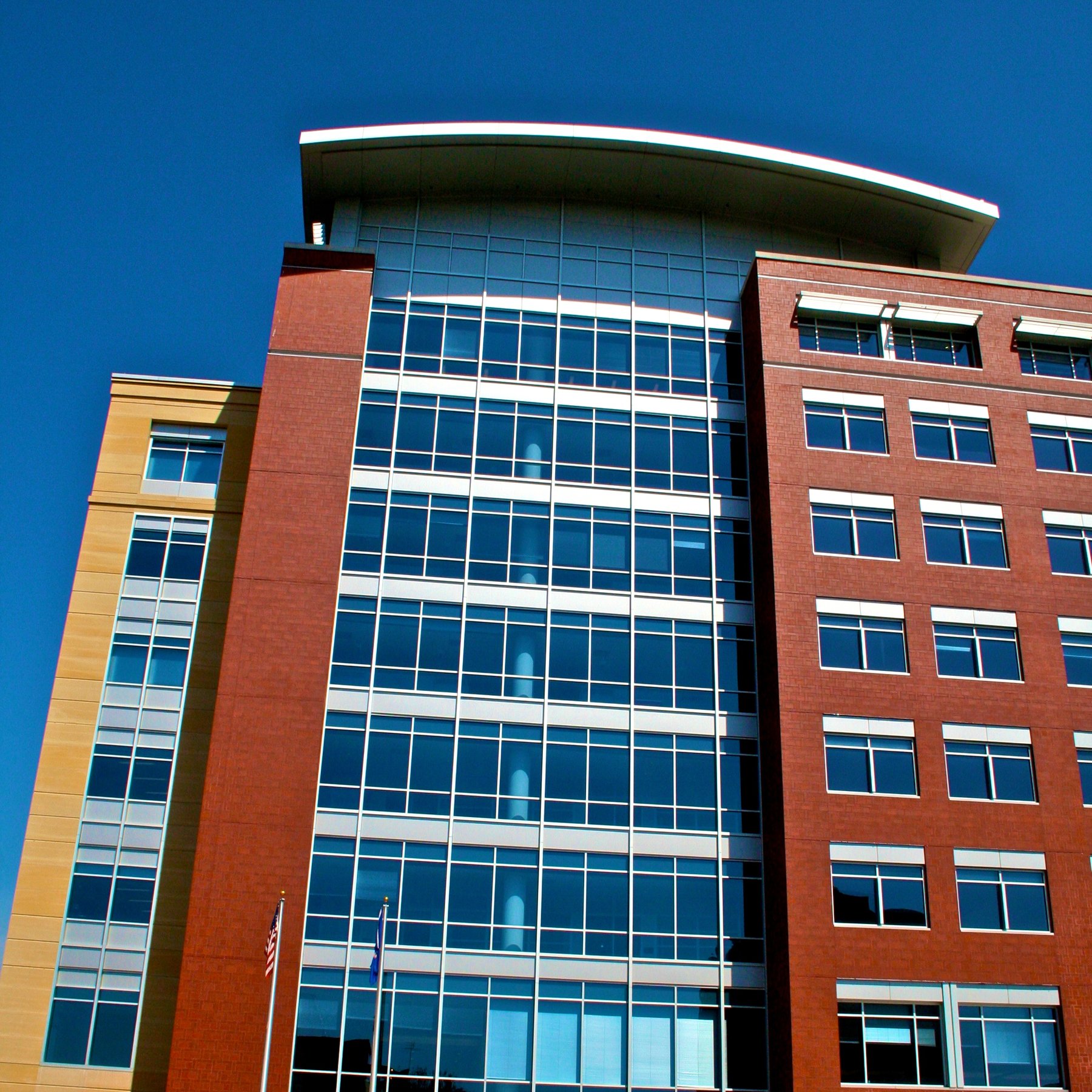
The Elmer L. Andersen Human Services Building in St. Paul, home of the Minnesota Department of Human Services. (Tony Webster, CC BY 2.0, via Wikimedia Commons)
Nothing Happens Until January 1, 2028
The bill's very first operative line sets the clock. The new state plan requirement applies "beginning January 1, 2028." Even if the House and Senate passed it this year and President Trump signed it, states would have more than a year before they had to show anything.
Official record
H.R. 10632, Medicaid Whistleblower Protection Act, 119th Congress, introduced September 28, 2026 (5 pages), via the Government Publishing Office.
"(91) provide that, beginning January 1, 2028, the State shall comply with the whistleblower protection requirements under subsection (zz)."
H.R. 10632, Sec. 2, page 2
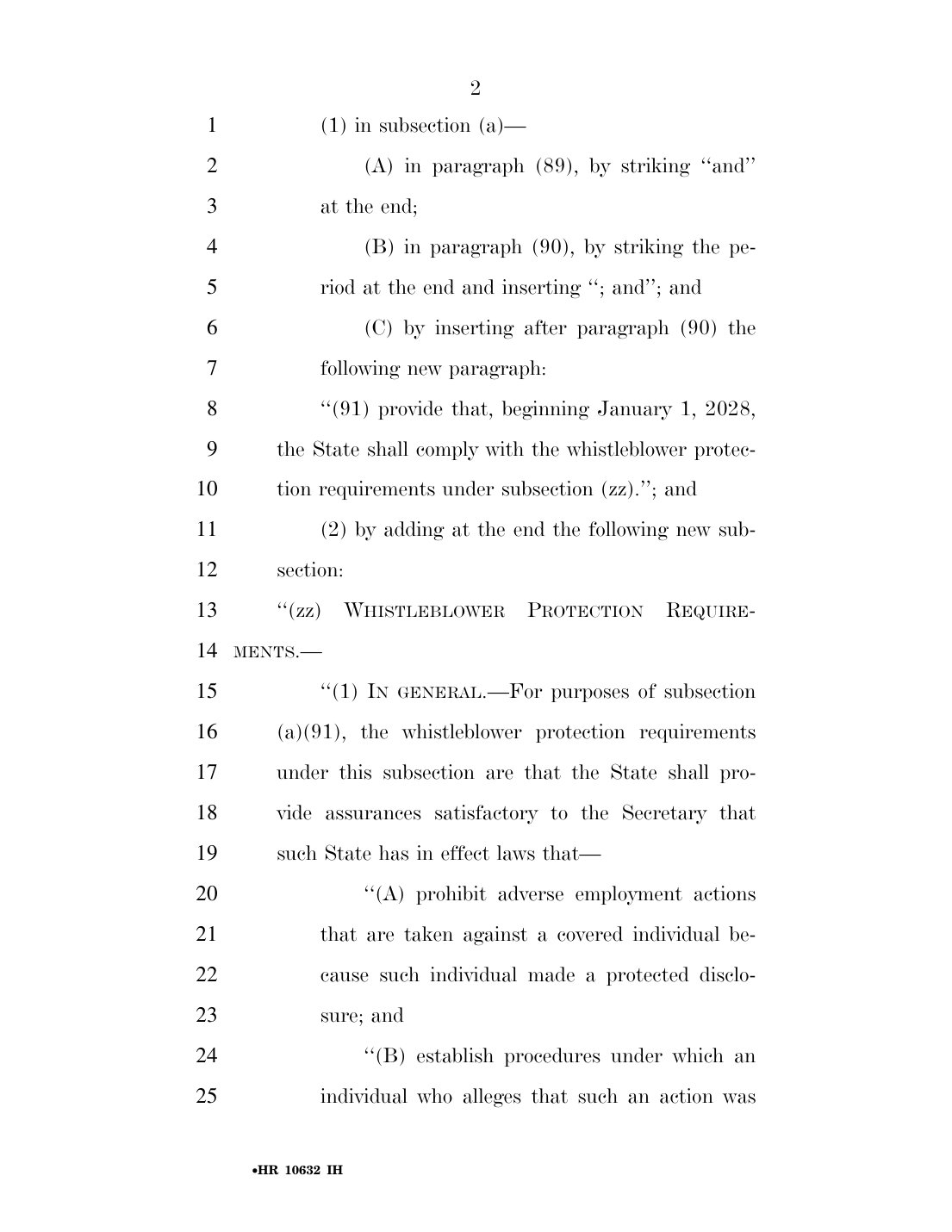
Read or download the full 5-page bill (PDF)
By then the administration the letter describes will be gone. Walz announced in January that he would not seek re-election, and Minnesota's next governor takes office in January 2027. Nothing in the text reaches back to cover anyone punished before 2028. For the workers who signed the January letter, the bill is protection for the next whistleblower, not relief for them.
The Places They Actually Went Are Not on the List
This is the gap the coverage missed. The bill only protects a "protected disclosure," and that means a disclosure made to a "covered entity." The text lists seven: a supervisor, the state Medicaid agency, state or federal law enforcement, HHS, the HHS Inspector General, Congress, and "any other entity designated by the Secretary."
Now compare that to where the Minnesota workers say they went. The letter says that when DHS's own channels failed, they escalated to "the Governor's Office" and "the Office of the Legislative Auditor." It says groups of staff also took complaints to Minnesota Management and Budget. None of those three is on the bill's list. Under the text as written, a worker who goes to the state's own legislative watchdog is protected only if the HHS Secretary has designated that office.
Going public is not covered either. The letter says DHS repeatedly questioned staff "about anonymous speech or social media activity." A worker who tells a reporter or testifies at a state legislative hearing makes no disclosure to a covered entity under this bill. The Minnesota employees chose Congress, which is on the list. Plenty of whistleblowers in other states start somewhere else.
Minnesota Already Had a Whistleblower Law
Minnesota has had a Whistleblower Act on the books since 1987. Its definition of employer expressly "includes the state and any political subdivision of the state." Its remedies section, Minn. Stat. 181.935, already lets a court order "reinstatement, back pay, restoration of lost service credit," compensatory damages and attorney's fees.
So the DHS employees were never without a law. What H.R. 10632 adds on paper is doubled back pay, punitive damages for malice, and a required administrative path ahead of court. Those are real upgrades. The Minnesota letter is also a warning about their limits. The writers say retaliation came through internal audits and investigations that looked legitimate on the surface, which is exactly the kind of case that is hard to win under any statute.
What Would Make This Bill Bite
Republicans are right to go after this. The fraud is not small. Then-First Assistant U.S. Attorney Joe Thompson said in December that 14 Minnesota Medicaid services under federal audit had billed $18 billion since 2018 and that a "significant" share, potentially half or more, could be fraudulent, Valley News Live reported. State employees saw warning signs years before prosecutors did.
The text gives Energy and Commerce two obvious fixes if it marks this bill up. Add state legislative auditors and governors' offices to the covered-entity list, so the Minnesota fact pattern is actually covered. Then spell out what HHS must see before accepting a state's "assurances," rather than leaving it to whoever holds the job.
None of that is a reason to oppose the bill. It is a reason to read it. The Senate is not scheduled to vote again until November 9, so the real test comes after the midterms, when the committee decides whether the Medicaid Whistleblower Protection Act becomes a real shield or a press release. The Minnesota workers who wrote that letter took a risk for taxpayers. The law named for them ought to cover the doors they knocked on.
Top photo: The St. Paul skyline with the Minnesota Department of Human Services building at center, October 2018. (Tony Webster, CC BY 2.0, via Wikimedia Commons)