Sen. Mike Lee asked the Senate on Wednesday to pass a national photo ID requirement for federal elections, and Sen. Alex Padilla of California blocked it with one objection. Padilla said it was too late and too sweeping. Lee said Democrats were stalling because they had nothing to say against voter ID itself. We read the 10-page bill they were fighting over, S. 5271, and found that each man described it in a way that leaves out part of what it says.
What Happened on the Senate Floor Wednesday
Late Wednesday morning, according to the Senate Daily Press log, Lee "spoke on election security and asked unanimous consent to take up and pass S. 5271." Padilla then asked Lee to swap in a different bill, S. 5390. Lee objected to that, and Padilla objected to Lee's original request. Under Senate rules, one objection is enough to stop a unanimous consent request.
Lee kept his pitch simple. "Let's make it easy to vote and let's make it hard to cheat," he said, according to the Deseret News. He pointed out that Americans already show ID for routine errands, down to Olive Garden's "Never Ending Pasta Pass." The honor system, he said, "must not be allowed to work in the context of our sacred elections."
S. 5390, the bill Padilla tried to swap in, has nothing to do with elections. It is Chuck Schumer's End Trump's Tariff Tax Act. Padilla's own office posted the full transcript, and most of his remarks were about gas prices, the Iran war, interest rates and health premiums. Lee's response, as the Deseret News reported it: "Fine, let's talk about tariffs on another occasion, but that's not what we're talking about here. This is a distraction, Mr. President."
What S. 5271 Actually Says
S. 5271 is Sen. Jon Husted's bill, not Lee's. The Ohio Republican, who ran Ohio's elections for eight years as secretary of state, introduced it August 5. It went straight onto the Senate calendar without a committee hearing. It adds one new section, Section 303A, to the Help America Vote Act.
The in-person rule is short. An election official "may not provide a ballot" in a federal election unless the voter shows valid physical photo ID. The bill lists five kinds that count: a state driver's license with a photo and an expiration date, a state ID card from the motor vehicle agency, a U.S. passport, a military or VA photo ID, or a tribal photo ID with an expiration date. A voter without ID can still cast a provisional ballot. It counts if the voter comes back within three days with the ID, or with a state affidavit saying they have no photo ID because of a religious objection to being photographed.
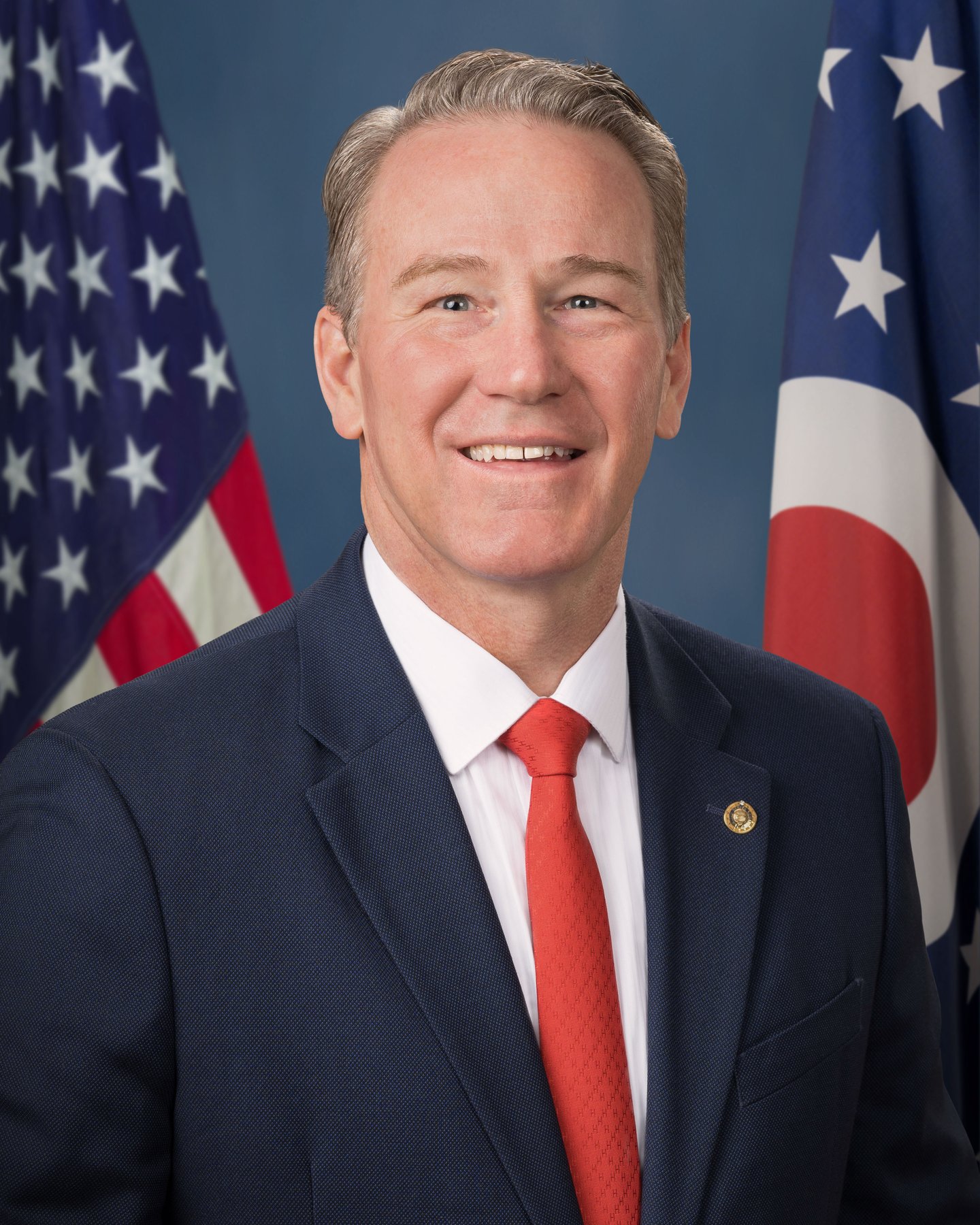
Sen. Jon Husted, R-Ohio, the author of S. 5271 and a former two-term Ohio secretary of state. (Official portrait, 119th Congress, United States Senate, via Wikimedia Commons, public domain)
Husted has described the bill as a modest one. His August 8 press release calls it a bill "to require voters to show photo ID at the polls." On the floor that night he called it "a clean, simple, straightforward bill" with "no prohibitions on absentee voting."
Padilla Got Two Things Right
"No prohibitions on absentee voting" is literally true. What Husted's release doesn't mention is that the bill has a second paragraph covering mail and absentee ballots. Page 4 of the bill says an election official "may not accept any ballot" from someone voting other than in person unless a copy of a valid photo ID comes back with it.
Official record
S. 5271, 119th Congress, "To amend the Help America Vote Act of 2002 to require voters to provide photo identification," introduced by Sen. Jon Husted August 5, 2026, and placed on the Senate calendar (Calendar No. 547) August 6, 2026. Page 4 shown below.
"the appropriate State or local election official may not accept any ballot for an election for Federal office provided by an individual who votes other than in person unless the individual submits with the ballot, (i) a copy of a valid photo identification; or (ii) the last four digits of the individual's Social Security number and an affidavit"
Proposed Section 303A(a)(2)(A)
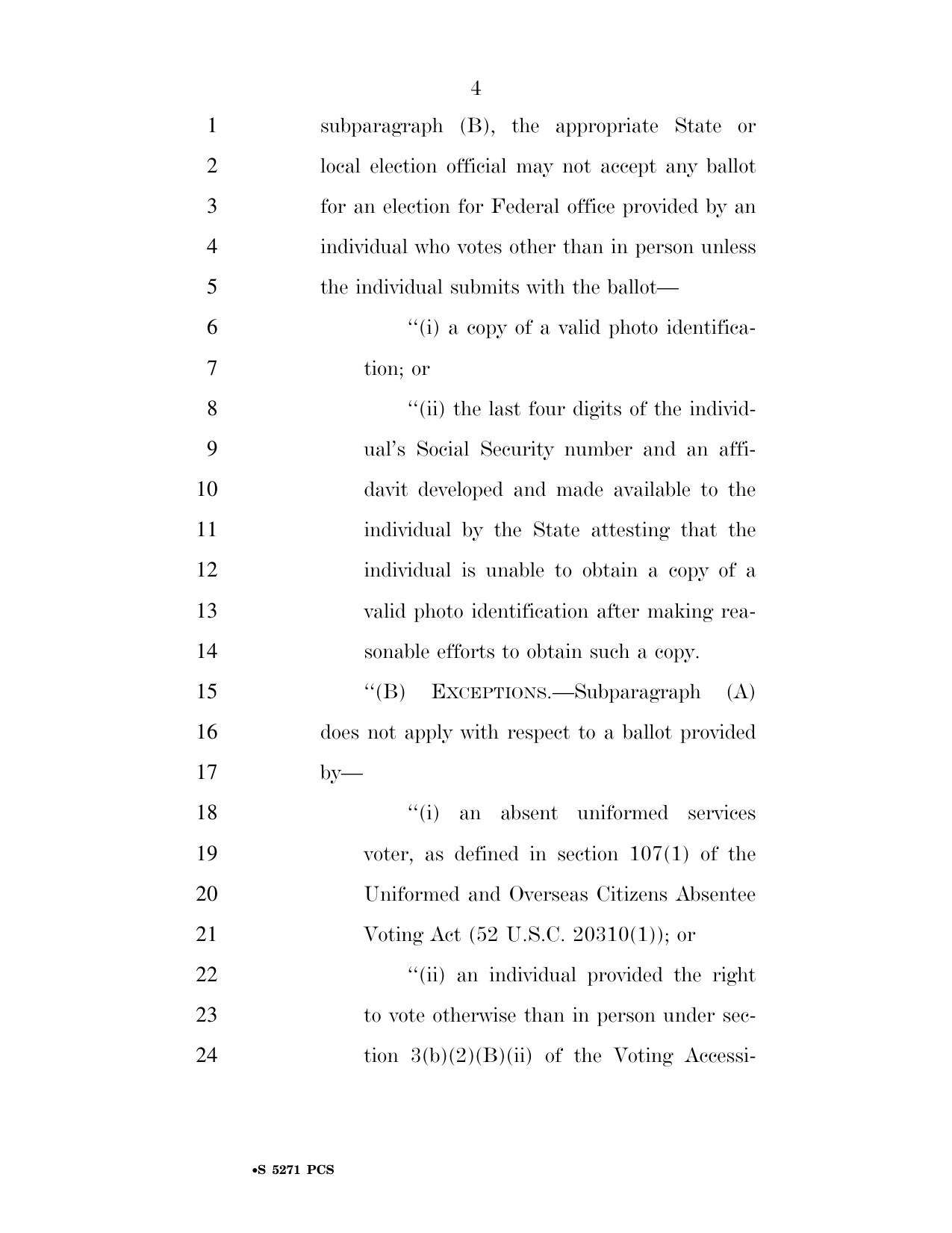
Read or download the full 10-page bill (PDF) · original on govinfo.gov
So Padilla's line that "it's not just a voter ID bill" holds up, because the requirement reaches past the polling place. The bill would reach every mail ballot in a federal race, and that matters in states like Utah and California that mail a ballot to every voter. His second point checks out too. The bill's effective-date clause says the new section takes effect "1 day after the date of the enactment" and applies to federal elections held on or after that date. No phase-in is written into it.
That timing matters this year. Padilla told the chamber that voters in North Carolina, Wisconsin and Alabama already have mail ballots, and that early in-person voting is open in Virginia, South Dakota, Minnesota, Vermont and Illinois. If S. 5271 became law in October, some ballots already sitting in kitchen drawers would suddenly need an ID copy that nobody told voters to include.
What Padilla Didn't Mention
The same page that backs up Padilla's point about mail ballots also has several provisions his speech skipped. A mail voter who can't get a copy of their ID "after making reasonable efforts" can send the last four digits of their Social Security number with a signed state affidavit. The copy requirement does not apply to absent uniformed services voters, meaning troops and their families, or to elderly and disabled voters covered by the 1984 Voting Accessibility for the Elderly and Handicapped Act.
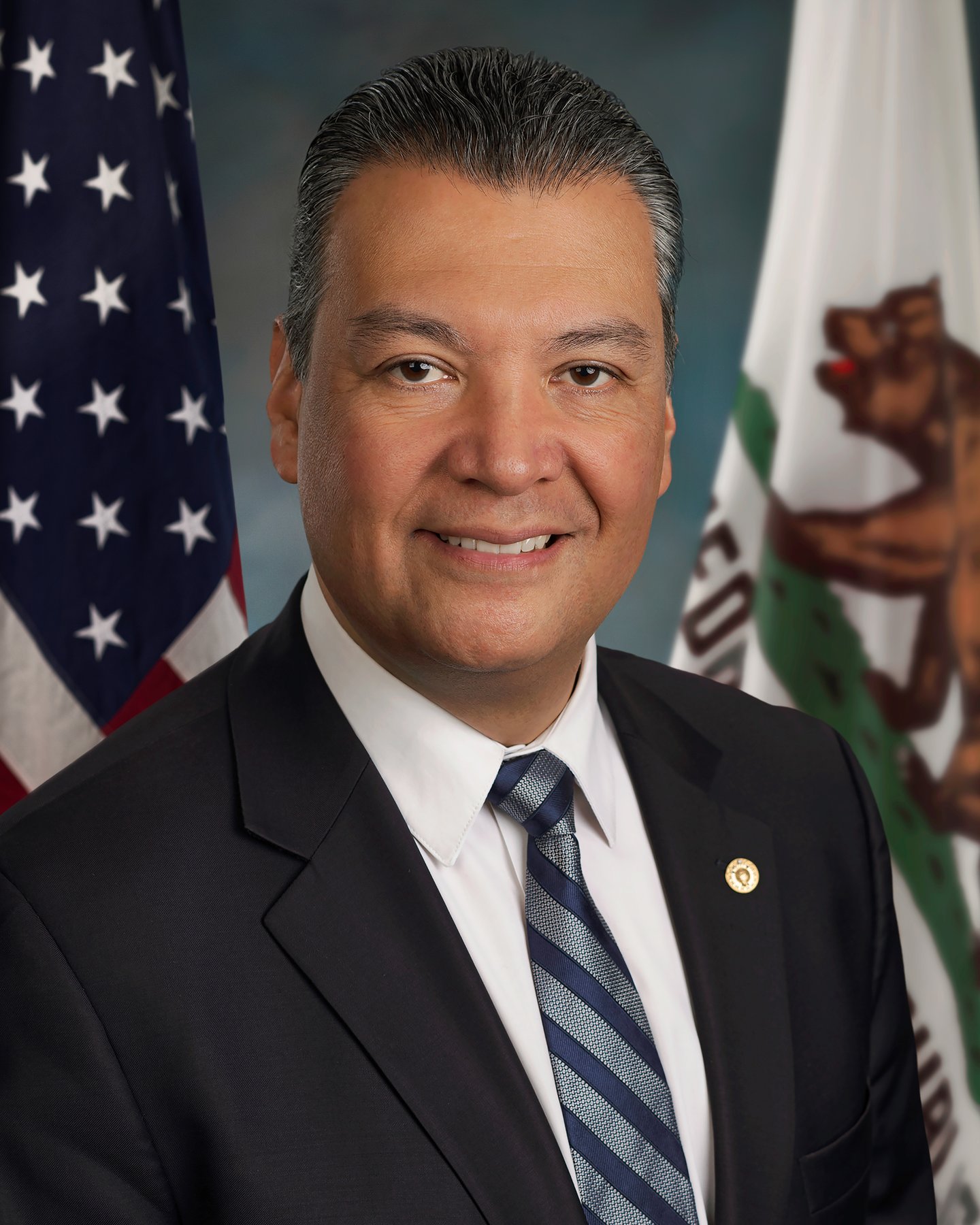
Sen. Alex Padilla, D-Calif., ranking member of the Senate Rules Committee and a former California secretary of state, objected to Lee's request on Wednesday. (Official portrait, United States Senate Photographic Studio, via Wikimedia Commons, public domain)
Section 303A(b) also requires each state to provide free public access to a copier or scanner, "to the extent practicable," at courts, libraries and police stations so voters can copy their ID at no cost. Padilla quoted Republicans who objected to the burden. He did not tell the Senate that the bill already includes a free way to make the copy and a fallback for voters who can't.
He also leaned on a quote that was originally about a different bill. Utah Lt. Gov. Deidre Henderson's "secret ballot" warning was aimed at the full SAVE America Act back in March, according to Utah News Dispatch. The ID-copy provision she was criticizing is also in S. 5271, so her concern still applies. But the bill on the floor Wednesday is not the one she was writing about, and Padilla's speech didn't say so.
Lee Also Described More Than the Bill Does
This part is on our side. As the Deseret News reported it, Lee told the Senate the bill had two mechanisms: one requiring new registrants to prove "that you are in fact a US citizen," and a photo ID requirement on Election Day. S. 5271 includes only the second. It has no proof-of-citizenship requirement anywhere in its text. Its only registration provision requires states to tell new registrants about the ID rule.
The reason is political. The full SAVE America Act, with proof of citizenship, has failed in the Senate since March. It failed as a talking filibuster and as reconciliation amendments. Husted first tried to pass a photo ID bill by unanimous consent on March 20, and in August he filed that idea as S. 5271. He had called it "a provision" of the SAVE America Act back in March. It got 52 votes on August 8, eight short of 60. Selling the narrow bill as if it were the whole package makes it easier for Democrats to call it something it isn't.
Who Made It "Too Late"?
Lee's best line Wednesday was about timing. For months, he said, Democrats called the bill racist and sexist, and now "they've secured the delay." He has a point. Padilla and his colleagues blocked voter ID in March, when there was time to prepare, and again in August. Now they say it's too close to the election. Padilla cited Justice Brett Kavanaugh's recent reasoning on changing election rules close to Election Day. That argument works best for the party that ran out the clock.
Still, Republicans on the ground made the same timing argument before Padilla did. In March, Henderson wrote that if Congress wants a federal ID mandate, "then states and voters need an onramp with time to prepare." Ohio shows what that looks like. The Ohio bill requiring mail voters to send an ID copy would have started with the November 2027 election, the Ohio Capital Journal reported, which gave the state more than a year to prepare. Republican Gov. Mike DeWine vetoed it anyway. He argued that a photocopy in an envelope gives officials no way to check whether the face matches the voter.
What Happens Next
S. 5271 remains on the Senate calendar as Calendar No. 547, and any senator can bring it back with another unanimous consent request. That will get the same objection until Republicans have 60 votes, or until the midterms change the numbers. Ohio voters will also decide this November whether to write photo ID into their state constitution, according to the same Capital Journal report. That vote will give a real reading on how popular the idea is.
The fix Republicans need is an effective-date change, not a new message. A version of S. 5271 that starts in 2027, with the free copier provision and the military exemption intact, would leave Padilla without the timing argument he relied on for most of Wednesday's speech. Democrats would then have to object to showing ID itself. That is the vote Lee has been trying to force since March, and a delayed start date is how Republicans could get it.
Top photo: Sen. Mike Lee, R-Utah, speaking at the 2019 Teen Student Action Summit hosted by Turning Point USA in Washington, D.C. (Gage Skidmore, via Wikimedia Commons, CC BY-SA 2.0)