Three House committees released a report on September 16 showing that ActBlue, the Democrats' main fundraising platform, never checked the passport numbers it used to screen out foreign donors. In the week since, ABC, CBS and NBC have not said the word "ActBlue" on their flagship morning or evening newscasts, according to a Media Research Center review. We read the 112-page report and ActBlue's 17-page rebuttal. ActBlue's defense is built on the same unchecked numbers.
Zero Seconds on the Big Three Networks
The Media Research Center searched every edition of the ABC, CBS and NBC flagship morning and evening shows that aired from September 16 through September 23. According to MRC analyst Bill D'Agostino, the scandal got zero seconds of airtime and ActBlue was not mentioned once.
That silence is harder to defend because the story didn't start with Republicans. It started with the New York Times. On April 2, Times reporters Reid Epstein and Shane Goldmacher reported that ActBlue's own outside lawyers had warned the company it may have misled Congress about how it vetted foreign donations. The Washington Post covered ActBlue's counterattack the same day the report came out. CBS News even covered the committees' contempt threat against ActBlue's CEO on its website in April. Their own industry broke it, and the networks still left it off the air.
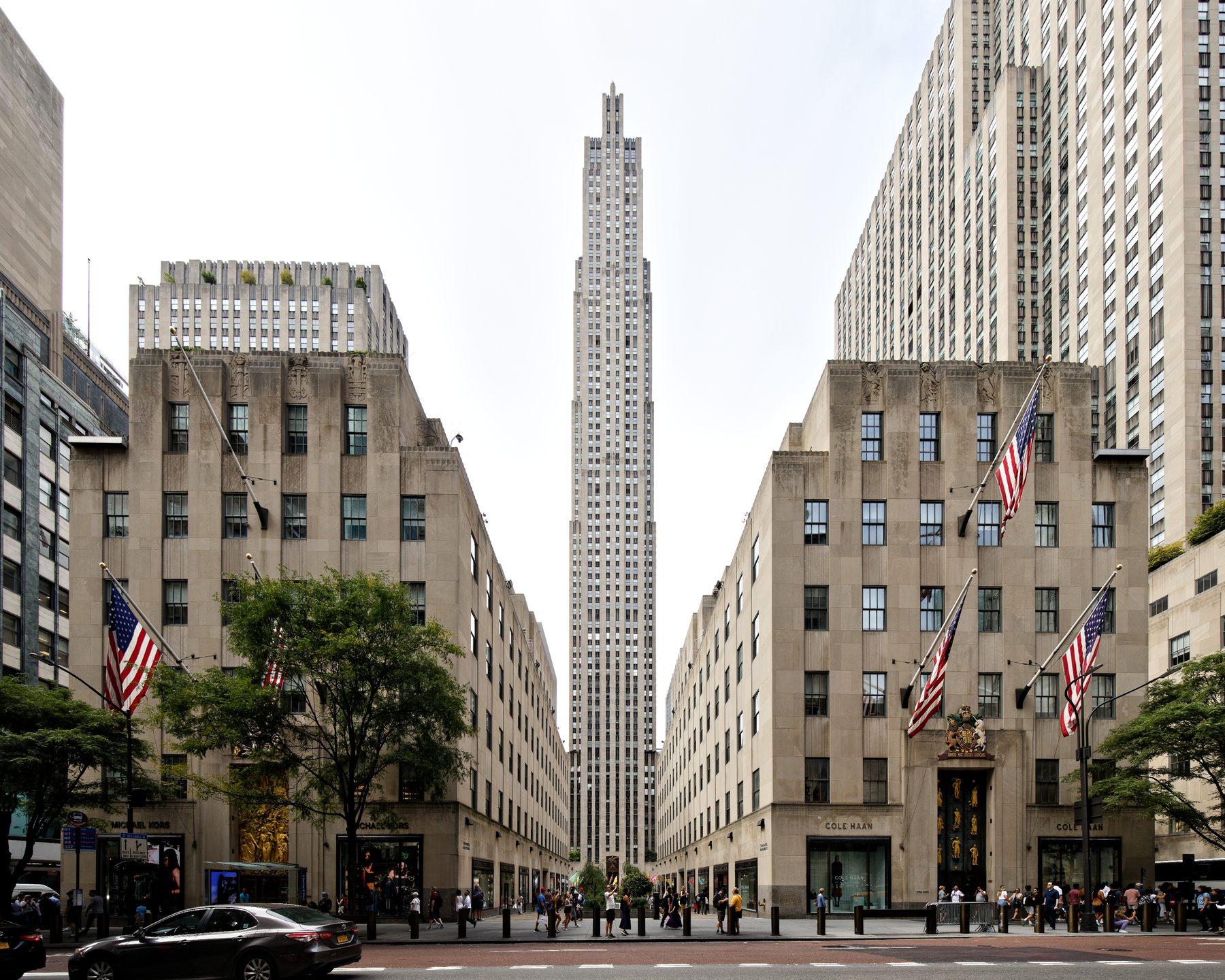
30 Rockefeller Plaza in Manhattan, home of NBC News, pictured in August 2024. (D. Benjamin Miller, Wikimedia Commons, CC0)
What the Committees Actually Released
The House Administration, Judiciary and Oversight committees published the report, titled "Fraud on ActBlue, Part III," on September 16. It is 22 pages of findings plus 26 exhibits taken from ActBlue's own document productions.
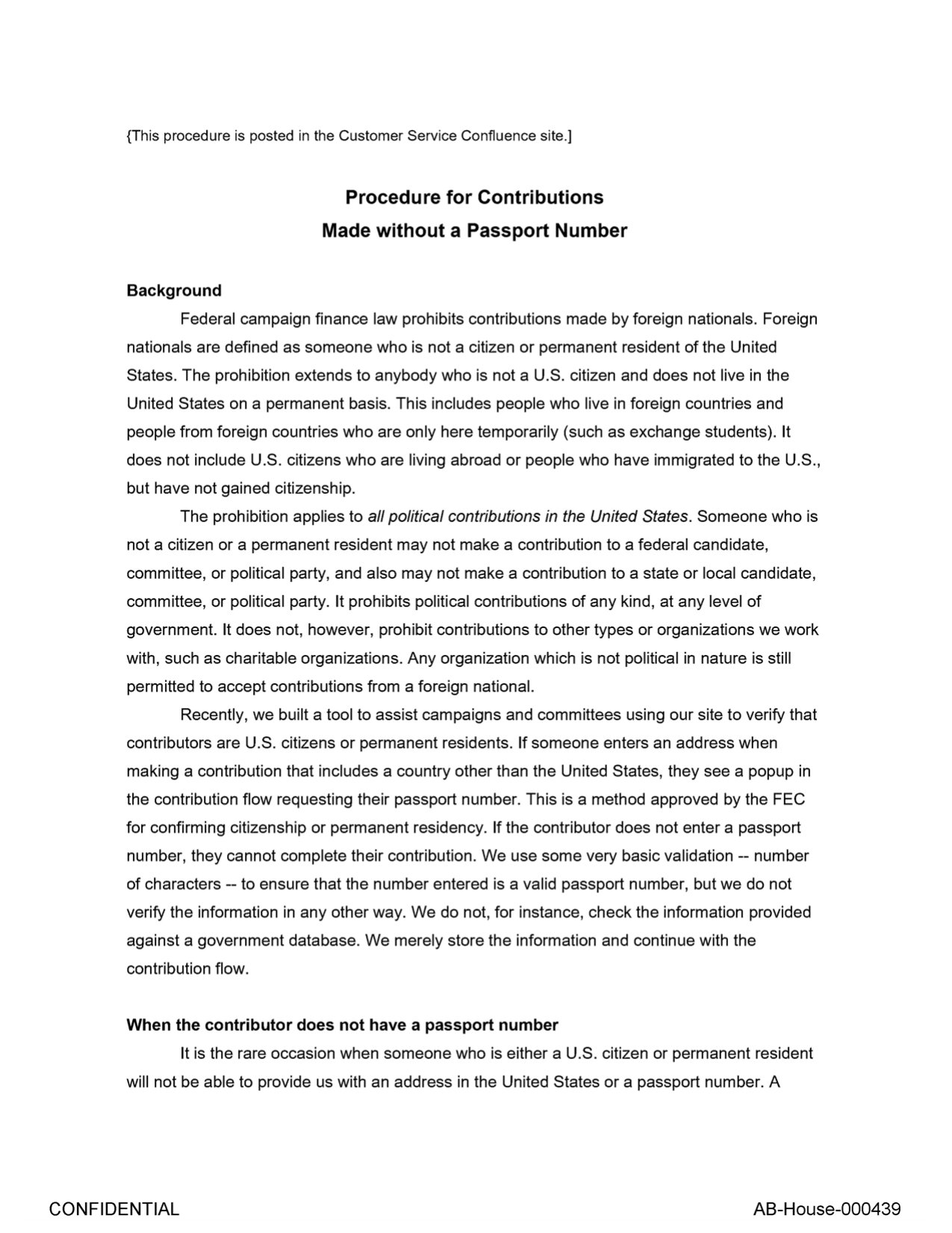
The exhibits are the part worth reading. Exhibit 13 is an internal ActBlue customer-service procedure, stamped AB-House-000439. It says that when a donor enters a foreign address, a popup asks for a U.S. passport number, and the donation can't go through without one. Then it explains what happens to that number:
"We use some very basic validation -- number of characters -- to ensure that the number entered is a valid passport number, but we do not verify the information in any other way. We do not, for instance, check the information provided against a government database. We merely store the information and continue with the contribution flow."
In other words, the gatekeeper for foreign-address donations was a length check. Any string with the right number of characters would get through.
Official record
"Fraud on ActBlue, Part III: ActBlue's Failure to Prevent Illegal Foreign Political Contributions," interim staff report of the Committee on House Administration, the Committee on the Judiciary and the Committee on Oversight and Government Reform, September 16, 2026. The page below is from Exhibit 13, ActBlue's internal "Procedure for Contributions Made without a Passport Number."
Read or download the full 112-page report with exhibits (PDF) · view the committee's release
The same procedure covers donors who say they are U.S. citizens but have neither a U.S. address nor a passport. Staff were told to ask about the donor's citizenship and send the case to the legal department. If the legal department signed off, the procedure tells staff to type "ACTBLUEXX" into the donor's passport field, so the donor is never asked for a passport number again.
The report gives one real example from a September 4 production. A donor supplied an identity card that expired on August 27, 1974 and a Detroit birth certificate, with no passport. A member of ActBlue's legal and compliance team wrote back: "This seems like sufficient evidence to me!"
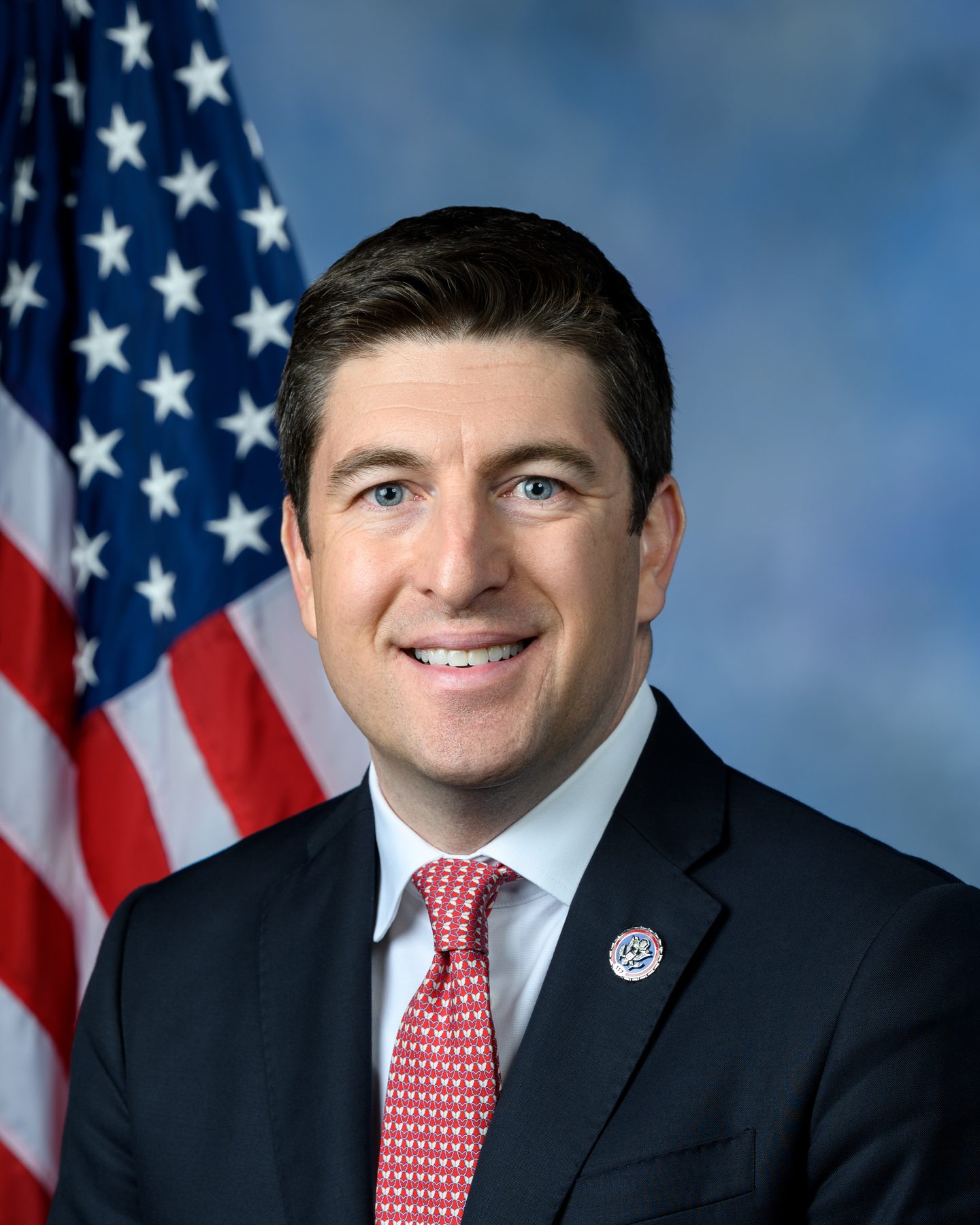
Rep. Bryan Steil (R-Wis.), chairman of the Committee on House Administration, which has investigated ActBlue since 2023. (U.S. House of Representatives, Wikimedia Commons, public domain)
"Give the Benefit of the Doubt to the Donor"
ActBlue's fraud reviews also leaned hard toward yes. The company produced shift logs of manual reviews from October 2022 through October 2024. In one, a supervisor listed an IP and billing mismatch, a foreign credit card, an odd email domain, and a browser fingerprint connecting the donor to other rejected users. Then the supervisor told the analyst to accept the donation because ActBlue "can't say for sure that this is fraud."
Other entries are just as loose. A donor who "sometimes has an IP in Hong Kong" was approved. A donor that "all signs point to" being Canadian, using a Missouri billing address, was approved partly because the person had an active Twitter account. Another was cleared because the donor had a LinkedIn page. The committees' press release adds that an analyst flagged "an odd pattern of small donations to the [Kamala] Harris campaign using prepaid cards," and a colleague said they were "good to accept."
ActBlue's Rebuttal Counts the Same Unchecked Numbers
ActBlue got ahead of the report. On September 12, its lawyer Ronald Machen of WilmerHale sent the committees a letter and white paper describing a forensic review of 2023 donations. ActBlue's public summary says 99.99 percent of nearly $990 million in 2023 political contributions "came from donors who provided ActBlue a U.S. address or a passport number."
Read that sentence next to Exhibit 13. The metric is whether a passport number was provided. ActBlue's own procedure says those numbers were never checked against anything. The white paper describes the passport box as a "required" field, meaning the form "could not be submitted without completing" it. That confirms a number had to be typed in. It doesn't show the number was real.
The white paper also puts the whole question in perspective, and that part deserves a fair hearing. Foreign-address donations were about $1.3 million in 2023, roughly 0.13 percent of ActBlue's political volume. ActBlue says donors provided a passport number in the same transaction for about 93 percent of those dollars.
The Numbers That Cut Against ActBlue's 2023 Letter
ActBlue's case is that CEO Regina Wallace-Jones told the truth in her November 27, 2023 letter to Congress. The white paper quotes the key line from that letter itself: "Only donations with passport information are processed."
ActBlue's own forensic data says otherwise. The white paper reports $91,316 in 2023 foreign-address contributions processed with no passport number in the same transaction. It says most of that money came from donors who provided a passport number or U.S. address on some other donation. But it also reports $22,321 from 139 donors for whom no passport number was ever collected. For $10,068 of that, the only sign the donor was eligible was their own checkbox on the form. ActBlue's explanation, in a footnote, is that "nothing will ever occur 100% of the time," and that most of the gaps were recurring donations set up before 2020, when the passport field was added.
Those are small numbers. But the 2023 letter didn't say "almost all." It said "only," and ActBlue's own review shows that wasn't literally true.
Where the Report Overreaches, and Where the Right Got It Wrong
The committees' report has its own soft spots. It opens its passport section by citing a March 2024 "new passport verification feature," which is Exhibit 12. That exhibit describes a different system: ActBlue Express account holders with international addresses scanning a photo of their U.S. passport through the payment company Stripe. That is a real ID check, not a character count. The report blends the two systems together. Neither exhibit, as published, says when it took effect or whether the Stripe scan was required before someone could donate.
The report also never estimates how much foreign money actually got through. Its 22 pages of findings contain no dollar figure for illegal contributions. What it documents is a weak gate and a culture of waving people through, which is serious, but it isn't the same as proving a specific amount of foreign cash.
The MRC's writeup has an error too. It says Wallace-Jones "testified under oath" in June that the passport process would filter out foreign donations. She didn't. At the June 10 House Administration hearing, Roll Call reported, she declined to answer questions and invoked her Fifth Amendment rights, even when Rep. Barry Loudermilk asked whether to address her as Ms. Jones or Ms. Wallace-Jones. The passport claim was in the 2023 letter. Two ActBlue lawyers, former interim general counsel Aaron Ting and legal counsel Zain Ahmad, also invoked the Fifth in their depositions in November and December 2025, according to the report.
ActBlue's Side, in Its Own Words
ActBlue calls the investigation a partisan attack. "President Trump and his allies have gone to unprecedented lengths to target ActBlue and other organizations they believe threaten their agenda," the company wrote. In a Washington Post op-ed the day she appeared, Wallace-Jones argued that lawmakers serious about fundraising fraud should also question the head of WinRed, the Republican platform. Rep. Jamie Raskin (D-Md.) called the hearing part of a "political vengeance and vendetta campaign," according to Roll Call.
ActBlue's argument deserves airtime. So do its shift logs. The networks gave viewers neither.
Why the Silence Matters Before November
ActBlue moved nearly $990 million in political money in 2023 alone, by its own count. In May, the House Administration Committee advanced three bills aimed at foreign money in elections, including H.R. 3535, the Stop Foreign Funds in Elections Act, according to the report. The committees say they will keep investigating, and ActBlue is still withholding large portions of Ting's resignation letter on privilege grounds.
The documents have been public for a week. Viewers who rely on the evening news still haven't heard about them.
Top photo: The Longworth House Office Building in Washington, where the Committee on House Administration held its June 10 ActBlue hearing. (U.S. Capitol, Wikimedia Commons, public domain)