Hawaii voids a handgun purchase permit if the buyer doesn't use it within 30 days, and it makes many gun owners carry a newly acquired firearm into a police station for inspection. On September 22 an 11-judge panel of the Ninth Circuit upheld both rules. Read the opinion's cover page and count the names: the vote was 6 to 5. The majority needed about a dozen pages to rule for Hawaii, and the five dissenters answered with more than 60.
Two Hawaii Rules No Other State Has
The case is Yukutake v. Lopez, No. 21-16756. Honolulu residents Todd Yukutake and David Kikukawa sued in 2019 over two parts of Hawaii's gun permit law. The first, Hawaii Revised Statutes section 134-2(e), says a permit to acquire a pistol or revolver "shall be void unless used within thirty days after the date of issue." Miss the window and you start the whole application over. Yukutake says that happened to him under the old version of the rule, which gave buyers only 10 days.
The second rule, section 134-3, requires owners to fill out a form listing the gun's caliber, serial number and manufacturer, and then in certain cases bring the gun itself to a police station for physical inspection. Judge Ryan D. Nelson's dissent says that has to happen within five days of acquisition. It also cites the district court's 2021 finding that Hawaii is "the only state in the country to require in-person inspection and registration of firearms."

The Richard H. Chambers U.S. Court of Appeals building in Pasadena, where the en banc Ninth Circuit heard Yukutake v. Lopez on March 24, 2026. (Ken Lund, Wikimedia Commons, CC BY-SA 2.0)
Who Actually Has to Haul a Gun to the Police?
Hawaii narrowed the inspection rule in 2022. According to the majority opinion, it now covers private-party transfers and certain homemade or 3D-printed guns. It also covers "firearms brought into Hawaii from another jurisdiction." Hawaii defended the rule in court as a way to catch unserialized "ghost guns."
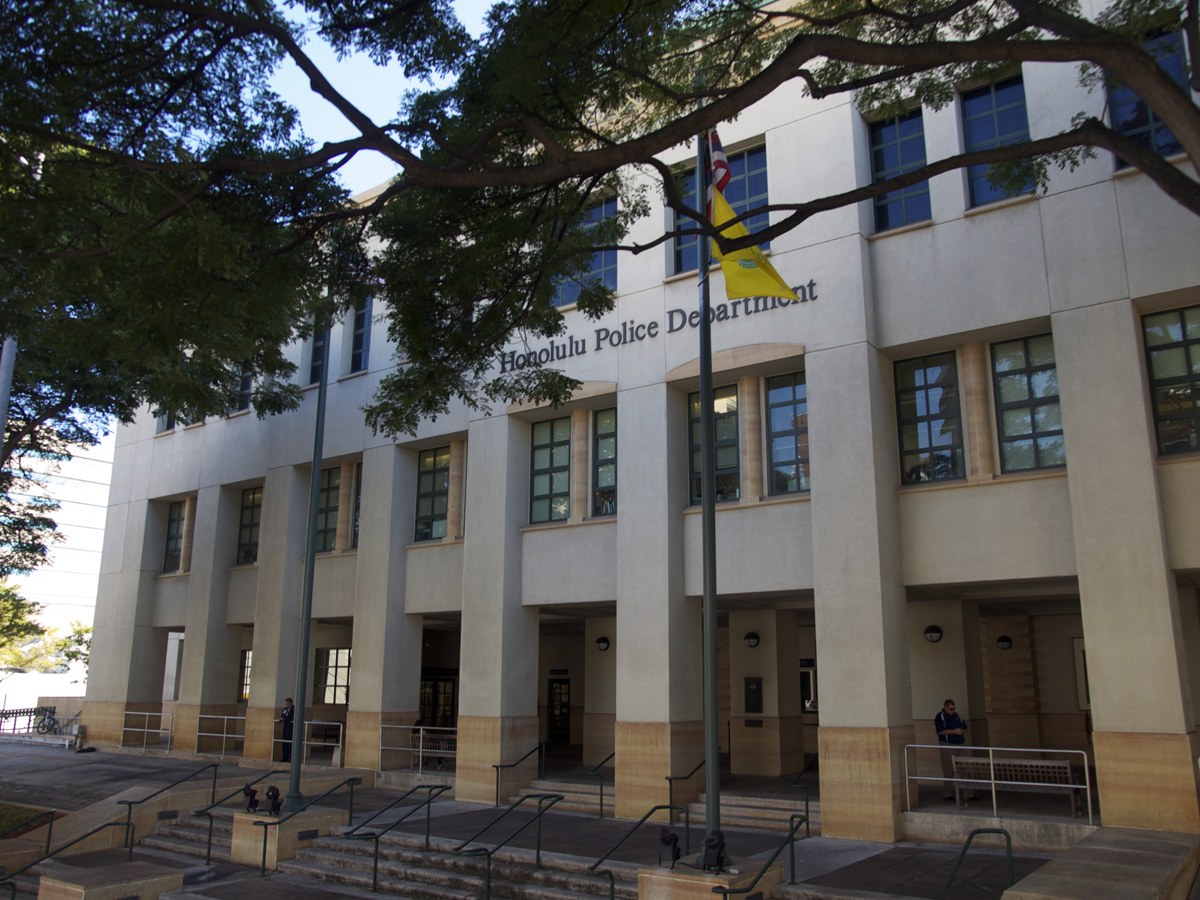
Honolulu Police Department headquarters. Under Hawaii Revised Statutes section 134-3, covered gun owners must bring the firearm itself to the police for inspection. (Gillfoto, Wikimedia Commons, CC BY-SA 3.0)
The dissent points out what that defense leaves out. The inspection requirement "applies not just to unserialized firearms; it also applies to all standard handguns brought to Hawaii from other states (even if purchased from a federally licensed dealer) or legally sold by private parties in Hawaii." So a law-abiding gun owner who moves to Honolulu with a factory-new, serialized pistol bought from a dealer still has to carry it into a police station. Judge Nelson called that either "an over-inclusive add-on regulating already illegal possession or a superfluous burden on an already vetted, law-abiding person."
The 30-day rule has its own problem. According to the dissent, Hawaii's permit for rifles and shotguns stays valid for a full year and can be used for several purchases. The state never explained why a handgun permit goes stale in 30 days when a long-gun permit is good for 12 months.
How the Majority Got to Yes
Judge John B. Owens wrote for the majority, joined by Chief Judge Mary Murguia and Judges Kim McLane Wardlaw, Jacqueline Nguyen, Gabriel Sanchez and Holly Thomas. His opinion never asked whether Hawaii could point to a founding-era law like either rule. It relied instead on footnote 9 of the Supreme Court's 2022 Bruen decision. That footnote said nothing in the ruling should be read to question "the 43 States' 'shall-issue' licensing regimes," while leaving room for challenges where permit systems are "put toward abusive ends."
Owens read that footnote as a presumption that shall-issue rules are constitutional, with the burden on gun owners to prove abuse. Then he resolved that question in one paragraph. "At most, the provisions impose only modest, procedural burdens," the majority wrote. They "do not materially impede Plaintiffs from acquiring firearms." The majority also described Hawaii's other permit demands, including fingerprints, Social Security numbers and mental health history, as "commonplace in shall-issue jurisdictions."
Kostas Moros of the Second Amendment Foundation, who filed an amicus brief in the case, rejected that line on X, as reported by Bearing Arms. Handing over a Social Security number and mental health records, he wrote, is "certainly NOT the norm in most shall-issue jurisdictions."
Official record
Yukutake v. Lopez, No. 21-16756 (9th Cir. en banc), opinion filed September 22, 2026. Opinion by Judge Owens, with dissents by Judges R. Nelson, Forrest and VanDyke.
"Never has a single footnote in a Supreme Court opinion been so misread by so many lower courts to deny so many Americans their constitutional rights."
Judge Ryan D. Nelson, dissenting
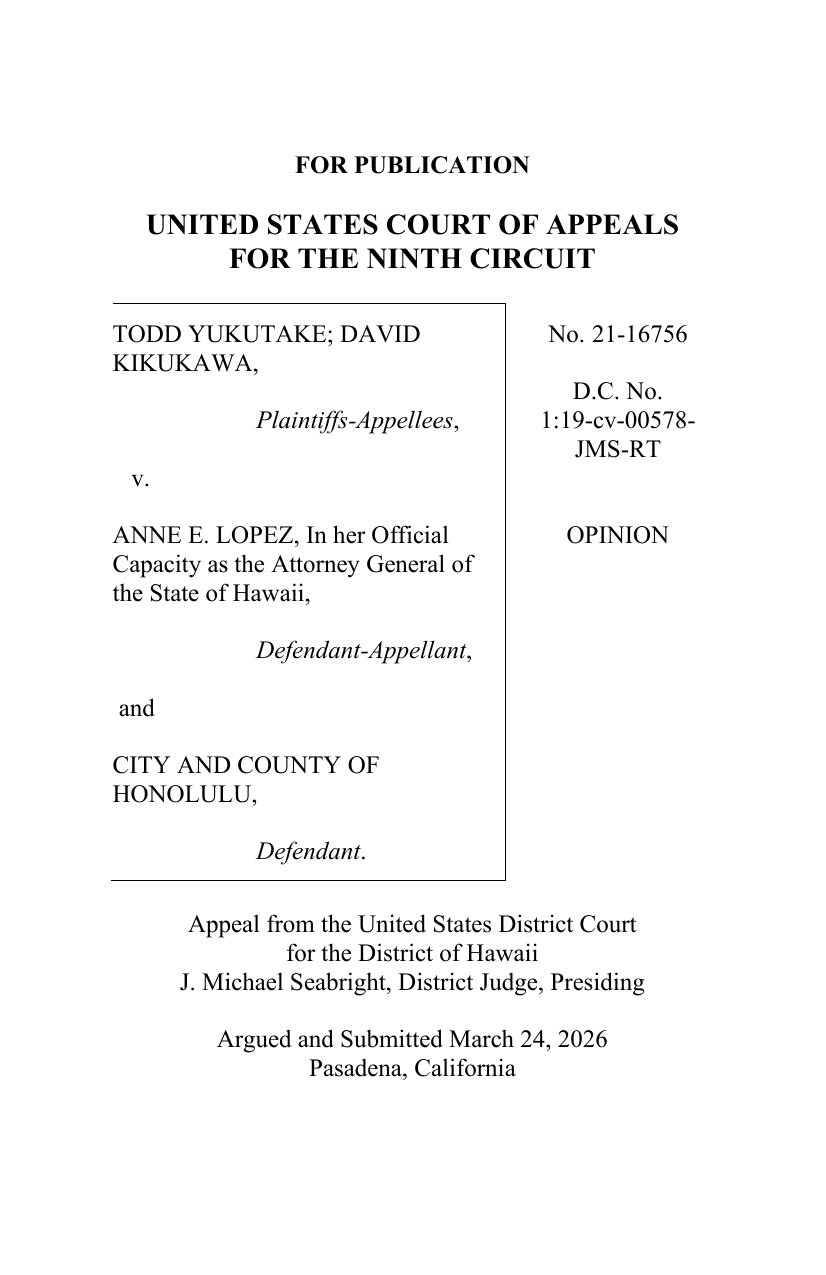
Read or download the full 84-page opinion (PDF) · original on the Ninth Circuit's website
Five Judges Said the Court Flipped Bruen Upside Down
Nelson's dissent was joined by Judges Daniel Bress and Lawrence VanDyke, and in most parts by Judges Bridget Bade and Danielle Forrest. His main point is about who carries the burden. Under Bruen, once a law touches conduct the Second Amendment covers, the government has to justify it with history. Footnote 9, he wrote, "does not shift to the citizen the burden to prove that a law governing protected conduct has been 'put toward abusive ends.'"
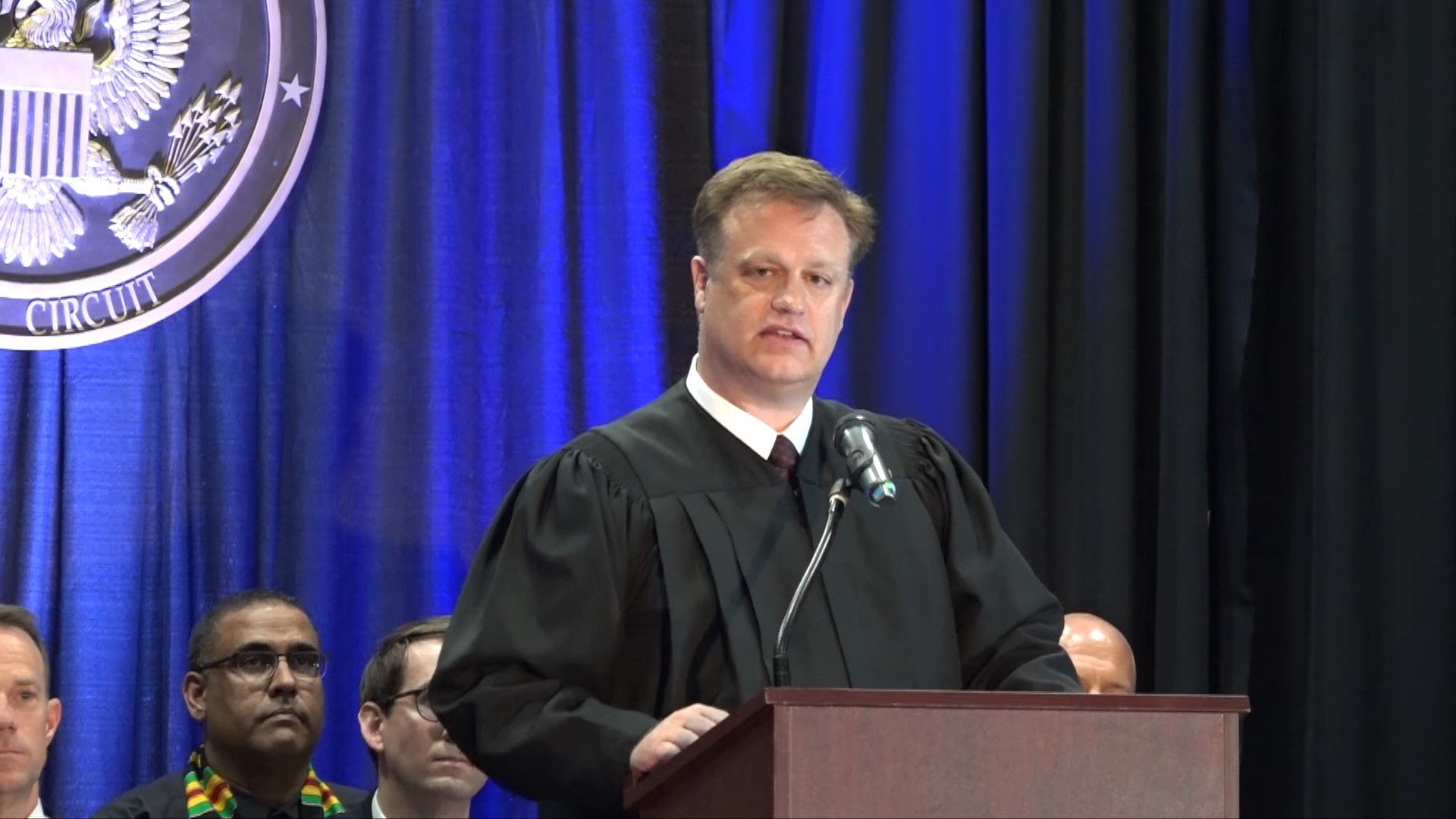
Judge Ryan D. Nelson, who wrote the lead dissent, at a 2019 Ninth Circuit ceremony. (U.S. Court of Appeals for the Ninth Circuit, via Wikimedia Commons, public domain)
He also argued the footnote doesn't fit this case at all. It talks about licenses to carry in public, and both Hawaii rules kick in after a buyer has already passed the background check and training. Neither rule is old, either. Hawaii added the across-the-board inspection requirement in 2020 and moved to the 30-day permit window in January 2024. "Footnote 9 did not create a gaping Second Amendment exemption for states to exploit with new creative restrictions," Nelson wrote.
Judge Forrest joined most of that reasoning and wrote separately about the remedy. She would have ruled for the plaintiffs but narrowed the district court's statewide injunction so it covered only them, citing the Supreme Court's 2025 decision in Trump v. CASA.
Hawaii's Own Supreme Court Called Bruen "Deadly Jurisprudence"
The Nelson dissent spends time on the state that wrote these laws. It quotes a 2026 Hawaii Supreme Court opinion, Granillo v. State, accusing the U.S. Supreme Court of "[m]aking the country more dangerous with a Second Amendment unmoored from text or history." The same opinion called Bruen "deadly jurisprudence" and said the 2026 Wolford decision "show[ed] disdain for Hawai'i's constitutional traditions."
That context matters because Wolford v. Lopez, decided this year, struck down Hawaii's rule banning licensed carriers from other people's private property unless the owner gave permission. Nelson argued the permit and inspection rules look like part of the same "not-so-subtle attempts to end run around the Second Amendment," which is itself evidence of abuse under the very footnote the majority relied on.
VanDyke: The Ninth Circuit Protects Less Than It Did Before Heller
Judge VanDyke wrote the sharpest dissent. "In this circuit, the Second Amendment safeguards less liberty now than it did in the wake of Heller," he wrote. The majority read Bruen as grounds to overturn a gun-rights win from 2021, and VanDyke said that has things backward: "if our court's takeaway from Bruen is that Bruen changed the law to make it harder to mount a successful Second Amendment challenge, then somebody has seriously lost the plot."
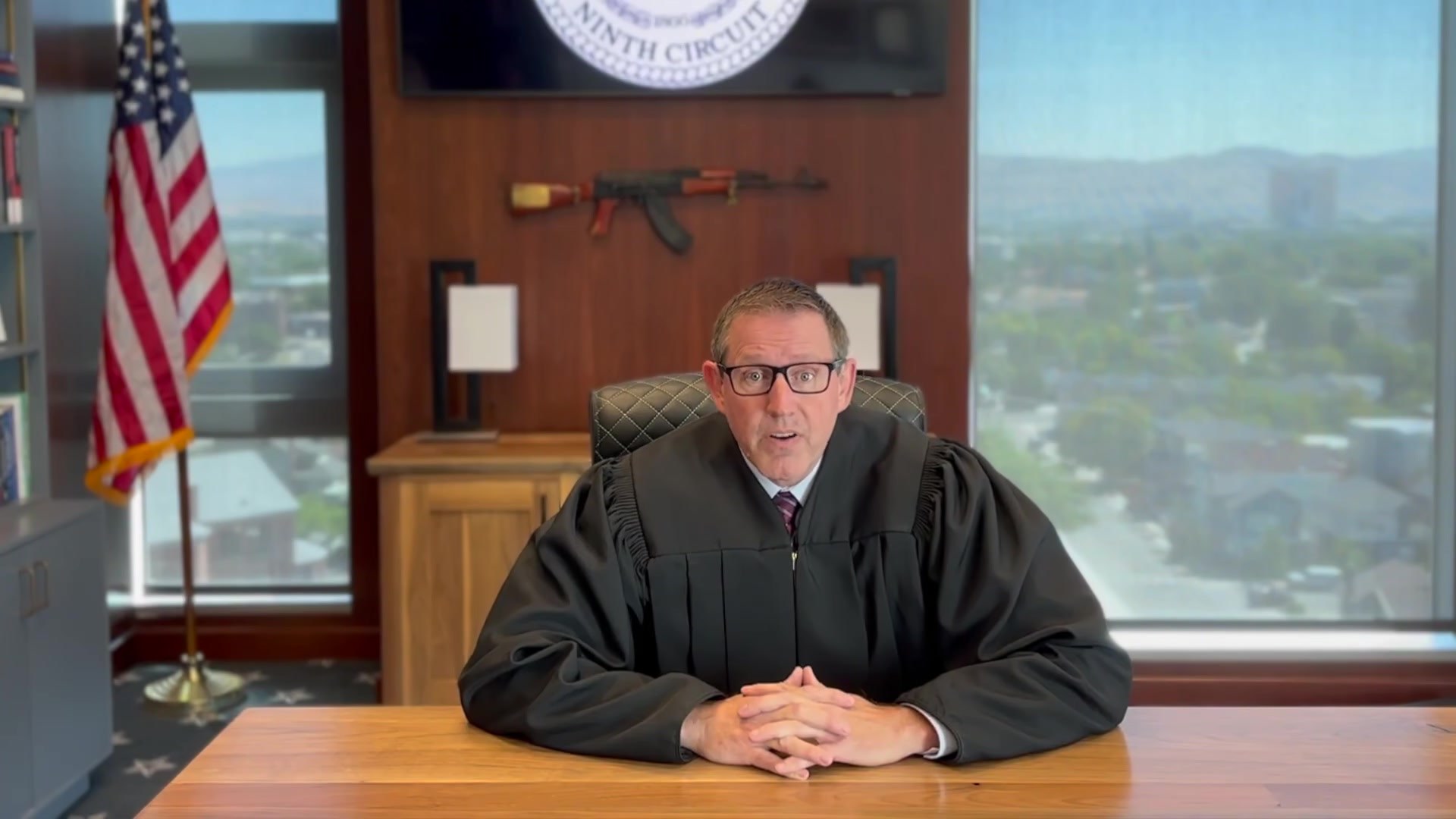
Judge Lawrence VanDyke in a video dissent the Ninth Circuit released with its 2025 Duncan v. Bonta magazine-ban ruling. (U.S. Court of Appeals for the Ninth Circuit, via Wikimedia Commons, public domain)
He proposed a simple test. If a state has a gun regulation that most other states don't have, it should be struck down. Hawaii's rules are outliers, so under his "outlier rule" they fail. He also pointed to what happened after the Supreme Court reversed the Ninth Circuit in Wolford: the same panel issued a one-and-a-half-page order on remand saying its analysis of the rest of Hawaii's law was "unaffected." He closed with a line gun owners in the West will recognize: "I will assiduously but wearily dissent."
The States Lined Up Along Party Lines
The opinion's list of lawyers shows how the country split. Hawaii's side had an amicus brief from 16 states plus the District of Columbia, led by Michigan and joined by California, New York, New Jersey and Illinois. The gun owners' side had a brief from 23 states led by Idaho, including Texas and Florida, along with the leaders of both chambers of the Arizona Legislature. The NRA, the Second Amendment Foundation, Gun Owners of America and the National Shooting Sports Foundation all filed briefs too.
What Happens Next?
This fight is now seven years old. The plaintiffs won in district court in 2021 and won again before a three-judge panel in 2025 before the full court took the case and reversed. The en banc court sent the case back to the district court for further proceedings, and the plaintiffs' next realistic stop is a petition to the Supreme Court. The majority practically asked for one: "Hopefully, the Supreme Court will make clear which analysis it thinks is correct."
The Justices are already dealing with the Ninth Circuit's record. They reversed it in Wolford this year, and they hear the consolidated AR-15 cases on December 2. Until they step in again, Hawaii's permit clock and police-station inspection are back in force, and every state in the Ninth Circuit now has a binding 6-5 en banc ruling that treats rules like them as presumed lawful. Under that ruling, it is the gun owner who has to prove they are abusive.
Top photo: The Hawaii State Capitol in Honolulu. (Daniel Ramirez, Wikimedia Commons, CC BY 2.0)