House Republicans just erased eight of the twelve legislative days the chamber had left before the November 3 midterms. Under the revised schedule sent to members on September 3, the House returns for votes the evening of Monday, September 14, works four days, and then stays gone until November 9, six days after the polls close.
That is four days of floor time to deal with a deadline the House built for itself. The stopgap President Trump signed on September 2 runs out December 11, and it carries far more than the government's funding with it.
The Majority Leader's own calendar still says they are working those weeks
The change did not come from a vote. It came from a notice out of Majority Whip Tom Emmer's office, published by the Daily Caller: "Members are advised that votes are not expected in the House during the weeks of September 21st and September 28th." One door stayed cracked. "Pending Senate adoption of H. Con. Res. 113, votes are possible in the House during the weeks of September 21st and 28th, and Members will be given at least 48 hours' notice prior to any votes."
Go look at the official 2026 House calendar and it still shows those days as work days. The one-page PDF that Majority Leader Steve Scalise's office publishes carries a last-modified date of November 18, 2025, and nobody has touched it since. September 22 through 25 are still highlighted. So are September 28, 29, 30 and October 1.
Count every highlighted square on that page and the year adds up to 115 scheduled session days. Of the twelve that were left between the return date and Election Day, eight are gone.
Official record
2026 House Calendar, 119th Congress, Second Session, published by the Office of the Majority Leader at majorityleader.gov. The file has not been revised since November 18, 2025, and still shows the two cancelled weeks as session days.
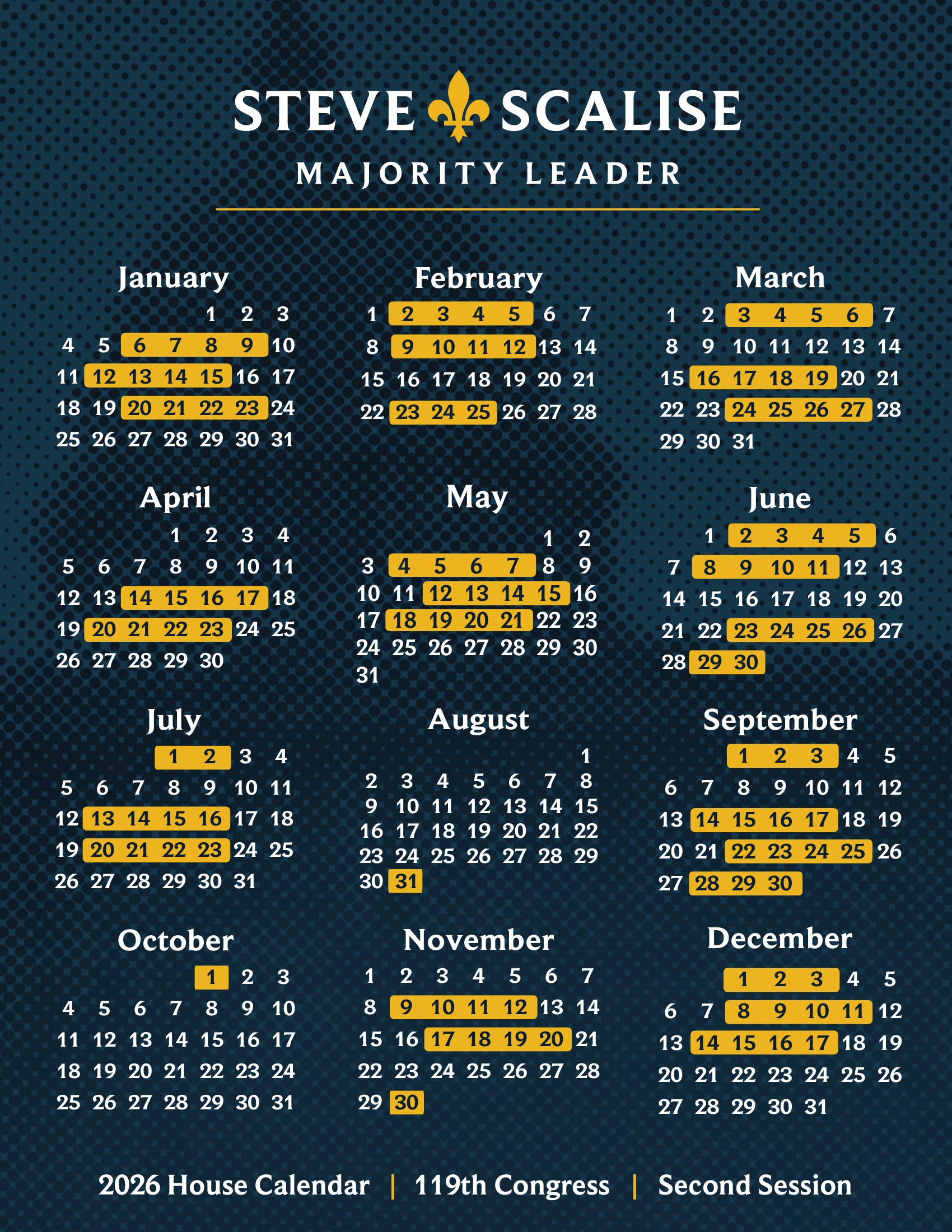
Open or download the official one-page 2026 House calendar (PDF) from the Majority Leader's website.
Four days before the election, twenty before the money runs out
The last recorded vote before the break was roll call 295, gaveled at 10:24 a.m. Thursday: H.R. 4795, the Protect Economic and Academic Freedom Act of 2026, which cuts off Higher Education Act money to colleges that join a commercial boycott of Israel. It passed 237 to 169. Twenty-seven members did not vote at all.
That number, 295, is also the whole year to date. NOTUS reported that the House managed 362 votes in all of 2025, which the Washington Post found was the fewest of any year this century and half the total from 2017.
Here is the arithmetic that matters more. Between the September 14 return and the December 11 funding cliff, the calendar holds 20 scheduled legislative days. Four come before the election. Sixteen come after.
Nine of the twelve spending bills have never reached the House floor
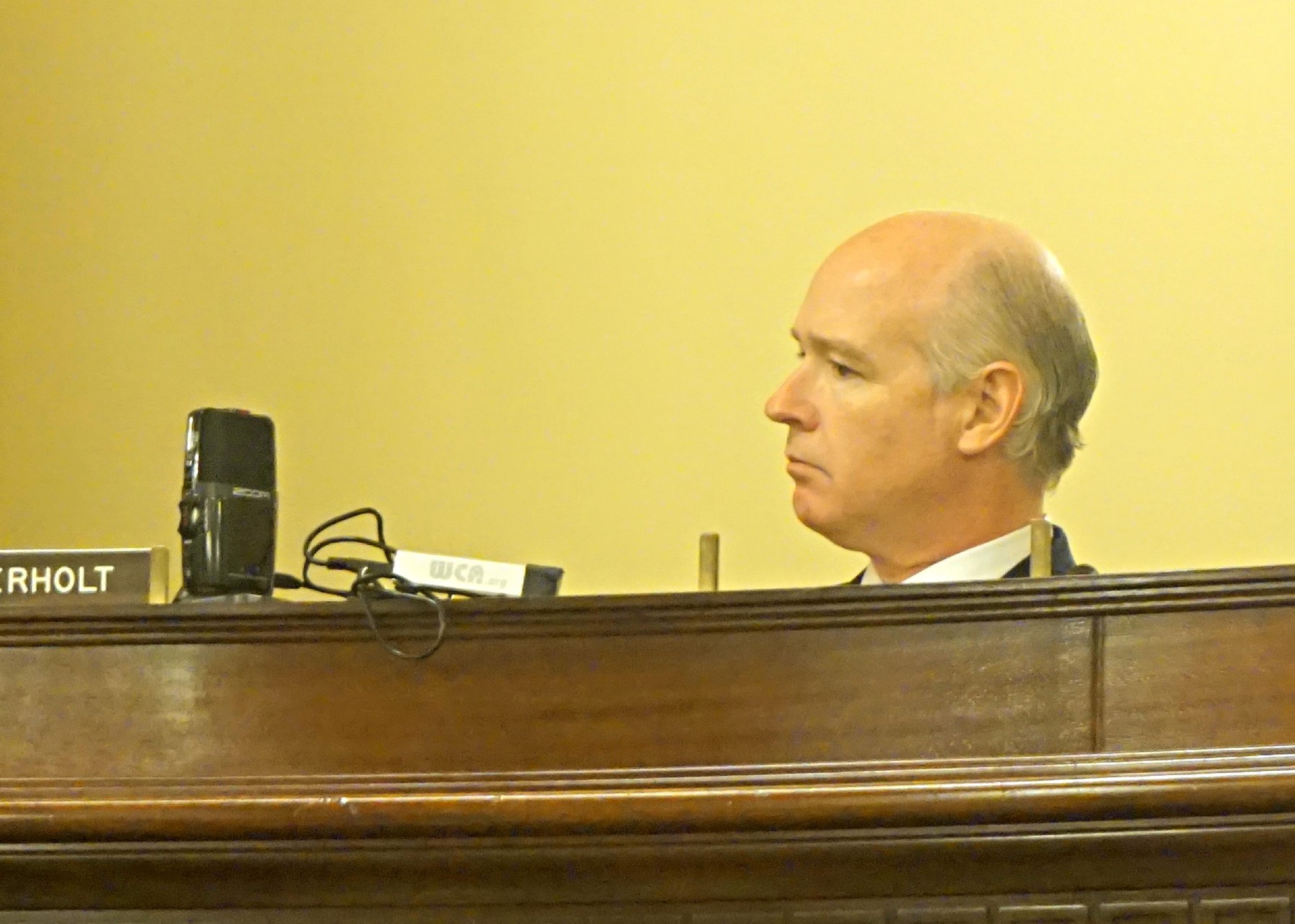
Rep. Robert Aderholt, R-Ala., a senior House appropriator, told Roll Call there was not "any probably compelling reason that we need to be here" late in the month. (Commission on Security and Cooperation in Europe, United States Congress, public domain)
Leadership spent the spring bragging about regular order and earned some of it. All twelve fiscal 2027 appropriations bills cleared the Appropriations Committee before the July Fourth recess.
Then the floor stopped. Three bills have actually passed the House: Military Construction and Veterans Affairs by 400 to 15 on May 15, Agriculture by 213 to 210 on June 4, and National Security, Department of State and Related Programs by 217 to 209 on July 15, according to the Committee for a Responsible Federal Budget's tracker. The other nine have never been called up.
The Senate is further behind. The American Action Forum's progress report found that as of June 30, not one of the twelve Senate subcommittees had held a markup, because appropriators still had not agreed on the 302(b) allocations that set each subcommittee's number. No fiscal 2027 bill has passed the Senate floor.
Rep. Robert Aderholt of Alabama, who sits on Appropriations, gave Roll Call the honest version. Asked about moving more of the fiscal 2027 bills, he said: "I think everybody's so focused on the election at this point that we'll just have to wait till the election's over."
The stopgap did not buy time. It stacked everything on one day.
H.R. 6500 is not a simple funding patch. The enrolled text runs four divisions deep, and the extensions buried in the back all terminate on the same date. Thirty-seven separate sections across Division B and Division D expire on December 11 or 12: Defense Production Act authority, the Cybersecurity Information Sharing Act of 2015, the U.S. Commission on International Religious Freedom, grant authority for homeless veterans programs and the VA inspector general's subpoena power, to name a few.
Flood insurance is in there too, quietly. Section 139 of Division A takes the National Flood Insurance Act's expiration date and replaces it with "the date specified in section 106(3)," which is December 11. Division C, the Surface Transportation Extension Act of 2026, does the same for federal highway and transit programs and moves the Highway Trust Fund's expenditure authority from October 1 to December 12.
The defense bill is stuck and nobody is in town to push it
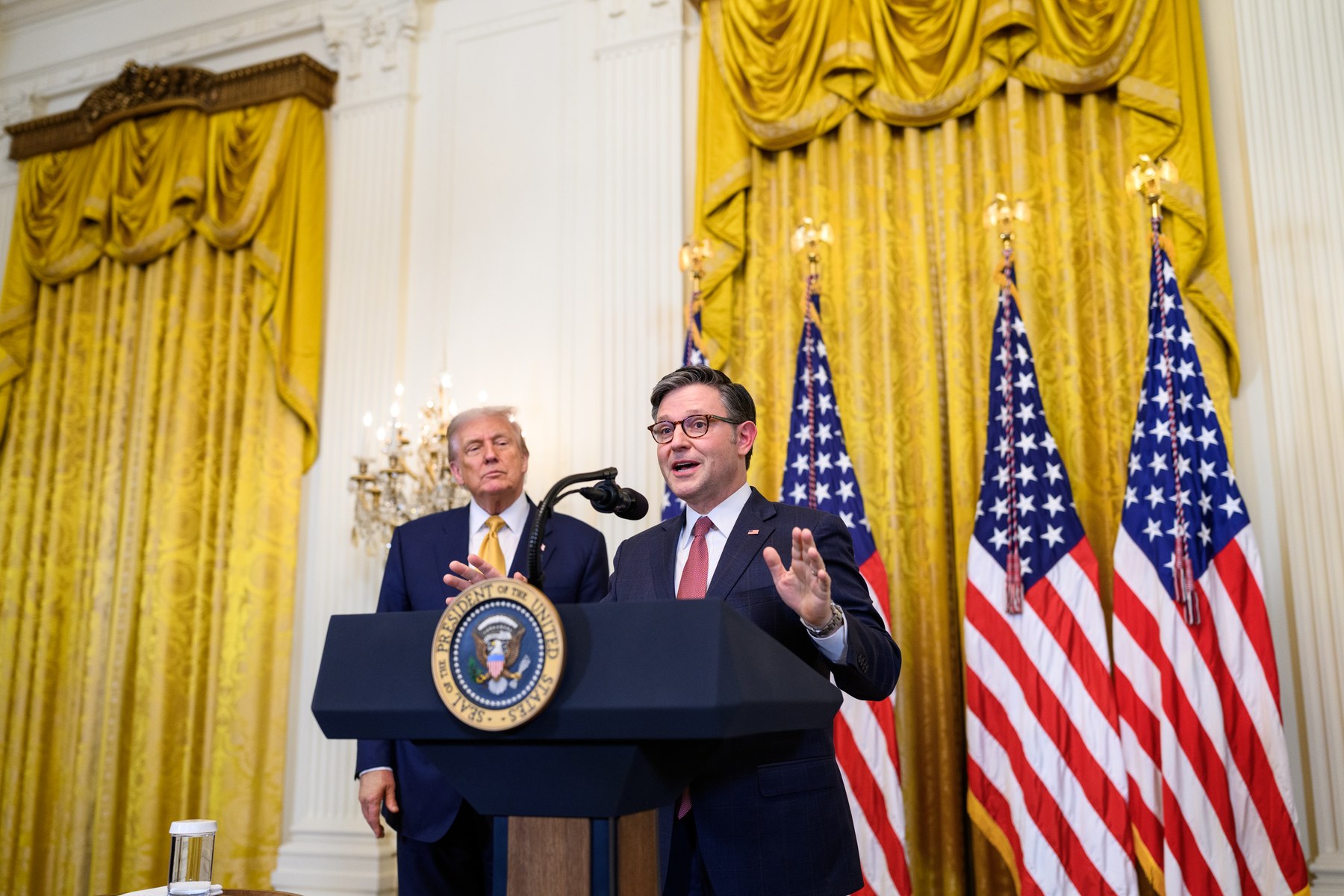
Speaker Mike Johnson defended the schedule change by pointing at roughly 600 House-passed bills he says are waiting on the Senate. (Official White House photo, public domain)
The House did its part on the National Defense Authorization Act, barely. Per the Congressional Research Service's September 1 status update, a first rule to bring up H.R. 8800 failed 198 to 224 on June 30. A second rule passed 214 to 211 on July 21, and the bill itself passed 216 to 212 the next day.
It has gone nowhere since. Cloture on the motion to proceed to the Senate companion, S. 4784, failed 50 to 46 on July 14, and CRS reports the Senate has taken no further procedural step. The same document charts how long it took to enact a defense authorization in each fiscal year from 1977 through 2026. The 2027 bill now waits on a chamber the House cannot pressure from home.
Speaker Mike Johnson made that his defense of the schedule. "I'll point out that there's almost 600 pieces of that landmark legislation that are still sitting over in the other chamber in the Senate," he said, per the Daily Caller. "Many of them want and need to be in their districts working with their constituents and running their campaigns."
The House wrote itself a September 11 deadline and will not be there for it
H. Con. Res. 113, the budget resolution the House passed on July 22, is the same measure Emmer's notice named as the trigger for coming back. Section 201(a) says it plainly: "In the House of Representatives, not later than September 11, 2026, the committees named in subsection (b) shall submit their recommendations on changes in laws within their jurisdictions to the Committee on the Budget."
Those instructions run to Agriculture at $12 billion, Armed Services at $60 billion, the Intelligence Committee at $13 billion and House Administration at $10 billion, adding up to a $95 billion reconciliation package. September 11 is a Friday in the middle of the recess. The Senate has not adopted the resolution, which is the exact condition Emmer attached to any September return.
Rep. Anna Paulina Luna of Florida put it plainer on Thursday. "Look, they sent us all home because no one wants to work together in the chamber because everyone's focusing on their reelection," she told Roll Call.
Leadership left the House on 48 hours' notice, and that notice runs to a Senate that has not adopted the budget resolution and has not gotten the defense bill onto its own floor. December 11 does not move for either chamber. Sixteen of the twenty session days standing between now and that date fall after the votes are counted.