Pete Hegseth told 600 troops at Quantico on Wednesday that the Pentagon is building a four-star Autonomous Warfare Command to lead America's drone war. His own memo admits the command still needs legislation from Congress. That legislation already exists. It is Section 917 of the Senate's defense bill, and it has been stuck since July 14, when Senate Democrats blocked the bill over the Iran war.
What Hegseth Announced at Quantico
Exactly one year after he summoned the generals to Quantico, Hegseth came back on September 30 for what he called a "State of the Force" address to E-6 and O-3 service members. Stars and Stripes quoted the headline line: "Today at my direction, we are announcing the creation of Autonomous Warfare Command, or AutoWarCom, a four-star combatant command with service-like authorities built to scale autonomous and robotic capabilities."
It was one of six initiatives in the speech. The others include Project Meridian, a 120-day study of future warfare co-led by Elon Musk, Palmer Luckey and Newt Gingrich, and a contest among the states to host a new base for 15,000 to 25,000 troops. Hegseth also confirmed a 20 percent cut in general and admiral slots. "The media calls that a purge. I call it accountability," he said.
On drones, his case was blunt. "Ukraine's lesson is not that one type of drone wins wars, but rather the need for a purpose-built system that maximizes the ability to adapt," he said, according to DefenseScoop.
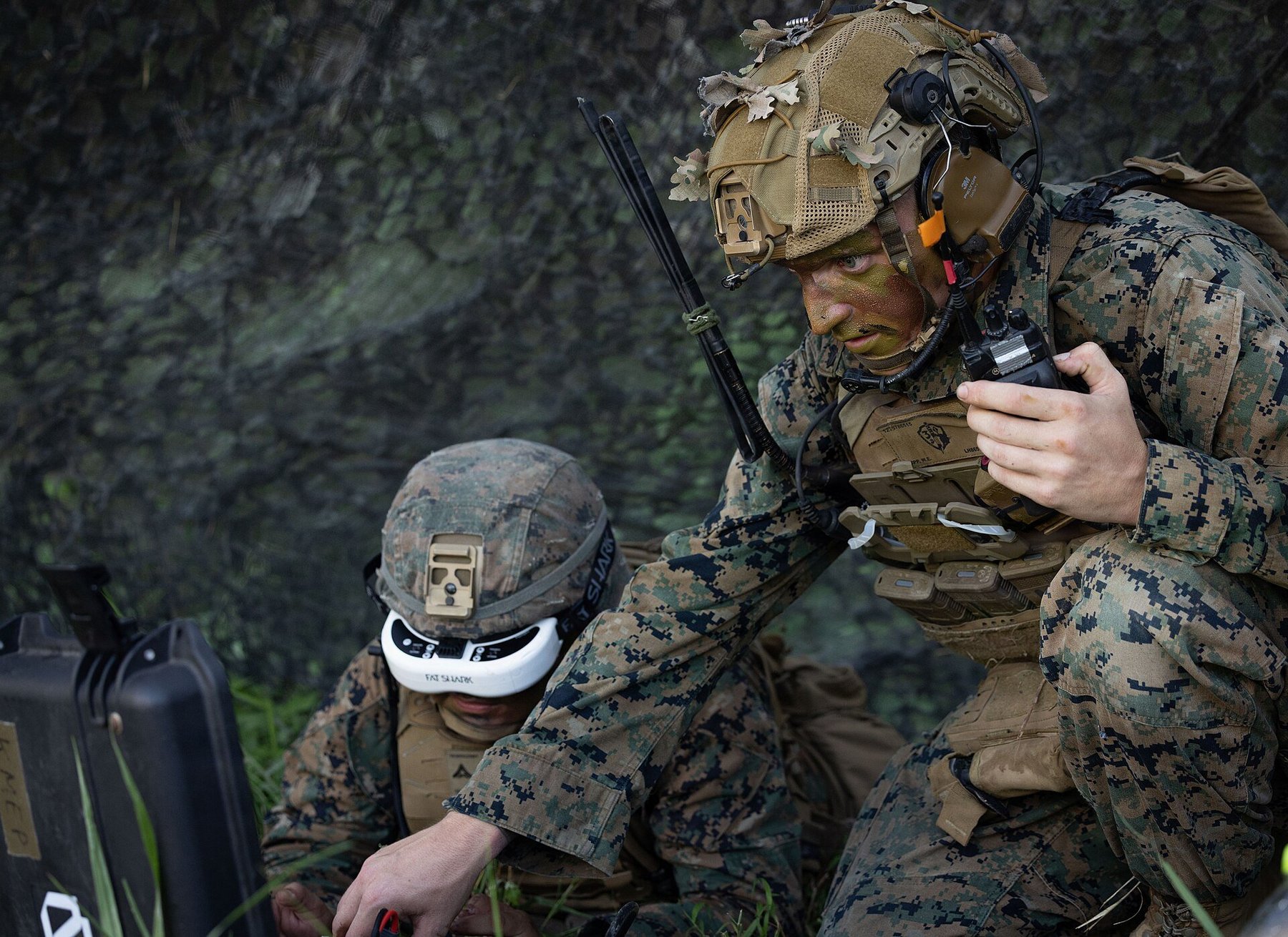
Marines with 3rd Battalion, 7th Marine Regiment run live-fire first-person view attack drone training at Rodriguez Live Fire Complex, South Korea, in August 2026. (U.S. Marine Corps photo, public domain, via Wikimedia Commons)
The Memo Says Congress Has to Act
The fine print is in a three-page memo Hegseth signed the same day, "Project Agincourt: Pathway to the Autonomous Warfare Command." It describes "a 4-star functional combatant command" that "will possess directed manpower, budget, acquisition authorities and create dedicated military career pathways." It then tells the drone office to "collaborate directly with Congress to secure necessary legislation with a target establishment date of October 1, 2027."
The memo hands the job to the Direct Reporting Portfolio Manager for Unmanned Systems, the drone office Hegseth created in July, now to be run by Defense Innovation Unit director Owen West and Navy SEAL Senior Chief Max Strasiser. They owe Hegseth a plan of action within 30 days, which lands around October 30, and a report every month after that. The name is a nod to Agincourt in 1415, where English longbowmen beat a larger French army.
Official record
Secretary of War memorandum, "Project Agincourt: Pathway to the Autonomous Warfare Command," September 30, 2026 (3 pages), released by the Department of War.
"DRPM-UxS will drive the immediate organizational shifts required and collaborate directly with Congress to secure necessary legislation with a target establishment date of October 1, 2027."
Project Agincourt memo, page 1
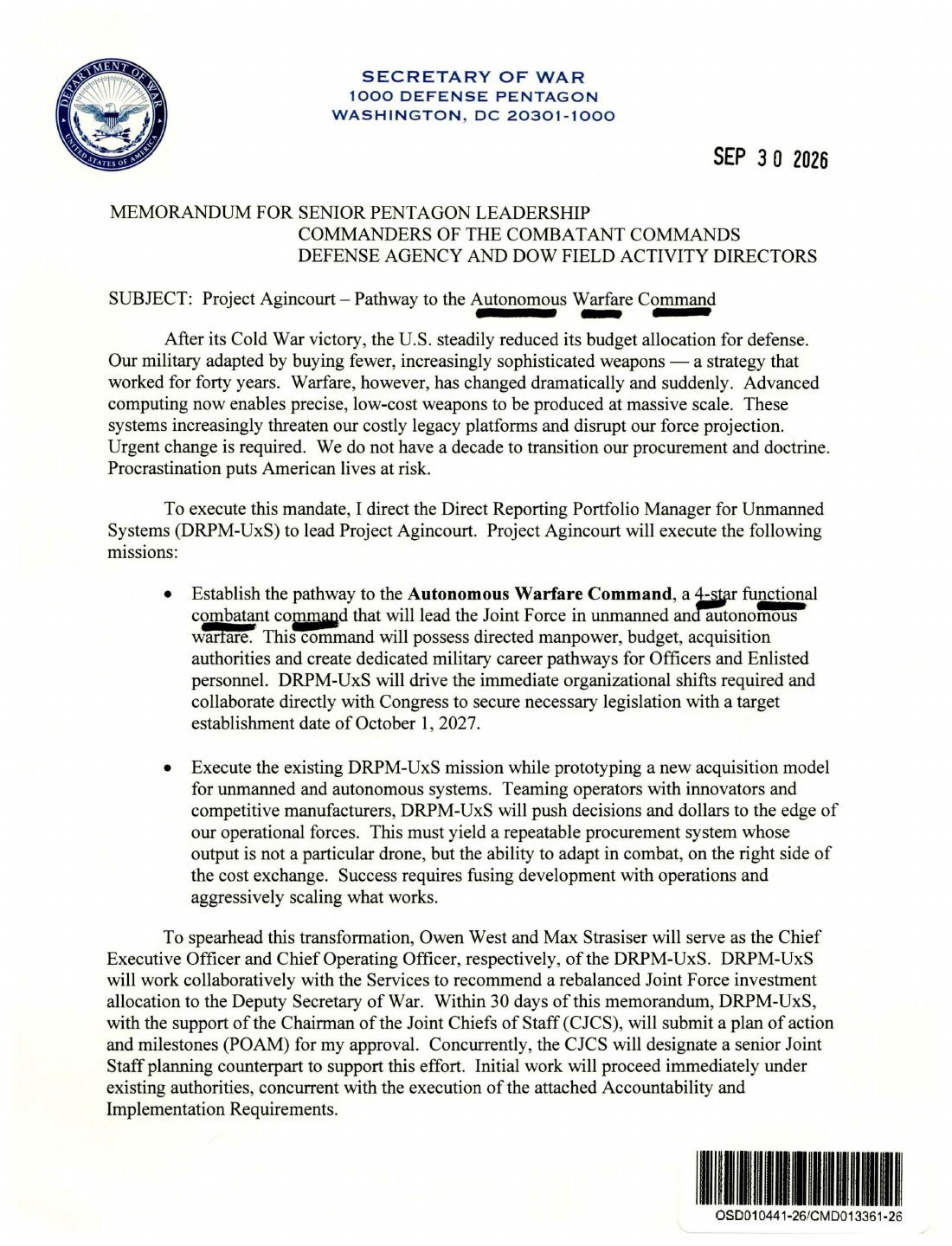
Read or download the full 3-page memo (PDF) · original on media.defense.gov
The Senate Already Wrote This Command Into Law
Here is the part most of Wednesday's coverage gave a sentence or less. The Senate Armed Services Committee drafted almost this exact command back in June. Section 917 of S. 4784, the Senate's Fiscal 2027 defense bill, would add a new section 167a to Title 10 creating the "United States Robotic and Autonomous Systems Command," or RASCOM. The committee voted the bill out 18-9, and Air and Space Forces Magazine reported at the time that it would be headed by a four-star officer.
Put the two documents side by side and they match on nearly every point. Hegseth wants dedicated career pathways. Section 917 orders each service to build "dedicated career paths, military occupational specialties (or equivalent ratings), promotion tracks, and training pipelines." Hegseth wants budget authority. Section 917 requires a separate major force program for the command in every Pentagon budget sent to Congress, the same tool that gives Special Operations Command its own money line.
Hegseth's memo says the command will "integrate Service-provided forces in support of geographic combatant commanders." Section 917 says nearly the same thing, and it bars the new commander from taking control of forces in another command's region unless that commander hands them over or the Secretary directs it.
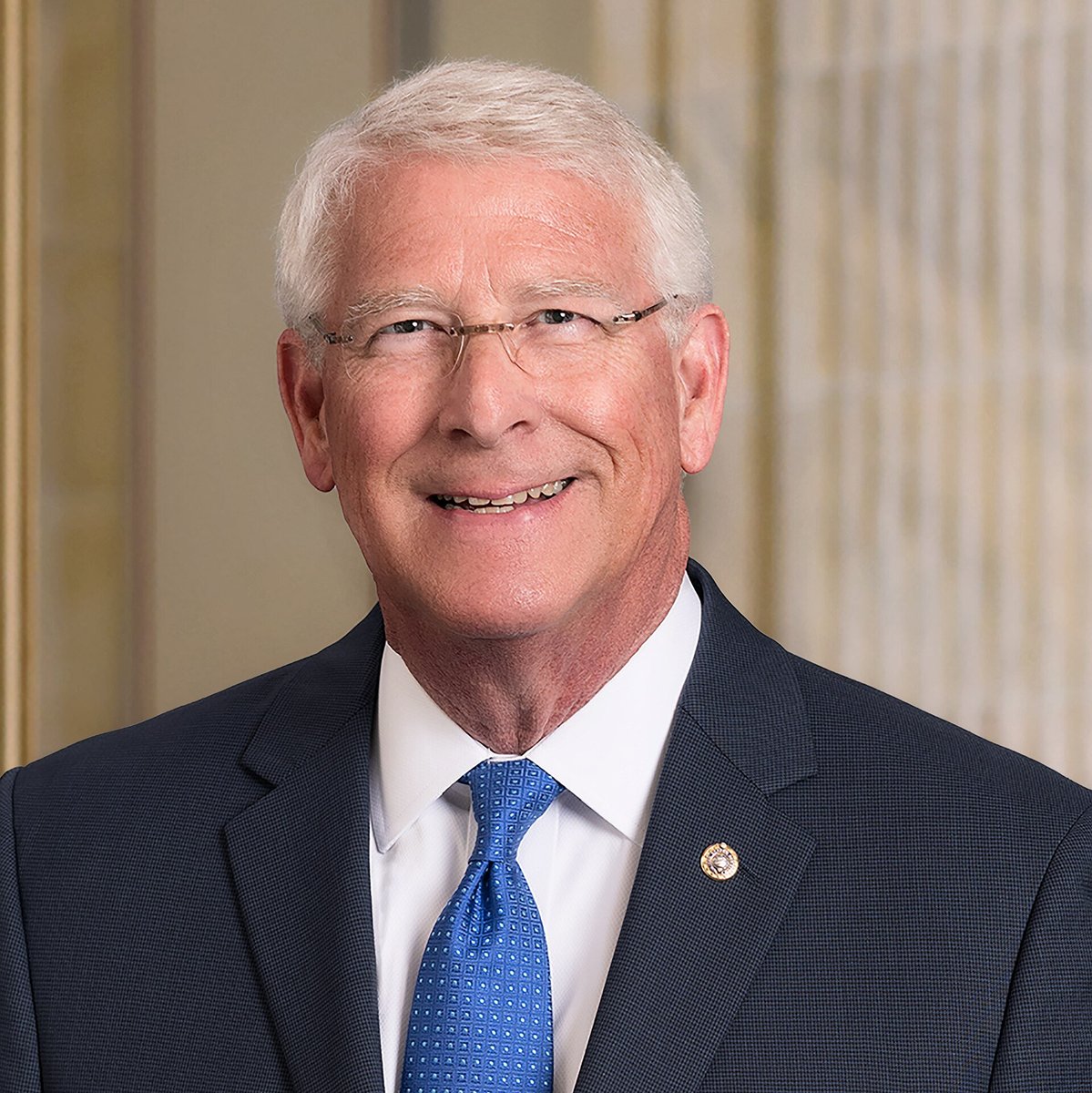
Sen. Roger Wicker (R-Miss.), chairman of the Senate Armed Services Committee, whose committee wrote Section 917 into S. 4784 in June. (U.S. Senate Photo Studio, public domain, via Wikimedia Commons)
Official record
S. 4784, National Defense Authorization Act for Fiscal Year 2027, as reported by the Senate Armed Services Committee (S. Rept. 119-127), Section 917, pages 695-704.
"With the advice and assistance of the Chairman of the Joint Chiefs of Staff, the President, through the Secretary of Defense, may establish under section 161 of this title a unified combatant command for robotic and autonomous systems."
S. 4784, Sec. 917, page 695
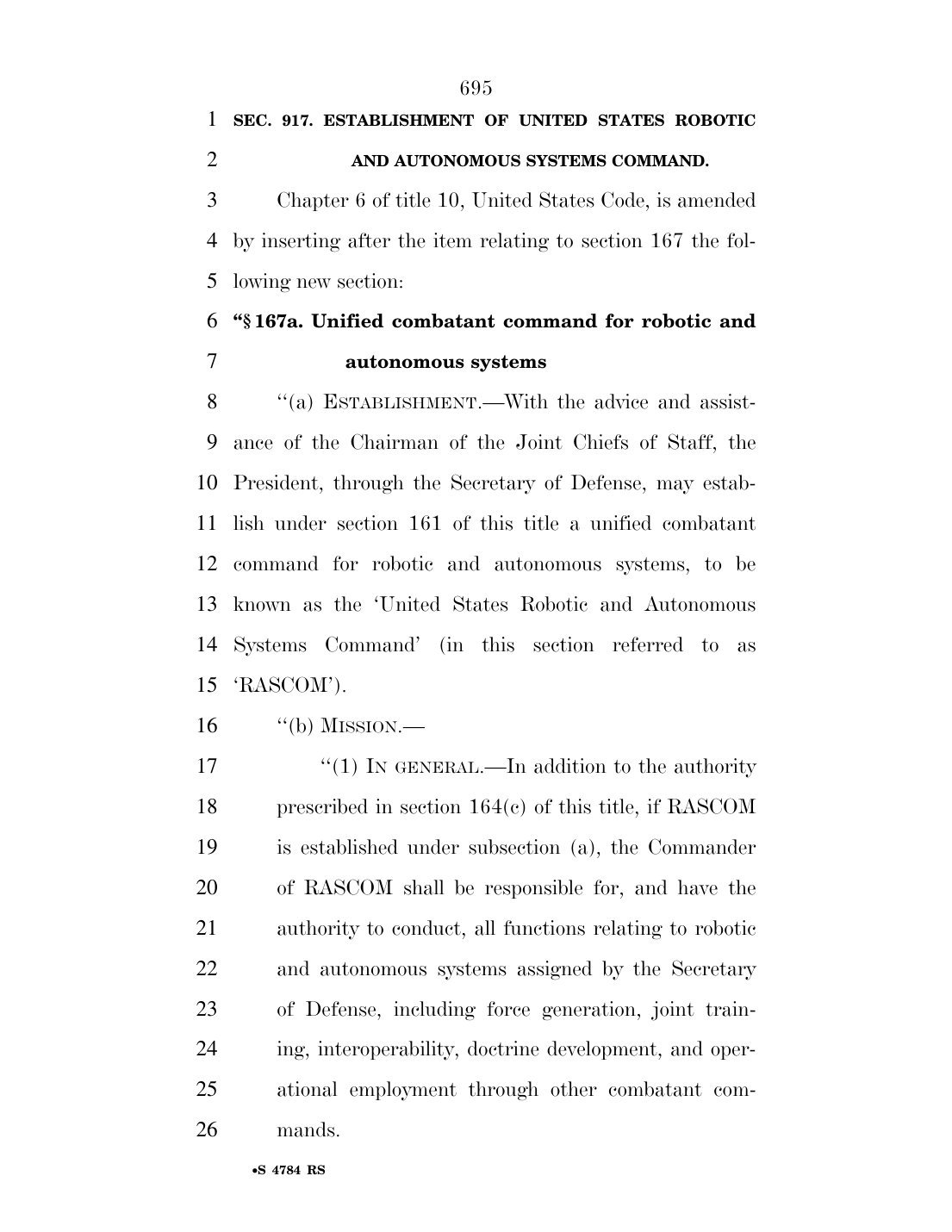
Read or download the 10-page Section 917 excerpt (PDF) · full 1,562-page bill on govinfo.gov
Where the Senate Bill Gives Him Less Than He Asked For
The match is not perfect, and the gaps matter. Section 917 says the President "may" create the command. It permits it and does not order it. The House-passed bill, H.R. 8800, has no such command at all. We searched the full engrossed House text for the Senate's language and found nothing, which lines up with Defense-Aerospace.com's reading that the provision is "absent from the House-passed NDAA."
The buying power is narrow, too. Hegseth's memo promises "acquisition authorities." Section 917 lets the Secretary hand the commander contracting authority, but only for limited quantities bought for testing, prototyping and initial fielding, plus items already on a service's pre-priced marketplace. It also adds a hard ceiling: "The Commander may not enter into a contract under paragraph (1)(A) to procure robotic and autonomous systems equipment and associated capabilities the cost of which exceeds $20,000,000." Special Operations Command, by contrast, has full head-of-agency acquisition authority for its own gear under 10 U.S.C. 167.
The Senate also fenced off five mission areas. Under Section 917, the new commander "shall not be responsible for" space systems, autonomous cyber capabilities, nuclear command and control, missile defense sensing, or tactical warning and attack assessment. Hegseth's memo draws no such lines.
Trump Can Create the Command. Congress Holds the Checkbook.
One more wrinkle cuts in the administration's favor. Under 10 U.S.C. 161, the President already has the power to set up combatant commands. He only has to notify Congress within 60 days and give a briefing. Trump did exactly that in his first term. He ordered U.S. Space Command created in a December 2018 memorandum, and it stood up at a White House ceremony on August 29, 2019, with no new statute.
So the headquarters is not the hard part. The "service-like" powers are: a protected budget line, contracting authority and career fields written into law. Those are what Section 917 supplies and what Hegseth's memo says Congress must deliver. Without them, AutoWarCom would be the military's 12th combatant command in name, borrowing its money and its people from the same services it is supposed to push.
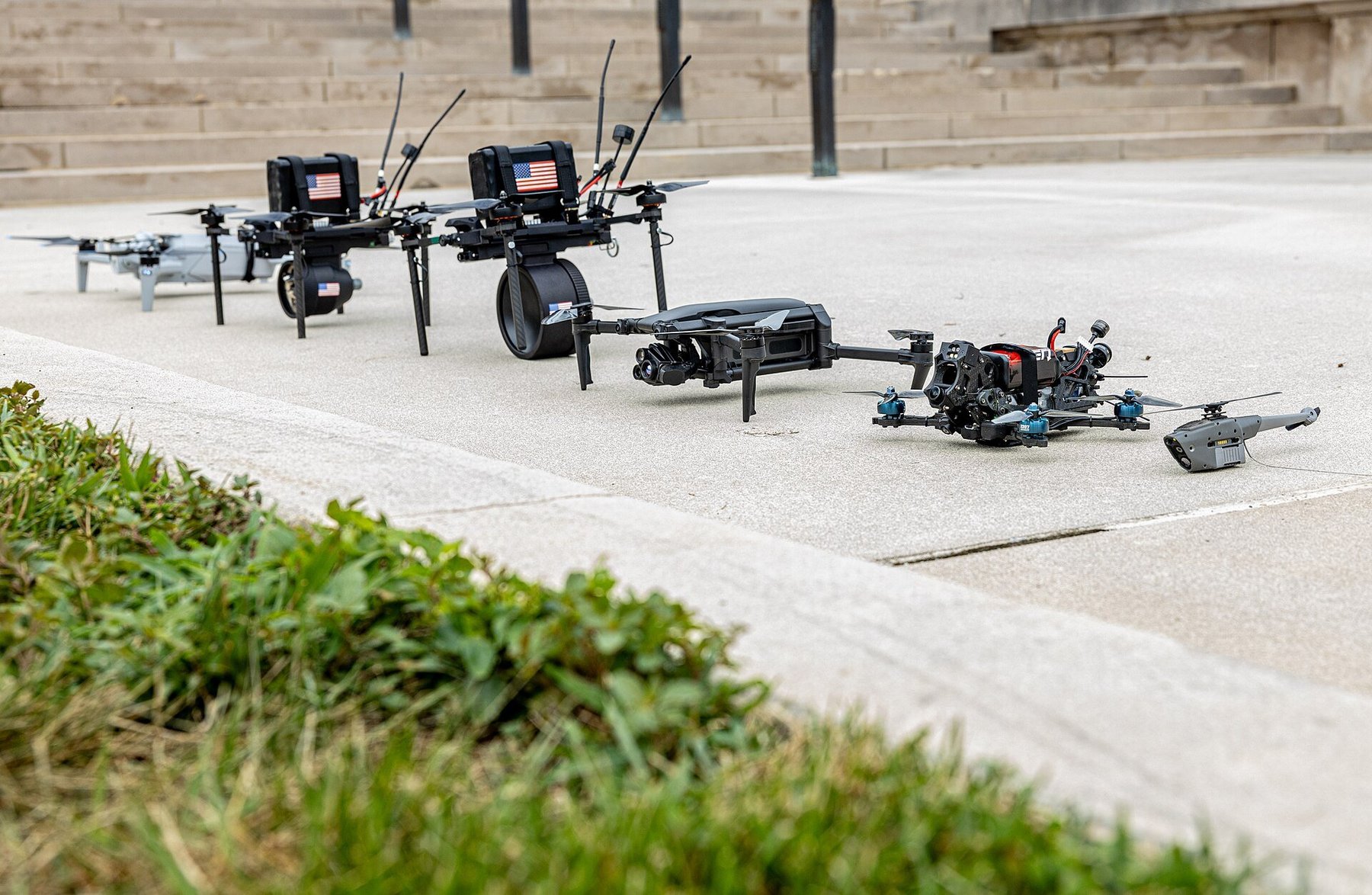
Small unmanned aircraft systems staged during a drone demonstration at the Pentagon, July 10, 2025, for Hegseth's "Unleashing U.S. Military Drone Dominance" initiative. (U.S. Marine Corps photo by Lance Cpl. Isaac Llanez Delgado, public domain, via Wikimedia Commons)
Why the Bill Is Stuck
S. 4784 never made it to the Senate floor. On July 14, a cloture vote on the motion to proceed failed 50-46, short of the 60 needed. CBS News reported that Senate Democrats blocked it over the Iran war, and Schumer said "the NDAA cannot become a permission slip" for the administration. Majority Leader John Thune switched his own vote to no so he could bring it back, and that morning he had praised the bill's "heavy emphasis on unmanned systems, especially drones and counterdrone measures."
As of the Congressional Research Service's September 1 update, the Senate had "taken no further procedural steps." Fiscal 2027 started this morning without a defense authorization law. CRS notes these bills have been enacted an average of 45 days after the fiscal year begins, and last year's was signed on December 18, 2025. If this one waits until next year's bill, the October 1, 2027 target is nearly impossible.
The Money Problem Behind the Command
Even with a law, the cash is uncertain. The Pentagon asked for $54.6 billion in Fiscal 2027 for the Defense Autonomous Warfare Group, up from roughly $225 million. According to Defense-Aerospace.com, which cites CRS report R49023, $53.6 billion of that depends on a reconciliation bill. The House and Senate Armed Services committees and House appropriators each wrote down only the $1 billion discretionary piece.
That leaves Hegseth's flagship command with a target date, a plan due in 30 days and a ready-made legal blueprint sitting in a Senate bill that Democrats will not let the Senate debate. If Democrats keep the defense bill hostage to the Iran fight, they are also holding up the drone command that Hegseth wants and the Republican-led Armed Services Committee already wrote into its bill. Watch the motion to reconsider. When Thune calls it up, Section 917 rides with it.
Top photo: Secretary of War Pete Hegseth at his War Department address to senior leaders at Marine Corps Base Quantico, Va., Sept. 30, 2025, one year before this week's State of the Force speech. (DoW photo by Navy Petty Officer 2nd Class Aiko Bongolan, public domain, via Wikimedia Commons)