Federal prosecutors say a Hamas military-wing operative in Gaza raised about $1.75 million through fake "humanitarian aid" campaigns, and the indictment they unsealed Friday shows roughly $626,000 of it came from donors in the United States. That figure is missing from the Justice Department's own press release. So far three Americans are charged, and their alleged donations add up to about $155,000.
Seven Arrests on Two Continents in One Day
On Friday, October 2, the Justice Department announced the unsealing of an indictment against Saleem Alzaq, 45, of Gaza, along with the arrests of three men in the United States. French internal security agents arrested three of Alzaq's alleged associates in France the same day: Faouzi Barika, Amel Oualid and Nordine Barika.
The American defendants are brothers Abdel Adhami, 35, and Omar Adhami, 33, of Covington, Louisiana, and Raed Yousef, 56, of Lutz, Florida, outside Tampa. DOJ says Abdel Adhami sent about $94,000 and Omar Adhami about $11,000 between February 2021 and September 2026. Yousef allegedly provided "almost $50,000." Every defendant is presumed innocent, and every fact below is an allegation from the charging papers.
"Anyone who finances or assists terrorist organizations responsible for the deaths of American citizens should expect to be prosecuted by the Department of Justice," Attorney General Todd Blanche said in the release.
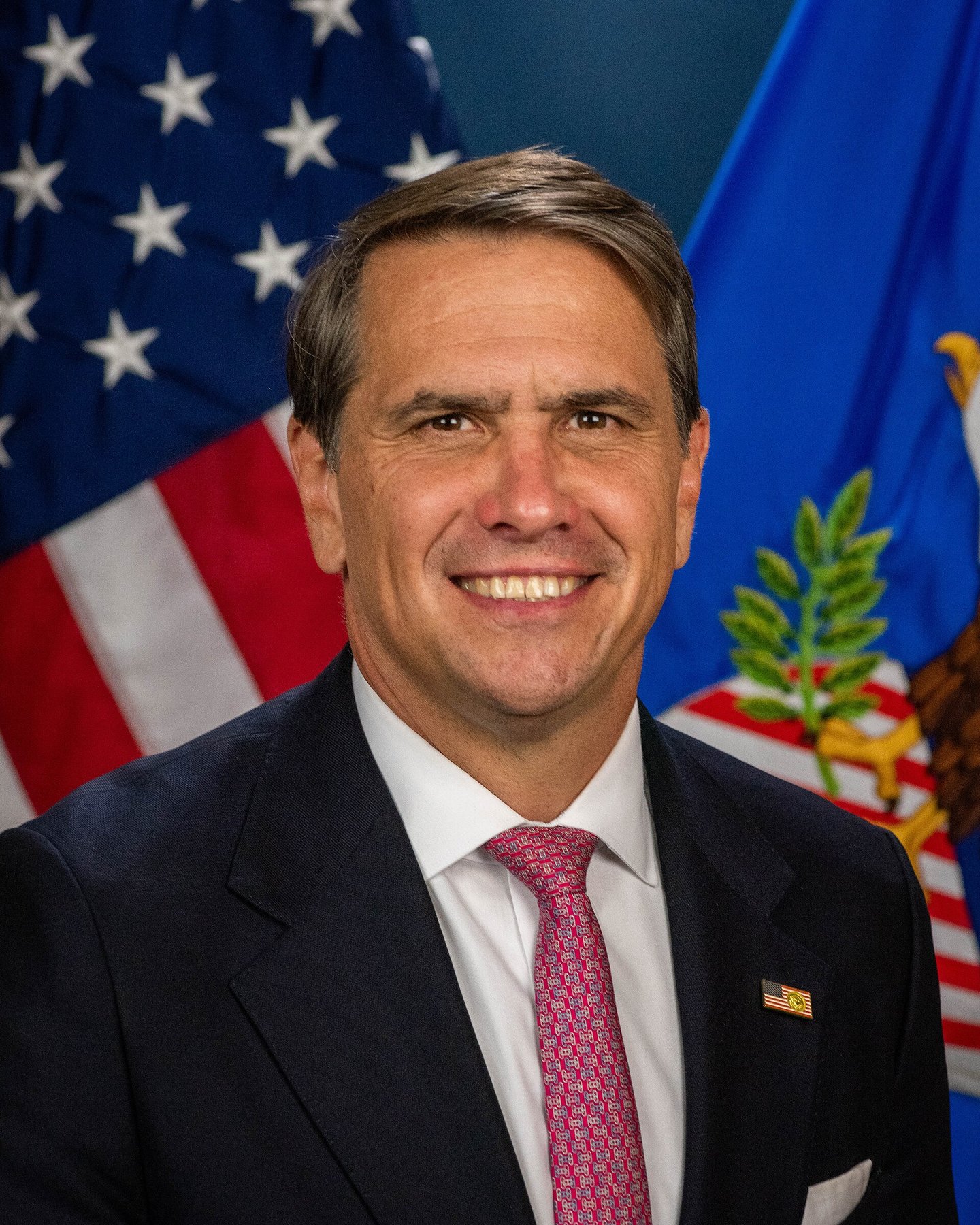
Attorney General Todd Blanche, whose Justice Department announced the coordinated Hamas finance arrests on October 2. (Official Department of Justice portrait by Ryan M. Biller, 2026, public domain, via Wikimedia Commons)
Who Is Saleem Alzaq?
According to the 17-page indictment filed in the Southern District of New York, Alzaq has been a battalion deputy in the Photography Department of the al-Qassam Brigades' Shujaiyya Brigade Media Office since at least 2017. The al-Qassam Brigades are Hamas's armed wing. Prosecutors say Alzaq photographed Hamas events with senior leaders Ismail Haniyeh and Yahya Sinwar and fed those images into the Hamas propaganda machine.
He is still at large in Gaza. He faces four conspiracy counts: material support to a foreign terrorist organization, violating the International Emergency Economic Powers Act, money laundering, and defrauding the United States by obstructing Treasury's sanctions enforcement.
The Number DOJ's Press Release Left Out
Read the press release and you learn only that Alzaq collected donations "including from individuals in the United States." Paragraph 20 of the indictment is far more specific. Between January 2020 and December 2025, it says, Alzaq and a France-based co-conspirator "raised approximately $1.75 million through their purported charitable campaigns, including approximately $626,000 from donors based in the United States."
That works out to about 36 cents of every dollar coming from American donors. The three Americans charged Friday account for roughly $155,000 combined, according to DOJ's figures. Even if every dollar they allegedly sent falls inside the indictment's window, that is about a quarter of the U.S. total. The charging papers made public so far do not say who sent the rest, or whether more charges are coming.
Official record
United States v. Saleem Alzaq, Sealed Indictment, U.S. District Court for the Southern District of New York (docketed as 26 Cr. 425, according to the redacted file DOJ attached to its SDNY release).
"Between at least in or about January 2020 and at least in or about December 2025, SALEEM ALZAQ ... and CC-1, raised approximately $1.75 million through their purported charitable campaigns, including approximately $626,000 from donors based in the United States."
Indictment, paragraph 20, page 8
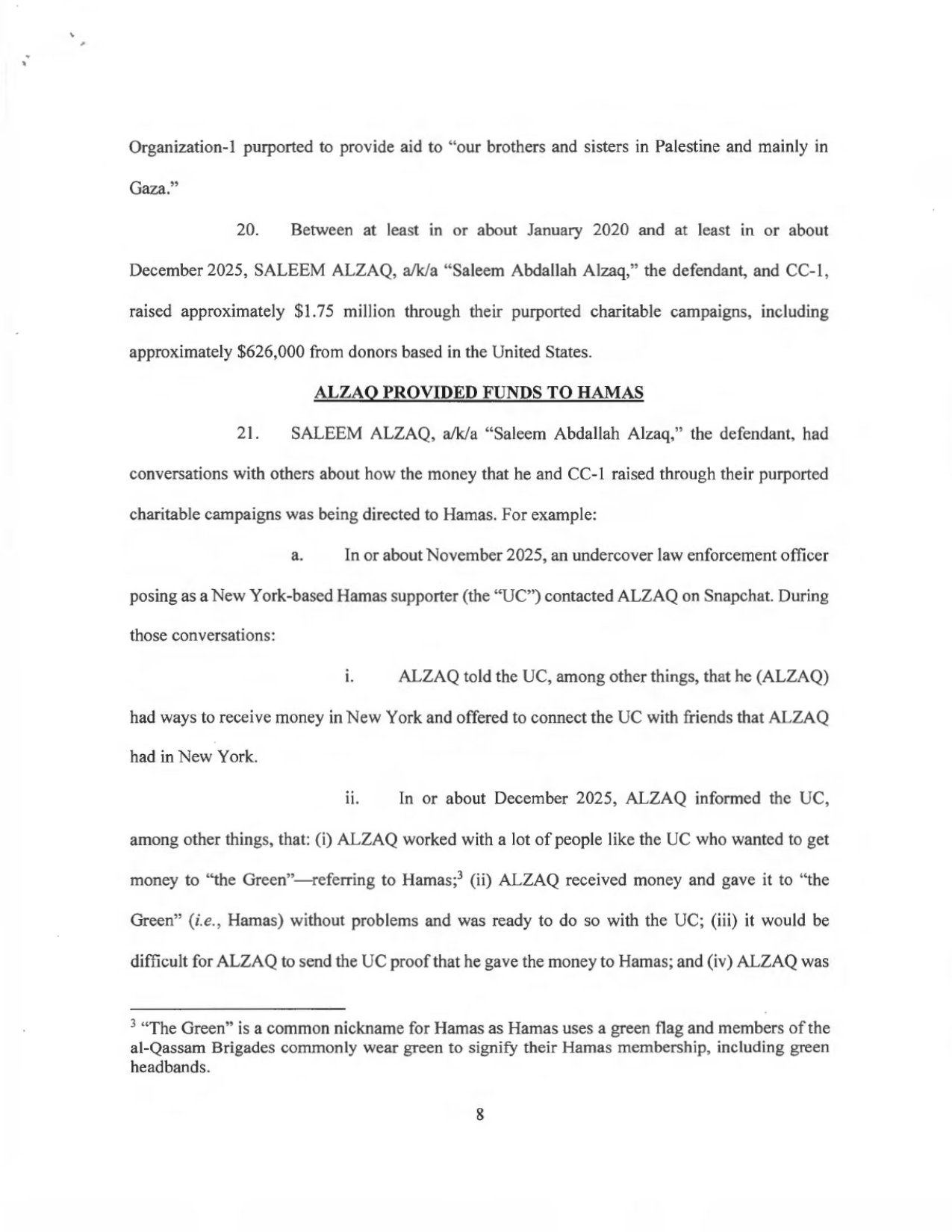
Read or download the full 17-page indictment (PDF) · original file on justice.gov
The officials can't agree on the headline number, either. The indictment says $1.75 million. DOJ's release rounds it to "more than $1.7 million." U.S. Attorney Jamie McDonald's quote says "more than a million dollars." NYPD Commissioner Jessica Tisch, whose intelligence analysts she says uncovered the network, put it at "more than $2 million." Only one of those figures carries a grand jury's signature, and it is the $1.75 million.
A Fundraiser Launched on October 7
The most chilling stretch of the indictment covers the week of the massacre. On October 7, 2023, prosecutors say, Alzaq posted graphic images and videos of the attack to his Snapchat account along with a video soliciting money for a new campaign on a French crowdfunding site, supposedly for Gazans injured that day. The campaign closed October 12.
Two days after the attack, Alzaq allegedly explained his social media strategy to his French partner. He used Telegram to show the killing and attacks "against the Jews and the Zionists," while keeping his Snapchat accounts focused on Palestinian suffering so they would not be shut down. He also told the partner that some people wanted to donate but worried they would be associated with "terrorism."
On October 13, 2023, the day after the crowdfunding campaign closed, the co-conspirator registered a new organization in France at Alzaq's suggestion. Its stated purpose was aid to "our brothers and sisters in Palestine and mainly in Gaza." Prosecutors say it existed to collect money raised by and for Alzaq.
"Bread" for "the Bread People"
The indictment says the money moved through coded language. In January 2024, a U.S.-based Hamas supporter identified as CC-2 told Alzaq he wanted to "buy a piece of bread" and "throw [it] at our cousins," which prosecutors say meant Hamas members. On January 28, 2024, Alzaq allegedly replied that part of the money "went to the bread people," the ones "present at ... al-Shifaa Hospital" in northern Gaza.
In late 2025 an undercover officer posing as a New York Hamas supporter reached Alzaq on Snapchat. According to the indictment, Alzaq said he worked with many people who wanted to get money to "the Green," a nickname for Hamas, and that he could deliver money monthly using words like "bread," "bakeries" and "give it to the bakeries." He then told the officer to delete the messages.
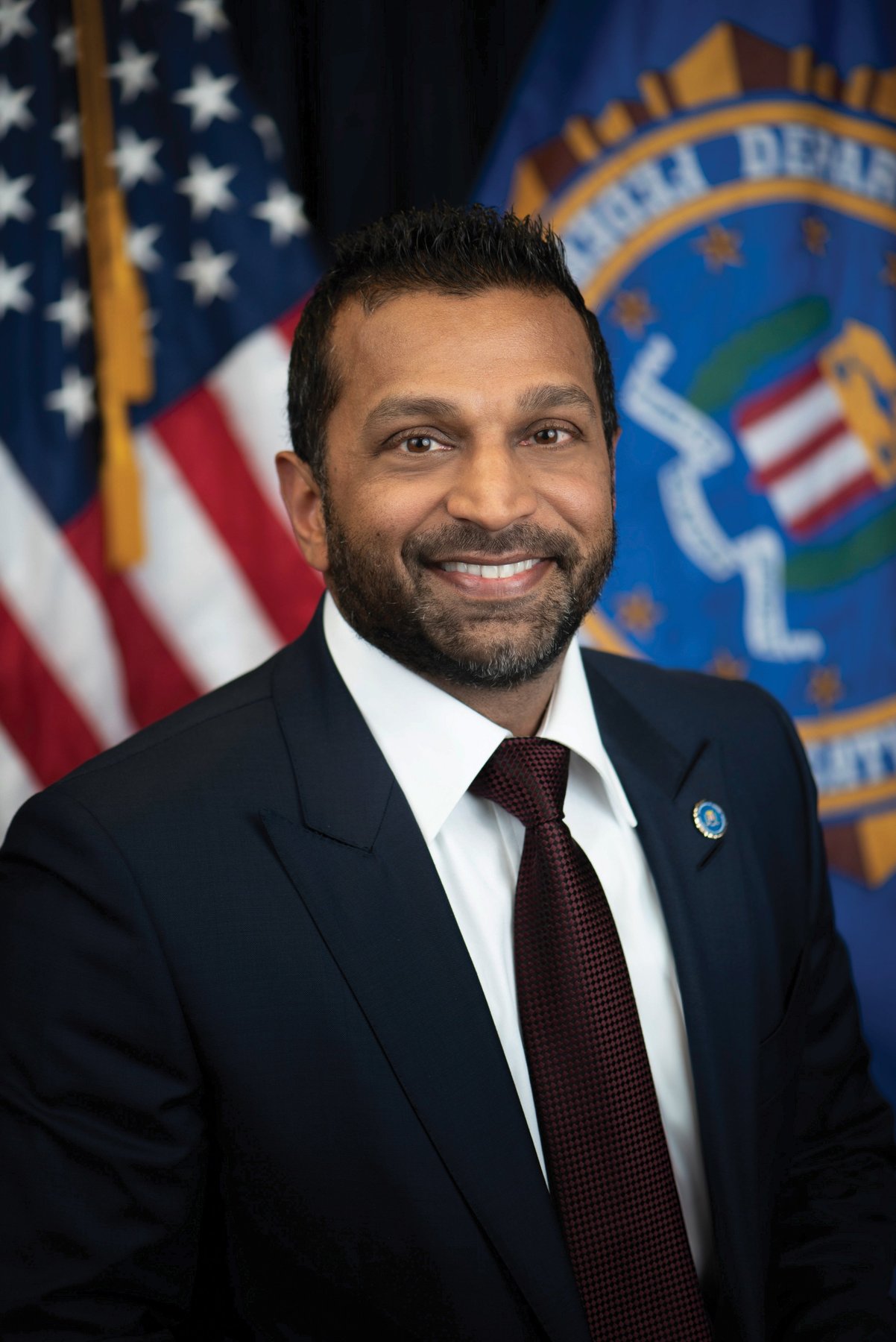
FBI Director Kash Patel, who said the defendants used cryptocurrency "to try to hide their criminal activity." (Official FBI portrait, February 2025, public domain)
PayPal, Western Union, Then Crypto
The paper trail shows a network adapting every time a payment company got suspicious. In November 2021, the indictment says, Alzaq had his French partner open a PayPal account because "we" were having trouble with PayPal over sanctions on people in Gaza. The partner was told to use different recipient names in Gaza so the French government would not notice repeated transfers and Western Union would not ban him.
By December 2021 Alzaq wanted Bitcoin instead, saying that with digital currency no one would know who sent the money or where it went. In May 2023, after one cryptocurrency exchange questioned where the funds came from, the partner simply switched to another exchange. On October 15, 2024, Alzaq allegedly told his Snapchat followers not to write "free Palestine" or "long live Hamas" on their donations so his PayPal accounts would stay open.
FBI Director Kash Patel said the defendants used "cryptocurrency to try to hide their criminal activity." The indictment's own timeline shows they also leaned on mainstream platforms for years before that.
Beauty Supply Owners on Louisiana's Northshore
The Louisiana defendants are not shadowy foreign operatives. FOX 8 in New Orleans reported that Louisiana Secretary of State records list the Adhami brothers as owners of beauty supply stores in Hammond and Slidell. FBI agents allege the brothers used Instagram and Snapchat while living in St. Tammany Parish and described their giving as "purely charitable." A grand jury indicted each on four felony counts, the station reported.
Yousef faces the longest list. The Middle District of Florida charged him with 19 counts, including five counts of attempting to provide material support, five counts of money laundering, and one count of passport fraud. DOJ's release does not explain the passport charge.
Some early coverage blurred these roles. A Washington Examiner headline read "Man helped raise $1.7 million for Hamas," while its story says Yousef provided nearly $50,000. The $1.75 million is the total prosecutors attribute to Alzaq's network over almost six years.
Why This Lands Right Before the Anniversary
Wednesday is the third anniversary of October 7. DOJ's release counts 46 American citizens among the more than 250 people Hamas took hostage that day. Assistant Attorney General John Eisenberg thanked Joint Task Force 10-7 "for its leadership in seeking justice for the victims" of the attack.
The Alzaq case is a warning about the giving that follows every disaster headline. Prosecutors say the pitch was animal sacrifices, food and winter supplies for Gaza, and Americans sent more than $600,000 of it. Three of the alleged U.S. donors are now in handcuffs. The open question is who sent the rest.
Top photo: The Daniel Patrick Moynihan United States Courthouse at 500 Pearl Street in Manhattan, home of the U.S. District Court for the Southern District of New York, where the Alzaq indictment was filed. (Photo: Ken Lund, CC BY-SA 2.0, via Wikimedia Commons)