President Trump has waived the tariffs and most of the sanctions in the Lindsey O. Graham Sanctioning Russia and Iran Act, a law he signed himself on September 18, and the order he signed October 16 sets no end date. The waivers stay in force until the president or the Secretary of State decides "further action is appropriate." The first oil-buyer tariffs were due to start October 18.
What did the order actually waive?
The text on WhiteHouse.gov does two things in sequence. Section 2 sets the duties the law calls for: 500 percent on goods from Russia, and 100 percent on goods from the five biggest buyers of Russian crude and gas that make new purchases on or after October 18, plus the top five facilitators of Russian oil sanctions evasion. Section 4 then waives all of it.
Section 4 waives the duties in sections 112 and 113 of the Graham Act, the sanctions provision in section 102(d), and a list of other sanctions sections. The order says Trump sent Congress the required certification that the waiver is "in the national interests of the United States," and that existing sanctions under the standing Russia emergency are not affected.
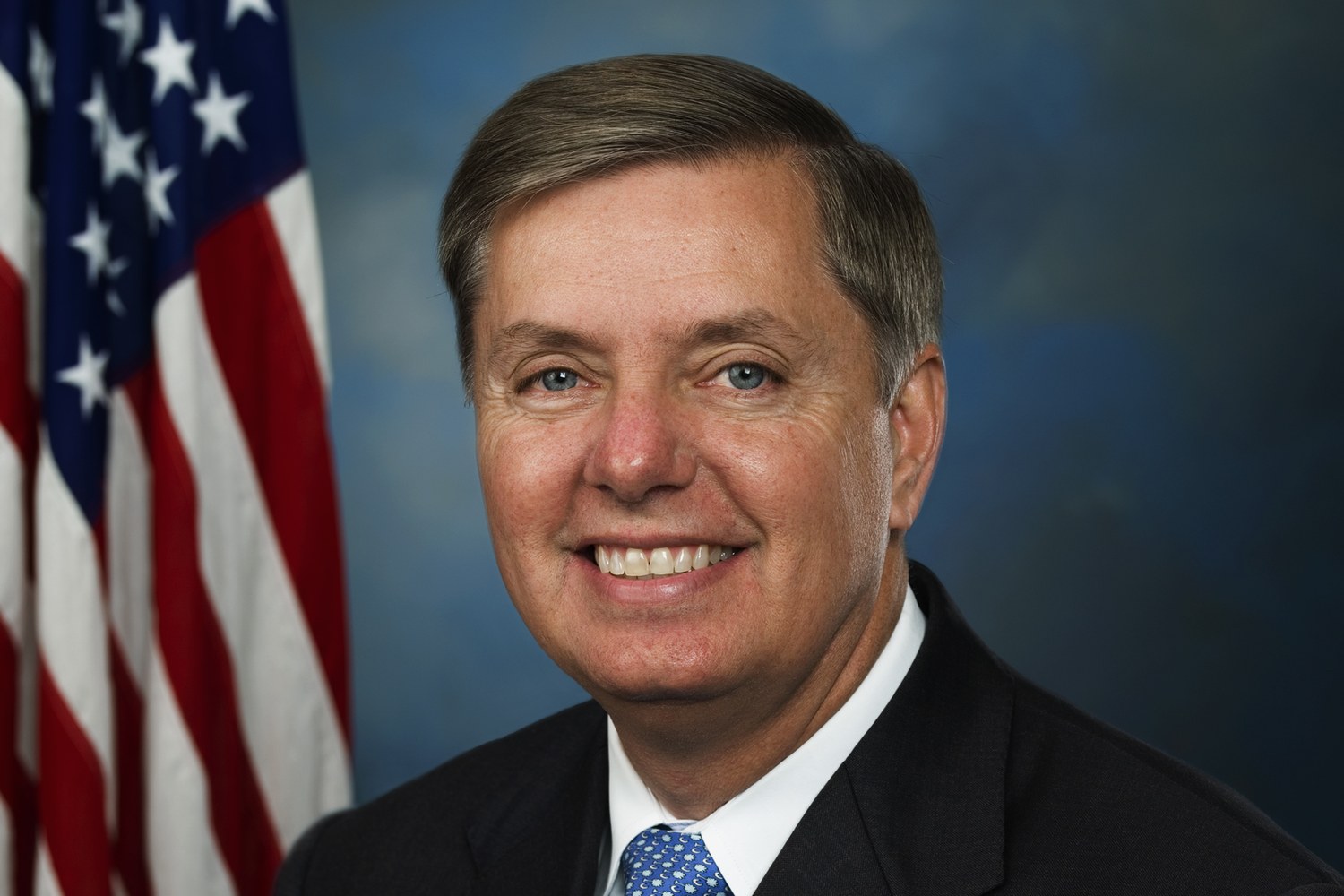
Sen. Lindsey Graham, whose name the law carries, in his official Senate portrait. Photo: official Senate portrait, via Wikimedia Commons, public domain.
Official record
Executive order, Implementing the Lindsey O. Graham Sanctioning Russia and Iran Act of 2026, dated October 16, 2026. Section 4, "Waiver," is shown below as printed from the White House web page.
"The waivers described in subsections (a) through (c) of this section shall remain in effect until such time as the President or the Secretary of State, in consultation with the Secretary of the Treasury and the Trade Representative, as appropriate, determine that further action is appropriate." - Section 4(d)
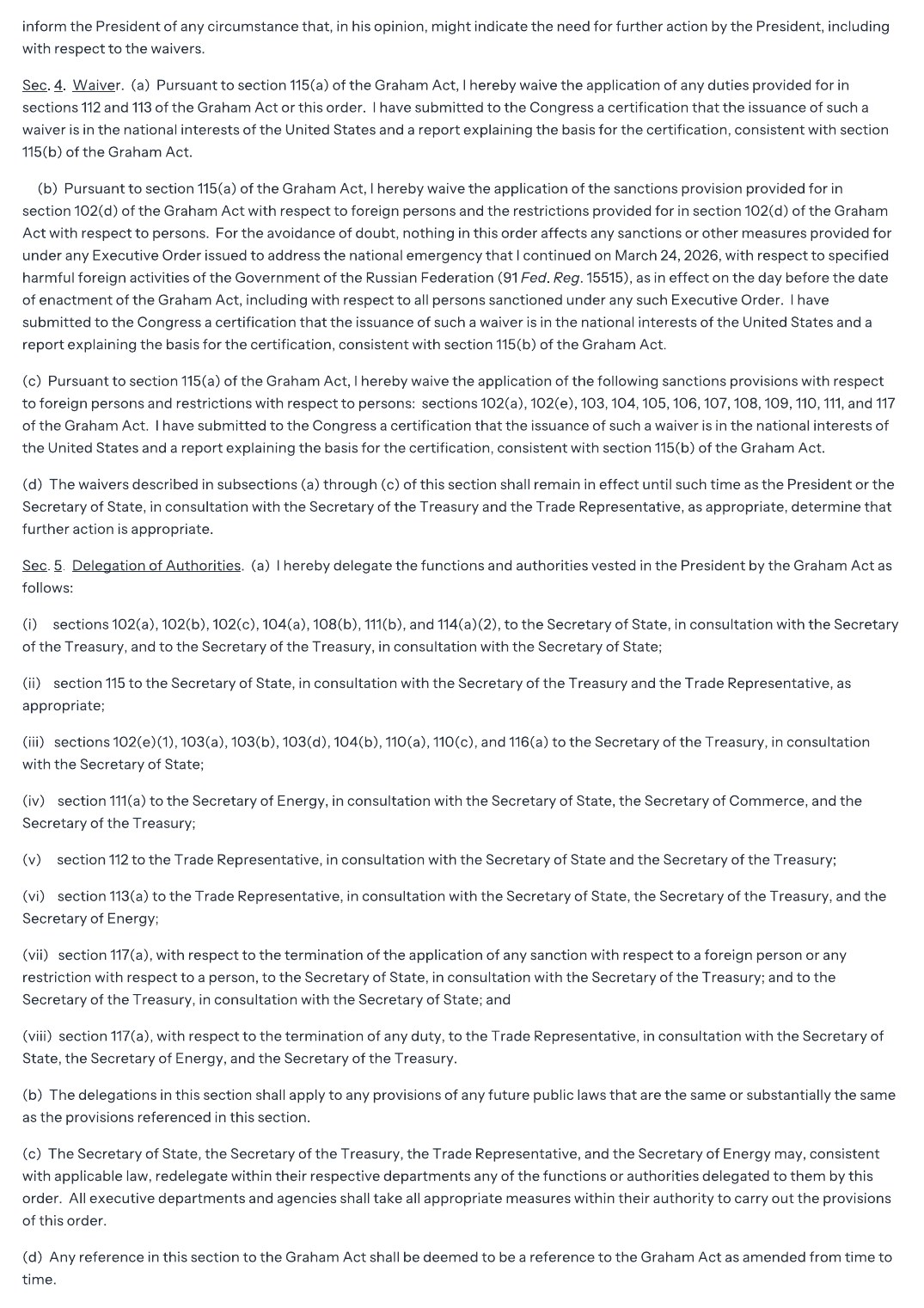
Read or download the full 4-page printout (PDF) · View the order on WhiteHouse.gov
Why does the White House say it did this?
White House spokesperson Taylor Rogers said Trump "wants to see this brutal war come to an end" and that enforcing the sanctions now "would impede ongoing U.S. efforts to negotiate a durable" peace, ABC News reported. The White House also says Trump can use the authorities again at any time.
Energy prices are the other piece. CBS News reports that Trump says he is trying to ease prices that spiked during the Iran war, and that a week earlier he eased sanctions on Russian diesel as part of a deal with Vladimir Putin. Fox Business notes Republicans have pressed Trump to bring costs down before the November midterms. That is a real argument. A 100 percent tariff on the largest buyers of Russian oil would hit the same fuel markets Americans are already paying for at the pump.
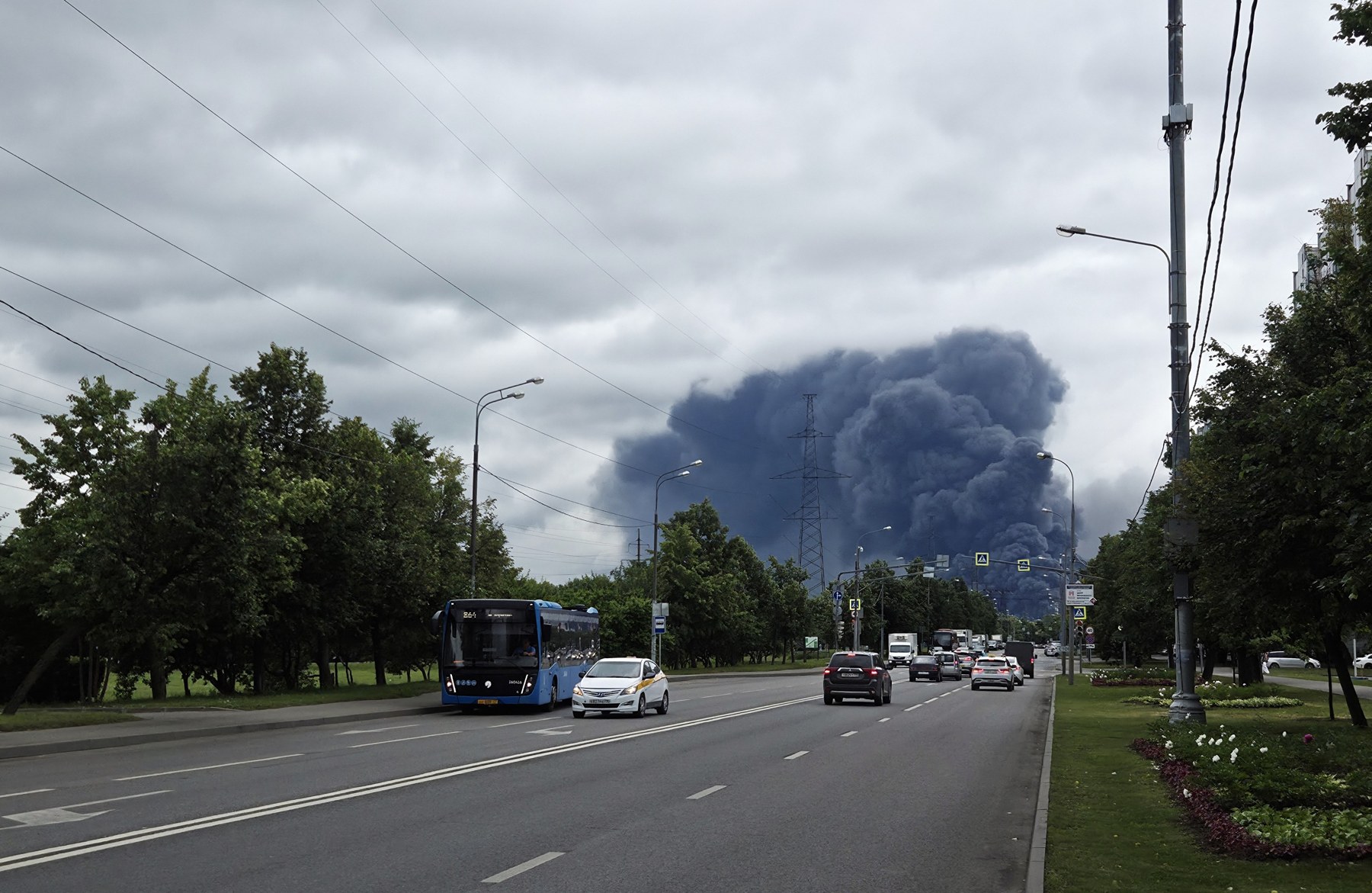
Smoke from a fire at the Moscow Oil Refinery, seen from a Moscow street on June 18, 2026. Photo: Wikimedia Commons, CC0.
Who in the Senate is angry about it?
Republicans, mostly. Sen. Thom Tillis called the move "Beyond irresponsible" and asked, "What part of enforcing a law passed 86-11 by the Senate does the President and his advisors not understand?" Sen. John Cornyn said Graham "would be appalled," per ABC. Zelenskyy called the decision "unfortunate," saying the law "could have helped enormously," according to CBS. Kremlin envoy Kirill Dmitriev, CBS reported, called the suspension "an important and truly historic moment."
Not every Republican objected. Rep. Thomas Massie, one of seven House Republicans who voted against the bill, said he was glad Trump used the waiver authority Congress wrote into it, ABC reported. That authority is the point. Congress gave the president this exit, with a certification and report requirement, and he took it. The vote was never a mandate to enforce every tariff on a schedule.
What should readers watch next?
Three things. Whether Putin delivers the diesel he promised, whether talks produce a deal Kyiv accepts, and whether the order's monitoring clause turns into anything. The Trade Representative is told to track which countries keep buying Russian energy and to "promptly inform the President" of any circumstance that might call for further action. The order does not say what happens if the answer is yes.
The tariffs are not dead. They are a loaded option in the president's drawer, with no deadline to use them. That is leverage, and Trump has always liked leverage. It only works if Moscow believes he will pull the trigger, and for now Moscow's envoy is celebrating. If the diesel does not flow and the talks stall, voters will judge this decision in November the same way they judge everything else: at the pump.
Header photo: President Trump and Russian President Vladimir Putin arriving at Joint Base Elmendorf-Richardson in Anchorage, Alaska, August 15, 2025. Official White House photo, via Wikimedia Commons, public domain.