Conservative outlets say California now forces churches to run "anti-hate speech" training. The bill's own summary says something narrower: AB 1803 adds the training to the harassment courses that employers with five or more workers already give, starting January 1, 2028. It never uses the word church, and a long-standing state exemption for religious nonprofits may keep many congregations out of it.
What does AB 1803 actually require?
Gov. Gavin Newsom signed the bill September 27, and it became Chapter 547 of the Statutes of 2026. It passed the Assembly 57 to 10 and the Assembly concurred in the Senate's changes 60 to 11. The Legislative Counsel's digest says it amends the state's sexual harassment training rule to add "anti-hate speech training, as specified."
According to IBTimes, the new content covers workplace speech that "vilifies, humiliates, or incites hatred" based on protected traits, and it fits inside the existing one-hour and two-hour courses. The same report says the law does not define "hate speech."
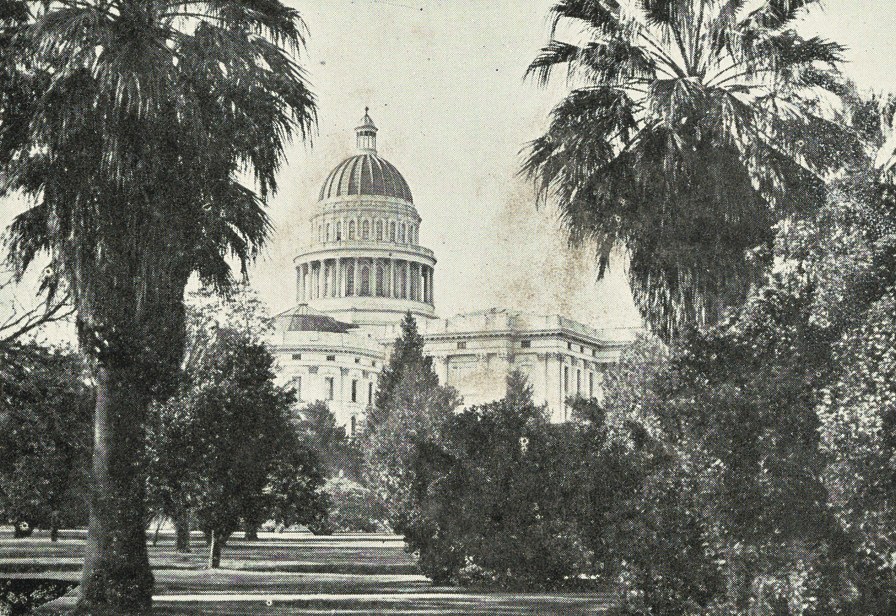
The California State Capitol in Sacramento, where AB 1803 passed, in a 1924 postcard print. Image: Library of Congress, no known restrictions on publication.
Does the church exemption cover this training?
The Daily Signal's headline says the law "Requires Churches to Implement Pro-LGBT 'Anti-Hate Speech' Training." The article itself says the statute never mentions churches or religious nonprofits.
California's Fair Employment and Housing Act has a carve-out on the books. Subdivision (d) of Government Code section 12926 reads: "'Employer' does not include a religious association or corporation not organized for private profit." Whether that sentence reaches the training mandate is the open question. The California Family Council, which fought the bill, says no court, attorney general opinion or Civil Rights Department guidance has settled it.
Official record
California AB 1803, "Employment: sexual harassment training and education: anti-hate speech training," chaptered September 27, 2026. The official bill text sits on the California Legislature's site, which blocked automated access, so the digest below is quoted from CalMatters' Digital Democracy copy of the Legislative Counsel's summary.
"This bill would additionally require that, beginning January 1, 2028, the above-described training and education include, as a component of the training and education, anti-hate speech training, as specified." - Legislative Counsel's digest, AB 1803 (chaptered version)
Read the bill summary and hearing history · LegiScan bill history
Are any churches actually refusing?
The IBTimes headline says employers adopt the classes "while churches refuse to comply." The article's own text says no identified church has been shown refusing. The loudest voice is Greg Burt of the California Family Council, who said, as The Christian Post reported, "This is one of those points in history here in California where civil disobedience is going to be necessary." That is a warning about the future, not a report of defiance.
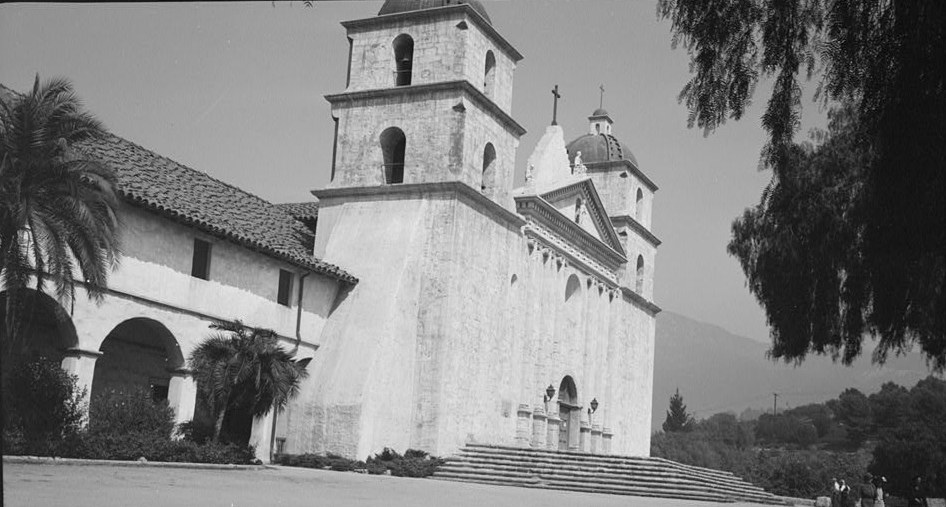
Mission Santa Barbara, a California house of worship, photographed in 1936 by Henry F. Withey. Image: Library of Congress, Historic American Buildings Survey.
Why is the word "vilify" the real problem?
The exemption fight may matter less than the vocabulary. The Foundation for Individual Rights and Expression quotes a legislative committee analysis conceding that "hate speech itself is not illegal but can violate employment law." FIRE argues terms like "vilify" and "incite hatred" are vague enough to push employers toward policing lawful speech.
That reaches well past pulpits. A Christian school, a ministry with a payroll, or a family business that holds traditional views on marriage all sit in the same five-employee category. The Daily Signal reports that the state Civil Rights Department is the agency left to give "hate speech" a working meaning. A Newsom signature settled the politics. It did not settle the definition.
The practical step is dull and necessary. A church or Christian employer in California with five or more people should ask a lawyer, well before 2028, whether it counts as a "religious association or corporation not organized for private profit," and get the answer in writing. Believers shouldn't have to guess which side of that line they stand on after the training is already law.
Header photo: Gov. Gavin Newsom's 2026 official portrait by Charles Ommanney, Office of the Governor of California, public domain via Wikimedia Commons. The dark background was extended at the sides to fit the frame.