The House Rules Committee meets Monday afternoon to set up a floor vote on the Lindsey O. Graham Sanctioning Russia and Iran Act, the bill that carries a dead senator's name because he spent his final weeks in Congress pushing it across the finish line. The Senate passed it 86 to 11 in August, with 37 Democrats joining nearly every Republican. In the House, some of those senators' own party allies, including the top Democrat on the Foreign Affairs Committee, are trying to keep the same bill off the floor, because it would hand Donald Trump real new leverage over Russia and China, and they cannot stomach him actually using it.
What Actually Happens in the House This Week
The House Rules Committee convenes Monday at 4 p.m. in H-313 of the Capitol to write the rule governing floor debate on H.R. 5334, the vehicle bill that now carries the full text of the Lindsey O. Graham Sanctioning Russia and Iran Act of 2026. If the Republican-controlled committee clears it, as expected, a floor vote follows later in the week, according to Reuters.
That timing matters. As recently as September 7, Deseret News reported that House Majority Leader Steve Scalise still had no date in mind, telling reporters only "we're working through it," while Speaker Mike Johnson described "a couple of pockets of concern" holding the bill back, according to Deseret News. A personal lobbying trip to Washington by Zelenskyy's own sanctions envoy hadn't moved the needle either, per NOTUS. What apparently did: one source familiar with internal discussions told Reuters that Trump's team wants the bill passed before his September 24 meeting with Chinese President Xi Jinping, to use as leverage at the table.
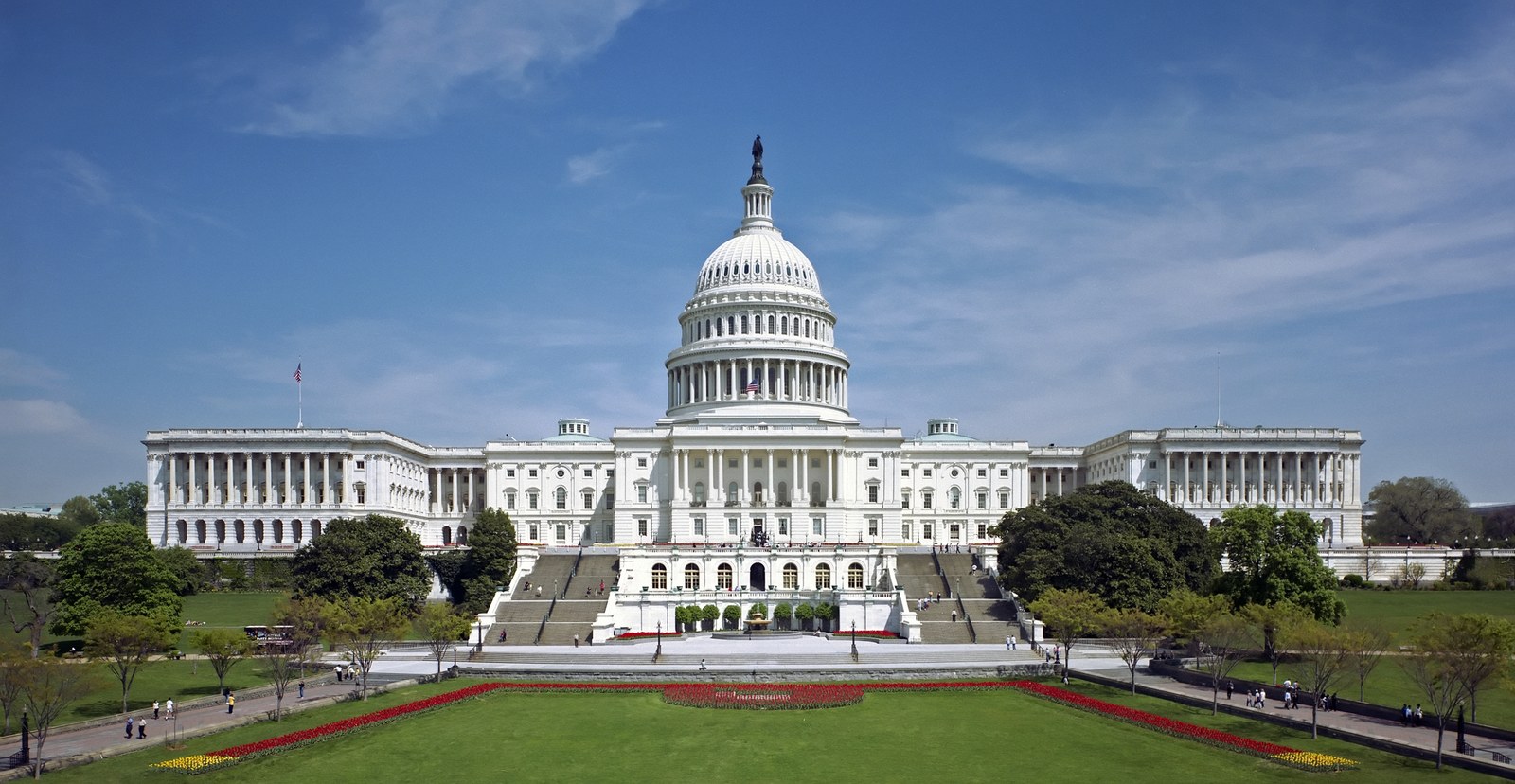
The U.S. Capitol. The House Rules Committee meets Monday to tee up floor debate on the bill named for the late Sen. Lindsey Graham. (Architect of the Capitol, public domain)
Why the Bill Carries a Dead Senator's Name
Sen. Lindsey Graham, R-S.C., died July 12 at 71 of an aortic dissection, according to the D.C. medical examiner's preliminary findings reported by The Washington Post. He had spent more than two decades in the Senate as one of Ukraine's loudest defenders on Capitol Hill, and this sanctions package, written with Connecticut Democrat Richard Blumenthal, was the fight he cared about most in his final months.
Weeks before he died, Graham told Fox News that Trump himself had personally pushed Senate Majority Leader John Thune to act, saying Trump told Thune over a round of golf simply to "move the bill." Graham explained why it mattered: "If you want Putin at the table, there will be no successful 28-point plan or 12-point plan unless Putin believes that we're going to continue to support Ukraine militarily and that we're going to come after people who buy cheap Russian oil."
His death didn't kill the bill. If anything, it drove the Senate to finally act. Senators held their first procedural vote the same day as his funeral, 86 to 12, with Ukrainian President Volodymyr Zelenskyy watching from the gallery after making his own private appeal to senators, according to Radio Free Europe/Radio Liberty. Final Senate passage came August 7, 86 to 11, with 37 members of the Democratic caucus joining nearly every Republican in support, according to the official roll call.
The Number Every Headline Uses, and the One Most Skip
Nearly every news story about this bill leads with the same figure: a 100 percent tariff on countries that buy Russian oil. That's real. Section 113 of the bill directs the U.S. Trade Representative to impose duties of "up to 100 percent ad valorem" on the five largest importers of Russian crude oil or natural gas, widely understood to mean China, India and Turkey. The rate can be raised or lowered later depending on whether a country keeps buying.
What almost no coverage mentions is Section 112, a separate and considerably blunter instrument. It doesn't touch other countries at all. It hits Russia directly, ordering the President, within 30 days of enactment and "notwithstanding any other provision of law," to raise the tariff on every category of good imported into the United States from Russia, not just oil and gas but coal, petrochemicals and everything else.
Official record
H.R. 5334, Engrossed Amendment Senate, Section 112, as passed by the Senate August 7, 2026:
"the President shall, notwithstanding any other provision of law, increase the rate of duty for all goods, including oil, natural gas, liquefied natural gas, petroleum, petroleum products, petrochemical products, coal, and coal products, imported into the United States from the Russian Federation to a rate of up to 500 percent ad valorem."
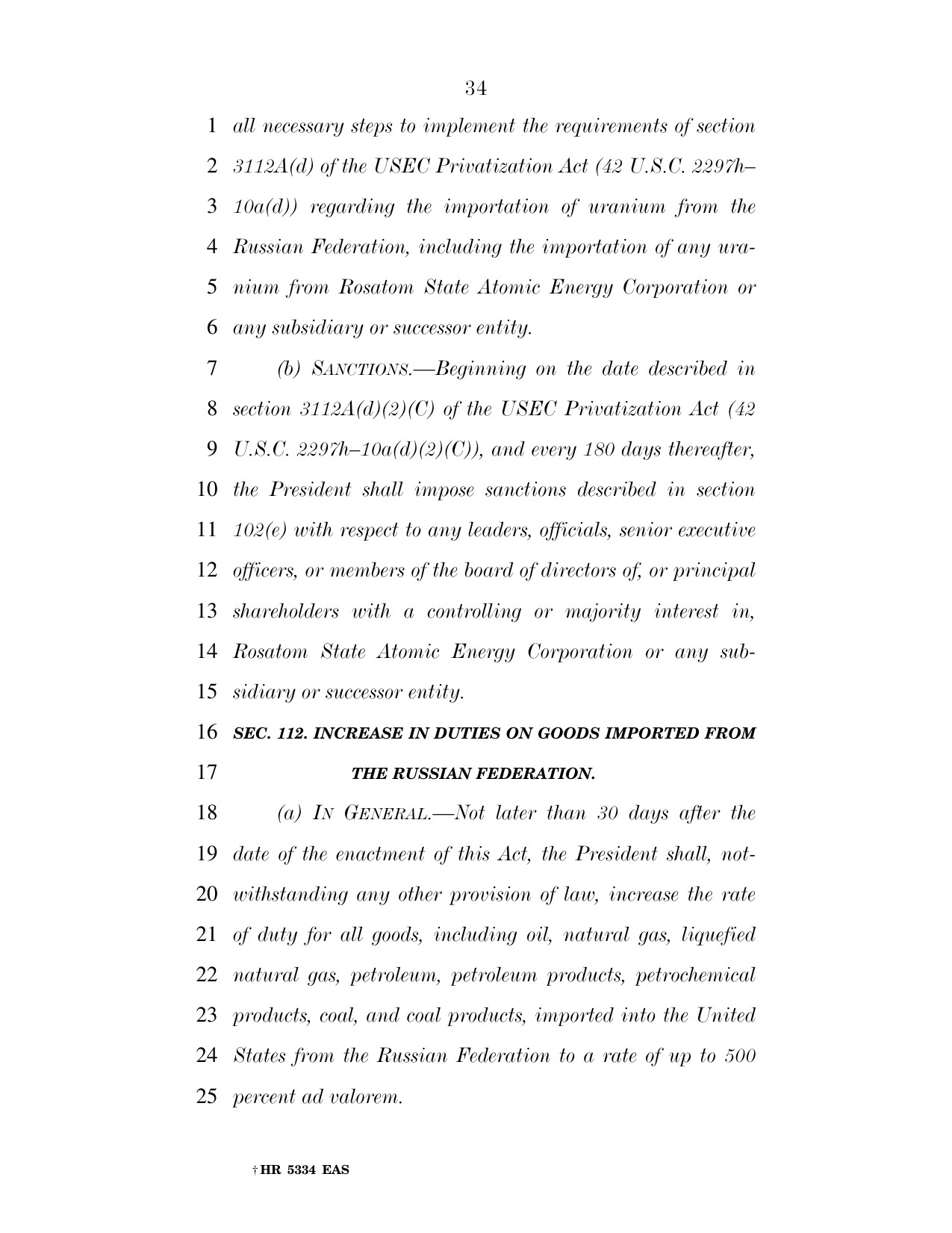
Read or download the full 62-page bill text (PDF) · view the bill on Congress.gov
Five hundred percent is five times the number driving every headline about this bill, and it applies with no country-by-country negotiation at all. It is simply a direct, mandatory tariff on Russian goods themselves.
How Easy It Would Be for Trump to Waive These Sanctions, and How Hard to Actually Kill Them
Democratic critics, including Rep. Gregory Meeks of New York, the ranking Democrat on the House Foreign Affairs Committee, argue the bill hands Trump too much discretion to waive its own sanctions. Read the text and that complaint holds up, but only for half the bill.
Section 115 lets the President waive any individual sanction, restriction or duty simply by sending Congress a written certification that doing so serves the national interest. There is no vote attached, no waiting period, no disapproval process. It is a letter.
Permanently ending the sanctions under Section 117 is harder. It requires the President to certify that Russia has signed a peace agreement Ukraine's own government accepts and has stopped its hostilities, then triggers a mandatory 30-to-60-day congressional review window during which Congress can file a joint resolution of disapproval, the same mechanism used against the 2015 Iran nuclear deal. The catch, also in the bill's own text: that resolution needs 60 votes just to come up for debate in the Senate, a bar few things clear in a chamber split this closely.
Why Some of the Bill's Own Democratic Backers Want to Kill It
Meeks isn't a sanctions skeptic. He's the same lawmaker who forced his own, tariff-free Russia sanctions bill through the House over GOP objections using a discharge petition, according to Roll Call. It's the Senate's amended version he opposes. "If the House passes this bill as written, the result will not be sanctions on Russia or support for Ukraine, it will be higher costs and more inflation for the American people," he said in a statement reported by Reuters. Weeks earlier he told NOTUS flatly, "This bill, as it is, is not going to help the Ukrainians in the long run."
Sen. Blumenthal, Graham's own co-author, disputes that framing, telling Deseret News the tariff authority "is narrowly targeted and confined to the five largest purchasers of Russian oil and gas... the president simply has no authority under this bill to apply tariffs in a broad blunderbuss way." Even Ben Harris, a Brookings economist who served as a senior Treasury official under Joe Biden, told Reuters the bill "shows congressional resolve towards Russia and in favor of Ukraine," while granting it "absolutely offers fairly sweeping new authority to the president."
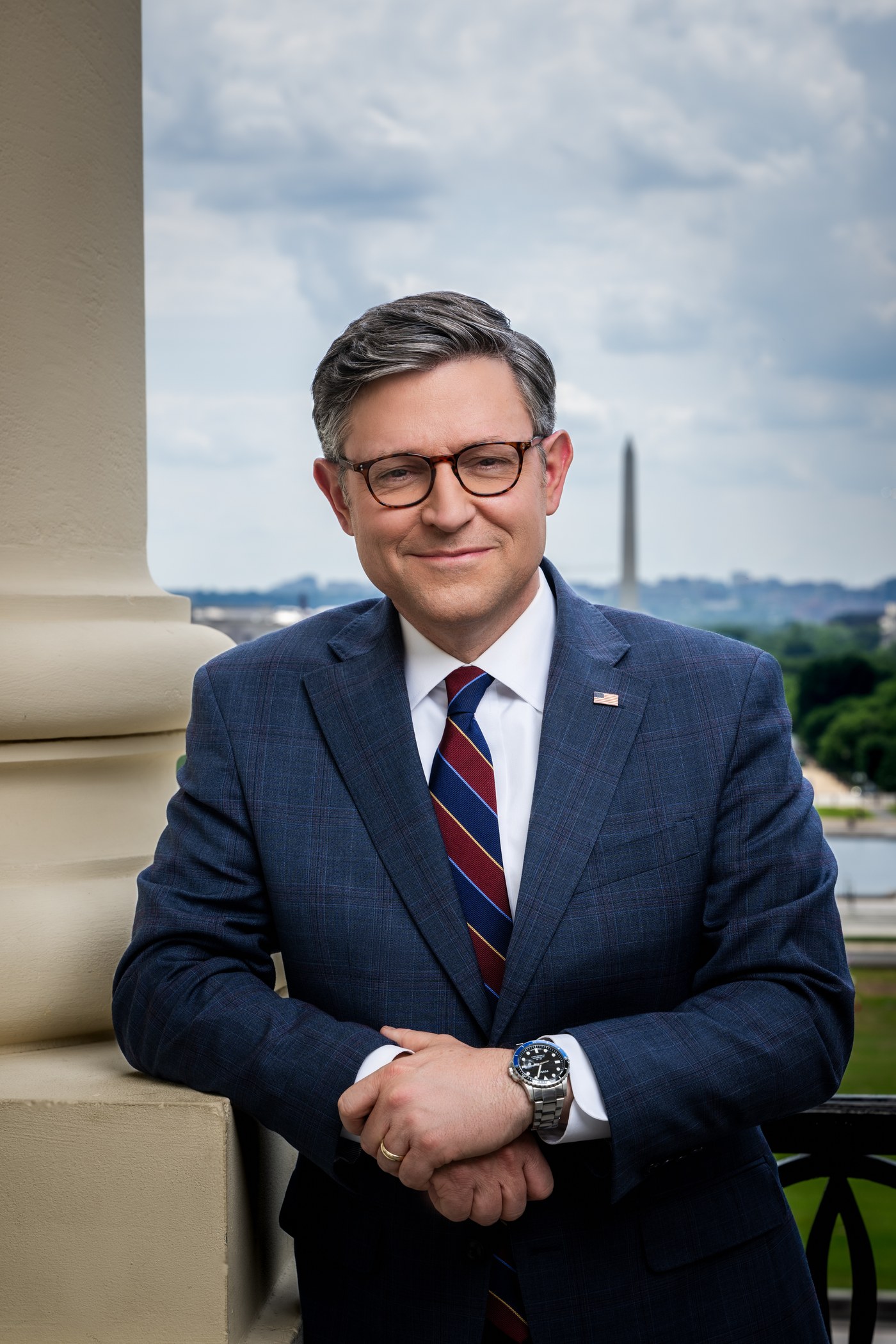
House Speaker Mike Johnson, R-La., has called the holdup "a couple of pockets of concern" rather than outright opposition. (Official portrait, public domain)
That is the part rarely said out loud: a bill even a former Biden Treasury official credits with real leverage over Moscow is held up in a House even though 37 members of the Senate's own Democratic caucus voted for it last month. The objection isn't that the bill is weak on Russia. It's that it works, and the win goes to Trump.
It Isn't Just Democrats Who Are Nervous
House Foreign Affairs Committee Chairman Brian Mast, R-Fla., has withheld his own endorsement, telling NOTUS the bill was "being examined" for its effect on gas prices if India and other buyers of Russian oil are forced into other markets. Other Republicans simply fear the political cost of a tariff fight seven weeks before voters decide who controls the House.
Not every Republican shares that hesitation. Rep. Brian Fitzpatrick of Pennsylvania, co-chair of the Congressional Ukraine Caucus, told NOTUS he'd back the bill regardless: "I would vote for it with tariffs, without tariffs. I'm not going to let the tariff piece stop my support for Ukraine." Maryland Democrat Steny Hoyer, one of the House companion bill's original sponsors, wants the Senate version passed untouched: "Do I think the bill is perfect? I don't. But we don't pass perfect bills here."
What's Actually at Stake This Week
The bill does more than sanction Russia. Title II extends the Iran Sanctions Act of 1996, otherwise set to lapse this year, out to 2031, a five-year renewal buried in a bill whose headlines are all about Moscow. The Russia title carries its own sunset clause too, expiring five years after enactment unless a future Congress renews it.
If the House passes the bill this week, it goes straight to Trump's desk, where he has already said he backs it, giving him direct leverage over both Putin and Xi Jinping within the same ten-day span. If it stalls, a bill that cleared the Senate with 37 Democratic votes and all but one Republican dies quietly in a House that Republicans control, killed less by the party that voted against it than by members of the party that helped write it. Either way, the man whose name is on the bill will not be there to see which way it goes.