An ICE charter landed at Roberts International Airport outside Monrovia on Thursday carrying 20 deportees, the first removals under a deal letting Liberia take up to 1,200 people who are not Liberian. It is one of the largest third-country removal arrangements the Trump administration has put together, and unlike most of them, the signed text is sitting in public on the State Department's own website.
What actually landed in Monrovia
The group boarded a bus after landing and was driven off by Liberian authorities without being allowed to talk to reporters, Al Jazeera reported, citing AFP and Reuters. The 20 people on that plane were largely Venezuelan and Cuban. Not one of them is from Liberia.
Liberian Information Minister Jerolinmek Piah told reporters the country will take the full 1,200 within a year, and that the group will include Africans along with nationals of North America, South America and the Caribbean, per the Associated Press. Justice Minister Natu Oswald Tweh said Liberia screened the manifest before the plane left. "Most of them are people who had immigration violations and offenses," he said.
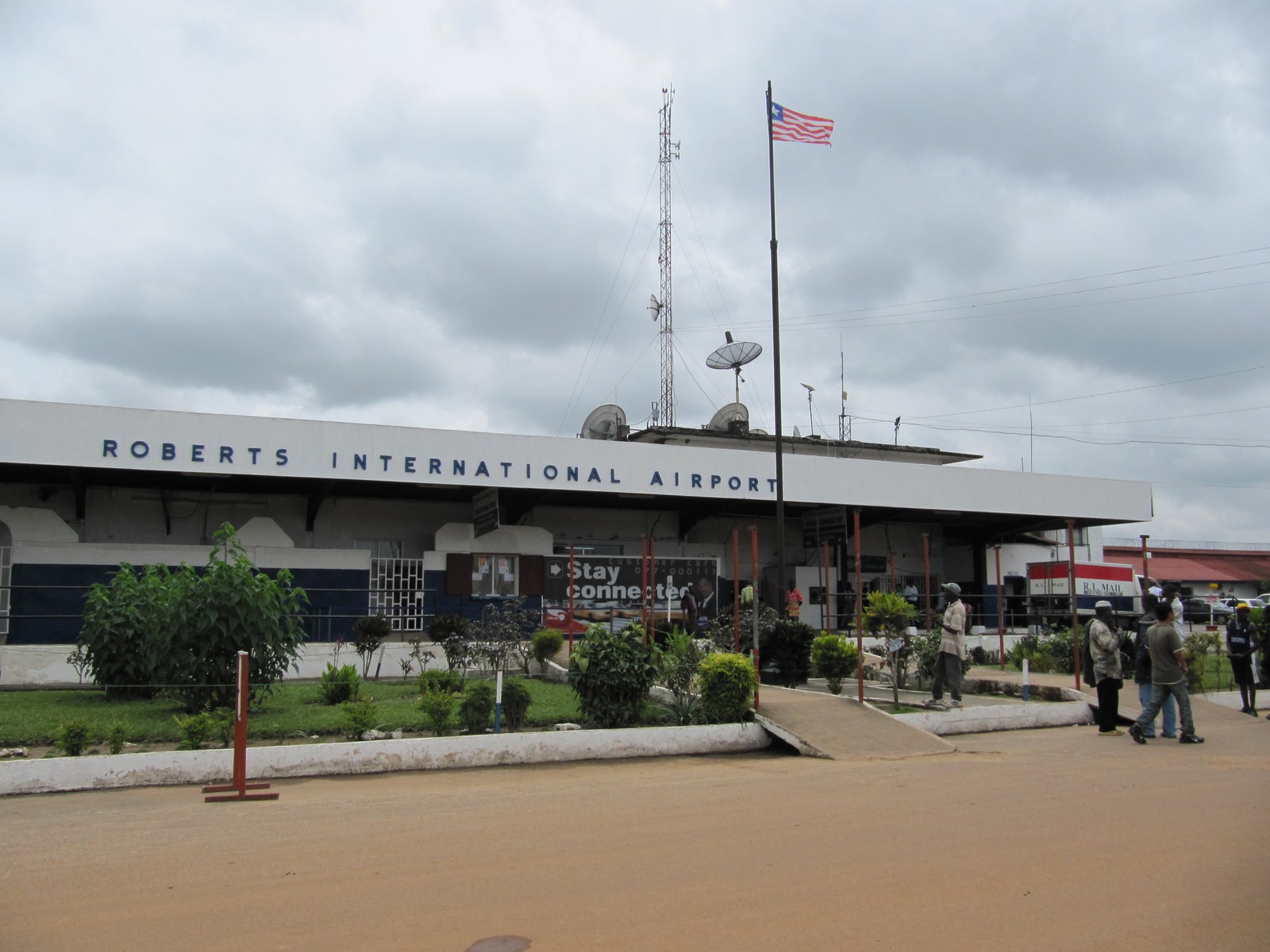
Roberts International Airport outside Monrovia, Liberia, where Thursday's ICE charter touched down. File photo, not from this week's arrival. (Photo: Popo le Chien, Wikimedia Commons, public domain)
The paperwork is real, and anyone can read it
Third-country removal deals are usually kept quiet. The Associated Press noted that these arrangements are "often shrouded in secrecy," and both DHS and the State Department went silent on this specific flight, according to AP's report carried by NBC News. DHS would not confirm Thursday's removals "for operational security reasons."
The underlying agreement, though, is on the record. It is Treaties and Other International Acts Series 25-910, an exchange of diplomatic notes signed at Monrovia on September 10, 2025, and the State Department posted the full text in March 2026. Six pages, no redactions, and it lays out exactly what the two governments committed to.
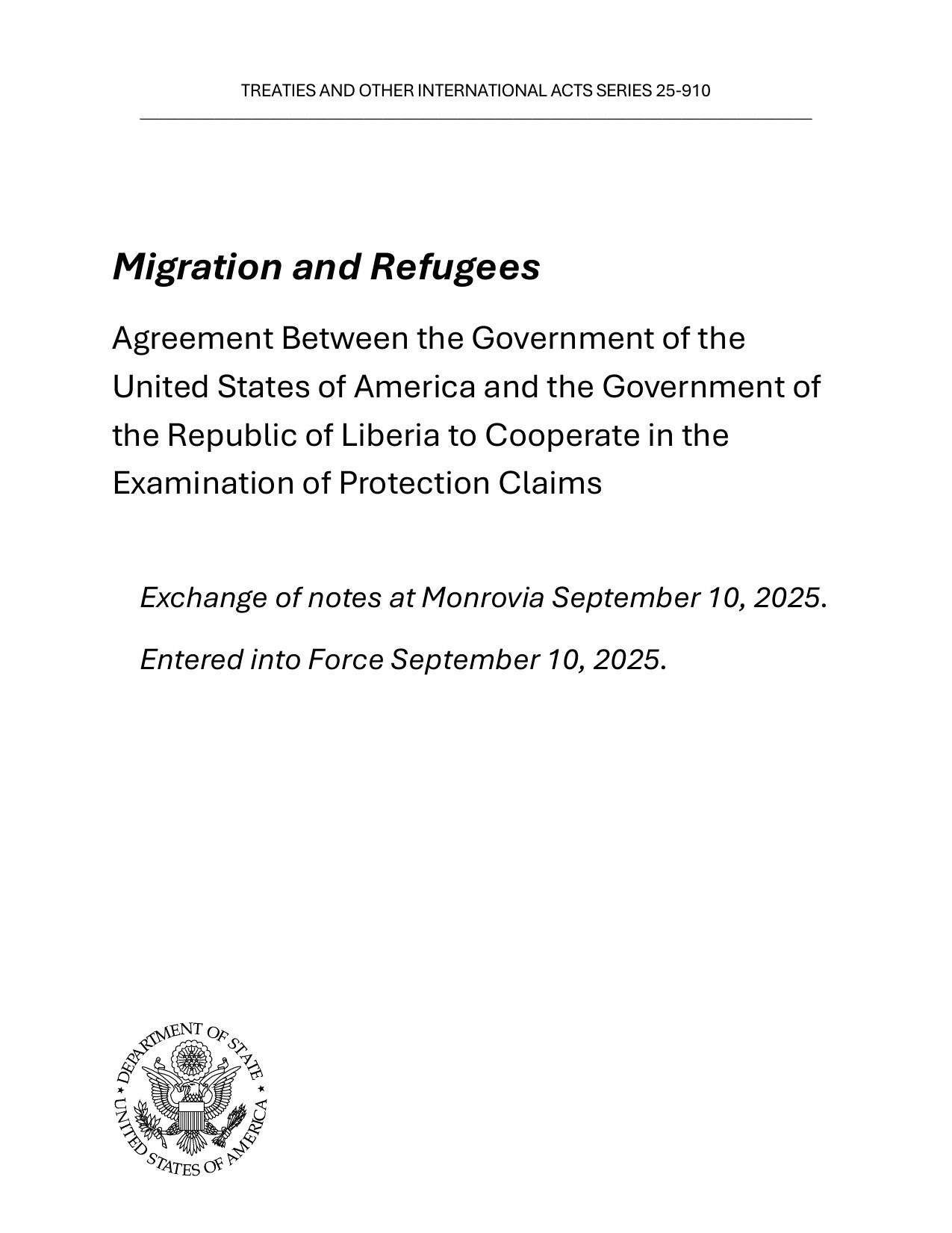
The text also bars Liberia from sending anyone transferred there back to their home country until a pending protection claim is finally decided, and it flatly rules out sending unaccompanied minors. Both governments can walk away in writing at any time. That is the whole architecture of this thing, in plain language, published by our own government.
Why Liberia said yes
Liberia's Ministry of Information got ahead of the obvious accusation. "The transfer of persons to Liberia is not a transaction with a quid pro quo," the ministry said in its statement announcing the deal. "Liberia has not demanded or received any compensation or promise of reward in exchange for its consent to participate in the program."
The ministry leaned on Liberia's own history to explain the decision, noting that the country "was founded as a refuge for freed slaves from the United States of America and other parts of the world." Piah called the gesture "entirely humanitarian and in keeping with the country's longstanding traditions," and said the deportees can apply for asylum in Liberia or leave whenever they want.
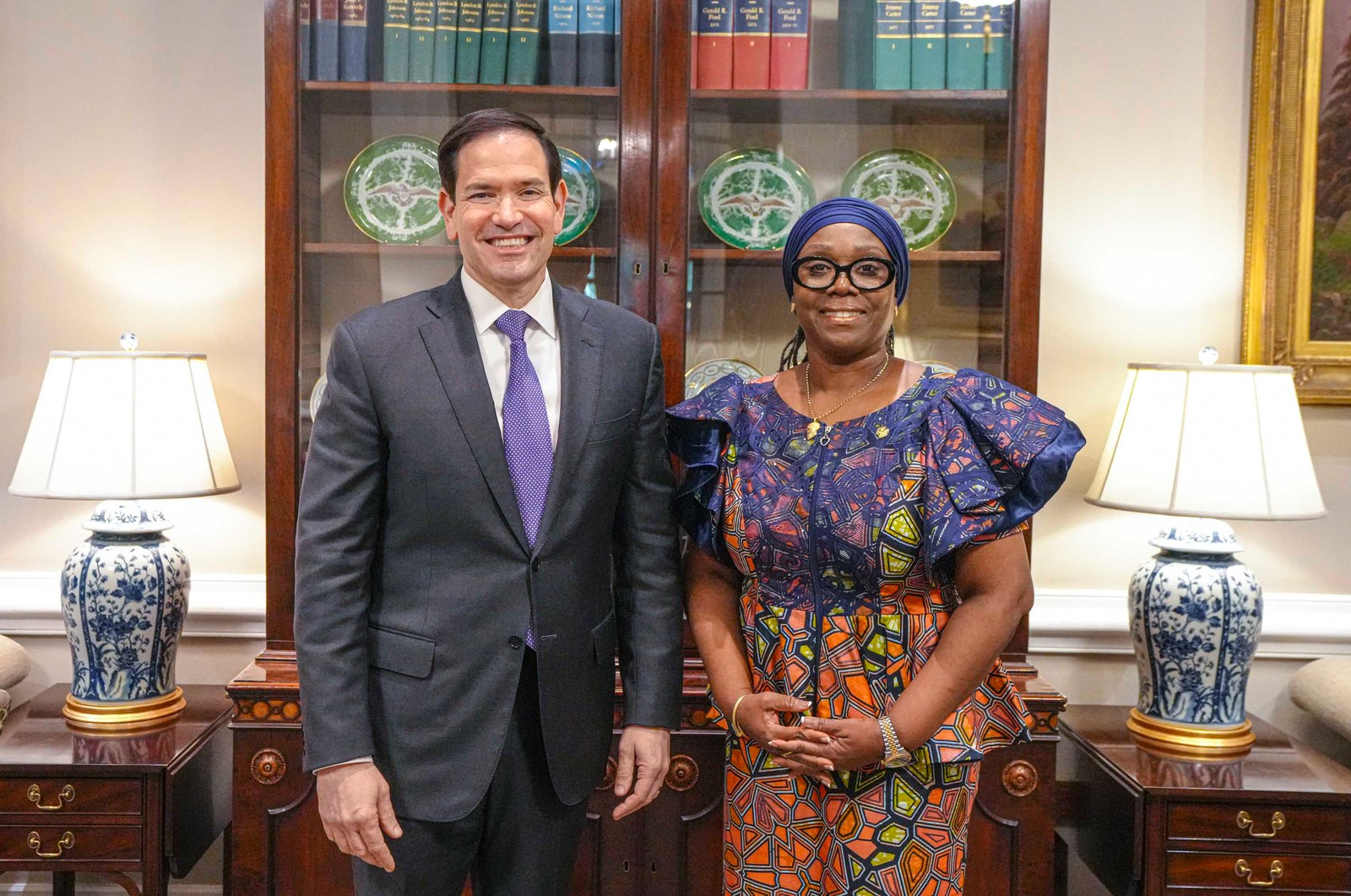
Secretary of State Marco Rubio meets with Liberian Foreign Minister Sara Beysolow Nyanti at the White House on October 16, 2025, a month after the two governments' migration agreement entered into force. (Official U.S. State Department photo by Freddie Everett, public domain)
Money did move, just not as a payment for bodies. The United States awarded Liberia $5 million this year for "migration management activities," and Senate Democrats estimated in February that at least $40 million had gone into deals like this during the first year of Trump's second term, both figures reported by Al Jazeera. Set that against what a single deportation charter costs and it is not a large number.
Thirty-five countries have signed up for this
Liberia is not an outlier anymore. The administration has struck third-country removal agreements with at least 35 governments, 14 of them in Africa, and more than 23,000 people have already been removed to 26 countries under them, according to Third Country Deportation Watch, a tracker run by Refugees International and Human Rights First that AP cited in its reporting.
That is the part critics keep missing when they call each individual flight a scandal. The whole point of building three dozen of these agreements is that "my home country won't take me back" stops working as a defense. DHS has been loud about arrests all week, including a Friday release touting the arrest of convicted murderers and fentanyl traffickers, while saying almost nothing about where the planes go afterward. The agreements are how the second half of that sentence gets finished.
The name that makes this deal politically radioactive
Liberia offered in October 2025 to accept Kilmar Abrego Garcia, the Salvadoran national the government mistakenly deported to a prison in El Salvador in 2025 and was then ordered to bring back. Blocked from returning him to his home country, the administration has said it intends to send him to a third country, and Liberia is the one it keeps naming. Abrego Garcia is fighting that in federal court in Maryland in Abrego Garcia v. Noem, Case No. 8:25-cv-02780, where U.S. District Judge Paula Xinis has kept a block in place on redetaining and deporting him to Liberia.
He says he would accept deportation to Costa Rica, which has agreed to take him, and the government has so far declined to send him there. On the criminal side, a federal judge in Tennessee threw out the 2022 human smuggling charges against him in May, and the Justice Department asked the Sixth Circuit this week to reinstate them, per the Washington Examiner. Those charges are allegations. He has not been convicted of them.
Thursday's flight matters because it turned a signed piece of paper into an actual runway in West Africa. A removal order only means something if there is a country on the other end willing to open the door, and that was the missing piece for a very long time. Twenty people walked off a plane in Monrovia on Thursday. Under this one agreement, 1,180 seats are still open.