

Headlines on Friday's Fifth Circuit ruling said ICE detainees have "no due process rights." The court's own opinion says the opposite on page 11: "There is no dispute that Petitioners enjoy the protections of the Fifth Amendment." What the full court actually decided is narrower, and it still matters to every illegal entrant arrested in Texas, Louisiana or Mississippi.
What did the Fifth Circuit decide?
Sitting en banc on October 23, the court ruled 10 to 7 in Sosnava Rodriguez v. Vergara, No. 26-50183, that three men held by ICE are not entitled to bond hearings on dangerousness or flight risk while their removal cases proceed. Judge Cory Wilson wrote the lead opinion. Judge Priscilla Richman concurred only in the judgment. The court reversed three district court orders that had freed the men and vacated their habeas relief.
It also wiped out a July panel ruling that would have required a bond hearing within 90 days of detention. The mandate issues "forthwith," so the old rule is gone now.
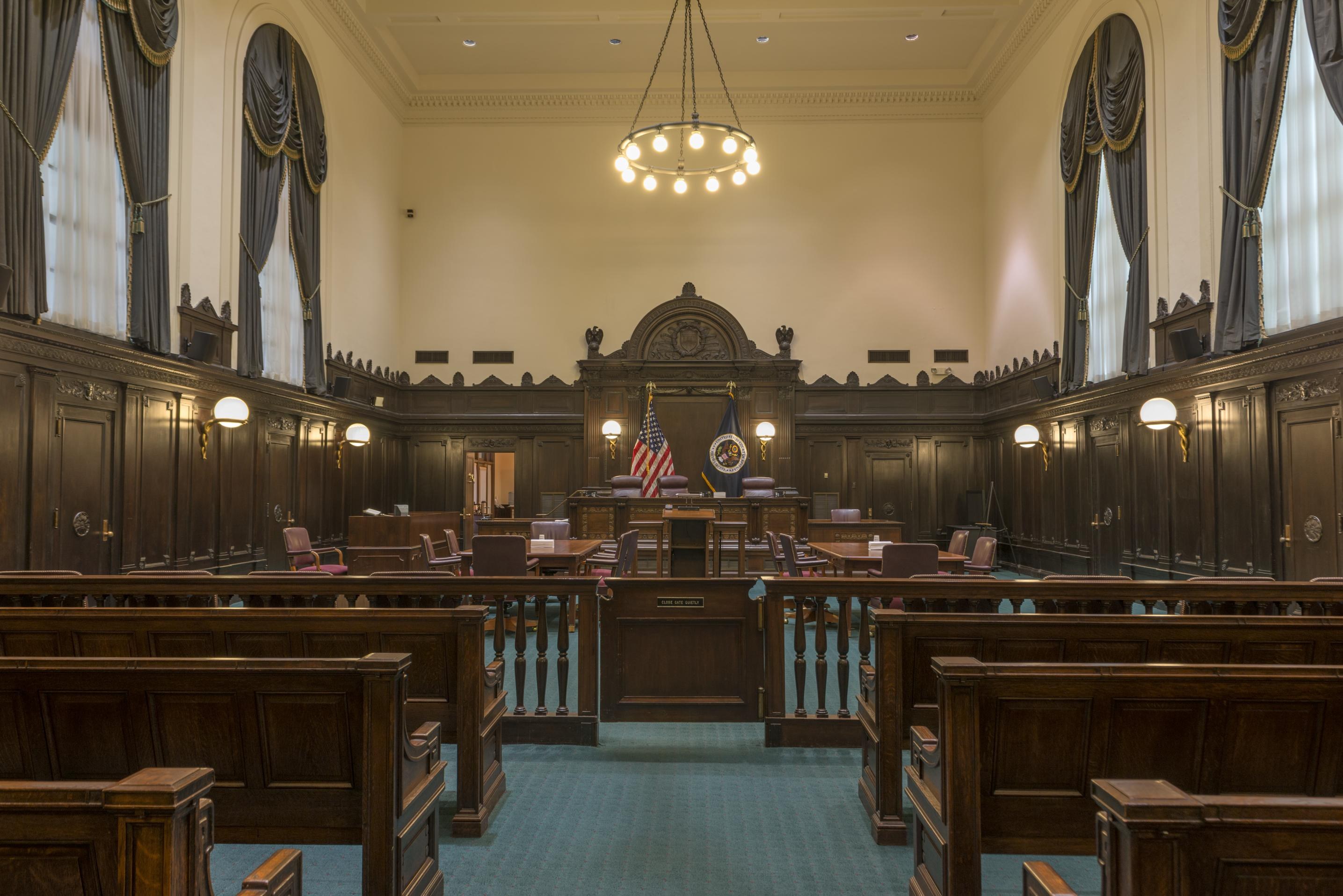
A courtroom in the John Minor Wisdom U.S. Court of Appeals Building in New Orleans, home of the Fifth Circuit. Photo: Carol M. Highsmith, Library of Congress, no known restrictions on publication.
Who are the three men?
All three are in the country illegally. Ignacio Sosnava Rodriguez is a Mexican national who has lived here more than 22 years and was detained in December 2025 after a traffic stop. Alejandro Villegas Angel, also Mexican, has been here since 2011 and was handed to ICE after police stopped him for driving without a license. Miguel Angel Gomez Alvarado, a Honduran national here since 2012, was detained after a traffic stop in November 2025. The opinion says Villegas has two U.S. citizen children and Gomez has one.
The legal hook is 8 U.S.C. 1225(b)(2)(A), which says an "alien seeking admission" who is not clearly entitled to be admitted "shall be detained" pending removal proceedings. The court says it "says [no]thing whatsoever about bond hearings." ICE moved interior arrests under that section in July 2025 guidance, and the Fifth Circuit upheld that reading earlier this year in Buenrostro-Mendez v. Bondi.
Official record
U.S. Court of Appeals for the Fifth Circuit, Sosnava Rodriguez v. Vergara, Nos. 26-50183, 26-50219, 26-50221 (en banc), filed October 23, 2026. Page 11 of the 159-page opinion.
"So the issue in this case is not whether Petitioners are entitled to due process. Rather, the question is what specific process is due for unadmitted aliens pending their removal proceedings." — Judge Cory Wilson, for the en banc court
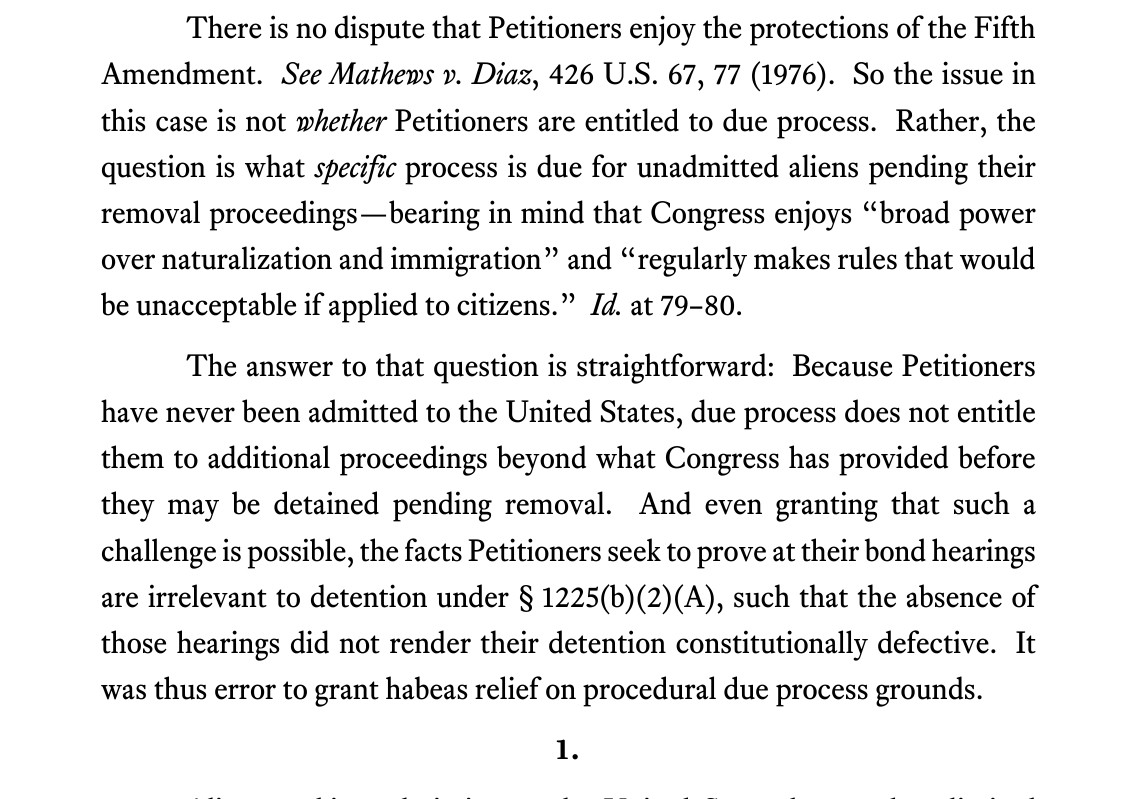
Static capture of page 11 · read the full opinion (PDF) on the Fifth Circuit site
What was the majority's reasoning?
The majority says Congress holds near-total power over who may enter, and that a person who was never admitted is owed only the process Congress wrote into the statute. It leans on the Supreme Court's Demore v. Kim, which allowed detention during removal proceedings.
On liberty, Wilson writes that the men "can do so at any moment by agreeing to leave the country," adding: "In no other context implicating a core liberty interest does the detainee hold the keys to his confinement." Judge Andrew Oldham, concurring, wrote that illegal entrants "receive exactly the same due process rights that they would have if they had come through a legal port of entry," which are "whatever rights Congress chooses to give them."
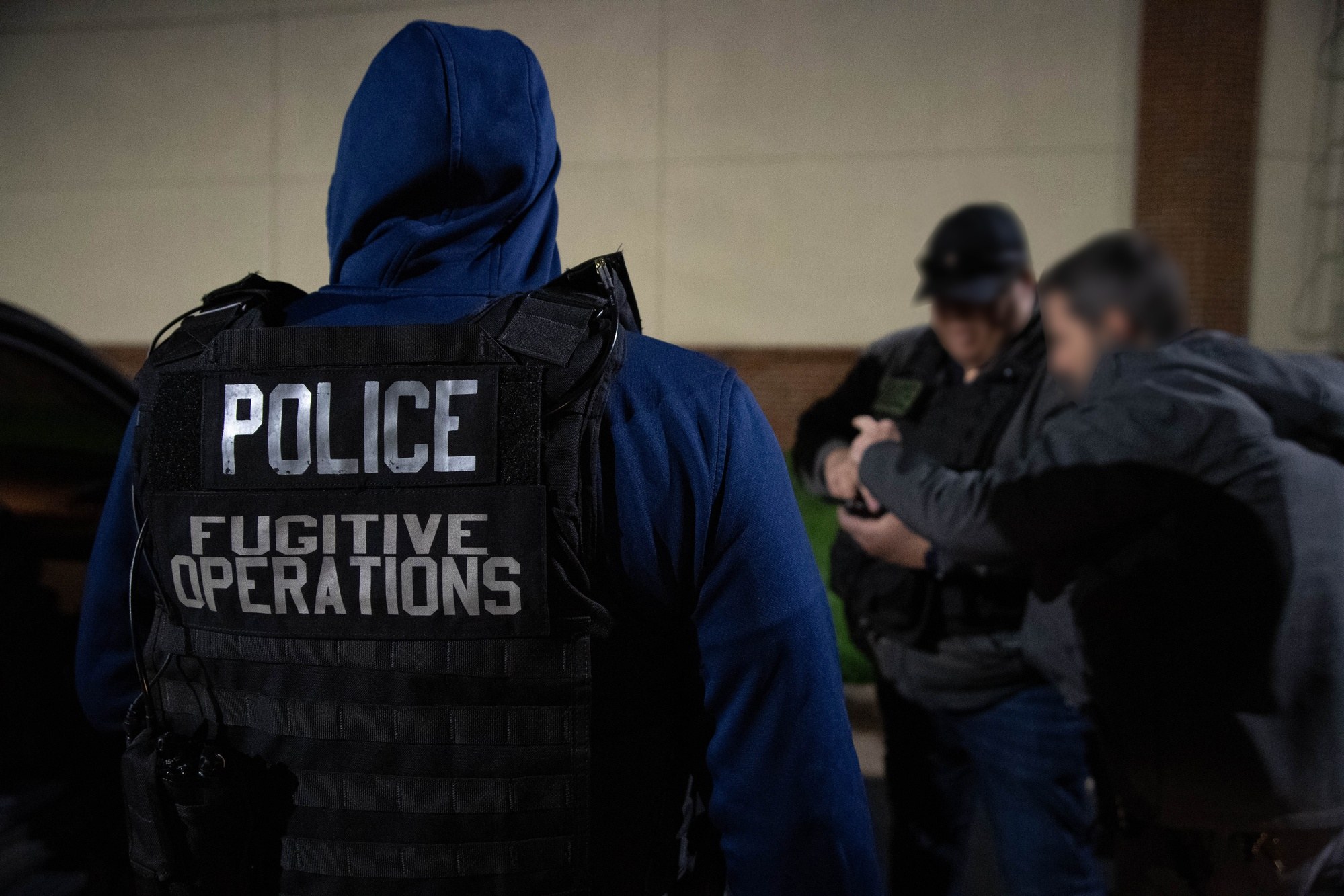
An ICE Enforcement and Removal Operations officer during an arrest in Manassas, Virginia, April 19, 2022. File photo, not connected to the Texas cases. Photo: ICE via DVIDS, public domain.
What did the ruling leave open?
Quite a bit. The court says detention is fine so long as it "ha[s] a definite termination point," and that "an issue may arise if the Government continues to detain an alien after it becomes clear that removal is only a remote possibility." The petitioners did not challenge how long they were held, so the court did not decide that question. It also says habeas relief could be proper in other circumstances, such as a real dispute over whether someone is "clearly and beyond a doubt entitled to be admitted."
That is far from "no rights." It is a ruling that a bond hearing is not one of the rights, for people who entered without inspection.
Is this headed to the Supreme Court?
Probably. Judge Stephen Higginson, dissenting for six judges, argues that nine other circuits read the statutes to allow bond hearings for people arrested in the interior, and that the majority "conflicts with all other circuits that addressed this question (except one)." The majority cites the Eighth Circuit's decision in Avila v. Bondi as agreeing with it. Judge Leslie Southwick, also dissenting, wrote that the court "has constructed an impenetrable wall between the Constitution" and long-term residents. Judge James Ho, concurring, answered that "a nation ceases to be a nation if it can't protect its borders."
For now, the Trump administration's no-bond policy stands in the Fifth Circuit, which covers Texas, Louisiana and Mississippi. If another circuit holds the other way and the case reaches the justices, the question will be settled for the whole country. Read the opinion, not the headline.
Header photo: The John Minor Wisdom U.S. Court of Appeals Building, New Orleans, seat of the Fifth Circuit. Photo: Carol M. Highsmith, Library of Congress, no known restrictions on publication. Cropped.















