

The Federal Reserve left its benchmark rate at 3.75% to 4% on Wednesday, but not unanimously: Governor Lisa Cook and Cleveland Fed President Beth Hammack voted to raise it again. Chair Kevin Warsh called growth "strong" and inflation "elevated." The government's own tables back one of those words better than the other, and the hot inflation number is mostly gasoline.
What did the Fed actually decide?
The Oct. 28 FOMC statement passed 10 to 2. Cook and Hammack "preferred to raise the target range for the federal funds rate by 1/4 percentage point at this meeting." The committee had raised rates by that amount a month earlier, in a 12 to 0 vote on Sept. 16.
Two wording changes are worth a look. September said activity was expanding at a "solid pace." October says "strong pace." And the line that the September hike "will support a timelier return" to 2% inflation was replaced with a promise that "the accumulation of more information will help the Committee determine the policy stance." Translation: the next move is open.
Official record
Federal Reserve, transcript of Chairman Warsh's press conference opening statement, Oct. 28, 2026 (marked preliminary, 4 pages).
"And the third quarter appears to have brought an even more rapid advance, led by healthy consumer spending, likely running above 3 percent growth, and business investment, likely rising at about a double-digit pace." — Chairman Kevin Warsh, Oct. 28
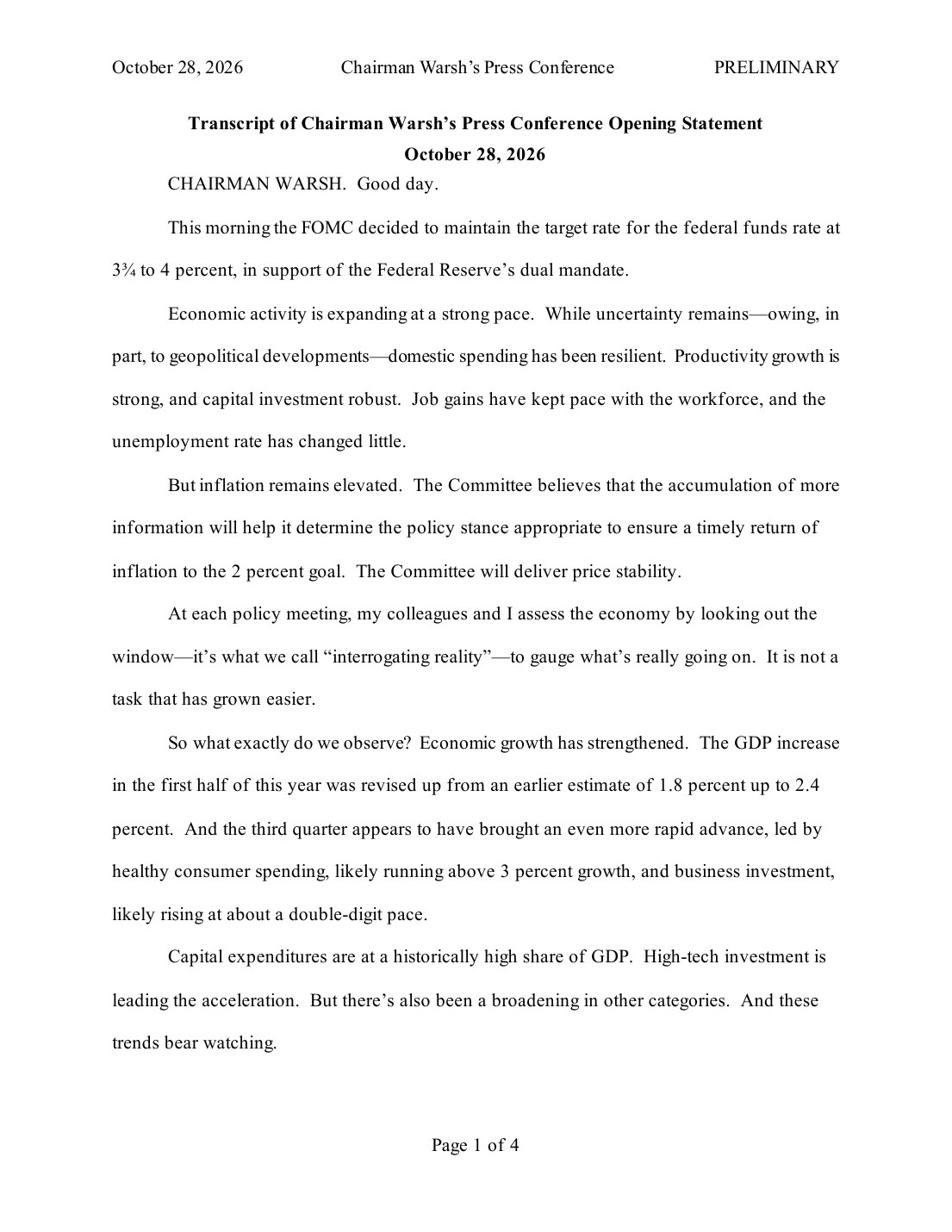
Read or download the full 4-page transcript (PDF) · view the official FOMC statement
Is growth really "strong"?
Warsh said first-half GDP was "revised up from an earlier estimate of 1.8 percent up to 2.4 percent." I could not check the 1.8. The 2.4 is consistent with the Bureau of Economic Analysis, whose third estimate has real GDP up 2.5% in the first quarter and 2.2% in the second, an average of about 2.35%.
That is decent, not booming. Last year's second and third quarters ran 4.0% and 3.9%, and the fourth quarter was 0.2%, per BEA data on FRED.
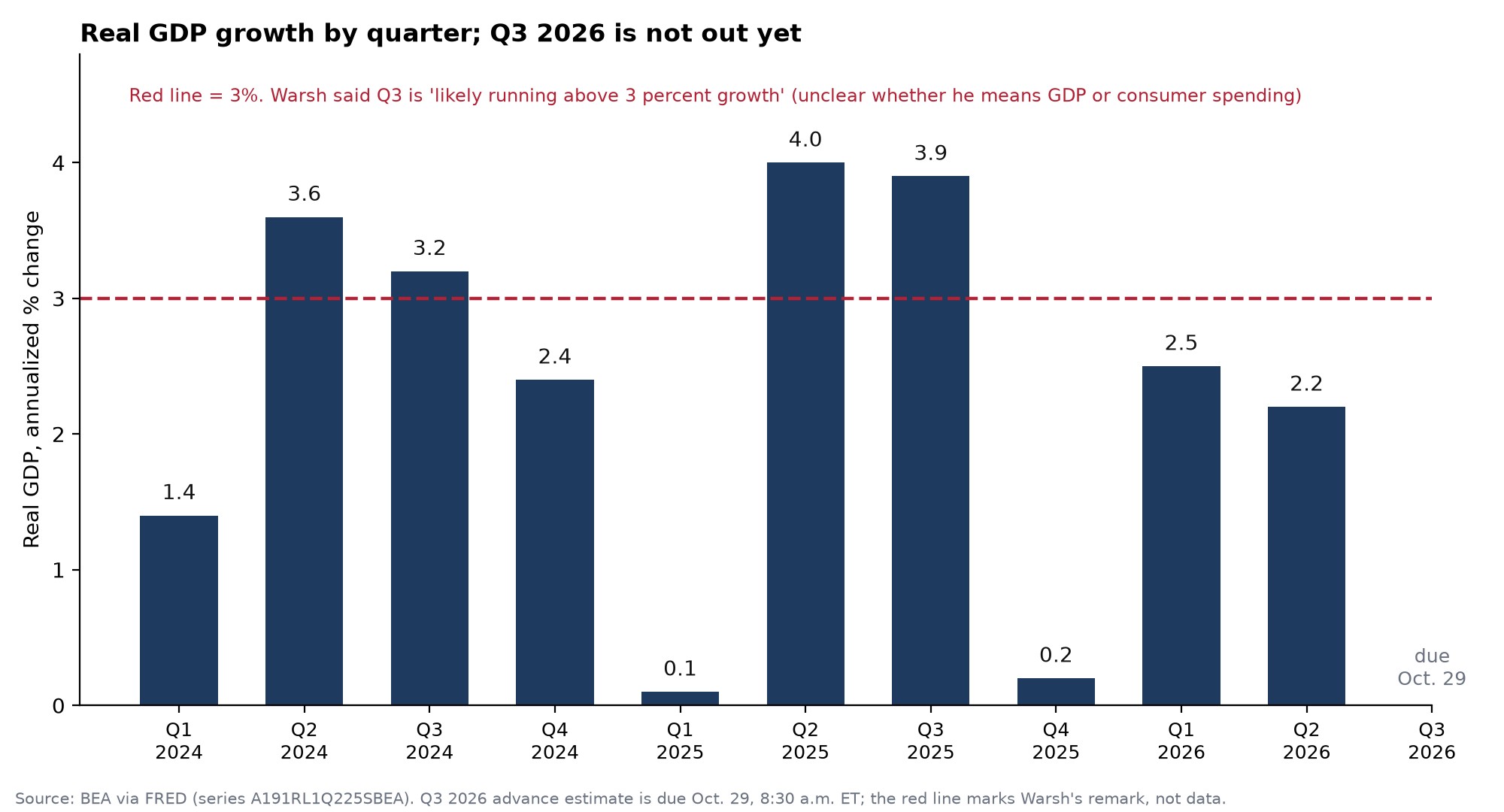
Quarterly real GDP growth, annualized. Chart built by PatriotAddict from BEA data via FRED (public domain U.S. government data). The red line is Warsh's remark, not a data point.
Will the third quarter clear 3%?
We find out today. BEA's release schedule lists the third-quarter advance estimate for Oct. 29 at 8:30 a.m. Eastern, and Personal Income and Outlays for September, which carries the PCE inflation index, at the same time. I wrote this before either was out, so check the numbers.
One caution on Warsh's sentence. "Likely running above 3 percent growth" sits after "healthy consumer spending," so it is unclear whether he means GDP or spending. If it is the economy as a whole, it would be the first quarter above 3% since last year's third quarter, which was 3.9%.
Where is the inflation coming from?
The Labor Department's September CPI report, released Oct. 14, has prices up 3.7% over 12 months, against 3.4% in August. Strip out food and energy and it is 2.6%. Energy is up 20.4% on the year, and gasoline alone is up 34.2%.
Gasoline rose 9.1% in September by itself, and BLS says that accounted for "over half" of the 0.6% monthly increase. Food at home is up 1.8% over the year. Shelter is up 3.2%, and airline fares are up 22.4%.
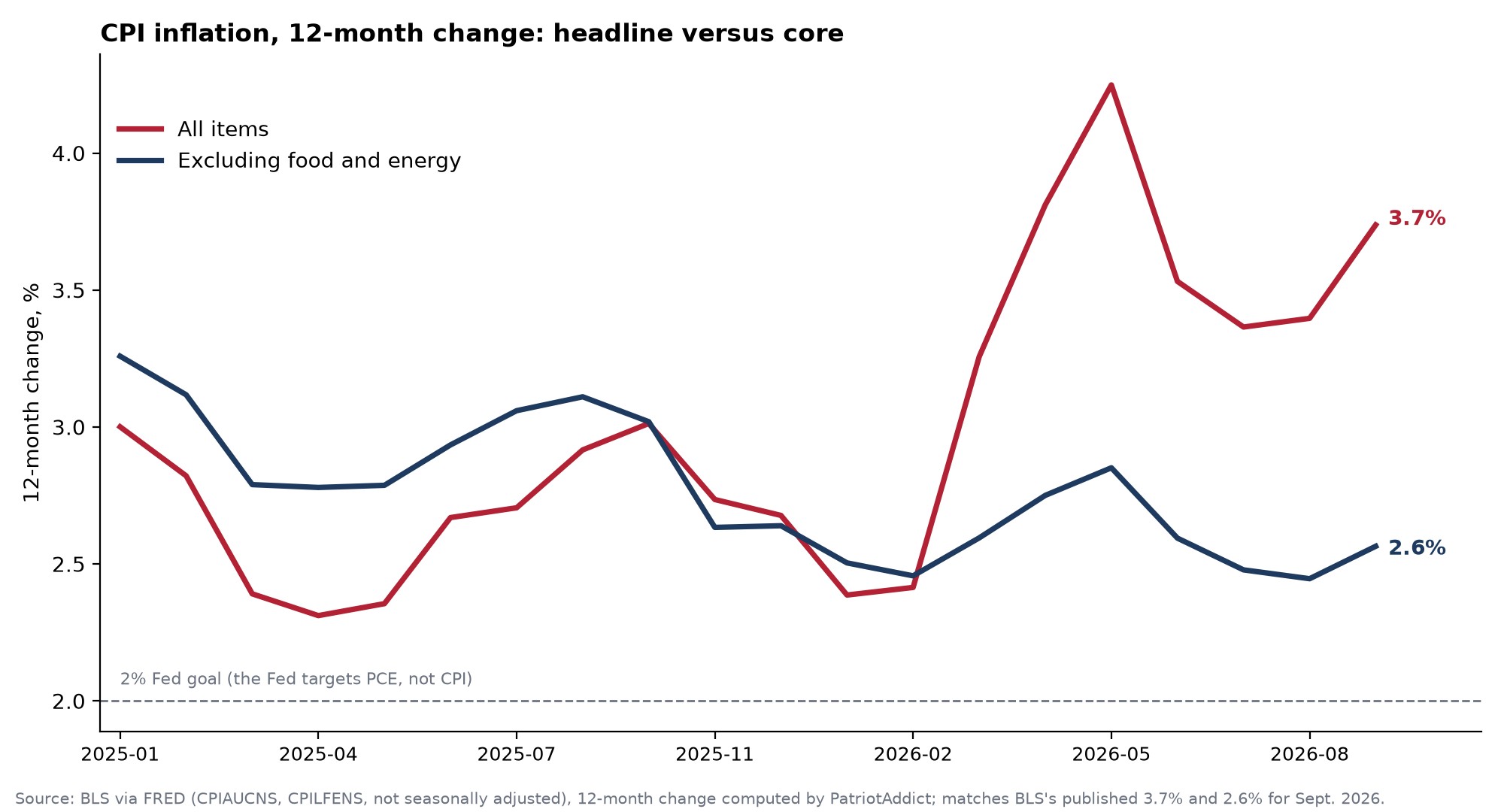
12-month CPI change, all items versus excluding food and energy. Chart built by PatriotAddict from BLS data via FRED (public domain U.S. government data).
Why vote to hike with core at 2.6%?
The statement does not say. Yahoo Finance reports that Hammack has favored smaller, more frequent increases so an inflationary mindset does not set in, and that she sees inflation as broad-based. I found no published explanation from Cook.
Warsh's own framing was that the job is to make sure "relative price changes in some sectors do not broaden out across the economy." That reads as a bet that energy spreads into everything else, and the chart so far does not show it. Core has stayed between 2.4% and 2.9% every month since November.
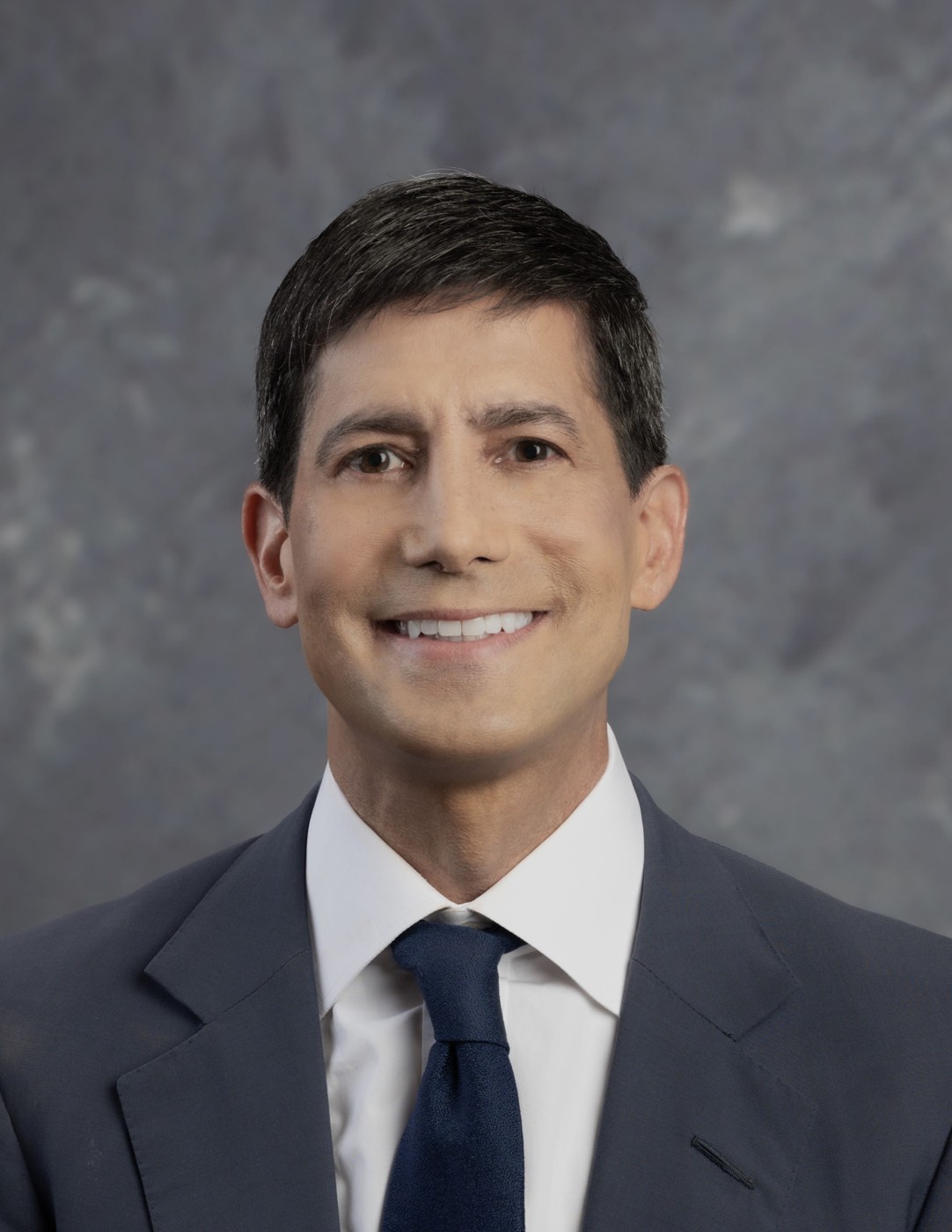
Fed Chair Kevin Warsh in an official Federal Reserve Board portrait (Federal Reserve, public domain, via Wikimedia Commons).
What about December, and the midterms?
Asked about politics less than a week before the election, Warsh said, per Reuters, "I didn't hear an utterance about politics." Reuters also says he indicated coming data should leave officials better placed to decide on a hike, which it places in December. Warsh declined to give formal guidance, and I did not find a Fed document that commits to December either way.
For voters, the plain read is this: the economy is growing at a respectable clip, gas is the problem, and the central bank is split on whether to lean harder against it. Today's GDP and PCE numbers will say a lot about which side is right.















