The EPA is expected to formally tear up Biden-era carbon rules for coal and gas power plants as soon as this week, killing a mandate that would have forced plants to bolt on carbon capture equipment or shut down. If it lands the way three people familiar with the plan told Bloomberg it would, the move erases the single biggest federal climate regulation still standing after Washington gutted the vehicle emissions rules and the 2009 endangerment finding earlier this year. For anyone paying a power bill or living near a coal plant that was staring down a 2032 compliance deadline, this is the one that actually touches your wallet and your local grid.
What the 2024 rule actually demanded
In May 2024, the Biden EPA finalized a rule under Section 111 of the Clean Air Act requiring the largest, most frequently run coal and new gas plants to capture 90 percent of their carbon emissions, mainly through carbon capture and storage technology, or shut down by 2039. The rule ran to more than 1,500 pages in the Federal Register (89 Fed. Reg. 39798), under Docket ID EPA-HQ-OAR-2023-0072 and RIN 2060-AV09.
Smaller, less-used plants only faced minor efficiency tweaks. But for the workhorse coal fleet, the math was brutal: no utility-scale coal plant in America has ever actually run carbon capture at the 90 percent level the rule demanded. Utilities and grid operators warned for two years that the rule was a back-door retirement mandate dressed up as a technology standard.
What EPA is rescinding this week
According to Bloomberg, whose reporting was picked up by the Spokesman-Review and other outlets, the agency is splitting this into two moves. First, a final rule scraps the 2024 carbon capture mandate outright on technical grounds, arguing CCS was never the "adequately demonstrated" technology the Clean Air Act requires. Second, a separate proposal would go further and argue EPA has no business regulating power-plant greenhouse gases under Section 111 at all, a standalone "endangerment finding" specific to the power sector.
Timing is not an accident. The announcement is expected to land alongside a G20 energy ministers meeting in Houston this week, giving Administrator Lee Zeldin a stage to sell the repeal as part of the administration's energy dominance push rather than bury it in a Friday document dump.
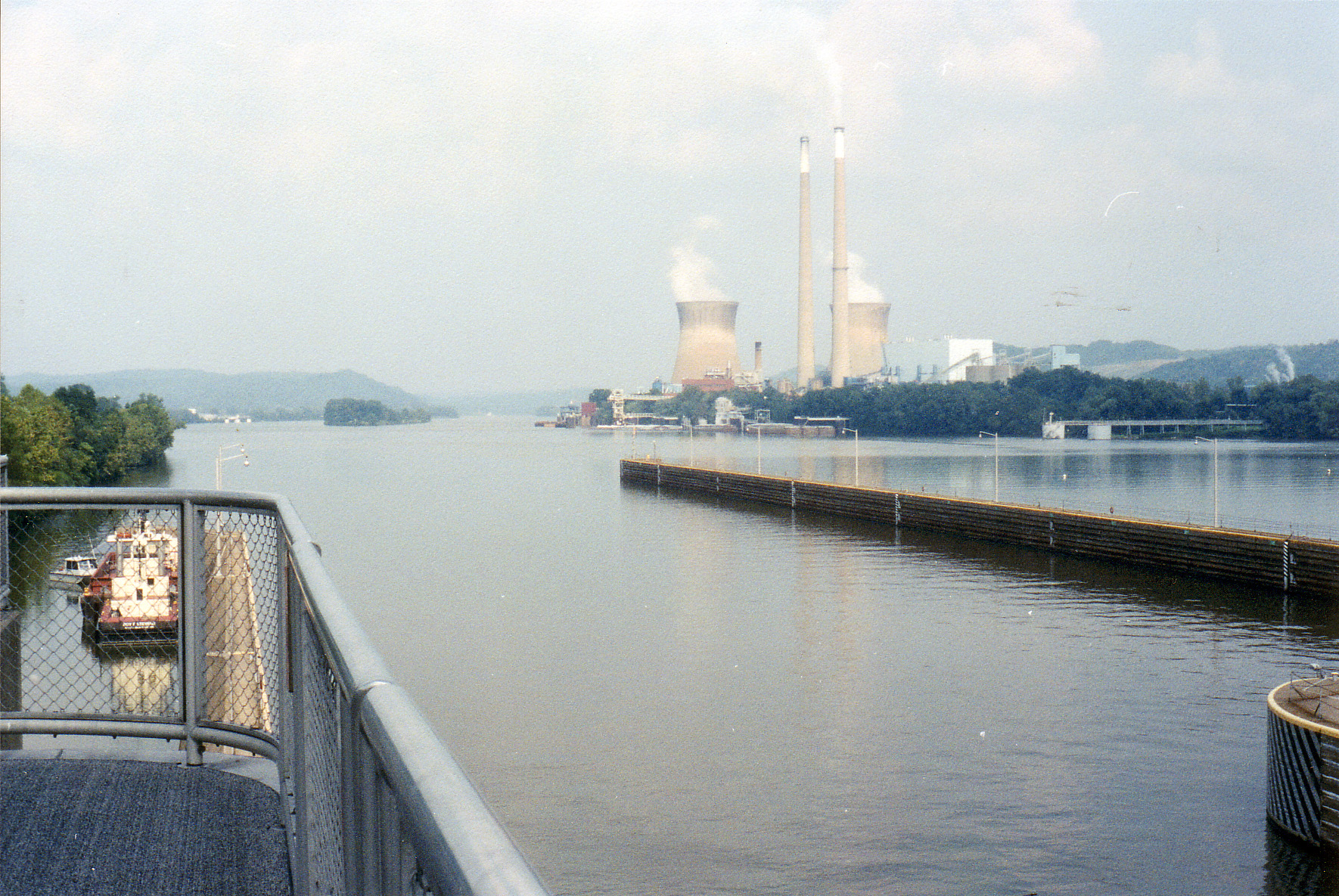
A coal-fired power plant on the Ohio River in Pleasants County, West Virginia, the kind of facility the 2024 rule's 90 percent carbon capture mandate targeted. (Wikimedia Commons, Brian M. Powell, CC BY-SA 3.0)
The dollar figures both sides are throwing around
EPA's own numbers, first published when it proposed this repeal in June 2025, put the savings at roughly $19 billion for the power sector over two decades starting in 2026, which the agency rounds to "more than a billion dollars annually." That is regulatory compliance cost avoided, not a guaranteed cut in anyone's bill.
The other side has its own numbers. The Natural Resources Defense Council says the 2024 rule it is now losing was projected to deliver $390 billion in combined climate and health benefits, more than twenty times its compliance cost, and would have prevented 1,200 premature deaths and 360,000 asthma attacks in 2035 alone by its own account. NRDC also points to a separate analysis claiming Trump-era energy policy is already pushing electricity bills up, not down, an additional $30 billion nationally by 2035. Both figures come from modeling, not receipts, and neither side's projection should be mistaken for a bill you'll actually see in the mail. What is not in dispute: this specific rule, if left in place, would have forced real retrofit or retirement decisions on real coal plants within the next six years.
Why coal-state Republicans are calling this a win
When EPA first proposed this repeal in June 2025, the reaction from coal country was immediate. Montana Governor Greg Gianforte said the rules "would have shuttered Colstrip," the state's largest power plant, thanking Zeldin for "taking swift action to protect Montana miners." West Virginia Governor Patrick Morrisey called it "a major victory for West Virginia, our energy producers, and every American who depends on reliable, affordable electricity," and West Virginia Attorney General J.B. McCuskey noted his state had already led a 25-state coalition suing over the rule before EPA ever proposed pulling it.
Senate Environment and Public Works Chairwoman Shelley Moore Capito, a longtime opponent of the underlying rule, called the repeal a step toward "prioritizing electric grid reliability and energy abundance." Senator John Barrasso framed it more bluntly: "the war on American energy is officially over." All of this is documented in EPA's own "what they are saying" release from last summer, which reads less like a press statement and more like a reunion of every coal-state governor and senator who fought the rule the first time around.
Official record
The rule being rescinded: New Source Performance Standards for Greenhouse Gas Emissions From New, Modified, and Reconstructed Fossil Fuel-Fired Electric Generating Units..., 89 Fed. Reg. 39798 (May 9, 2024), Docket ID EPA-HQ-OAR-2023-0072, RIN 2060-AV09.
"The EPA is finalizing the repeal of the Affordable Clean Energy (ACE) Rule. Second, the EPA is finalizing emission guidelines for GHG emissions from existing fossil fuel-fired steam generating EGUs, which include both coal-fired and oil/gas-fired steam generating EGUs." — EPA, Federal Register summary, May 9, 2024
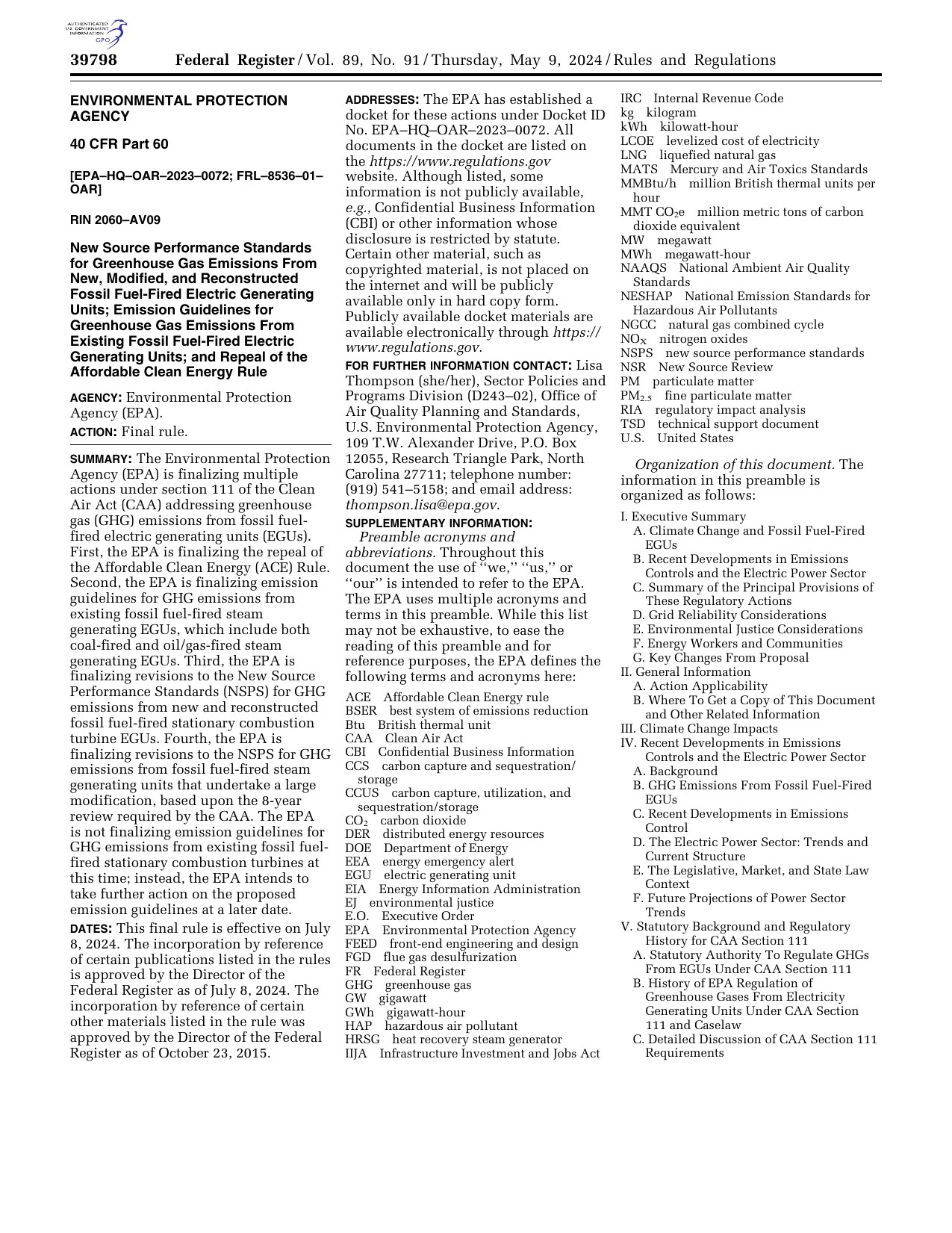
Read the full 2024 Federal Register notice (PDF) · view the docket on Regulations.gov
The legal fight nobody thinks is over
NRDC has already told its members it is "ready to go to court" the moment this repeal is final, and it will not be alone. The group's legal argument leans on a 2021 D.C. Circuit ruling that found greenhouse gases from power plants "significantly contribute" to dangerous air pollution "under any reasonable threshold," a precedent EPA will have to explain away if it argues the opposite now. Environmental groups also note that the Trump Justice Department has told the Supreme Court, in an unrelated case involving Boulder County, Colorado, that the Clean Air Act gives EPA "exclusive authority" to regulate greenhouse gases, a position that sits awkwardly next to a proposal arguing EPA lacks that authority over power plants specifically.
EPA's answer is 2022's West Virginia v. EPA, where the Supreme Court struck down the Obama-era Clean Power Plan for trying to reshape the entire electricity market rather than regulate individual plants. The administration's position is that the 2024 rule's 90 percent carbon capture mandate did the same thing in a different wrapper, and that no technology exists today that lets a coal plant hit that number affordably. Whoever is right, this is headed to the D.C. Circuit either way, the same court that has already ruled once on the underlying "significant contribution" question and did not rule EPA's way.
What doesn't change, even if this goes through
Here's the part most coverage skips. States that already run their own carbon programs keep them regardless of what EPA does. New York, for instance, still enforces state-level carbon dioxide performance standards under its own Part 251 regulations, still participates in the Regional Greenhouse Gas Initiative's regional emissions cap, and is still bound by a 2019 state law requiring zero-emission electricity by 2040, a target its Public Service Commission reaffirmed as recently as 2025. None of that depends on a single federal rule under Section 111. A repeal in Washington removes a federal floor; it does not touch the ceiling states like New York, California or Washington have set for themselves.
That is worth sitting with. This repeal is not a national mandate that coal keeps running everywhere. It is Washington getting out of the business of forcing plants to install technology that does not exist at scale, and handing the harder question, how fast to retire fossil generation, back to states, utilities and grid operators who actually answer for blackouts when the wind doesn't blow and the sun doesn't shine.
The pattern this fits
This is the third leg of a stool the Trump EPA has been building since Zeldin took over. In February, the agency finalized the repeal of the 2009 endangerment finding as it applies to motor vehicles, the legal foundation nearly every federal greenhouse gas rule since Obama has stood on, and rolled back the tailpipe emissions standards that finding supported. That repeal did not automatically touch power plants, which is exactly why this week's action includes a second, standalone endangerment finding written specifically for the power sector. Around the same time as the vehicle repeal, EPA also rolled back the 2024 Mercury and Air Toxics Standards, the mercury rule that Montana's own coal plant advocates said could have forced Colstrip's closure on a different front, for an estimated $670 million in nationwide savings. This week's action goes after the carbon side of the same coal fleet those earlier moves were built to protect.
Whether that adds up to a coherent energy policy or a legal house of cards depends entirely on which court gets to rule first. But the direction is not in doubt. Three times in eight months, this EPA has looked at a rule built to shrink America's fossil fuel fleet and torn it out by the roots instead. For coal communities from West Virginia to Montana that have spent a decade watching plants get regulated into retirement, that is not a technicality. It is the whole point.