Angie Nixon raised $974,844. Alexander Vindman raised $16.2 million. On Aug. 18 the Florida state representative beat him by 12 points and became the first member of the Democratic Socialists of America to win a U.S. Senate nomination. She is not the only one who won this year, and the pattern in the other races tells you more than the upset does.
The money in the Florida race was not close, and neither was the result
Nixon took 56.1 percent to Vindman's 43.9 percent, according to Associated Press results published by the Jewish Telegraphic Agency. NBC News called it Tuesday night. Vindman, the retired lieutenant colonel who testified in President Trump's first impeachment, had every institutional advantage in the race and lost the primary outright.
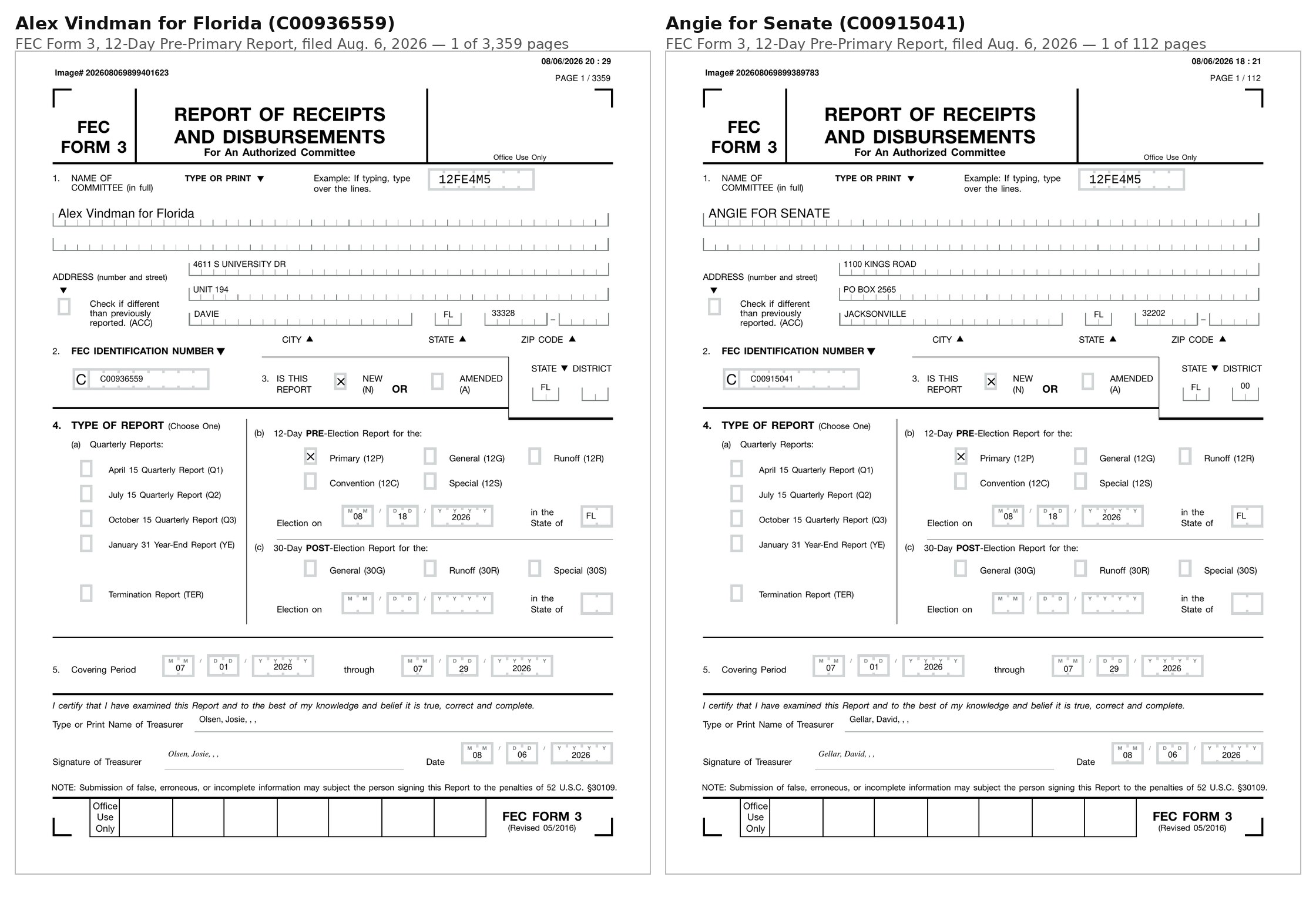
The spending gap is a matter of federal record, not estimate. Through July 29, the close of the pre-primary reporting period, Vindman's committee reported $16,273,862.45 in receipts. Nixon's reported $974,844.71. That is a ratio of roughly 16.7 to 1.
The seat matters beyond the symbolism. Sen. Ashley Moody was appointed by Gov. Ron DeSantis to fill the vacancy left when Marco Rubio became Secretary of State, and she won her own primary with 79.6 percent. Whoever wins on Nov. 3 serves the final two years of Rubio's term.
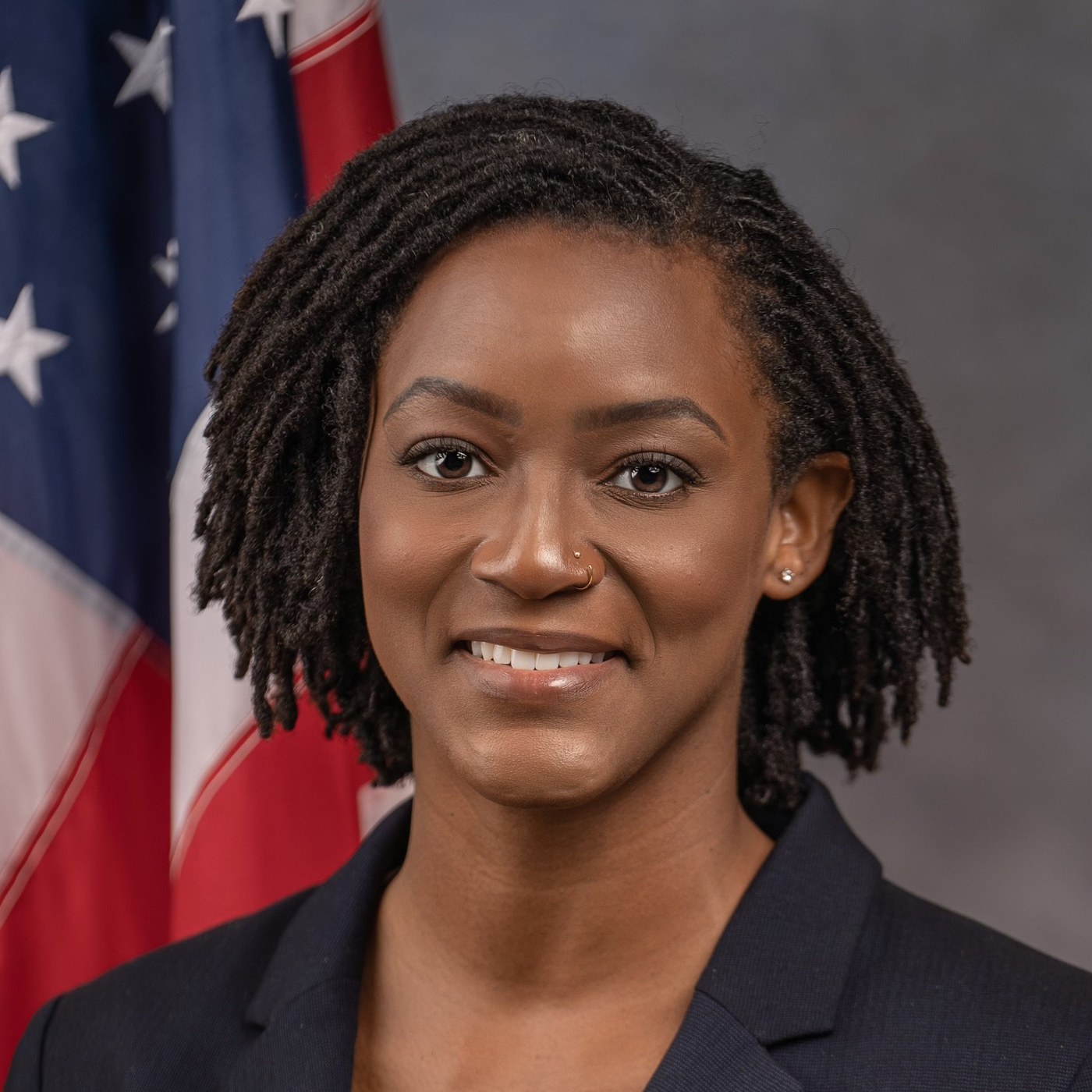
Florida state Rep. Angie Nixon of Jacksonville, now the Democratic nominee for U.S. Senate. She joined the Democratic Socialists of America and says she is not a socialist. (Official portrait, Florida House of Representatives, public domain via Wikimedia Commons)
She was not the first, and three of the others beat sitting members of Congress
Sinclair's Fact Check Team counts Chris Rabb in Pennsylvania, Claire Valdez and Darializa Avila Chevalier in New York, Melat Kiros in Colorado and Donavan McKinney in Michigan among the DSA-backed candidates who took Democratic nominations before Nixon did. Three of them beat sitting members of Congress.
Avila Chevalier, a first-time candidate, unseated Rep. Adriano Espaillat, chairman of the Congressional Hispanic Caucus, in New York's 13th District on June 23. NBC News called the race at 49.3 percent to 45.9 percent with 94 percent counted, a margin of about 2,300 votes. The same night, Claire Valdez took roughly 58 percent to Brooklyn Borough President Antonio Reynoso's 33 percent in the 7th District, per the Brooklyn Paper, for the seat Rep. Nydia Velázquez is vacating.
In Colorado's 1st District on June 30, 29-year-old Melat Kiros ended the career of Rep. Diana DeGette after 15 terms, Colorado Public Radio reported. In Pennsylvania's 3rd District on May 19, state Rep. Chris Rabb took about 44 percent against state Sen. Sharif Street's 30 percent and Dr. Ala Stanford's 24 percent, according to the Philadelphia Inquirer.
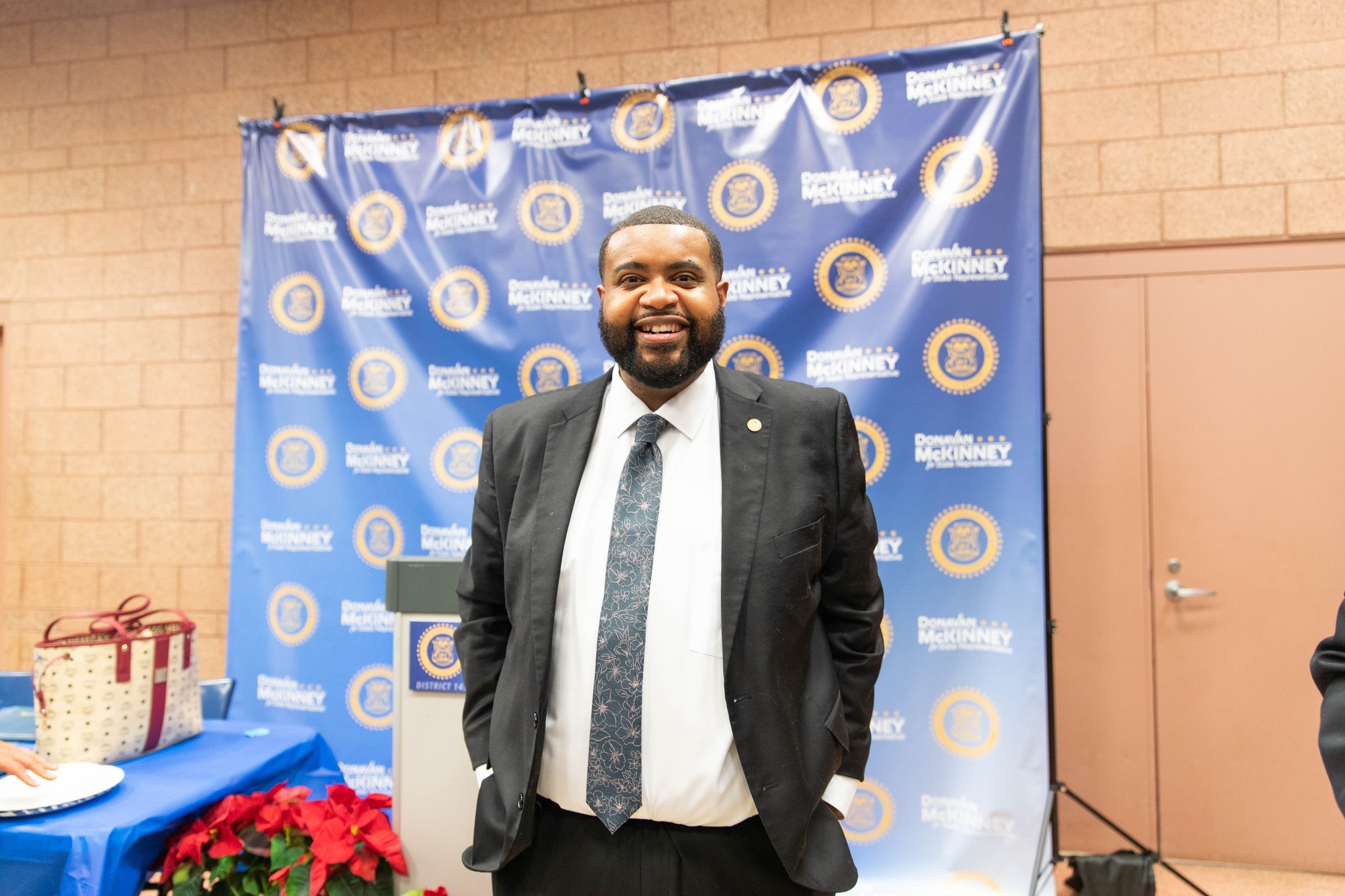
Donavan McKinney at his swearing-in as a Michigan state representative in December 2022. On Aug. 4, 2026, he unseated Rep. Shri Thanedar in the Democratic primary for Michigan's 13th District, 51.9 percent to 48.1 percent. File photo. (City of Detroit, public domain via Wikimedia Commons)
Thanedar is worth pausing on. He was a DSA member himself until October 2023, when he quit over the group's response to the Hamas attacks. "I can no longer associate with an organization unwilling to call out terrorism in all its forms," he wrote at the time, quoted by Fox News. "I stand with Israel and its right to defend itself." Three years later the organization he left helped end his congressional career.
Brookings counted every one of these races, and the number is 123
On Aug. 19, Elaine Kamarck of the Brookings Institution published the first full audit of the DSA's primary season with research interns Riana Mahtani and Gabriel Kraemer. They identified 282 DSA-endorsed candidates across federal, statewide, state legislative and local races. Of those, 123 won their primaries, 110 lost, 7 were undecided at publication and 42 never faced a primary at all.
Only 29 of the 282 carried an endorsement from national DSA. The rest were endorsed by local chapters, which is how a movement with no ballot line of its own puts more than a hundred nominees on Democratic ballots in a single cycle.
Here is the part that cuts the other way
The same Brookings audit found the wins are not spread across the map. Ninety of the 282 candidates came from California and 21 from New York. Congressional candidates went 19 for 64. Statewide candidates went 5 for 15. And in districts and states with a Cook Partisan Voting Index of less than D+10, meaning anywhere Republicans have a realistic path, only 10 DSA-backed candidates won anything.
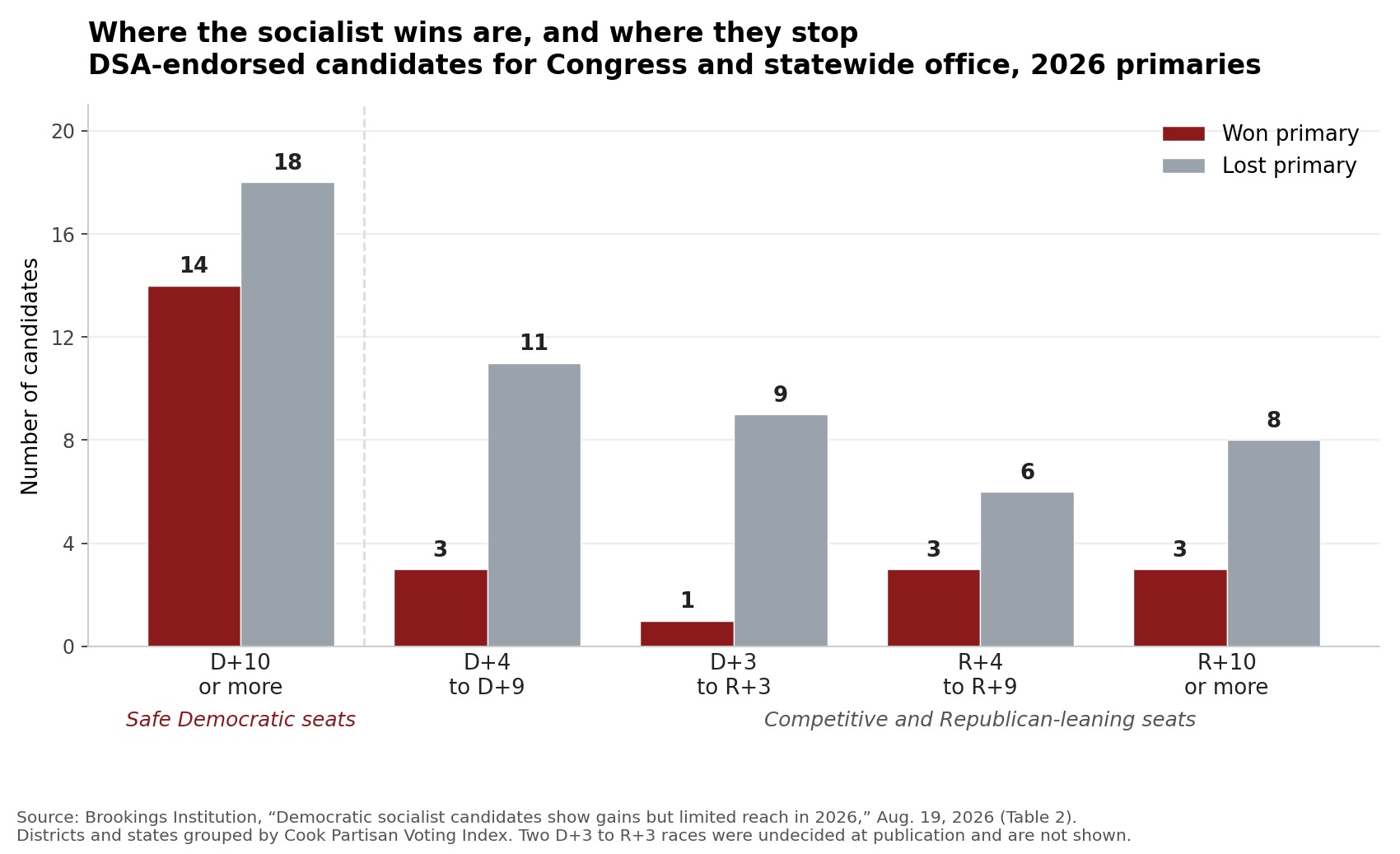
DSA-endorsed candidates for Congress and statewide office in the 2026 primaries, grouped by the partisan lean of the seat. In the true tossup band, D+3 to R+3, they went 1 for 10 in decided races. (Chart by PatriotAddict from Brookings Institution Table 2, Aug. 19, 2026)
Look at the seats they actually took. Rabb's Philadelphia district is D+40 on the Cook index. Avila Chevalier's is D+32. Kiros's Denver seat is D+29. Valdez's Brooklyn and Queens district is D+25. McKinney's Detroit seat is D+22. Not one of those five is a seat Republicans were going to contest in November regardless of who won the primary.
Kamarck's own verdict is blunter than anything a Republican would write. "The scarcity of candidates and their lack of strong success rates overall make this look more like a skirmish than a war," the Brookings piece says. It also notes that the number of DSA candidates who won a Democratic nomination is well under 1 percent of the 7,386 state legislative seats in the country, and that the League of Women Voters counted 76,902 local elections in 2024 alone.
There is one more inconvenient fact for the takeover story. Abdul El-Sayed won the Michigan Democratic Senate nomination and gets counted in a lot of coverage as a socialist victory. Brookings left him out of the dataset on purpose, because, in its words, he "calls himself a capitalist, was never a member of DSA, and wasn't formally endorsed by DSA."
What the DSA platform actually says, in its own words
None of that makes the platform moderate. The DSA's own published political platform calls to "expand the House of Representatives, implement proportional representation and ranked choice voting in all elections, and abolish the Senate." It calls to "replace the President and Supreme Court with an executive and judiciary chosen by and subordinate to Congress." It calls to "establish public ownership of the largest corporations and essential industries."
On law enforcement, the platform calls to "demilitarize police departments, disempower police unions, and redirect funding to public services as steps towards fully abolishing the police and prison system." On immigration, it calls to "end ICE detention and deportations" and "legalize migration, grant amnesty for all immigrants regardless of status." On defense, it calls to "defund the Department of War. End all foreign wars and close overseas military bases."
DSA national co-chair Megan Romer confirmed all of it on the record. Asked on "Fox News Sunday" whether the organization's platform calls for abolishing the Senate, ICE, borders and prisons, Romer answered yes, Fox News reported, describing the Senate as "an anachronistic institution" and saying it "was part of the system that was made to make sure that the people didn't have too much of a say."
Nixon joined the group and then walked away from most of it
Two days after winning, Nixon sat with Kristen Welker on NBC's "Meet the Press NOW" and rejected the planks one by one. "Ashley Moody knows that I'm not a socialist," she said, per Fox News Digital. "I joined the DSA because I believe in them in regards to fighting for adequate public housing, as well as fighting for quality healthcare, as well as making sure that we are getting our veterans off the street, taking big money out of politics."
She explicitly refused to back abolishing the Senate or rewriting the Constitution, and refused to back defunding the military. "I don't believe in defunding anything," she said. Asked whether she is a capitalist, she said: "I live in a capitalistic society. I'm a small business owner. I like to make money. I don't see what the problem is. I'm a capitalist who believes that we need some strong regulation."
She still backs Medicare for All, free child care, a national rent freeze, an eviction moratorium, a universal jobs program and abolishing ICE. Moody is not letting the rest go. "Angie Nixon, who will be my opponent in November, and her comrades want to destroy this country and everything that it is built on," the senator said. RNC spokeswoman Emma Hall put it this way: "Socialist lunatic Angie Nixon wants to empty our prisons, open our borders, and raise your taxes to bankroll their far-left agenda."
Nixon is not alone in the cleanup. Avila Chevalier deleted old posts praising communism and Marxism after winning her primary. "I have grown considerably in the years since these tweets, and I am focused on our community and our community's future," she told CNN.
Wisconsin is the number that should worry both parties
On Aug. 11, Milwaukee County Executive David Crowley won the Wisconsin Democratic gubernatorial nomination with 39.8 percent. Francesca Hong, a DSA-backed state representative, took 39.4 percent, PBS NewsHour reported. Four tenths of a point kept the movement out of a governor's mansion in a state Trump carried.
That is the honest read of the whole season. The DSA is not running the Democratic Party, and Erin Covey of the Cook Political Report found that in the House seats most likely to flip to Democrats, primary voters mostly picked moderates. But the party's safest districts, the ones that supply its committee chairs and its institutional memory, are being handed to people whose organization has published a plan to abolish the Senate and nationalize large corporations. Diana DeGette has served 15 terms and Adriano Espaillat chairs the Congressional Hispanic Caucus, and neither one will be in the next Congress.
Shannon Bream is scheduled to take up the primary results on "Fox News Sunday" on Aug. 23. Six hundred DSA members met in Chicago in early August to plan the next phase, and co-chair Ashik Siddique told the Washington Post, "I never thought this would be possible in my lifetime." On Nov. 3 the country finds out whether a movement that wins where it cannot lose can win anywhere else.
Header photo: Democratic Socialists of America members outside Milwaukee City Hall at the Power to the People rally, June 24, 2026. Photo by Paul Johnson (Wikimedia Commons user 7pej), licensed CC BY 4.0.