The Justice Department sued Kansas City, Kansas Public Schools on Sept. 1 over an internal guideline that can keep a child's gender transition from parents. The government wants a federal judge to shut the guideline down across a district of more than 20,000 students. Read the complaint closely, though, and a harder question sits under the headline: does Washington even have the power to bring this case?
Start with what the district's own document says
It runs three pages and is titled USD 500 Transgender and Gender Non-Conforming Students Internal Guidance Document. The Sentinel, a Kansas nonprofit newsroom, obtained it under the Kansas Open Records Act in June. Its default is parent involvement, not concealment. Paragraph 2 tells any staff member who learns a student is transgender to relay that to the principal "without delay," then tells the principal to discuss accommodations with the student or the parent.
The carve-out is what drew the lawsuit. If a student does not want a parent brought in, or does not want the parent told at all, the request "will be evaluated on a case-by-case basis" by three named administrators and the district's attorney. Paragraph 6 then says the written plan goes to the parent or to the student, "depending on the determination made pursuant to paragraph 5."
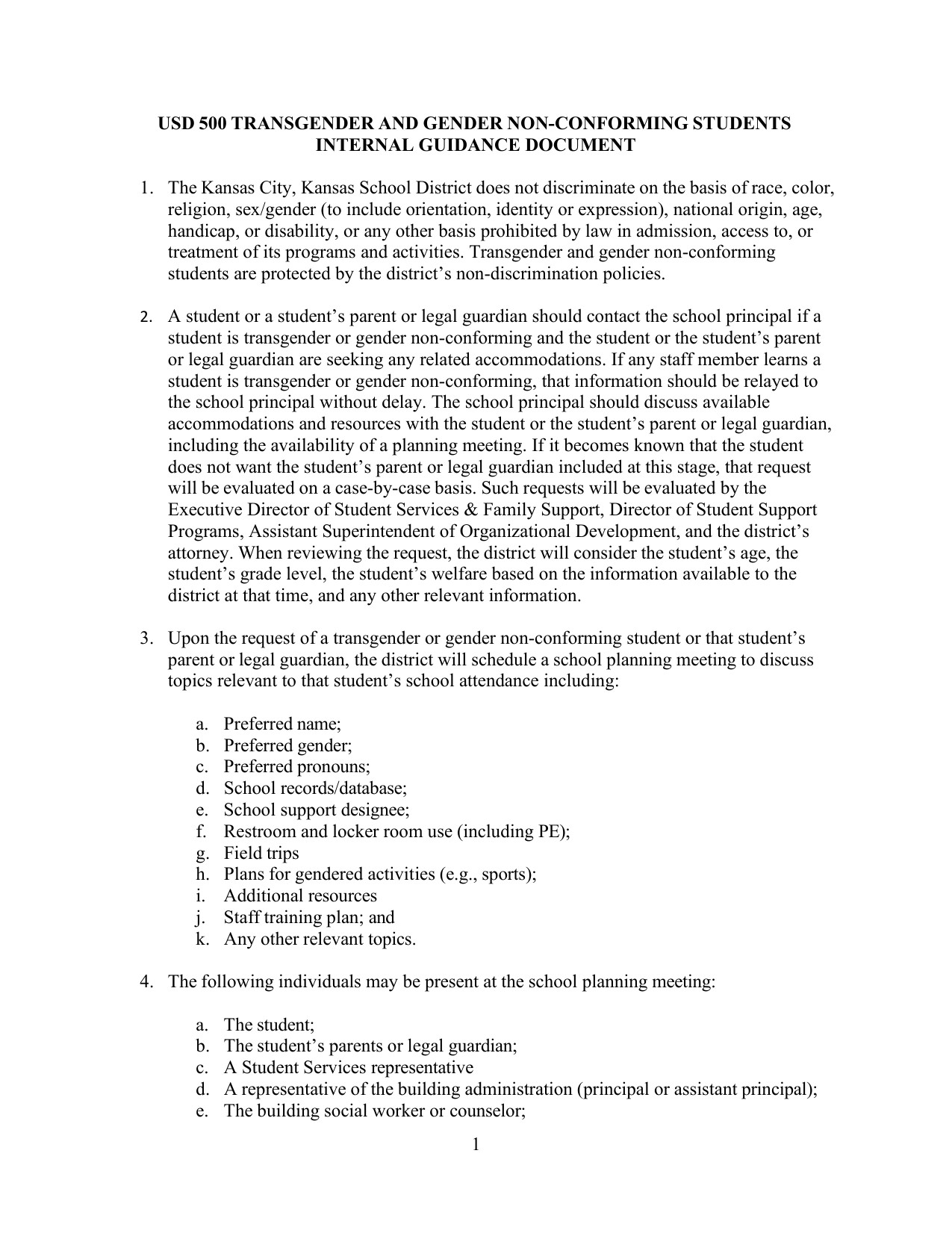
Page 1 of the district's internal guidance document, released to The Sentinel under the Kansas Open Records Act. The copy quoted in the DOJ complaint differs in one detail: it names the Executive Director of Equity and Inclusion as a reviewer where this copy names the Assistant Superintendent of Organizational Development. The complaint says at least two versions have existed since 2017. Source: Kansas City, Kansas Public Schools, public record.
The press release claims more than the exhibit shows
DOJ's announcement says the guideline "directs staff to develop and implement 'transitioning' plans for children's so-called 'gender identity' without informing or obtaining consent from their parents." The document does not direct that. It permits it, case by case, after four adults including a lawyer sign off. Superintendent Anna Stubblefield made the same point to KSHB 41: "there's nowhere in the guidance where we say 'withhold information from parents.'"
That distinction matters less than the district may hope. FERPA does not only forbid turning down a parent who asks. It cuts off funding to any school with "a policy of denying, or which effectively prevents" parental access to education records. Count I argues that a plan written in a meeting the parent was kept out of, filed with administrators the parent does not know to ask, is inaccessible whatever the paperwork promises.
The Supreme Court already told parents they cannot enforce this law
In Gonzaga University v. Doe, decided 7-2 in 2002, Chief Justice William Rehnquist held that FERPA creates no personal right a student or parent can sue over under Section 1983. Its spending conditions, the Court said, speak to the Secretary of Education rather than to individuals. A Kansas parent who learned tomorrow that a plan had been written about their child would have no damages claim under this statute at all.
The government does not dispute what followed. Jordan Carpenter, the Civil Rights Division counsel whose name leads the signature block on this complaint, told Kansas City radio host Pete Mundo on Sept. 2 that these parental-rights statutes have been on the books for fifty years and "to put it mildly, they've been lightly enforced."
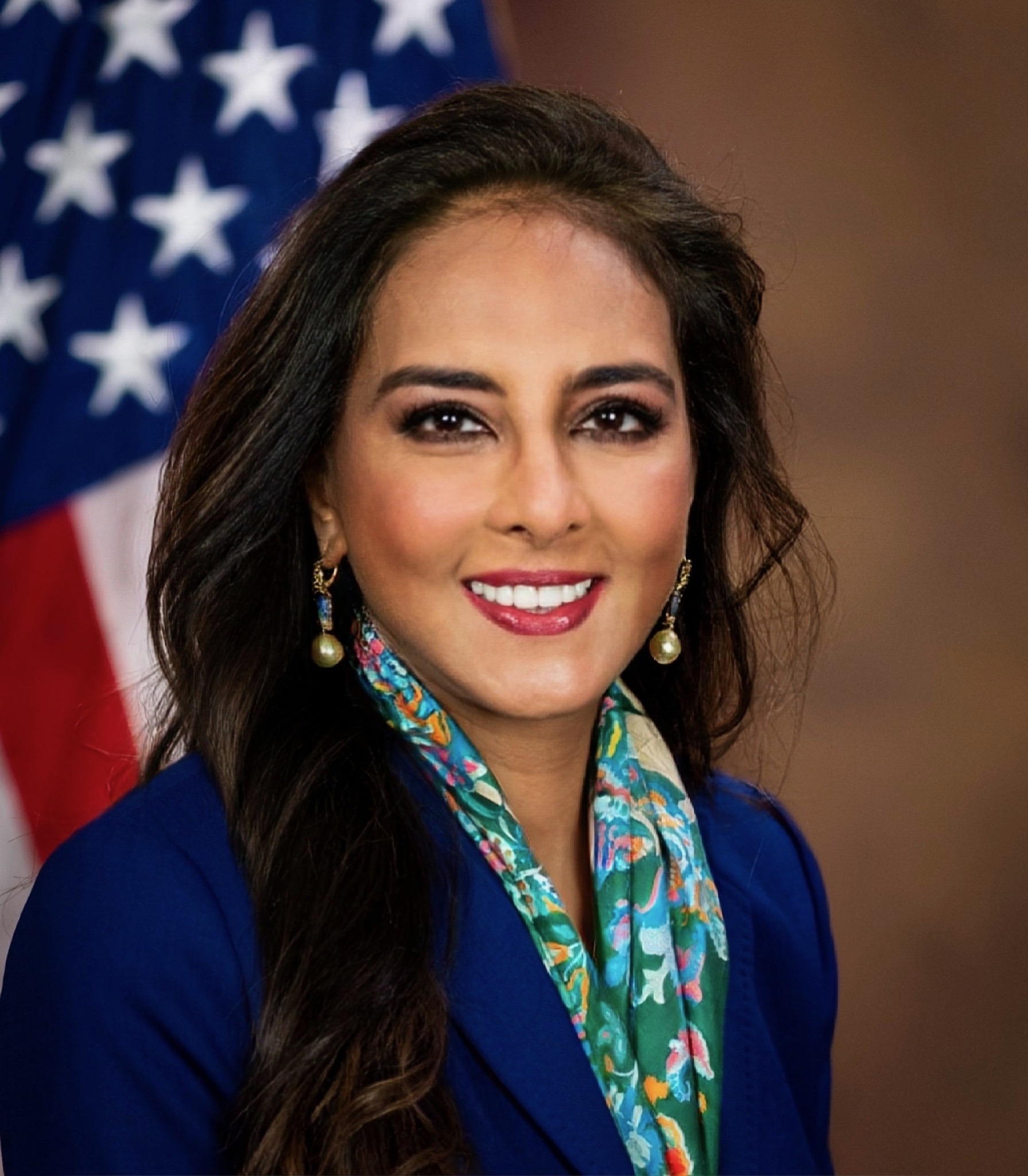
Assistant Attorney General Harmeet K. Dhillon, who leads the Civil Rights Division that filed the suit. She has said additional cases against other districts are contemplated but declined to name them. Official DOJ portrait, U.S. Department of Justice, public domain, via Wikimedia Commons.
DOJ's answer is a ruling handed down one week after Gonzaga
Paragraph 8 of the complaint rests on 20 U.S.C. 1234c(a)(4), a catch-all letting the Education Secretary "take any other action authorized by law" against a recipient out of compliance. Paragraph 11 adds a fallback: the United States has "the inherent power to sue to enforce conditions imposed on the recipients of federal grants."
Both lines trace to United States v. Miami University, 294 F.3d 797, where the Sixth Circuit upheld a FERPA injunction the government won against two Ohio universities. On the catch-all, the panel wrote that the provision "certainly permits the DOE to bring a cause of action, including, inter alia, an action for injunctive relief." On the fallback, it wrote that inherent-power sentence almost exactly as DOJ has now pleaded it. The opinion issued June 27, 2002, one week after Gonzaga, and expressly limited its reasoning to federal enforcement, citing Gonzaga by name.
Kansas sits in the Tenth Circuit, which is bound by none of it. DOJ calls this suit first of its kind, and on the subject matter that is fair. On the mechanics, the clearest appellate authority for this route is 24 years old, comes from a different circuit, and turned on a different provision of the same law.
Official record
United States v. Unified School District No. 500, Wyandotte County, State of Kansas, No. 2:26-cv-02519 (D. Kan., filed Sept. 1, 2026), complaint, 16 pages.
"The Transgender Guideline does not require the District to provide parents with an opportunity for a hearing to challenge a Gender Plan produced by the District, including any information that may be inaccurate, misleading, or otherwise violates the student's privacy rights." — Complaint ¶ 31, page 7
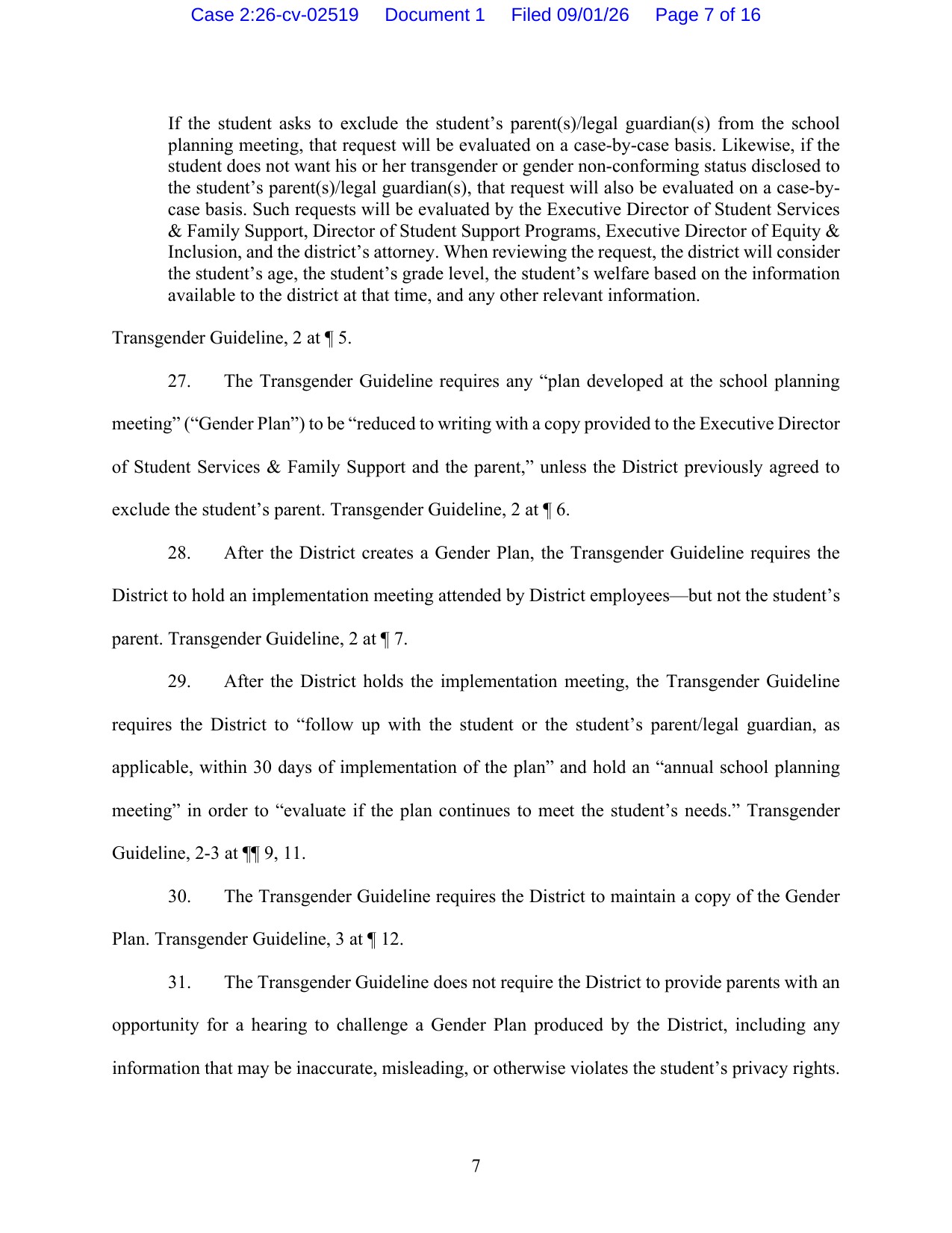
Read or download the full 16-page complaint (PDF) · original copy hosted by the Civil Rights Division
Nobody is getting a check
The prayer for relief asks for declaratory relief, an injunction, plus costs. No damages, because none exist under these statutes. KCKPS takes in close to $70 million a year in federal money by KSHB's count, and the Education Department can move to withhold that separately, but this complaint never asks the court to touch it. Winning ends the guideline. It compensates no one.
The religion claim is in the filing, not just in the framing
The Protection of Pupil Rights Amendment lists eight categories a school may not probe without prior written parental consent, and one is "religious practices, affiliations, or beliefs of the student or student's parent." DOJ's requested injunction spells that category out. Paragraph 38 alleges that in an undated recording, organizational development specialist Lauren Hernandez discussed supporting "students whose culture is against the LGBTQIA relationships," including asking a student about his willingness to share information with his father, a preacher.
Paragraph 37 alleges that Assistant Superintendent Canise Salinas described the guideline as a document withheld from the KCKPS community and held by certain "gatekeepers." The Sentinel published audio in June in which Salinas-Willich names the superintendent, the district's attorney and a student services coordinator as those gatekeepers.
What has actually been decided
Nothing. No judge has ruled, the district has not answered, and every allegation above is the government's untested version of events. KCKPS says it "is in full compliance with FERPA and PPRA" and will respond through the court rather than the press. Assistant Attorney General Harmeet Dhillon told the Daily Signal more suits are contemplated and would not say where.
Two questions decide this. Whether a discretionary exception a lawyer signs off on counts as a "policy" that "effectively prevents" access under a statute Congress wrote in 1974. And whether a judge in Kansas reads that catch-all provision the way Cincinnati did in 2002. Parents have been told for years that FERPA protects them. This is the first real test of whether the only party allowed to say so in court will actually win.
Header photo: Wyandotte High School, 2501 Minnesota Ave., one of the roughly 50 school sites operated by Kansas City, Kansas Public Schools. The complaint names the district, not any individual school. Photo by Wikipedia editor KarateLady (DeBarra Mayo Shaw) via Wikimedia Commons, released into the public domain.