Maryland quit its own Supreme Court appeal on August 13 after the justices gutted the private-property carry rule in Wolford v. Lopez. Four days later the state told those same justices that Wolford does not reach any of its other carry bans, and that the Court should stay out of Novotny v. Moore.
That petition, No. 25-1324, is now set for the September 28 long conference, the justices' first sitting after the summer recess.
Maryland gave up one fight and kept ten
After the Fourth Circuit ruled in January, both sides went to Washington. Maryland filed its own petition on April 20 in Moore v. Kipke, No. 25-1206, trying to revive its rule barring licensed carry inside private businesses without the owner's express say-so. Then the Court decided Wolford on June 25 and struck down Hawaii's version of exactly that. Maryland filed a stipulation of dismissal on August 10, and the petition died under Rule 46 on August 13.
That was the honest read of Wolford. What Maryland did next is harder to square. In its August 17 brief opposing certiorari, the Attorney General's office called the ten surviving bans a "targeted approach" that does not affect carriage during an ordinary day, and asked the Court to let the issue keep percolating below.
What Wolford actually held
Justice Alito wrote for six justices, joined by Roberts, Thomas, Gorsuch, Kavanaugh and Barrett. The opinion is not narrow about what was wrong with Hawaii's scheme. It says the law "hobbles what the Second Amendment protects: the right of Americans to carry arms for self-defense as they go about their daily lives."
The majority proved that by walking a hypothetical woman through one workday, past the supermarket and the lunch restaurant, and counting her exposure. By the end of an ordinary day, Alito wrote, she "could be a criminal at least six times over." Maryland's answer is that its bans are itemized rather than blanket. That is a distinction about drafting technique, not about what a permit holder can do on a Tuesday.
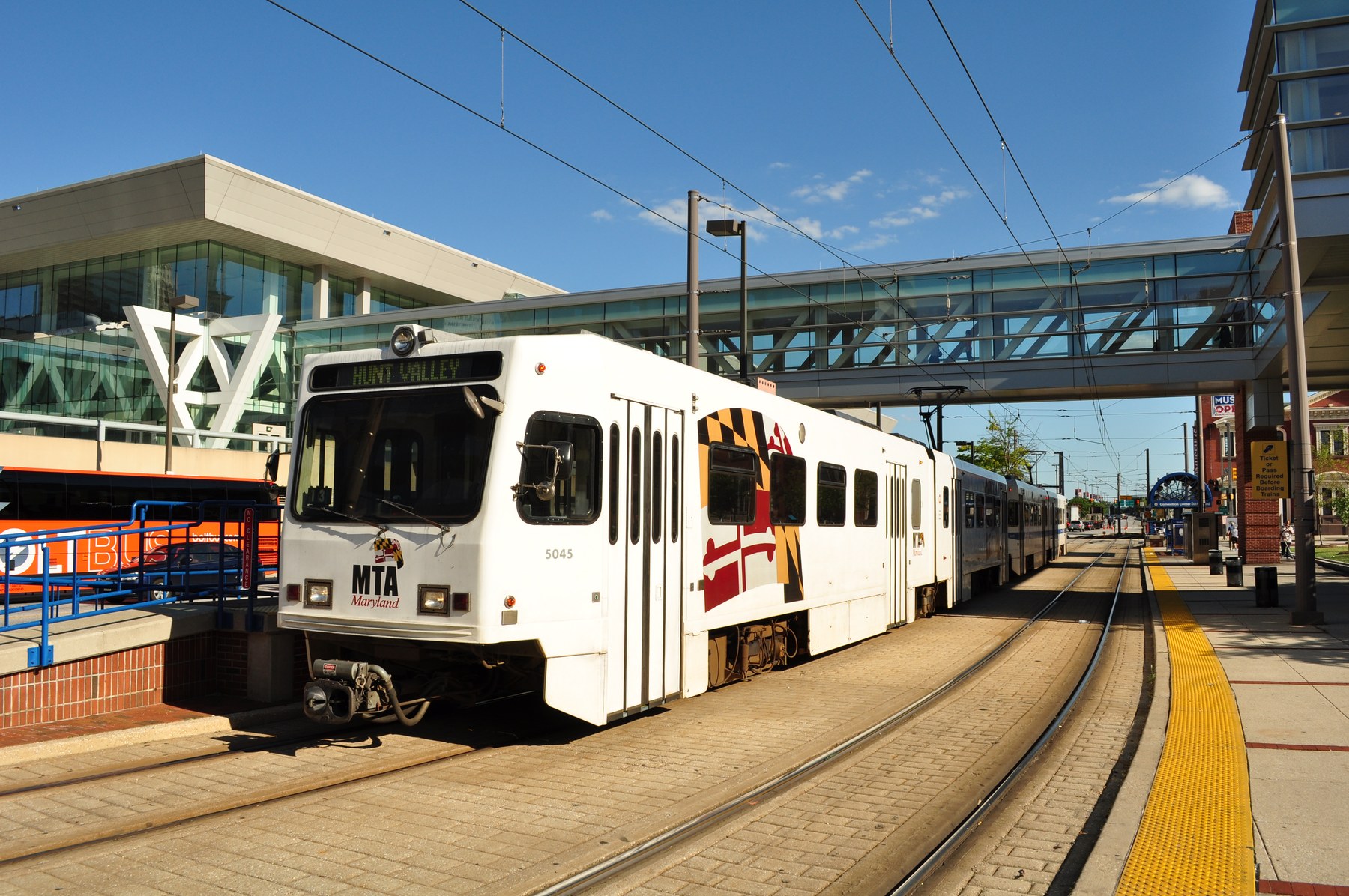
An MTA light rail train at Baltimore's Convention Center station. Maryland bars carrying a concealed weapon in any transit vehicle or facility the MTA owns or controls, a ban the Fourth Circuit upheld 2-1. (AndrewHorne via Wikimedia Commons, public domain)
Count the places
Maryland's own brief is the fastest way to see the scale. Mass transit. State parks, forests and Chesapeake Forest Lands. Hospitals and rehabilitation facilities. Museums, stadiums, racetracks, amusement parks, casinos. Any building owned or leased by a unit of state or local government, plus college buildings. Any location licensed to sell alcohol for on-site consumption, which means restaurants. Within 1,000 feet of a public demonstration.
The last two on that list were struck down by the federal district court and then revived by the Fourth Circuit. On the challengers' motion the panel stayed its own mandate while the cert petition is pending, so the reversal has not taken effect and the trial court's injunction still stands on those two. Everything else is enforceable today.
Official record
Reply Brief for the Petitioners, Katherine Novotny, et al. v. Wes Moore, Governor of Maryland, et al., No. 25-1324, filed September 2, 2026 by David H. Thompson of Cooper and Kirk with Mark W. Pennak of Maryland Shall Issue.
"An individual who merely wishes to carry peaceably for self-defense as she goes about her day can still find herself 'a criminal at least six times over' if she deigns to carry anywhere but the 'wastelands' 'where people don't care about assembling with others, eating and drinking, ... divisive opinions, amusement, recreation, education, ... public travel, leisure, community, and where children or vulnerable people are not normally present.'" — Reply Brief, page 1 (internal citations omitted)
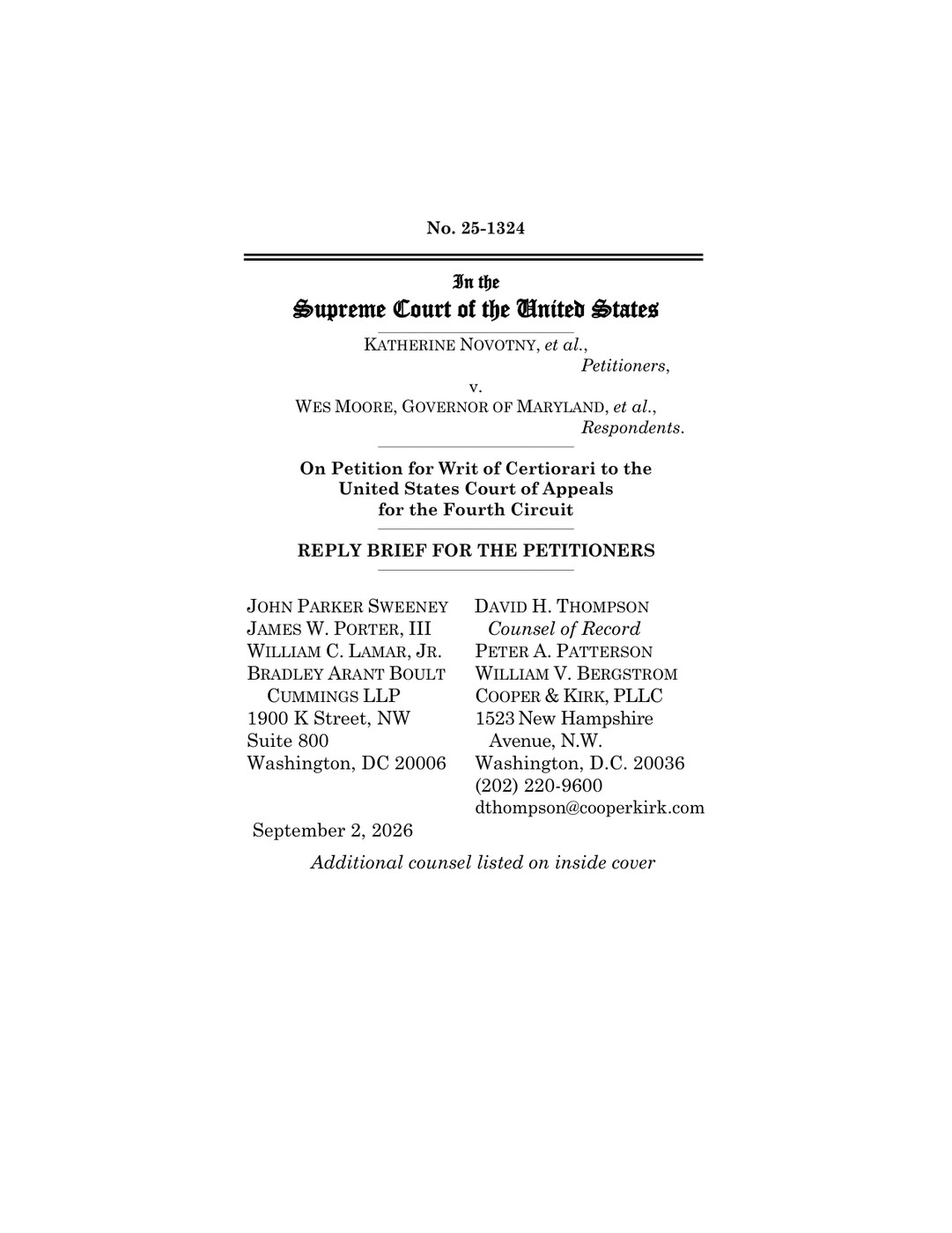
Read or download the full 18-page reply brief (PDF) · view the official docket
The history is thin, and it is late
Under Bruen the state carries the burden of producing a historical tradition. Maryland starts with the 1328 Statute of Northampton, which Bruen already read as a ban on terrifying carry rather than peaceable carry, then jumps five centuries to an 1817 New Orleans ballroom ordinance and nine state and territorial laws dated 1853 through 1903.
The reply brief does the arithmetic. Not one of those state laws predates the Fourteenth Amendment. Four predate the end of Reconstruction, and all four came from former slave states. Several of the rest are territorial, which Bruen discounted as transitory. There were 45 states by 1900, so even at its best this is a minority practice. Maryland's supporting case law is no sturdier: it leans on English v. State, an 1871 Texas decision holding the Second Amendment covers only militia-suitable arms, which Bruen named an outlier by name.
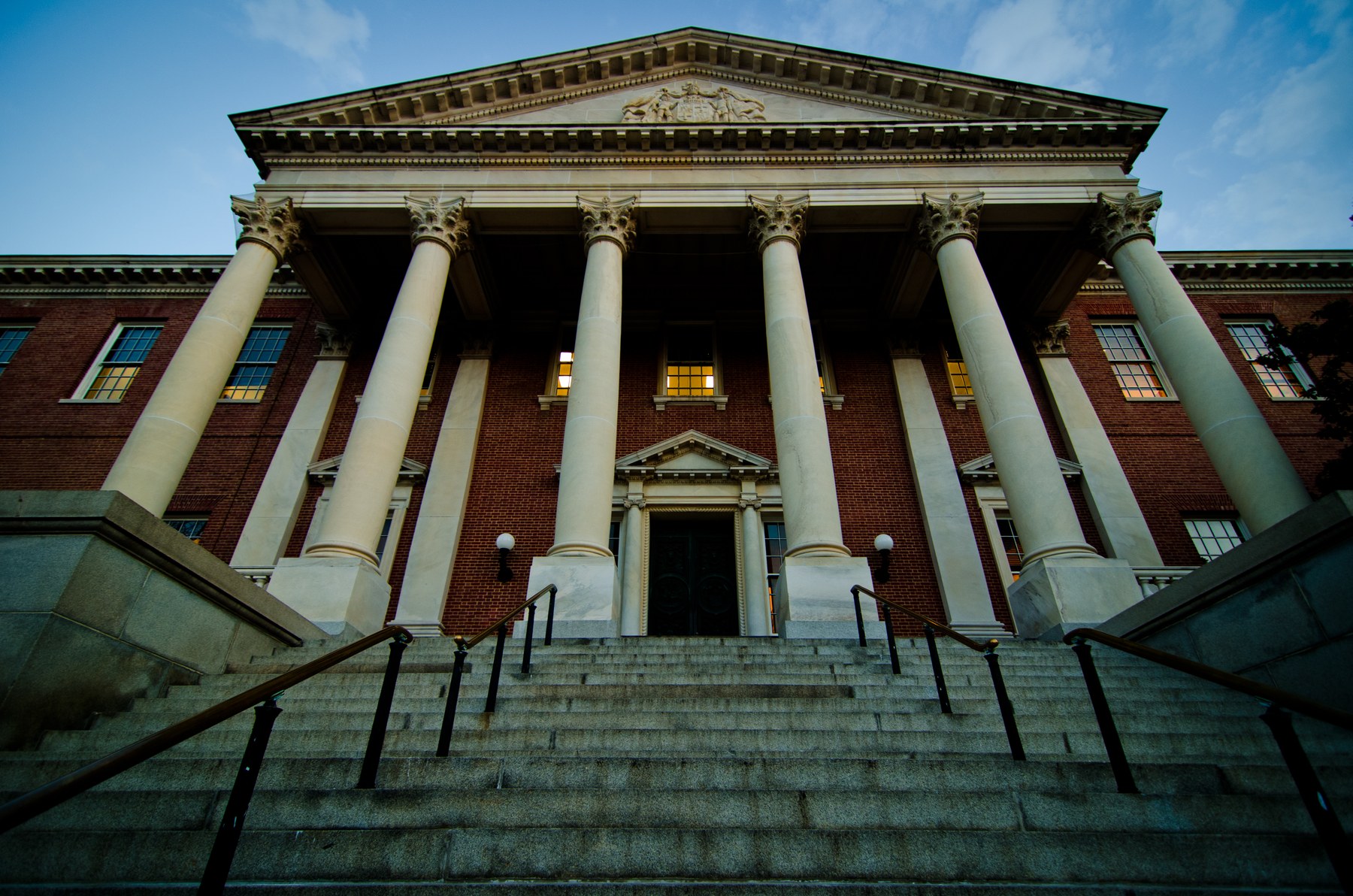
The Maryland State House in Annapolis, where the General Assembly passed Senate Bill 1 in 2023, months after Bruen forced the state to start issuing carry permits. (Photo by Kevin Galens via Wikimedia Commons, CC BY-SA 2.0)
A Bush appointee said most of this in January
The Fourth Circuit was not unanimous. Judge Roger Gregory wrote for the court joined by Chief Judge Albert Diaz, but Judge G. Steven Agee, whom George W. Bush put on the bench in 2008, dissented on transit, the demonstration buffer, parks and forests, places of amusement, museums, and alcohol-serving locations. He wrote that the majority "grossly misread[s] Bruen" by letting "a smattering of mid-to-late 19th century and later laws serve as the only historical analogues" propping up its analysis. Trains did not exist in 1791, he noted, but ferries and stagecoaches did, and Maryland produced nothing showing guns were barred on either.
Why sending it back would accomplish nothing
Maryland's fallback is that only five circuits have live merits decisions on sensitive places since Bruen, so the Court should wait. The petitioners answer that waiting will not repair a test producing results the judges themselves cannot defend, and they quote the Ninth Circuit conceding in its 2024 Wolford opinion that its answers "appear arbitrary."
Then comes the sharpest fact in the brief. On August 10, with Wolford back in its hands on remand, the Ninth Circuit issued a memorandum saying its analysis as to all other aspects of Hawaii's law is unaffected. The circuit that just got reversed read the reversal as changing nothing else. Sending Novotny back to the Fourth Circuit invites the same shrug.
Adam Kraut, the Second Amendment Foundation's executive director, put it plainly: "when forced by the Supreme Court to issue carry permits, Maryland simply made those permits useless everywhere."
What happens on September 28
Four outcomes are possible: grant, deny, relist for a later conference, or vacate and remand under Wolford. The first signal usually shows up in an orders list a few days after, though a relist comes with no explanation at all. Maryland dropped the one piece of this fight it had appealed itself rather than defend it after Wolford. Four days later it filed a brief telling the Court that loss means nothing for the other ten. The justices decide on the 28th whether they believe that.