

Headlines say a federal judge "halted" the Trump administration's hunt for noncitizen voters in nine states. The 19-page order says something narrower. DHS can keep investigating illegal voting. It cannot send agents to people it knows, suspects or should reasonably suspect are U.S. citizens, and it cannot act on its flagged-voter list alone, through Election Day.
What did Judge Martinez-Olguin actually order?
U.S. District Judge Araceli Martinez-Olguin signed a preliminary injunction on October 21 in California Nurses Association v. Mullin, a case against Homeland Security Secretary Markwayne Mullin and his department. It covers California, Connecticut, Georgia, Missouri, Nevada, New York, Pennsylvania, Washington and Wisconsin. The order has two prongs, and the second is easy to miss.
The first bars "elections-related field operations and field interviews" that "involve or are likely to involve" people agents "know, suspect, or should reasonably know or suspect are U.S. citizens." The second bars field operations based "wholly" on the flagged-voter records, again against suspected citizens. It expires at 8:00 p.m. on November 3, when polls close.
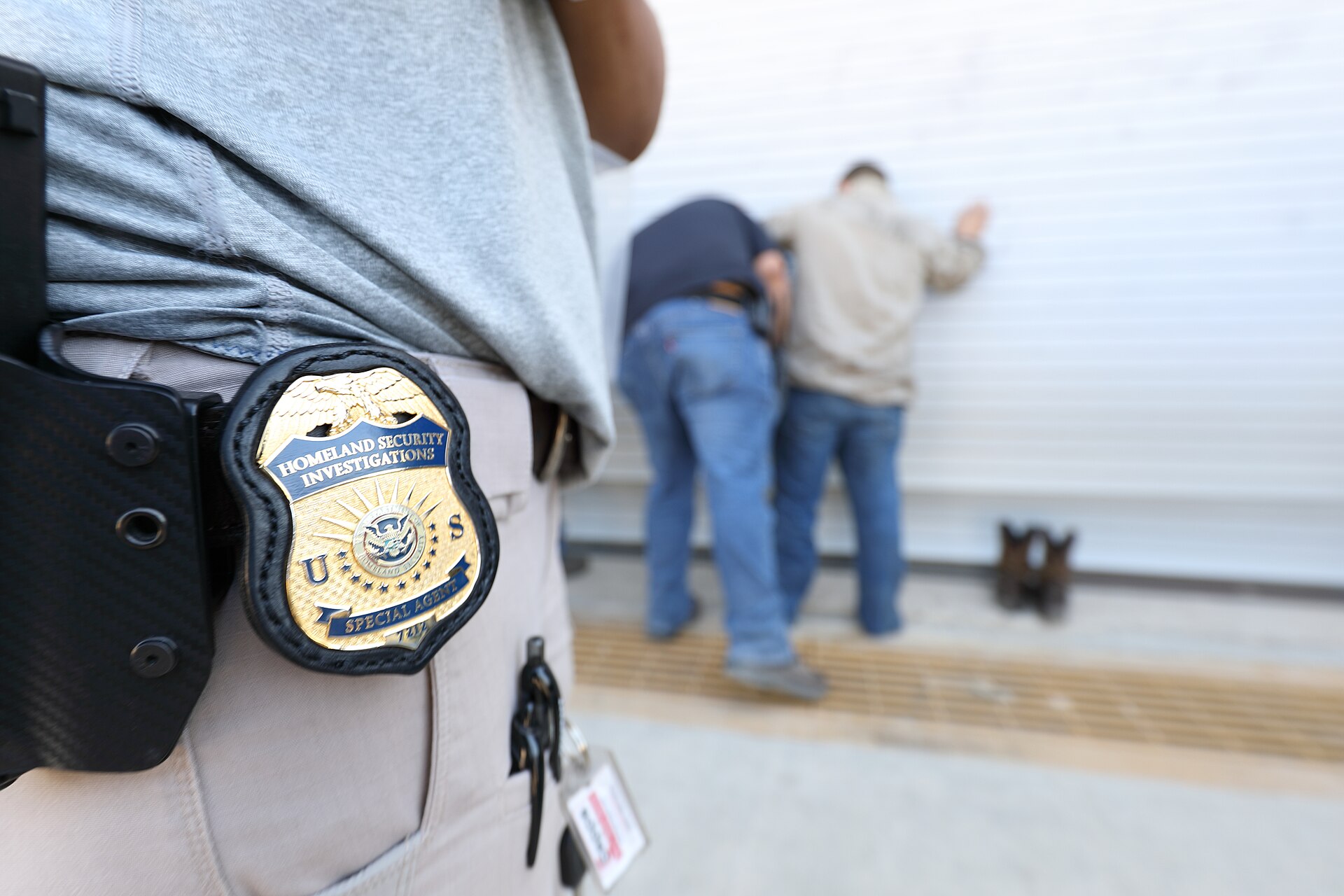
HSI special agents during a search warrant operation in North Texas. File photo from an unrelated case, not from the voter-eligibility operation. Photo: U.S. Immigration and Customs Enforcement via Wikimedia Commons, public domain.
Is the government barred from investigating noncitizen voting?
No, and the judge says so. The order states that "Plaintiffs do not claim, nor does the Court find, that it is unlawful for federal officials to undertake investigations into unlawful voting in federal elections." A footnote adds that the court "makes no findings related to the extent of the threat of voter fraud." Noncitizens who register or vote can still be investigated and removed.
DHS says as much. In a statement reported by CBS News, the department said it is "laser focused on identifying, prosecuting, and removing aliens who vote and dilute the votes of U.S. citizens" and has "no plans to question or investigate people we believe to be U.S. citizens."
Official record
California Nurses Association et al. v. Markwayne Mullin et al., No. 4:26-cv-10680-AMO (N.D. Cal.), Document 87, Order Granting Preliminary Injunction, filed October 21, 2026. Page 18 of 19 shown.
"This order shall remain in effect until November 3, 2026, at 8:00pm, or when polling places close on Election Day, or as otherwise directed by the Court." — U.S. District Court, Northern District of California
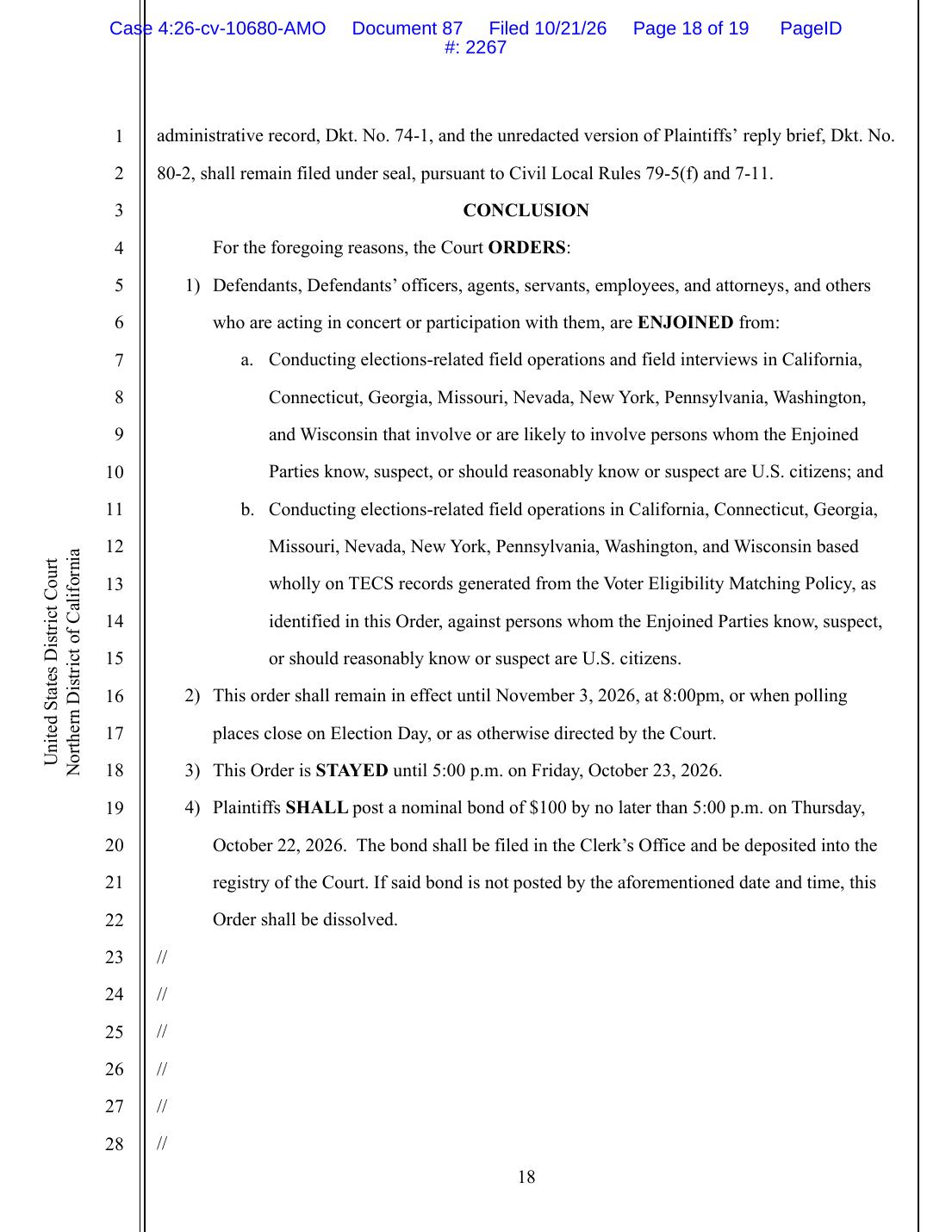
Static image of the operative page · read or download the full 19-page order (PDF) · original on CourtListener
Why did the judge say the operation went too far?
The order describes the target list as built from "voluminous and unreliable" data: 48.2 million records from sources of "questionable provenance," plus 50.6 million records from the Justice Department that, for states that would not share voter rolls, came from "unreliable commercial versions of voter roll data." The order quotes USCIS conceding that errors will result from "[s]imilar names, incomplete records, outdated citizenship information, clerical errors, and other circumstances."
The order also says USCIS reviewers were required to take no more than twelve minutes to clear a person from the list, and that there is no federal database of citizenship status for U.S. residents. Then there is publicity. The judge cites X posts from HSI offices showing armed officers approaching homes and an arrest video, and finds that these "lead to an objectively reasonable fear of law enforcement entanglements."
That is the legal hook. Section 11(b) of the Voting Rights Act bars anyone, "whether acting under color of law or otherwise," from intimidating a person "for urging or aiding any person to vote." The court found a private right to sue under it and said DHS had not shown that investigating illegal voting "requires the targeting of U.S. citizens, the deployment of armed agents."
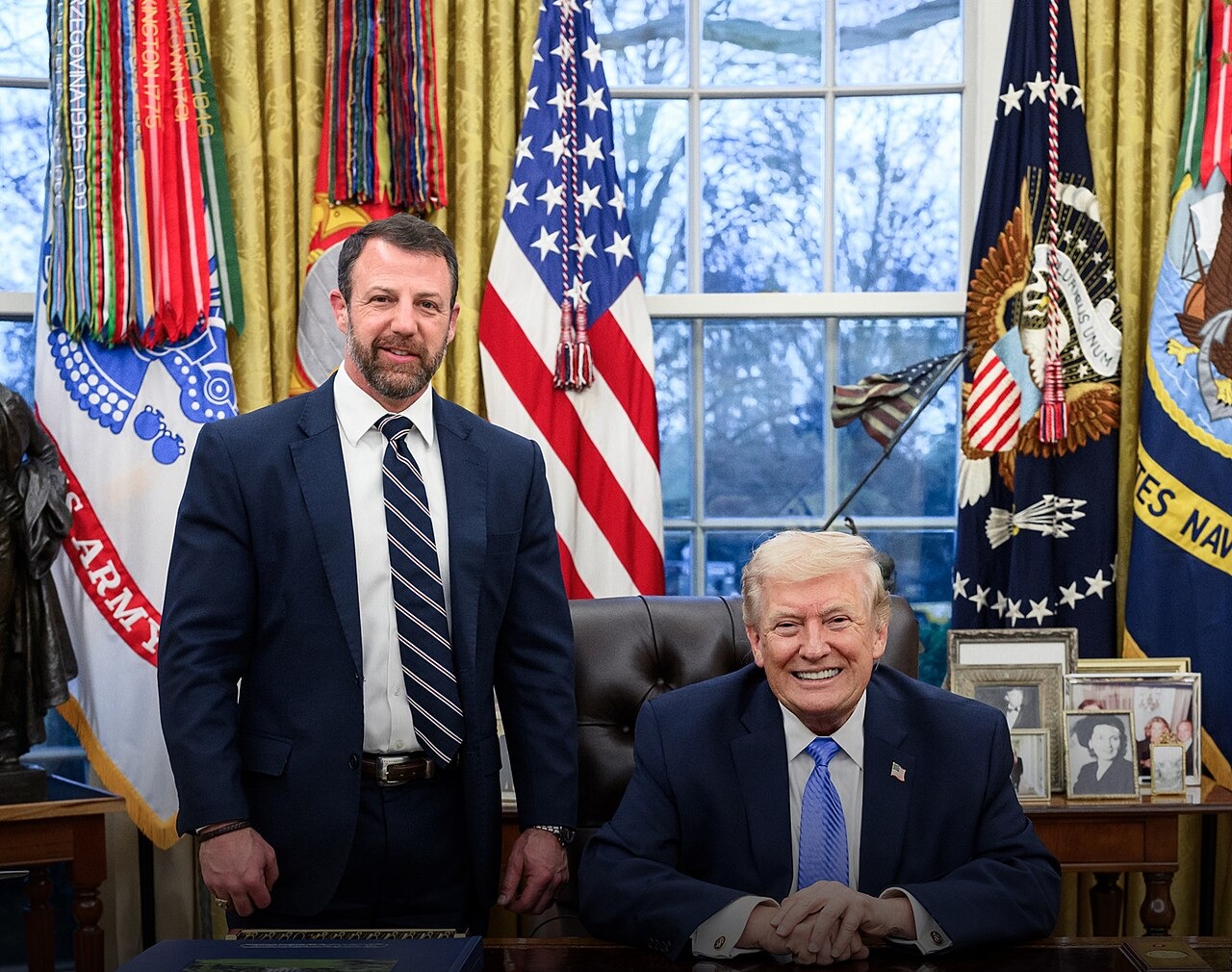
DHS Secretary Markwayne Mullin with President Trump in the Oval Office after Mullin's Senate confirmation. DHS is the lead defendant in the case. Photo: The White House via Wikimedia Commons, public domain. Cropped from a White House graphic.
Who won standing, and who lost it?
Only the nurses' unions did. The judge ruled that San Francisco and Santa Clara County, and Voto Latino, failed to clearly show standing at this stage. The unions got through with declarations from at least four citizen members, including one who "will no longer sign up to be a poll monitor." The order says the unions showed no cognizable harm to their members' own voting, since they will vote by mail, so the ruling rests on get-out-the-vote work.
The order also repeats a claim from the plaintiffs' reply brief that DHS "surveils, covertly infiltrates, and interrogates the staff of non-profits and churches conducting voter engagement," with at least 148 organizations targeted as of July. That is the plaintiffs' evidence as recited by the court, not a finding about any specific church.
What happens before Election Day?
The judge stayed her order until 5:00 p.m. Friday, October 23, to allow an appeal. I found no report of an appeals court stay as of Saturday morning, and I did not find a statement on whether the administration will seek one. Check the docket for updates.
The practical read: a citizen who gets a knock from an HSI agent about voting is now covered by a court order in nine states. A noncitizen who voted is not. The injunction sets a rule for how DHS picks its targets, and the government has until polls close to prove its list is better than the court says it is.
Header photo: Markwayne Mullin sworn in as Secretary of Homeland Security. Photo: The White House via Wikimedia Commons, public domain. Cropped.















