

A federal appeals court did not block immigration arrests at churches on Tuesday, whatever the headlines suggest. The D.C. Circuit ruled 2-1 that 27 Christian and Jewish groups have standing to sue over DHS's January 2025 decision to drop its limits on enforcement at houses of worship, and sent the case back to a district judge to decide whether to issue an injunction. The opinion also leans on a line from DHS's own press release.
What did the court actually decide?
Only one thing: whether the plaintiffs are allowed to ask. In Mennonite Church USA v. Department of Homeland Security, No. 25-5209, Judge Florence Pan, joined by Judge Robert Wilkins, held that the groups "likely have standing." The panel reversed the denial of a preliminary injunction and remanded "for further consideration of that motion."
Nothing in the ruling restores the old policy today. The panel did not reach the merits of the First Amendment, Religious Freedom Restoration Act or Administrative Procedure Act claims.
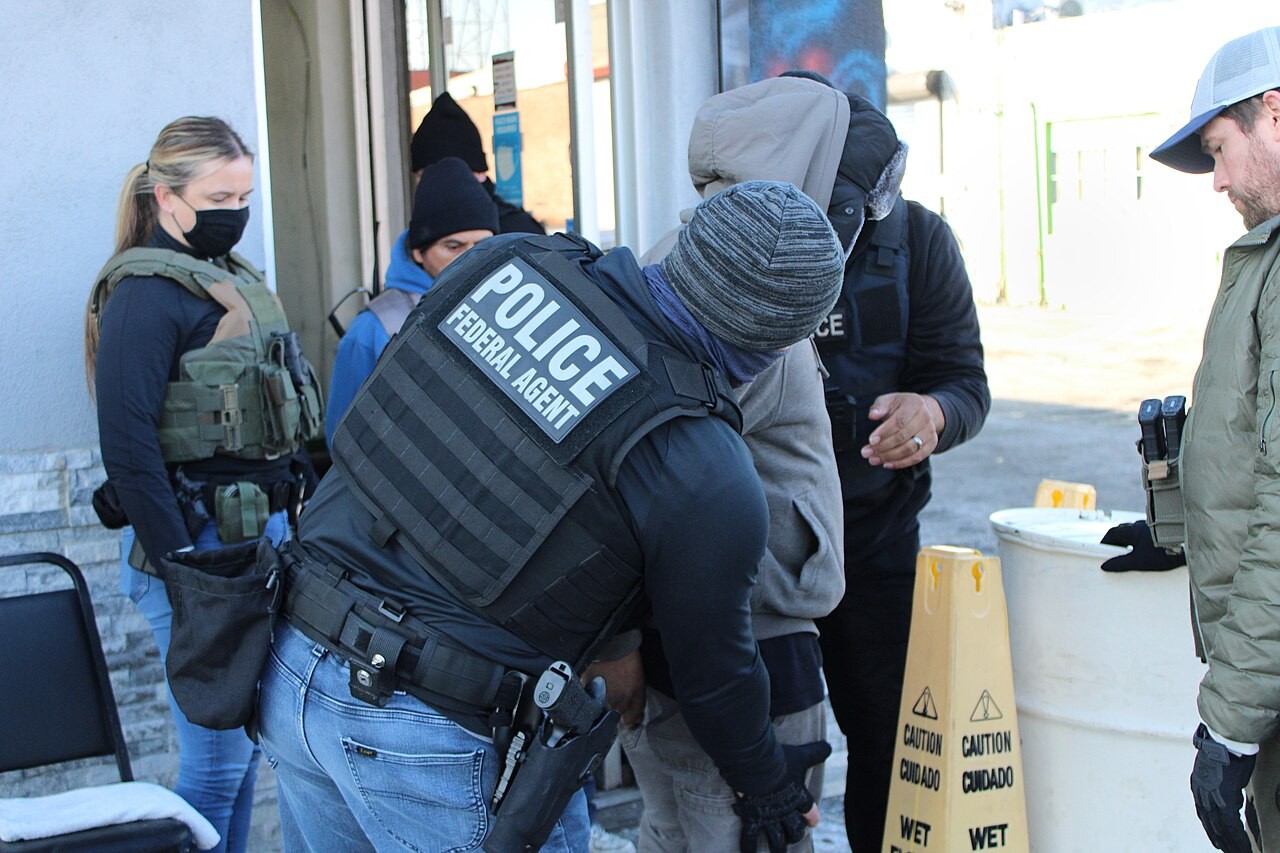
ICE officers during a worksite enforcement operation at a car wash, as ICE described it. This is a file photo and does not show a house of worship. Photo: U.S. Immigration and Customs Enforcement via Wikimedia Commons, public domain.
What was the policy, and what replaced it?
For about 30 years, the government largely stayed out of "sensitive locations." The 2021 Mayorkas memo said officers should not take an enforcement action in or near a place of worship "to the fullest extent possible," with exceptions for threats to national security, imminent risk of death or violence, evidence destruction and hot pursuit, per the opinion.
On January 20, 2025, Acting DHS Secretary Benjamine Huffman rescinded it. Officers were told to "use [their] discretion along with a healthy dose of common sense." Eleven days later an ICE memo told supervisors to make "case-by-case determinations" with no "bright line rules," and allowed approval "either verbally or in writing."
Official record
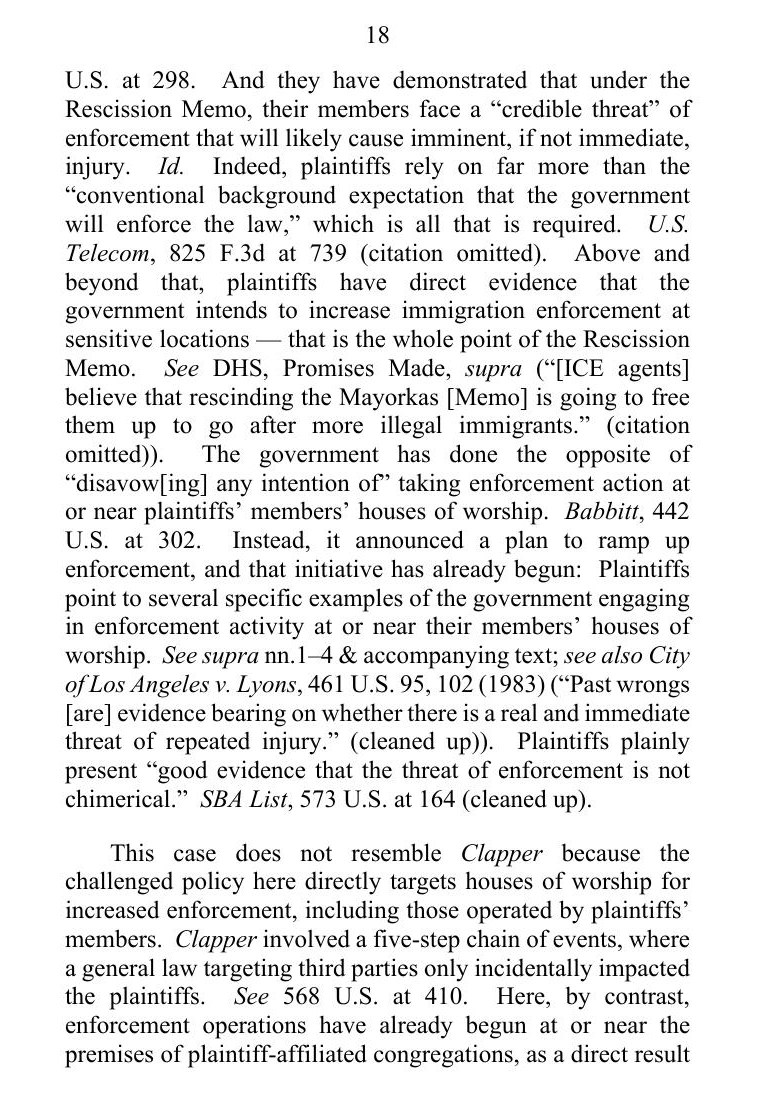
U.S. Court of Appeals for the D.C. Circuit, Mennonite Church USA v. DHS, No. 25-5209, decided October 20, 2026 (50 pages including the dissent). Slip opinion page 18 is shown below.
"The government has done the opposite of 'disavow[ing] any intention of' taking enforcement action at or near plaintiffs' members' houses of worship. Instead, it announced a plan to ramp up enforcement, and that initiative has already begun." — Judge Florence Pan, for the panel
Read or download the full 50-page opinion (PDF) · View it on the court's website
Which sentence in the opinion should bother DHS?
The panel's evidence that enforcement is coming is not a protester's declaration. It is a DHS press release. The opinion quotes the department's January 26, 2025 statement that ICE agents "believe that rescinding the Mayorkas [Memo] is going to free them up to go after more illegal immigrants," and calls it "direct evidence that the government intends to increase immigration enforcement at sensitive locations." Pan added that if rescinding the memo "free[s] up" agents, "reinstating the memo is likely to have the opposite effect."
What is the evidence of enforcement at churches?
It is thinner than the headlines imply. The opinion lists an ICE visit to a church daycare office in Georgia, a raid next door to another church, a raid at a church that is not a plaintiff, and surveillance near three plaintiff-affiliated churches. The plaintiffs' appeal briefs cite at least six more examples, but the court noted those were not presented to the district court.
The panel also said the government did not contest that the harm is traceable to the memo. Declarants for all but one plaintiff reported attendance drops since the rescission, the opinion says, though the panel rested its ruling on the threat of enforcement and did not decide the attendance theory.
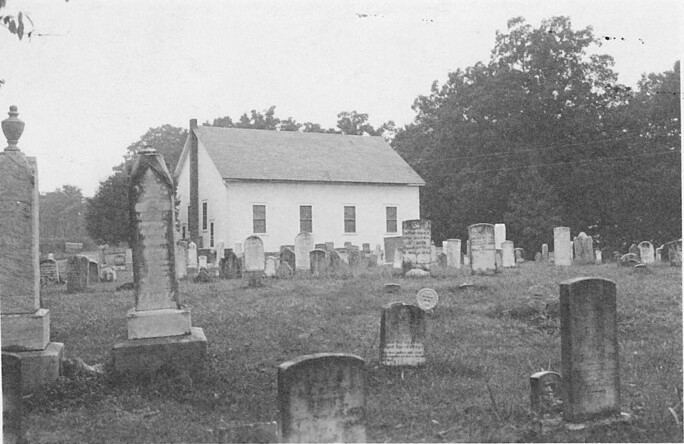
Trissels Mennonite Church and cemetery in Broadway, Virginia, photographed in 1949. Mennonite Church USA, the lead plaintiff, is not alleging a raid at this church. Photo: Mennonite Church USA Archives via Wikimedia Commons, no known copyright restrictions.
What does the dissent say?
Judge Neomi Rao argued the plaintiffs "offer only speculation" that restoring a prior administration's guidance would change what ICE does. She wrote that the 2021 memo "imposed no actual restriction on enforcement authority or discretion," and that "Enforcement priorities and policies are the exclusive purview of the Executive Branch." Redressability, she wrote, "requires more than conjecture."
That is a serious argument, and Pan's answer is also in the text. The majority said the dissent rests on a "mistaken belief" that the Mayorkas memo was non-binding, and that courts "generally assume that agencies comply with their announced administrative policies."
One passage will interest gun owners. The district court had tested imminence using a standard from D.C. Circuit firearms cases, which required a plaintiff to be "singled out or uniquely targeted." Pan called that test "idiosyncratic," said it is tied to firearms cases and does not fit a challenge to an agency decision that burdens religious expression, and applied the Supreme Court's "credible threat" standard instead.
What happens next?
Judge Dabney Friedrich, who denied the injunction in April 2025, now has to weigh the remaining factors. The plaintiffs want the old policy revived and a bar on enforcement at their houses of worship without a judicial warrant or exigent circumstances. The panel noted the judicial-warrant question on the merits was not briefed and left it alone.
The Fourth Circuit already affirmed a narrower injunction on August 18 for the plaintiffs in Philadelphia Yearly Meeting v. DHS, the opinion says. Two circuits ruling for religious plaintiffs could push the government toward further review. I found no DHS statement on the ruling or any announced appeal as of Wednesday. If the Justice Department does go up, the cleanest question is the one Rao asked: can a court order a return to guidance the executive branch says it never had to follow?
Header photo: the E. Barrett Prettyman United States Courthouse in Washington, home of the D.C. Circuit. Photo: ajay_suresh via Wikimedia Commons, CC BY 4.0.















