A federal judge blocked Connecticut's Glock sales ban on Wednesday, one day before it was set to make selling America's most popular handgun a felony. The headlines stopped at the ruling. Footnote 6 of the order goes further: Judge Kari Dooley wrote that the state's Attorney General knew the lawsuit was coming and "elected not to advise his staff" who would have to defend the law.
The Ban Died 24 Hours Before It Took Effect
U.S. District Judge Kari A. Dooley signed a 12-page order in Bridgeport on September 30, granting preliminary injunctions in two cases: Glock, Inc. v. Griffin (No. 3:26-cv-01525) and National Shooting Sports Foundation v. Griffin (No. 3:26-cv-01528). Both were filed September 21. The law they challenged, House Bill 5043, became Public Act 26-41 when Gov. Ned Lamont signed it on May 26. It was due to take effect October 1.
The law pulls any "convertible pistol" into Connecticut's machine-gun definition. That means any semiautomatic pistol with a "cruciform trigger bar" that could be turned into a machine gun by attaching an illegal converter, the device usually called a Glock switch. Anyone who imports, keeps for sale or offers such a pistol made on or after October 1 would be "guilty of a class D felony," the order quotes. Under state law, that carries up to five years in prison and a $5,000 fine.
Dooley's conclusion was blunt. "The statute is presumptively unconstitutional, and Defendants have not met their burden of demonstrating that the statute is consistent with our nation's history of firearms regulation," she wrote. Dooley was appointed by President Trump, The Reload noted.
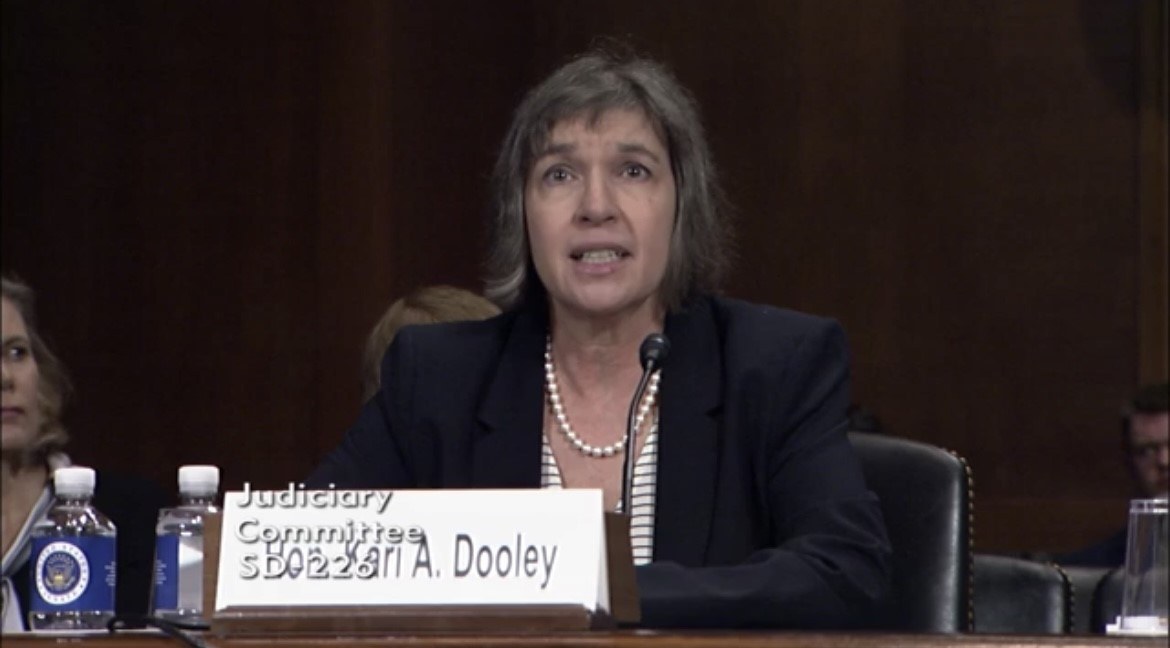
Kari A. Dooley at her March 7, 2018 Senate Judiciary Committee nomination hearing. She now sits as a U.S. District Judge in Connecticut. (U.S. Senate Judiciary Committee video still, public domain, via Wikimedia Commons)
Connecticut's Best Argument Came From the 1700s and Missed
Under the Supreme Court's Bruen test, Connecticut had to show its law fits the nation's history of gun regulation. For this stage of the case, the state conceded that the ban covers conduct the Second Amendment protects. Its defense rested on two pillars. One was Founding-era "proving" laws in Pennsylvania, New Jersey, New Hampshire and Massachusetts, which required guns to be tested and inspected before sale. The other was the long tradition of restricting machine guns.
Dooley rejected the pairing. Proving laws "were designed to ensure safety before the firearm enters the stream of commerce," she wrote. "They were not designed to, and indeed could not, forestall future misuse of the firearm (even if predictable) after it enters the stream of commerce." Nobody disputed that an unconverted Glock is safe and "extremely popular for purposes of self-defense."
Then came the line that sums up the whole law. The state offered "no adequate explanation as to how the sale of a firearm manufactured on September 30, 2026 needs no safety regulation but the same firearm manufactured 24 hours later is sufficiently dangerous so as to be properly restricted and regulated by the state."
The Second Circuit Already Said Connecticut Can Keep Its Glocks
Here is a detail most coverage skipped. To show Glocks are protected, Dooley quoted the Second Circuit's own 2025 decision in National Association for Gun Rights v. Lamont, 153 F.4th 213. That ruling went against gun owners. It let Connecticut keep enforcing its assault weapons and magazine bans.
In upholding those bans, the appeals court noted that "Connecticut residents remain able to . . . own and possess popular semiautomatic handguns like the Glock 17." Dooley turned that sentence against the Glock ban. Connecticut won its last big gun case in a ruling that leaned on residents still having the Glock 17. Months later, the legislature passed a law aimed at those same pistols.
The order also repeated the plaintiffs' point that the real danger is already illegal. Machine-gun conversion devices are banned, and so is selling or possessing a pistol converted with one. When the law dealt with sawed-off shotguns, the order notes, "the response was to ban the modified shotgun, not to ban shotguns altogether."
Footnote 6: The Attorney General Kept His Own Lawyers in the Dark
Connecticut argued that Glock and the NSSF waited until the last minute to sue, and it used that delay against their claim of urgent harm. Dooley declined to blame either side. Then, in footnote 6 on page 9, she pointed straight at the state's top lawyer.
Official record
Order Granting Plaintiffs' Emergency Motion for Preliminary Injunction, Glock, Inc. v. Griffin, No. 3:26-cv-01525 (KAD), and National Shooting Sports Foundation, Inc. v. Griffin, No. 3:26-cv-01528 (KAD), U.S. District Court for the District of Connecticut, filed September 30, 2026 (ECF No. 31, 12 pages), via CourtListener.
"The Attorney General was clearly on notice that this challenge would be filed if ongoing discussions as to the applicability of the statute to certain of Glock's firearms could not be resolved. That he elected not to advise his staff who would be tasked with defending against that challenge cannot be laid at the feet of the Plaintiffs."
Judge Kari A. Dooley, footnote 6, page 9
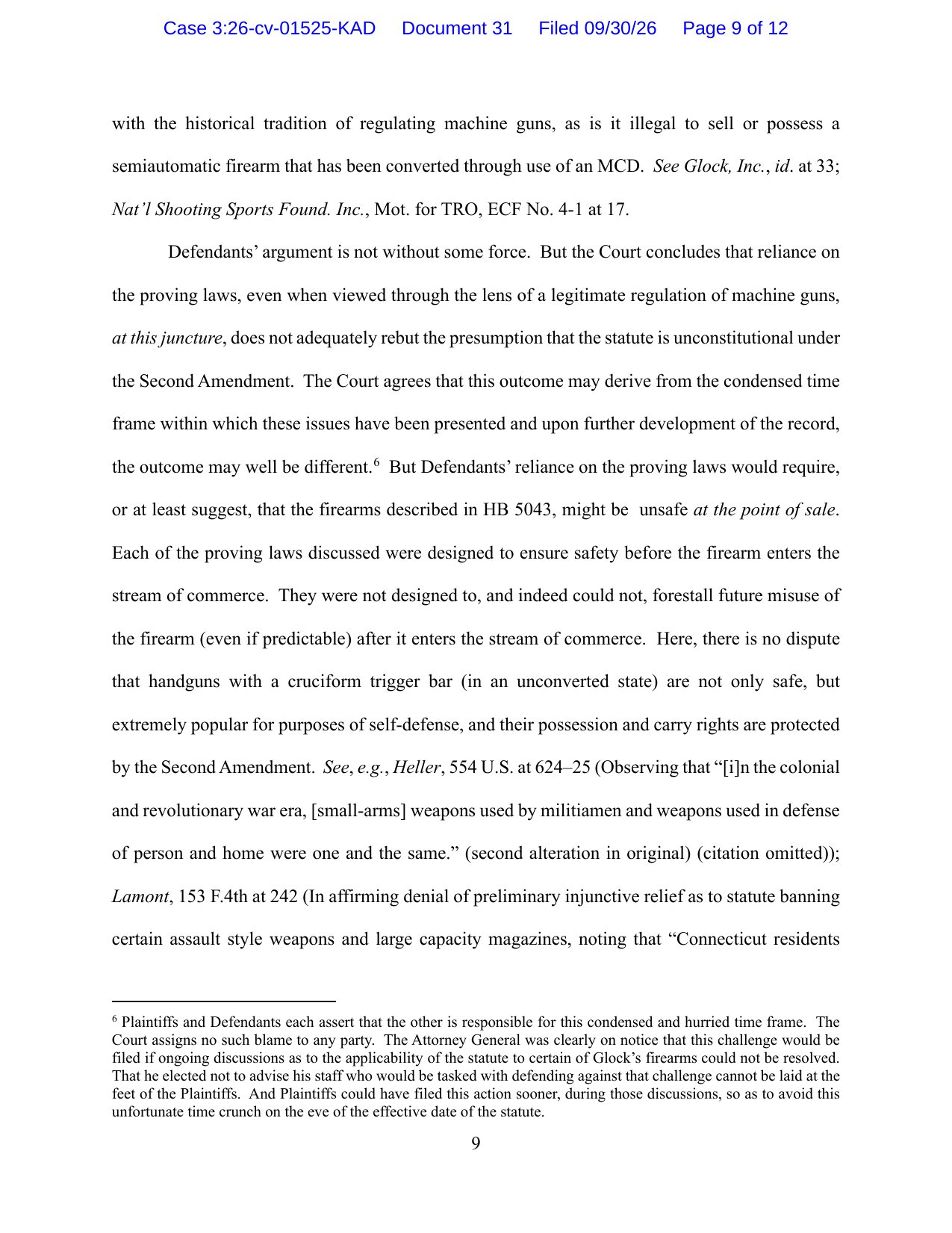
Read or download the full 12-page order (PDF) · Glock's 31-page complaint (PDF)
The footnote does not name him, but Connecticut's Attorney General is William Tong, a Democrat. In the same footnote, Dooley also said the plaintiffs "could have filed this action sooner." The judge did not let the state off the hook for its own lost weeks, though.
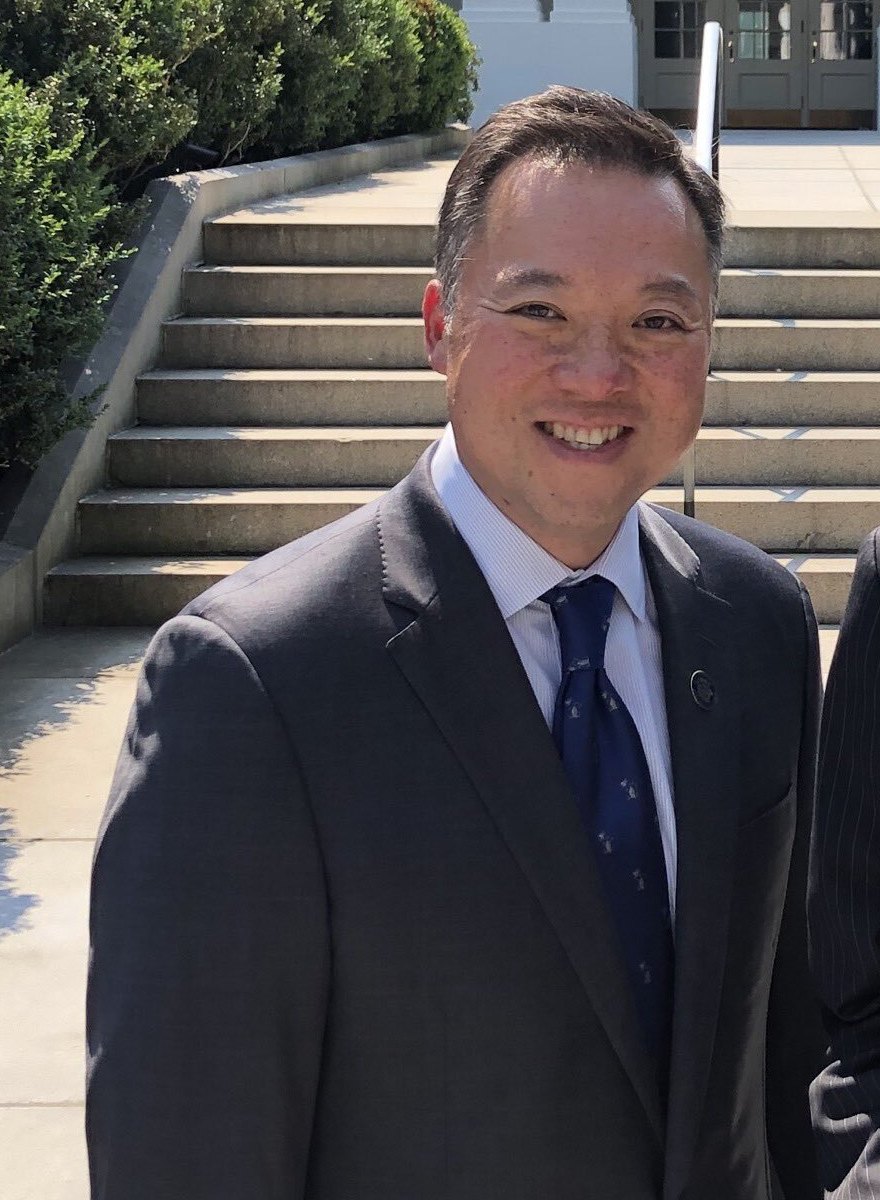
Connecticut Attorney General William Tong at the White House in May 2021, cropped from a photo with Sen. Richard Blumenthal. (Office of Sen. Richard Blumenthal, public domain, via Wikimedia Commons)
Glock's Complaint Shows How Long Tong's Office Knew
Glock's complaint lays out the timeline. Glock's lawyers first wrote to the Attorney General's office on July 3. On August 27, Glock's team met with seven people from that office and two from the State Police Special Licensing and Firearms Unit. They brought sample pistols to argue that Glock's newer Slimline, V Series and Gen6 models fall outside the ban.
According to the complaint, the State Police representatives at that meeting said dealers had been calling to ask whether new Glocks would be banned on October 1, "but that they do not know the answer." When Glock asked for the state's position, the complaint says, the Attorney General's office "refused to respond." It later told Glock that criminal enforcement "is simply not a part of . . . the duties" of the office and that it "cannot answer legal questions from private parties."
So the same office that told Glock it couldn't say what the law covered then showed up in federal court to defend the law. And according to the judge, it hadn't warned its own defense team. Glock sent a follow-up letter on September 8 and asked for an answer by September 14. As of the September 21 filing, the complaint says, no answer had come.
Lamont Says Police Asked for This Law. It Has No Police Exception.
Lamont told The Reload he was "disappointed" and would "evaluate all legal options." He called it "a commonsense law," adding: "Police asked for this bill. They are concerned about the rising number of convertible pistols showing up on our streets."
Glock's complaint tells a different story about police. It says about 85 percent of Connecticut law enforcement agencies issue Glock pistols, including the State Police and the Hartford and New Haven departments. It also says the law has "no exceptions" for sales of covered pistols to officers "or even to law enforcement agencies." Dooley listed the loss of "law enforcement personnel who are not exempted under the statute" among the harms the injunction prevents.
Tong said Connecticut "does not agree with the Court and will continue to defend the law," per The Reload. NSSF general counsel Lawrence Keane said the ruling "recognizes there are serious constitutional questions with the law Governor Ned Lamont wants to enforce."
What Happens Next for Connecticut and Other Blue States?
The injunction is preliminary. Dooley said the result "may well be different" with a fuller record, and she ruled only on the Second Amendment claim. She also left open whether Glock's newer Slimline and Series VI pistols are covered at all. The state told her that review is "underway." Bearing Arms and AmmoLand both expect the state to appeal to the Second Circuit, the same court that upheld Connecticut's assault weapons ban.
Connecticut is not alone. FFLGuard reports that California's version took effect July 1, 2026, and New York's starts May 31, 2027. The Reload called Dooley's order the first court win against these so-called Glock bans. A federal judge in California had earlier declined to block that state's version.
For now, Connecticut gun shops can keep restocking the pistol most of the state's own police carry. The state's lawyers will go to the appeals court with the same history arguments that just failed. And footnote 6 is now part of the record, saying in a federal judge's words that the Attorney General had weeks of warning and kept it from his own team.