"60 Minutes" opened its 59th season on CBS the night of September 13 without once telling viewers why half the names on the broadcast had changed. Correspondent Scott Pelley was gone, fired in June after accusing CBS News editor-in-chief Bari Weiss of pressuring him to favor "the president's version of events." Correspondents Sharyn Alfonsi and Cecilia Vega were gone too, along with longtime executive producer Tanya Simon. Anderson Cooper had already left in February. The only acknowledgment came from an announcer at the very end of the hour, who mentioned "new faces" without naming a single one of the people who were pushed out.
What actually happened at CBS News this year?
The timeline is public record, most of it reported by the Associated Press and CBS's own trade coverage. Anderson Cooper left "60 Minutes" in February, citing family time, though his exit came amid Weiss's first months running the newsroom. On May 28, Weiss and CBS News President Tom Cibrowski told staff in a memo that the show needed "a new approach," replacing 30-year veteran Tanya Simon with Nick Bilton, a former New York Times technology columnist with no broadcast news experience. Correspondents Alfonsi and Vega were let go in the same shakeup.
Pelley's exit came days later. On June 2, after what CBS termed a heated staff meeting, he told colleagues Weiss "does not love this place. She was brought in to kill it and is doing exactly that," according to reporting from Latin Times that cited The Guardian's account of the meeting. Bilton fired him the next day, writing that Pelley had "hijacked" the meeting with "remarkable incivility and contempt."
Why was Bari Weiss brought in to begin with?
Weiss, founder of the Free Press, became CBS News editor-in-chief in October 2025 after Paramount's new ownership bought her outlet and installed her at the top. The timing mattered. Nine months earlier, Paramount had agreed to pay Trump a $16 million settlement over his lawsuit claiming "60 Minutes" deceptively edited a 2024 interview with Kamala Harris, according to The Hill. The money went to Trump's future presidential library, not to Trump personally, and Paramount issued no apology, but the network agreed going forward to release full transcripts of eligible presidential-candidate interviews.
Weiss wasted little time signaling why she'd been hired. Within two weeks on the job, according to a New York Times report cited by Fox News, she stunned senior "60 Minutes" staff by asking them directly why the country thought they were biased. She has since taken a hands-on role booking guests herself, including Hillary Clinton, Benjamin Netanyahu and Trump administration officials Jared Kushner and Steve Witkoff. Trump himself sat for an interview with Norah O'Donnell on "60 Minutes" on November 2.
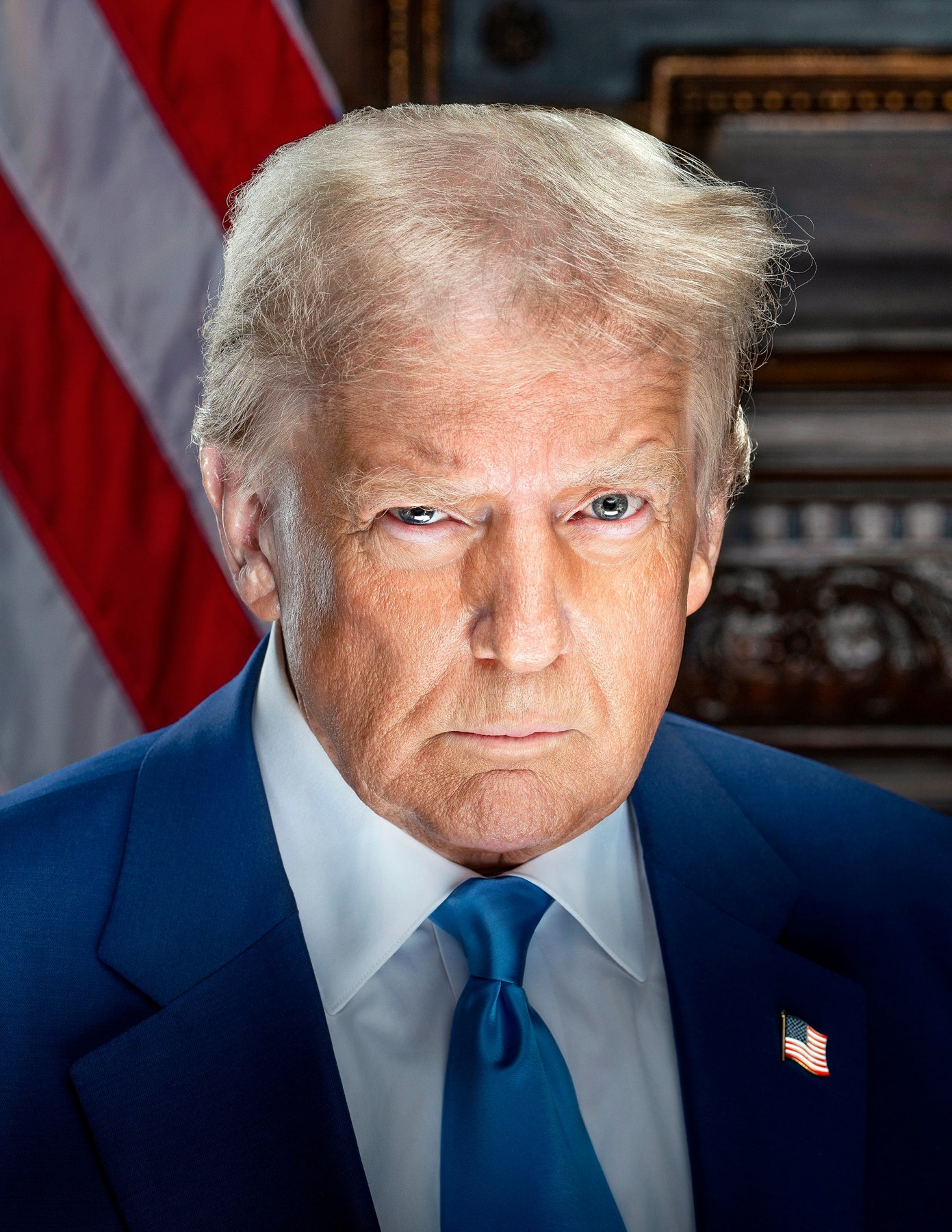
President Trump's lawsuit over the edited Kamala Harris interview led to a $16 million settlement in 2025, the backdrop against which Paramount hired Bari Weiss to run CBS News. (Wikimedia Commons, official White House portrait, public domain)
What did Scott Pelley actually accuse Weiss of?
Pelley's public statement after his firing was carefully worded. He said network management had instructed him to "inject falsehoods and bias into a politically sensitive story" and to "include assertions that are unverified," adding that "in every case, I have managed to ignore these instructions or refuse them." He did not say which story until a follow-up interview with The New York Times weeks later.
There, Pelley named it directly: a February 1 "60 Minutes" segment on the fatal shootings of Renee Good and Alex Pretti by federal Department of Homeland Security officers during the Minneapolis immigration enforcement operation. Pelley told the Times that CBS leadership pushed for "the president's version of events," a level of pressure he said he hadn't experienced in 37 years at the network, according to NBC News. A CBS spokesperson responded that Weiss raised four editorial points meant to make the piece "as strong, fair, and accurate as possible" and that "not everything she raised made it into the final piece." Pelley's reply: Weiss "knows what she said is not true."
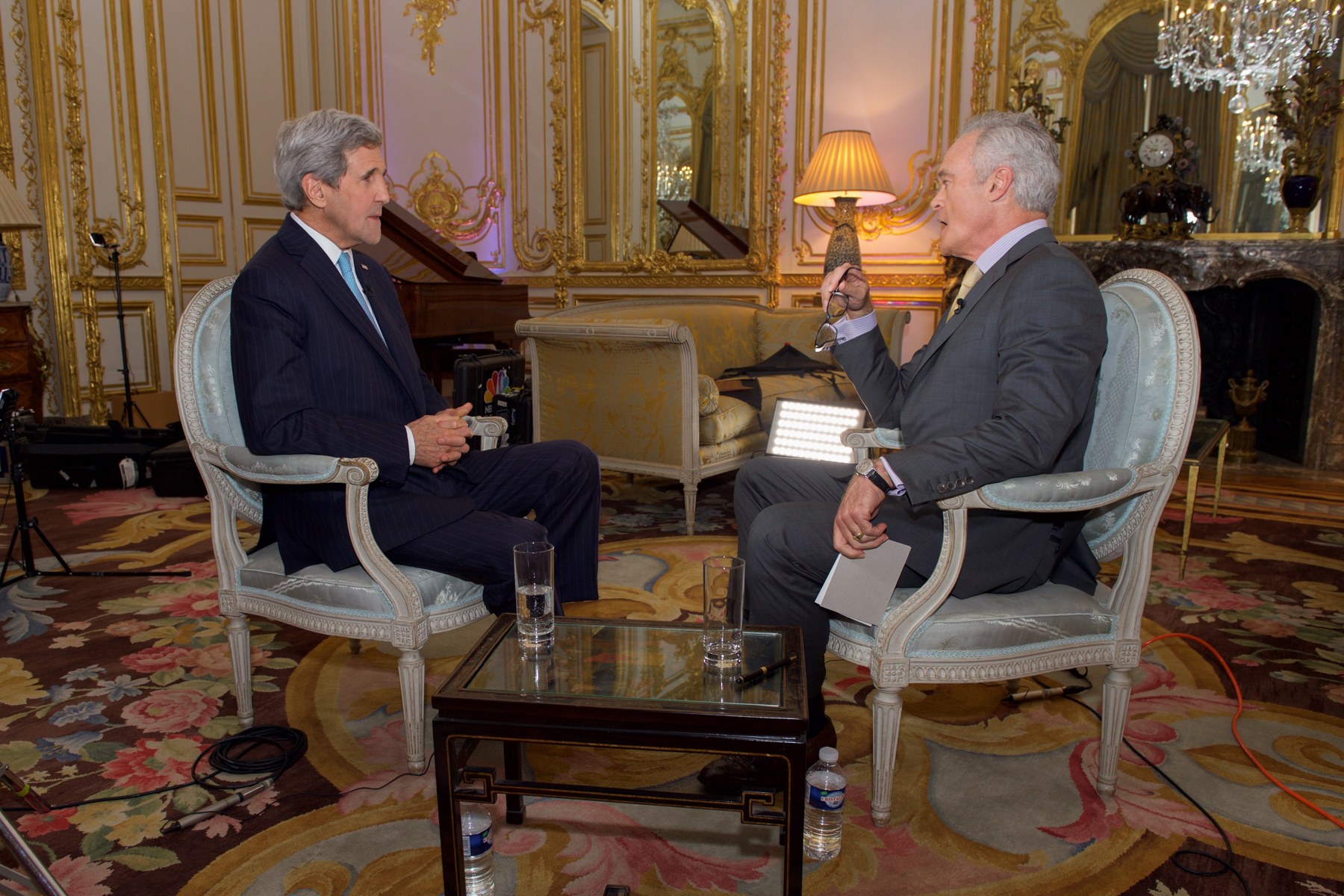
Scott Pelley, seen here interviewing then-Secretary of State John Kerry in 2015, spent 37 years at CBS News before his June 2026 firing from "60 Minutes." (U.S. Department of State photo, public domain)
What was actually in the disputed segment?
This is the part no other outlet covering the Pelley-Weiss fight seems to have checked: the segment itself is still sitting on CBS's own website, under Pelley's byline, and it is not soft on the administration. The February 1 piece opens with Sen. Rand Paul, the Republican chairman of the Senate Homeland Security Committee, describing Alex Pretti as "a man that was retreating" and stating flatly that he saw "no evidence" Pretti assaulted officers, despite Secretary Kristi Noem's public description of Pretti as a domestic terrorist who attacked federal agents. Paul told Pelley on camera that trust in DHS is broken "without question."
The segment also features Sam Trepel, a former Justice Department Civil Rights Division prosecutor who led the federal case in George Floyd's death, questioning why there was "no clear reason for the use of force" against Pretti and calling the federal government's refusal to share evidence with state investigators "very unusual" and "unprecedented" in her experience. A third source, a retired Customs and Border Protection investigator, said the shootings weren't being reviewed under normal protocols. None of that reads like a segment written to protect the administration.
So which way was the bias actually pointed?
That is the detail that complicates the story most coverage has told. The simple version, repeated across entertainment and media outlets, casts Weiss as the reformer cleaning house of a newsroom long accused of tilting against Trump, and Pelley as the old guard resisting it. Pelley's own account does not fit that shape. He is not saying the segment was too hard on the administration and he wanted it softer. He is saying leadership wanted it softer still, and he refused.
If Pelley's account is accurate, CBS's newest leadership pushed a veteran correspondent toward more favorable coverage of DHS conduct in a case where a sitting Republican senator, on camera, already doubted his own party's administration. If CBS's account is accurate, four ordinary editorial notes got recast by a fired employee as an ideological demand. Either version is a real story about how the incoming management team operates. Neither version is the tidy tale of a biased anchor getting corrected that the coverage has mostly assumed.
What did the season premiere actually tell viewers?
Whatever the truth of the dispute, "60 Minutes" chose not to explain any of it on air. According to the Associated Press account carried by multiple AP affiliates, the September 13 premiere waited until the closing seconds to acknowledge that anything had changed, when an announcer said the broadcast has "meant the same thing" for almost 60 years, "journalism you can trust," before adding there would be "new faces" this season. No mention of Pelley by name. No mention of the firings, the lawsuit, the settlement, or the on-record dispute over what pressure was or wasn't applied to a story about two Americans killed by federal officers.
That is a striking choice for a broadcast built on the premise that powerful institutions owe the public a straight account of their own conduct. The same network that paid $16 million to settle a claim that it edited an interview in a misleading way opened its new season by giving its own audience an incomplete one. Viewers who tuned in for "journalism you can trust" got, on the subject of their own trust in that journalism, nothing at all.
Why does this matter beyond one TV show?
"60 Minutes" is still the most-watched news program in the country, and its credibility fight is really a fight over who gets to define media bias and who gets to police it. CBS has not disputed a single fact Pelley put on the record, only his interpretation of intent. Pelley has not disputed that the segment on Good and Pretti aired largely as reported, including its sharpest lines against DHS. Both things being true at once is the actual story, and it is a more useful one for this audience than either side's preferred version: an institution that fought Trump in court over selective editing spent the following year selectively editing the story of its own newsroom, and told its viewers next to nothing about it.