Carnegie Mellon University posted two statements on Sept. 12 promising to review "hostile and threatening" posts by tenured professor Uju Anya, who wrote in a 2021 exchange resurfaced online that a critic should "die first, white man." What almost no outlet mentioned: Anya was already gone for the year. Her leave was a sabbatical booked long before anyone found the posts, and she is teaching in Toronto this fall with no CMU classroom, no CMU students and no CMU paycheck at stake either way.
What actually surfaced on Sept. 12
The controversy started when an X user going by @TheWuhanClan resurfaced a Feb. 17, 2021 post in which Anya, an associate professor of second language acquisition, wrote that conservative radio host Rush Limbaugh "finally did something positive in life by dropping dead. Good riddance to bad rubbish." Asked why she "only" celebrated the deaths of white people, Anya answered, "die first, white man, then ask yourself why I'm dancing," according to screenshots verified by Breitbart and TribLive.
The same thread pulled in newer posts. On the first anniversary of Charlie Kirk's assassination, Anya referred to the day as "Kirkmas." In 2024, after the attempt on Donald Trump's life in Butler, Pennsylvania, she wrote that "it was staged," comparing the footage to "a stupid Tubi movie set in the Bronx with palm trees in the background." Her X account has since gone dark.
Carnegie Mellon's statements, read closely
Carnegie Mellon's first post, on Sept. 12, read: "Dr. Uju Anya is currently on voluntary professional leave from the university and is not teaching courses on our campus this academic year. We are deeply concerned by recent hostile and threatening social media posts by Dr. Anya and are reviewing this matter closely." A follow-up added, "To be clear: These posts incorrectly imply our university's endorsement and are contrary to our community standards and values."
Days later, president Farnam Jahanian and provost James H. Garrett Jr. issued a longer joint statement saying Anya "used expletives, racial slurs, and derogatory language that demeaned, dehumanized, and intimidated," and that she had "repeatedly and prominently invoked her connection to Carnegie Mellon" in ways that "blurred the line between personal expression and academic authority," according to the Chronicle of Higher Education. The Washington Times described the university as vowing "swift action."
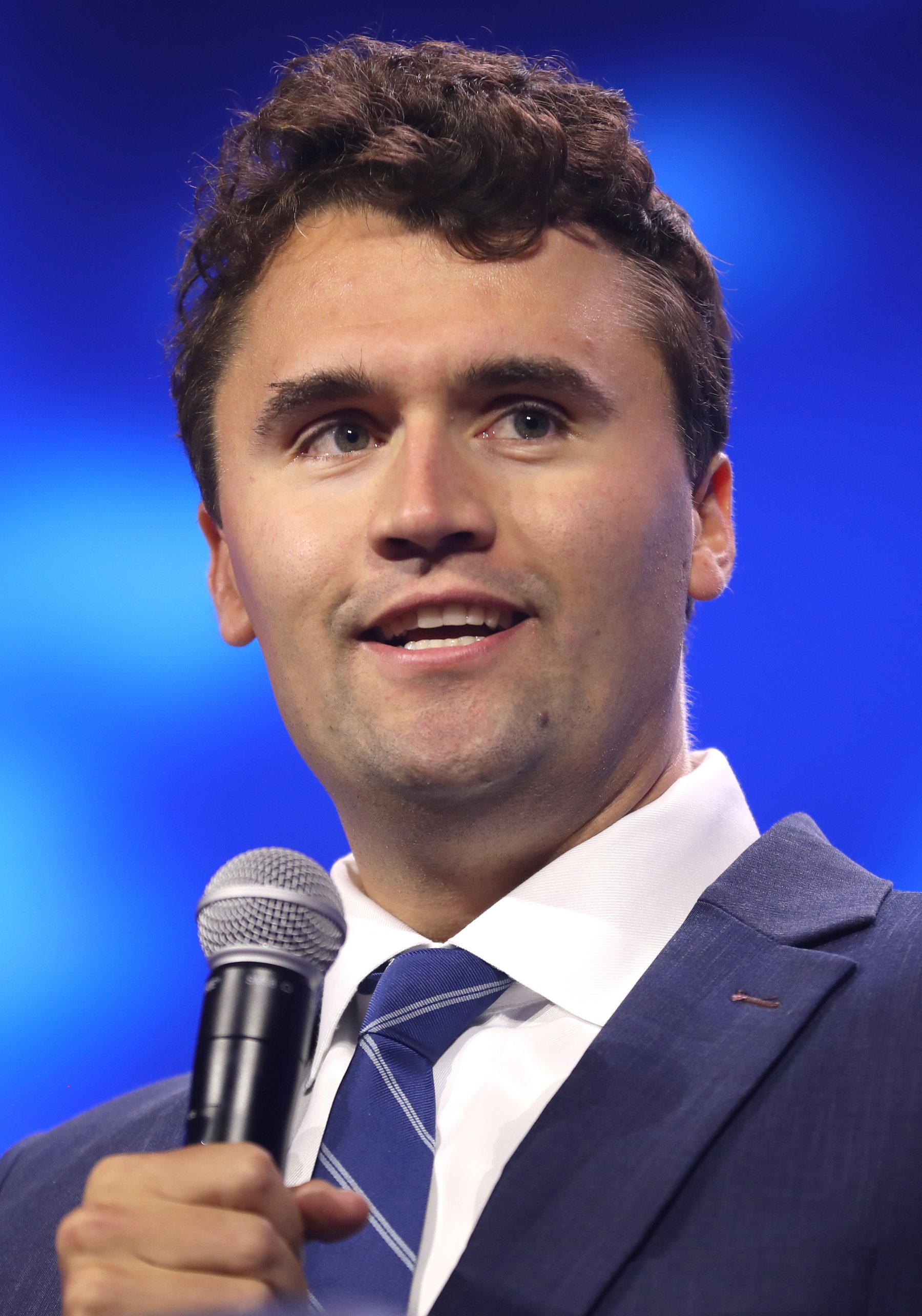
Charlie Kirk in 2023. Anya's post marking the anniversary of his assassination as "Kirkmas" was part of what drew renewed attention to her account this month. Photo by Gage Skidmore, Wikimedia Commons, CC BY-SA 2.0.
The leave was already on the books
Here is what the university's own spokesman told TribLive once reporters started asking questions: Anya's sabbatical "was previously scheduled." The Chronicle confirmed she is spending the 2026-27 academic year researching and teaching at the University of Toronto, a plan that predates the Sept. 12 backlash entirely. An out-of-office reply on her Carnegie Mellon email cites "sabbatical leave for the 2026-27 academic year," the same language a faculty member uses for an ordinary research year, not a disciplinary one.
That means "swift action" describes a trip that was booked regardless of what happened online. Carnegie Mellon has not suspended Anya, has not docked her pay and has not stripped her tenure. Through a spokesperson, the university declined to answer the Chronicle's follow-up questions about her case, pointing instead back to the same website statements. Anya, for her part, told the Chronicle nobody from the university has contacted her directly at all. "How are you going to review or investigate without addressing or personally telling, or even advising the person you're investigating and reviewing?" she said. "What kind of review is that?"
Not her first round with this exact script
Anya has been here before. In September 2022, as Queen Elizabeth II lay dying, she wrote that "the chief monarch of a thieving raping genocidal empire is finally dying. May her pain be excruciating." Carnegie Mellon said at the time it did "not condone the offensive and objectionable messages," then took no disciplinary action, citing free expression. More than 3,000 academics signed a letter backing her.
Anya has said the 2022 post came from grief tied to her family's experience in the Nigerian Civil War, telling the Pittsburgh outlet 1Hood that she had "an emotional reaction" rooted in generational trauma. That explanation may or may not satisfy critics, but it is on the record and it predates the current controversy by four years, which makes this month's furor a repeat performance rather than a first offense.
What happened to professors who wrote less
Compare that with Clemson University, a public school bound by the First Amendment in a way private Carnegie Mellon is not. In the weeks after Kirk's killing last September, Clemson fired assistant professor Joshua Bregy for resharing a Facebook post that read, in part, "I'll never advocate for violence in any form, but it sounds to me like karma is sometimes swift and ironic. As Kirk said, 'play certain games, win certain prizes.'" Clemson fired a second faculty member, Melvin Villaver Jr., around the same time for posts that called Kirk a racist and mocked his death more directly, according to South Carolina Daily Gazette.
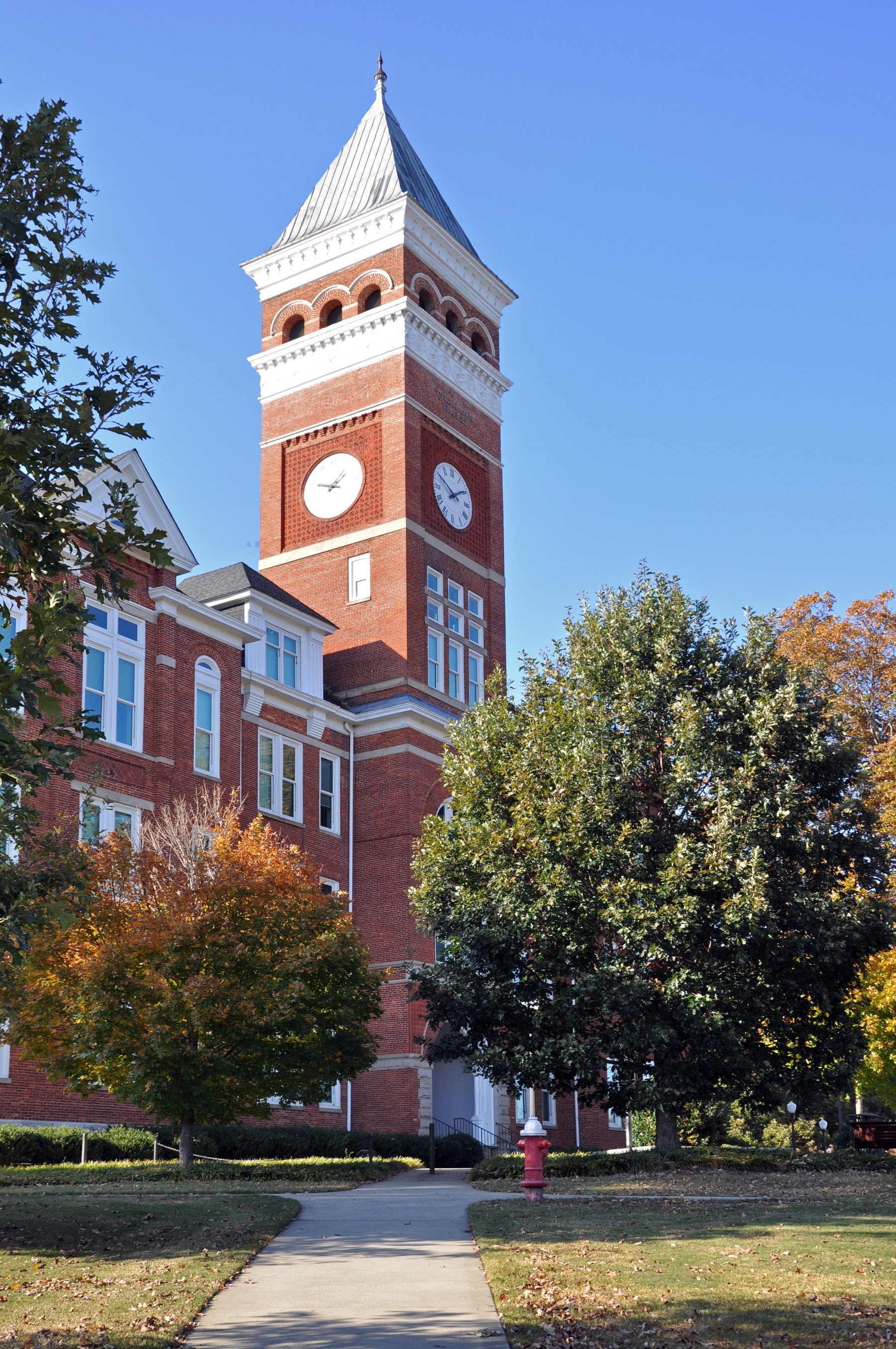
Tillman Hall at Clemson University. As a public institution, Clemson is bound by the First Amendment in ways private Carnegie Mellon is not, and it is Clemson that fired people fast. Photo by Indies1, Wikimedia Commons, CC BY 4.0.
Bregy sued in federal court on Oct. 3, 2025, with the ACLU of South Carolina arguing the firing violated his First Amendment rights (Bregy v. Board of Trustees of Clemson University, No. 8:25-cv-12810, D.S.C.). Villaver has not sued and remains terminated, and student journalists at The Tiger reported that classmates have pushed the university to revisit his case now that Bregy's outcome is public.
Firing fast turned out to be the expensive mistake
In January 2026, Clemson agreed to rescind Bregy's termination, pay him "throughout the original term of his employment" and provide positive references, in exchange for him dropping the suit and resigning that May, according to Inside Higher Ed. That settlement was one of several. The University of Tennessee at Knoxville paid $1.9 million to anthropology professor Tamar Shirinian, fired two days after Kirk's death over a comment on a friend's private Facebook post. Austin Peay State University paid $500,000 and reinstated a theater professor, and Ball State University paid $225,000 to a fired health administrator.
The Chronicle of Higher Education put the total near $3 million across just those settlements, and the Foundation for Individual Rights and Expression says it is tracking 17 lawsuits from public employees disciplined over Kirk-related speech. Every one of those payouts happened because a public institution moved fast against an employee and then had to answer to the Constitution for it.
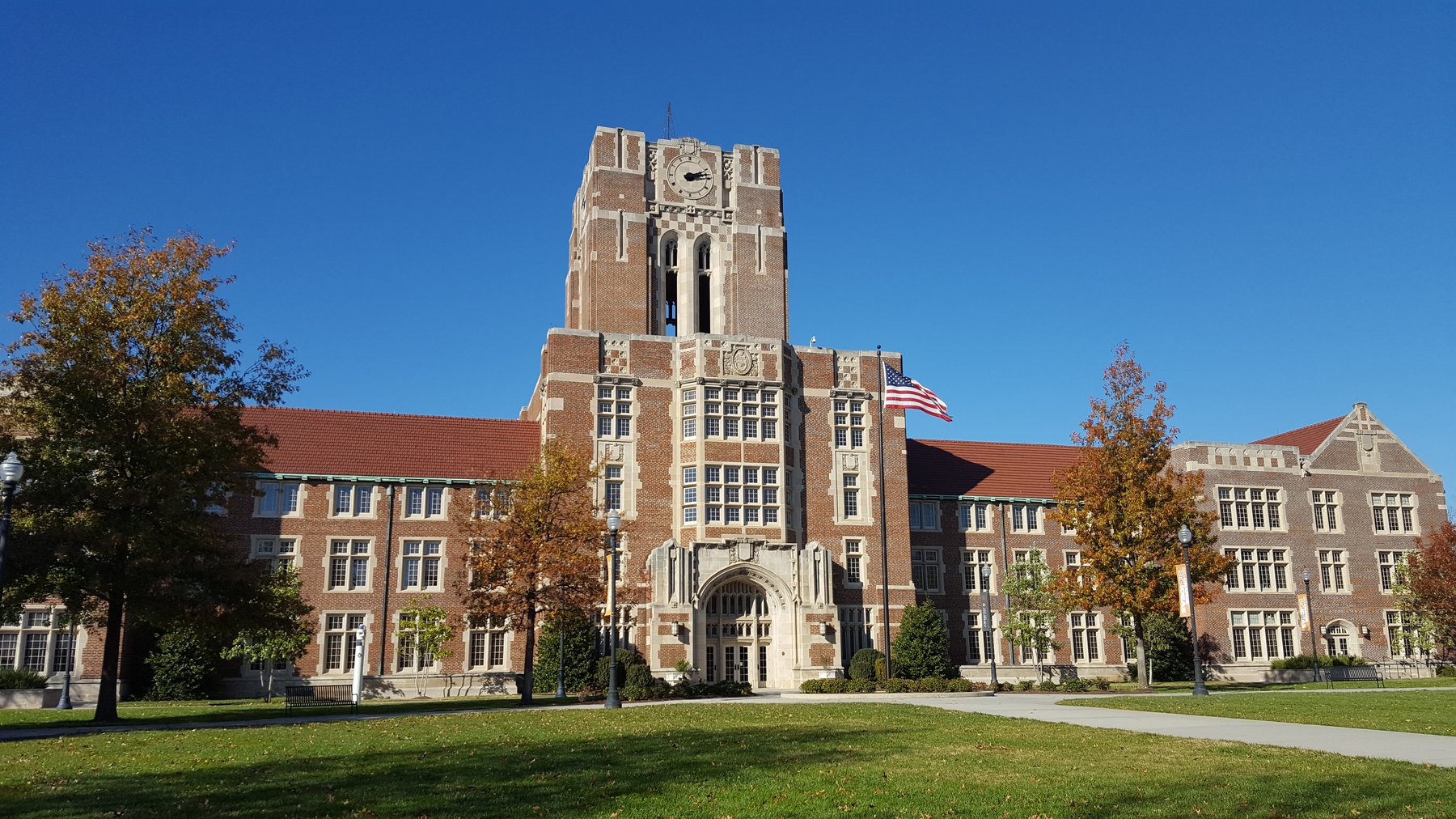
Ayres Hall at the University of Tennessee, Knoxville. UT paid $1.9 million to settle with anthropology professor Tamar Shirinian after firing her over a private Facebook comment about Kirk's death. Photo by w_lemay, Wikimedia Commons, CC BY-SA 2.0.
The legal irony nobody's framing has caught
Carnegie Mellon is private, which means the First Amendment does not bind it the way it binds Clemson or the University of Tennessee. That gives Carnegie Mellon more legal room to discipline Anya than any of those public schools had to fire their own employees, and it used none of that room. The institution with the freest hand to act did the least, while the institutions with the least legal room to maneuver acted first and are now writing checks.
Even the free-speech groups that represented fired public employees like Bregy are not treating Anya's case as separate. FIRE came to her defense this week, arguing on X that Carnegie Mellon's "disrespect in any form" language hands the university a blank check to investigate whatever it finds controversial. FIRE attorney Zach Greenberg told the Chronicle that firing a professor over extramural speech generally requires proof the speech interfered with teaching or amounted to a true threat, and that "die first, white man" does not clear that bar. Former ACLU president Nadine Strossen called the underlying standard "very demanding," noting courts "have actually enforced that standard quite strictly."
What actually happens next
Anya told the Chronicle that since the posts resurfaced she has received "hundreds of threatening calls, emails, and comments," that her home address was leaked, and that her family left their house as a result. She blames Carnegie Mellon for the fallout, saying the university "besmirched" her reputation by publicly reviewing her conduct without ever contacting her. She has not said whether she will sue.
Per her own contract, Anya has to return to Carnegie Mellon once her sabbatical ends. That is the actual test still ahead, not the statements already issued. A private university with the legal latitude to fire her chose instead to let a pre-booked trip do the talking, and the university with less room to maneuver is the one that had to write a check. Readers can decide for themselves which university actually took "swift action" and which one just said the words.