Trump's 50 percent tariffs on roughly $20 billion in Canadian goods took effect at 12:01 a.m. Saturday after Prime Minister Mark Carney walked away from the table minutes before the deadline. Canada says it will hit back dollar for dollar.
Who killed the deal depends on which side you ask
The two governments issued statements within minutes of each other Friday night, and they do not describe the same negotiation. U.S. Trade Representative Jamieson Greer said Canada backed out of terms it had already accepted. "Tonight, Canada declined to finalize the trade deal under the terms agreed earlier this week," Greer said in a statement read to reporters shortly before midnight, according to the Associated Press.
He went further in the written version, saying that "new demands and walk backs of other commitments by Canada have upended the careful balance reached in the past days," and that Ottawa was still running "flat-out prohibitions on certain American goods and services," per CTV News.
Carney told it the other way. "I have decided to suspend trade negotiations with the U.S. and have directed Canada's negotiators to return to Ottawa," his office said, blaming "last-minute changes in the U.S. proposed terms" that were "unfair, uneconomic, and called into question the reliability of any deal," according to Fox Business.
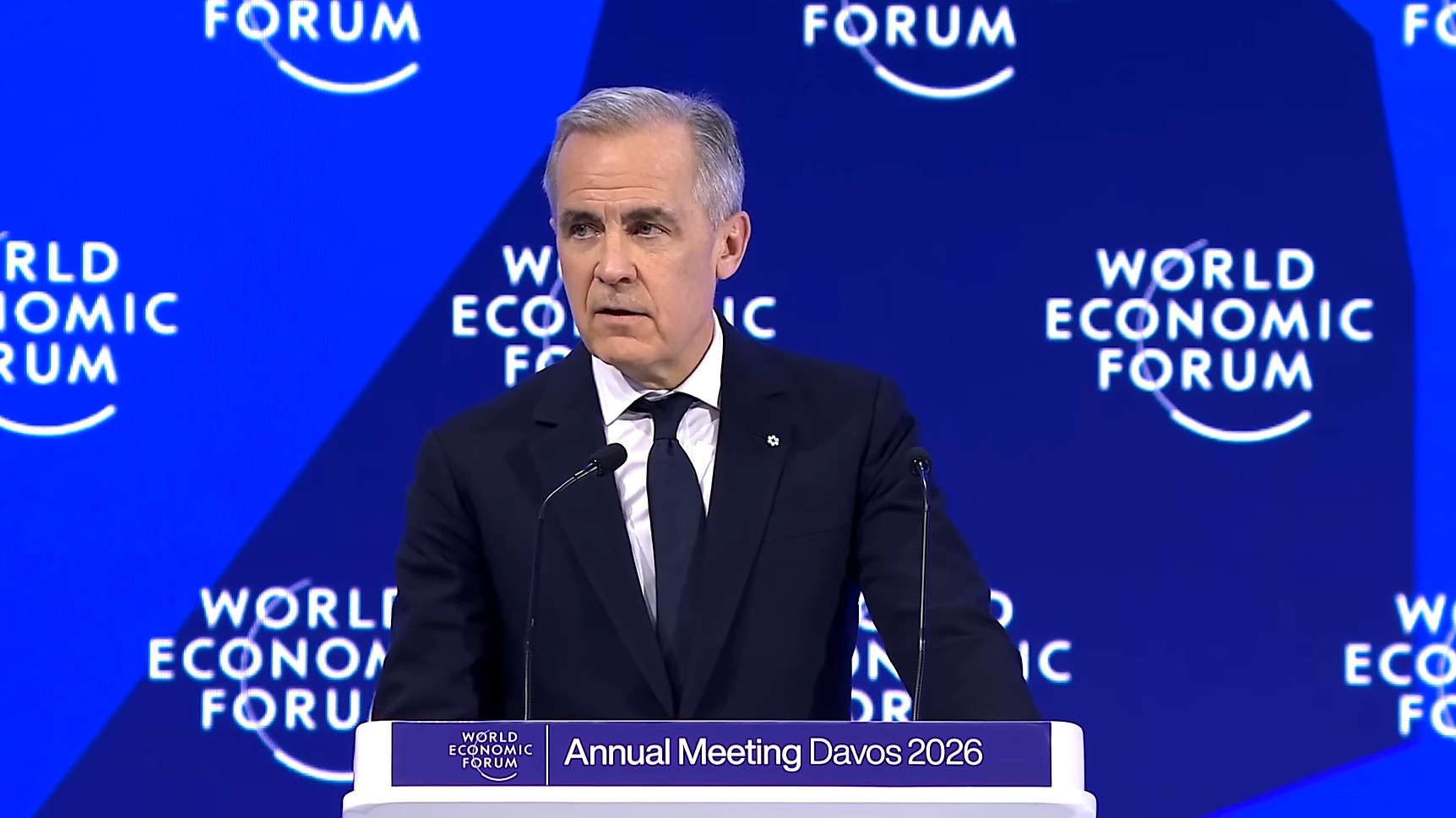
Canadian Prime Minister Mark Carney, who suspended trade talks with Washington on Friday night and ordered his negotiators home. (World Economic Forum, CC BY 4.0, via Wikimedia Commons)
What Washington says it put on the table
Greer's account lists what Canada turned down: significant tariff cuts on steel, aluminum, autos and lumber, plus a broader economic and national security partnership covering export controls, transshipment, digital trade and critical minerals. "This is a missed opportunity for Canada to partner with the United States, which is the fastest growing economy in the G7," he said, per Fox Business.
Sources briefed on the draft told Al Jazeera the agreement would have cut the tariff on Canadian-built vehicles to 15 percent from 25 percent and halved the steel and aluminum rate to 25 percent. That was never going to be an easy sell in Ottawa. Conservative leader Pierre Poilievre spent Friday telling Carney to reject it outright, saying "one-sided tariffs on Canadian industry would be a bad deal," CTV reported. A Leger poll released Wednesday found 56 percent of Canadians opposed any further concessions.
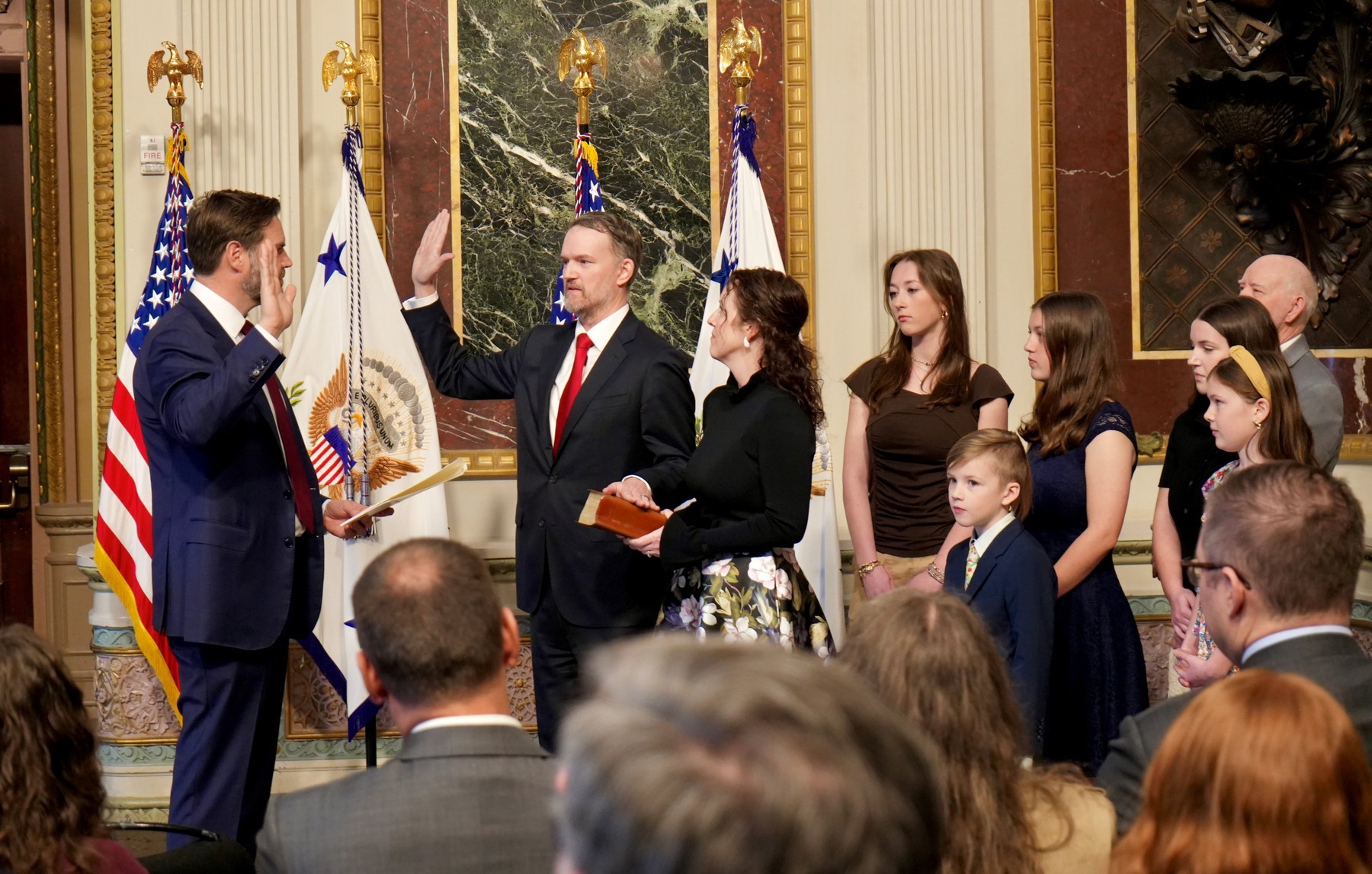
Vice President JD Vance swears in Jamieson Greer as U.S. Trade Representative in 2025. Greer led the American side of the Canada talks and announced their collapse Friday night. (Office of the U.S. Trade Representative, public domain, via Wikimedia Commons)
The tariffs did not need a new order to hit
This is the part that got lost in the countdown coverage. Trump did not have to sign anything Friday night for the duties to land. He had already paused the tariffs for three days on Aug. 18, and that proclamation set a hard restart date. When Saturday arrived without a signed deal, the 50 percent rate switched on by operation of the document itself.
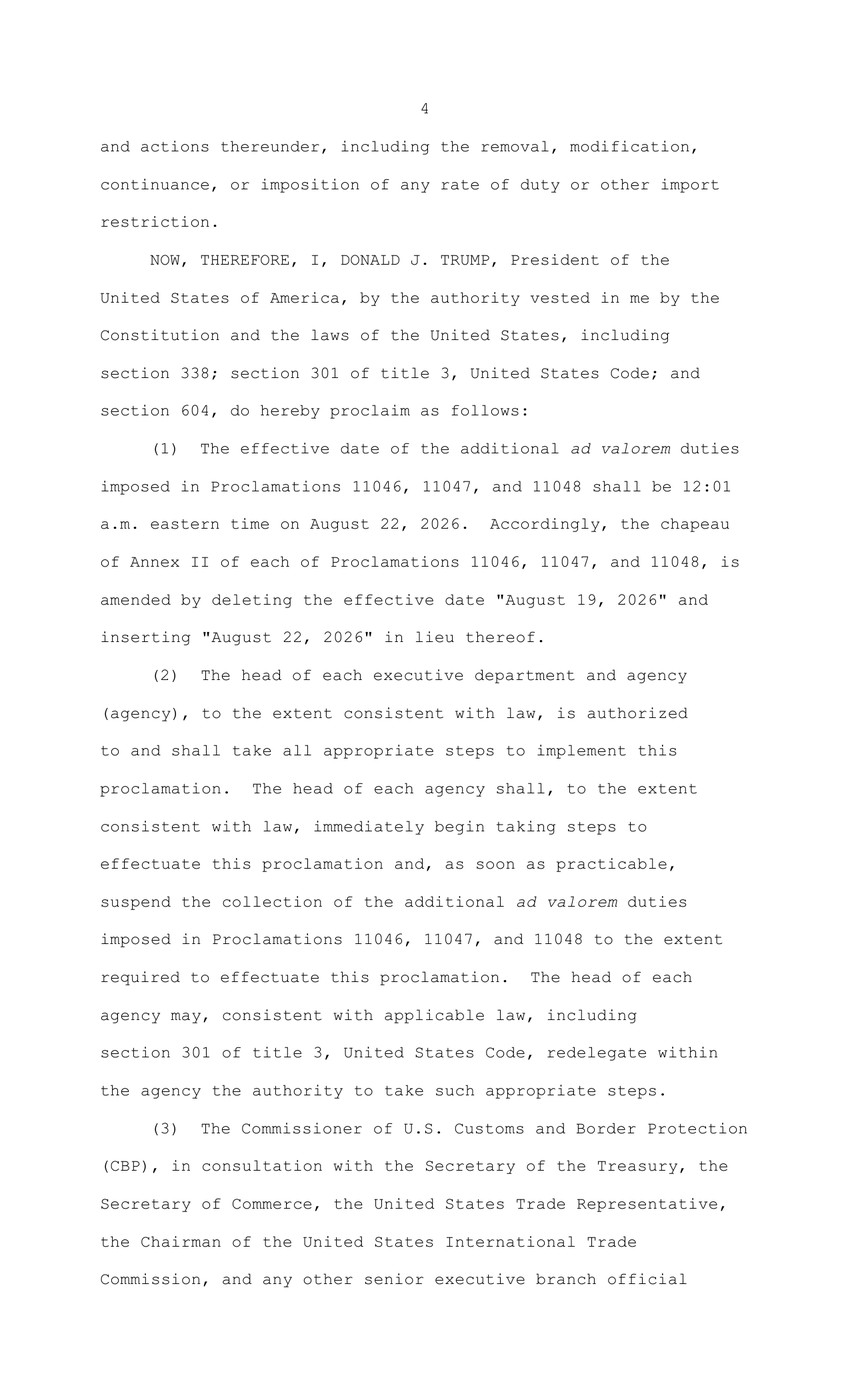
The underlying duties come from three July 20 proclamations invoking Section 338 of the Tariff Act of 1930, a Depression-era provision that lets a president impose duties up to 50 percent on a country found to be discriminating against American commerce. Trump used it against Canada's alcohol ban, its cheese quotas and its motor vehicle tariff scheme.
Canada is matching the tariffs dollar for dollar
Carney did not wait for morning to answer. "At midnight tonight, the U.S. intends to impose a 50% tariff on roughly $28 billion of Canadian goods. Canada will match those tariffs dollar for dollar to protect our workers and businesses," he said, per CTV. The gap in the numbers is currency, not disagreement: CTV and the AP both put the American figure at US$20 billion.
He also promised new subsidies for affected Canadian industries, on top of what he described as nearly $25 billion in support already spent over the past 18 months. Ontario Premier Doug Ford backed him immediately, posting that "Team Canada needs to stand together more united than ever before."
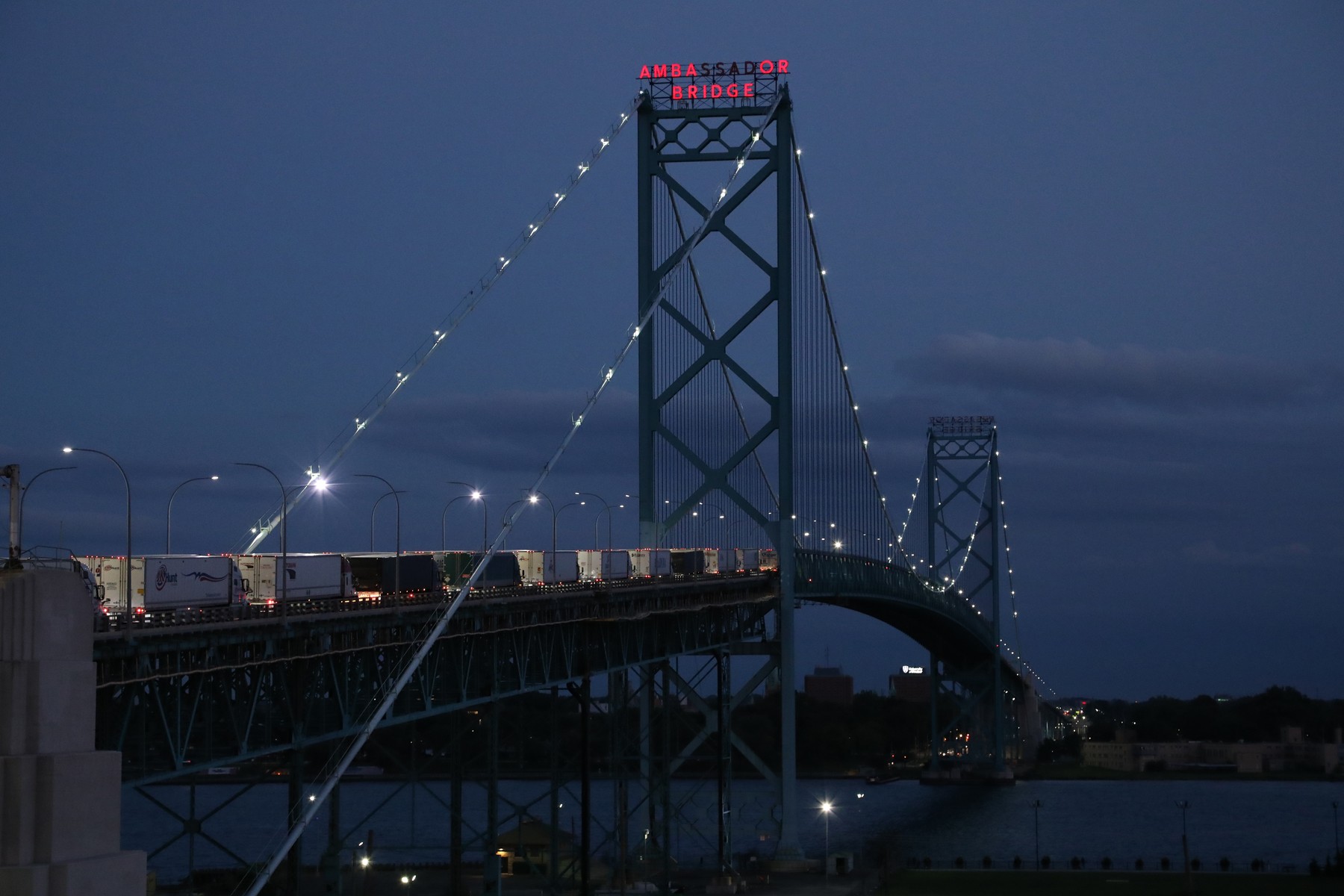
Freight trucks queue at dusk on the Ambassador Bridge, the busiest international crossing in North America, linking Detroit and Windsor, Ontario. (U.S. Customs and Border Protection photo by Charles Csavossy, 2022, public domain, via Wikimedia Commons)
What actually gets taxed
The 50 percent rate covers about 5 percent of everything Canada ships south in a year, according to the AP. The product list runs from plywood, cement and liquor to electrical equipment, hockey sticks and tongue depressors. It is a narrow list by design, aimed at the sectors where Washington says Canada shut American producers out first.
The broader relationship is not narrow at all. The two countries traded $880 billion in goods and services last year, and nearly 330,000 people plus $2 billion in freight cross the border every day. Candace Laing, president of the Canadian Chamber of Commerce, called the new tariffs "a body blow to North American competitiveness."
No new talks are scheduled
The AP reports flatly that no further negotiations have been planned. That leaves the renewal of the U.S.-Mexico-Canada Agreement hanging: Washington has already opened formal talks with Mexico on revamping the pact Trump negotiated in his first term, while talks with Canada have not started at all.
Barry Appleton, a senior fellow at the Center for International Law at New York Law School, laid out why an off-ramp just got harder to find. "Canada told the Americans in advance that if these tariffs landed, it would stop negotiating and retaliate," he told the AP. "Both sides have now committed themselves in public, which is how escalation stops being a choice."
The leverage question is settled for now
Three days ago the White House said Canada had committed to dropping its alcohol ban, loosening its dairy quotas and fixing its auto tariff scheme. Newfoundland and Labrador Premier Tony Wakeham said the premiers had all agreed to put American liquor back on the shelves as a show of good faith, CTV reported. Then Ottawa asked for more on steel, aluminum, autos and lumber, and the whole thing came apart in the last hours.
Trump spent Friday sounding unbothered. "I only make good deals," he told reporters on the tarmac at Joint Base Andrews, adding that talks were "moving along" and that "we have to take care of our farmers." He was right about one thing: he never moved his own deadline a second time. Canada blinked first in August, then walked out on the terms it had already accepted, and now both countries are paying for it at the border.