Richmond Fed President Tom Barkin told a Baltimore audience Tuesday that business conditions are "if anything, firming." His own bank's survey, published the same day, found factory orders shrinking and input costs up 7 percent. Families are the ones caught in between. In his words, many shoppers are already "moving from beef to chicken to even cheaper proteins, like peanut butter."
Barkin Made the Case for Higher Rates on a Rosy Read of Business
Barkin gave the speech, titled "Why Hike?", to CFA Society Baltimore on September 22. It was his explanation for last week's quarter-point rate increase, the Fed's first hike since mid-2023. His case rested on two claims: inflation won't come down by itself, and the economy is strong enough to take tighter money.
On the second claim he did not hedge. "The economy and the labor market remain on solid footing," Barkin said. "We hear from businesses that economic conditions are, if anything, firming." A few paragraphs later he added that "manufacturing contacts are starting to sound more upbeat."
Barkin does not vote on the rate-setting committee this year, but he runs the regional bank that covers Maryland, Virginia, the Carolinas, the District of Columbia and most of West Virginia. And he asked for more hikes. "Last week's hike will help. Will additional hikes be required, and how many? We'll see," he said, as Fox Business reported. Reuters led its story with the "firming" line.
His Own Survey Says Factory Orders Shrank in September
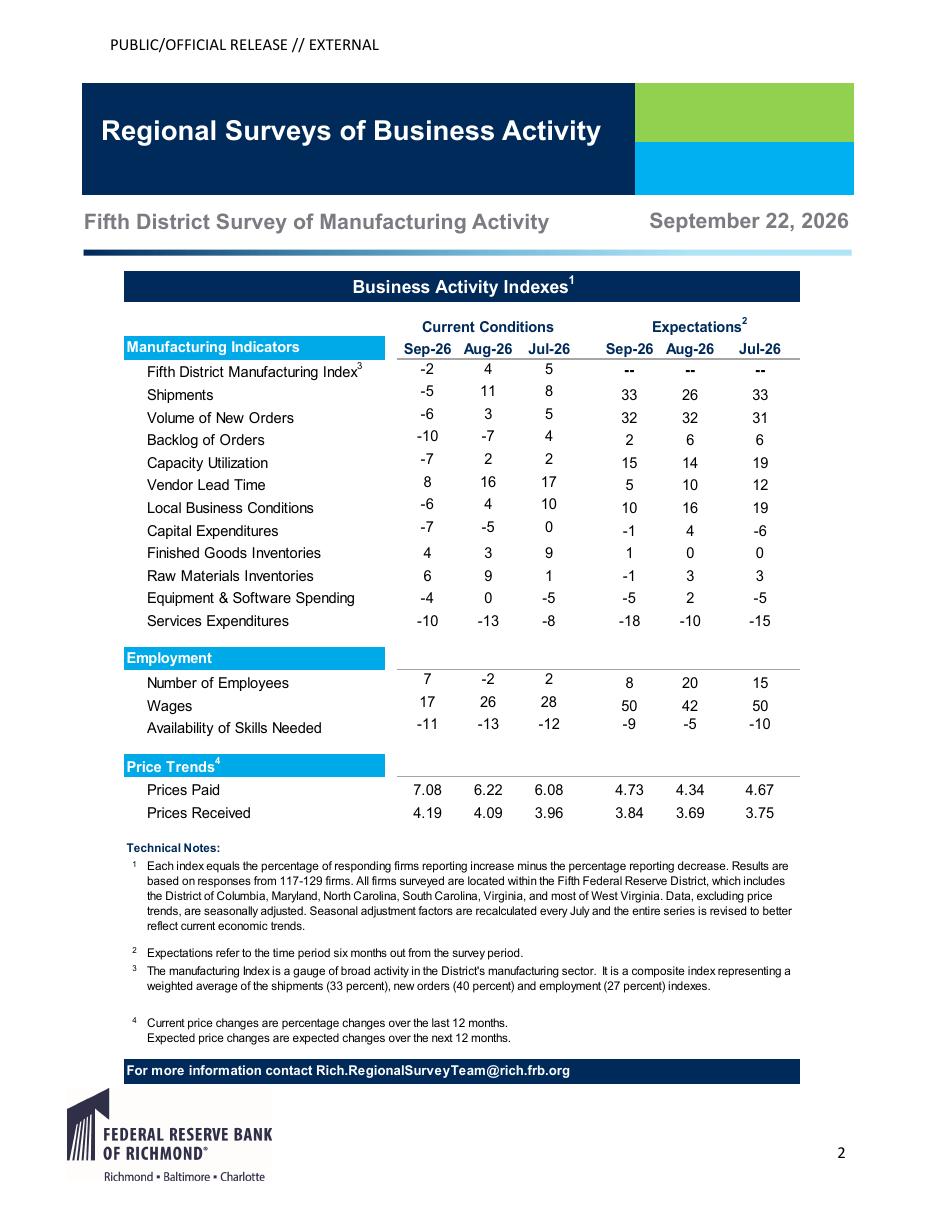
Barkin's bank publishes a monthly survey of manufacturers in those same states. The September edition came out September 22, the same day as the speech. The headline index fell to -2 from 4 in August. Shipments dropped to -5 from 11, and new orders slipped to -6 from 3.
Official record
Federal Reserve Bank of Richmond, Fifth District Survey of Manufacturing Activity, released September 22, 2026. Page 2 shows the full index table, based on responses from 117 to 129 firms.
"Fifth District manufacturing activity edged down in September, according to the most recent survey from the Federal Reserve Bank of Richmond."
Federal Reserve Bank of Richmond, September 22, 2026
Read or download the full 2-page survey (PDF) · richmondfed.org manufacturing survey page
The softness goes past the headline. Backlogs of orders fell to -10. Capacity use fell to -7. Capital spending came in at -7, and equipment and software spending turned negative at -4. Each index is the share of firms reporting an increase minus the share reporting a decrease, so a negative number means more plants are cutting back than growing.
One Number Kept the Index From Falling Further
This is the part of the release that got little attention. Richmond's footnote says the headline index is a weighted average: 40 percent new orders, 33 percent shipments and 27 percent employment. Two of those three pieces went negative in September. The only one that rose was hiring, which climbed to 7 from -2.
Run the numbers and the result is plain. If employment had stayed at August's -2, the same formula gives roughly -4.6 instead of -2. Hiring held up the September reading while orders and shipments fell. Even that support may not last. The survey's index for expected hiring six months out fell to 8 from 20.
Firms still expect better days. Expected shipments (33) and new orders (32) six months out stayed strongly positive, and that is probably the "upbeat" talk Barkin hears from his contacts. But hopes about next spring are not the same as conditions "firming" now. On current activity, his own data points the other way.
Factories Are Paying 7 Percent More but Charging About 4 Percent More
The inflation numbers in the survey are where Barkin has a point. They are also where the pain lands on Main Street. Manufacturers said the prices they pay rose 7.08 percent over the past 12 months, up from 6.22 percent in August and 6.08 percent in July. The release itself said prices paid growth "increased notably."
What they charge customers barely moved: 4.19 percent, compared with 4.09 percent in August. That leaves a gap of almost 2.9 percentage points between costs and selling prices, up from about 2.1 points in each of the prior two months. A factory eating a 3-point squeeze can do two things. It can cut, which matches the falling orders and capital spending, or it can raise prices later. Firms told the Richmond Fed they expect prices received to rise 3.84 percent over the next year.
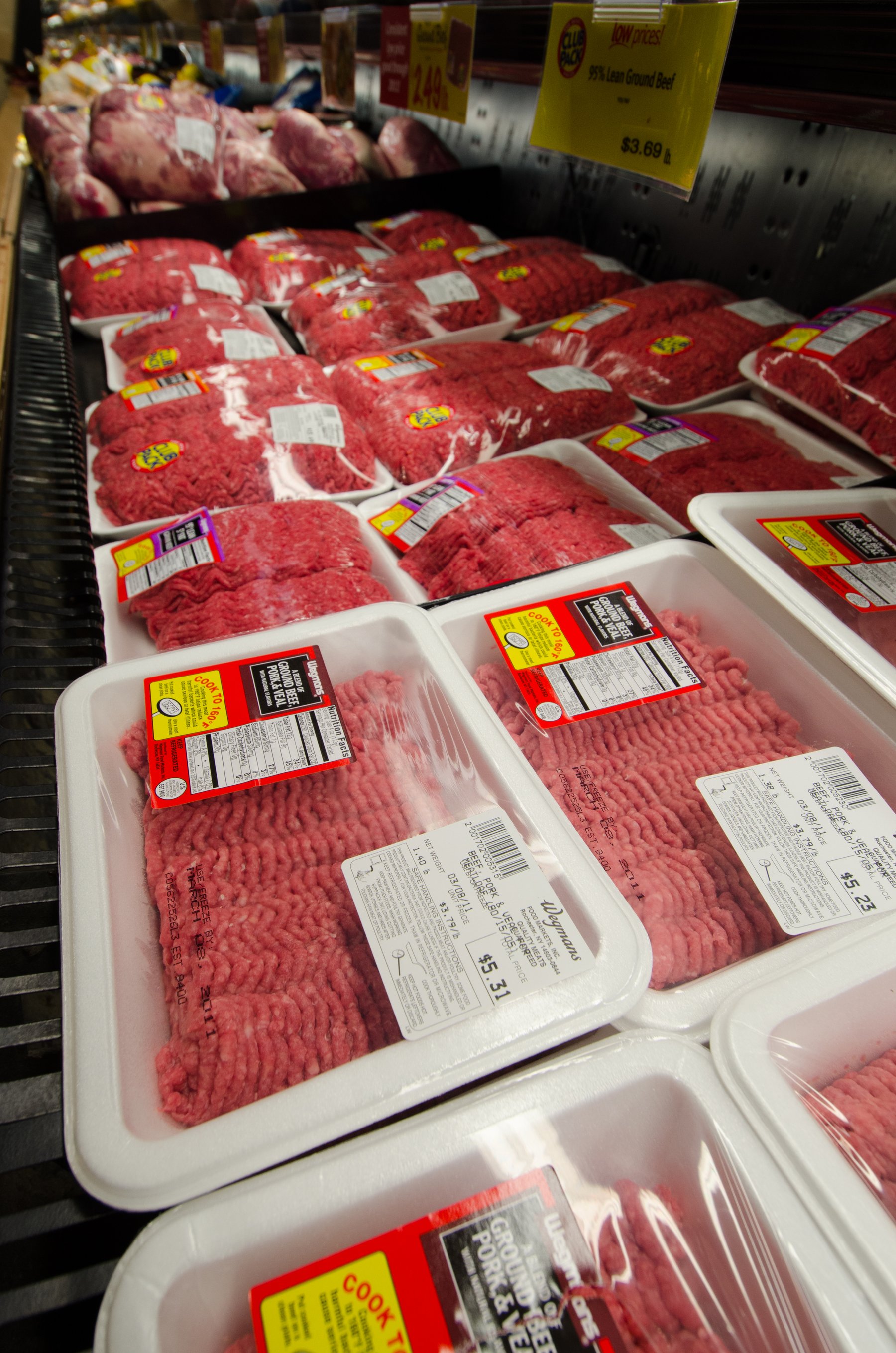
Ground beef in a grocery store meat case in Fairfax, Virginia, inside the Richmond Fed's district. Barkin said struggling shoppers are moving "from beef to chicken" and on to peanut butter. (USDA photo by Lance Cheung, Wikimedia Commons, public domain)
Service Businesses Rate Their Local Economy Negative, Too
The bank released a companion survey of non-manufacturing firms the same day, drawing on 223 to 249 retailers, service companies and other businesses. Revenues came in at 0 and demand at 2. The release called that "flat."
The question that tests Barkin's "firming" claim most directly is the one that asks firms about business conditions in their own area. Service firms answered -8 in September, after -12 in August and -5 in July. That makes three straight negative months. Manufacturers answered -6 in September, down from 4. Their six-month outlook for local conditions dropped to 10 from 16 and is down from 19 in July. Service firms' outlook fell to 0 from 9.
Service businesses also expect their own costs to keep climbing. They put expected growth in prices paid over the next 12 months at 5.06 percent, up from 4.39 percent in August and 4.17 percent in July. On current conditions, the Fed president's words and the Fed bank's numbers do not match.
Barkin Admitted Families Are Living "Closer to the Edge"
The most honest part of the speech was about ordinary households. Barkin said consumers keep spending, but "spending is disproportionately driven by those who are well off, and that group has gotten even wealthier, thanks to remarkable asset price growth in recent years."
For everyone else he gave a list any working family will recognize: trading down to store brands, "buying used instead of new," choosing to repair rather than replace, "dropping coverages or opting out of insurance altogether," and "saving less, or even tapping into savings." His summary: "They're making ends meet by living a little closer to the edge, but they're still spending."
That is the household the Fed is now tightening on. Barkin pointed to a "blowout retail sales report." The Census Bureau's advance August estimate did show sales up 1.2 percent. But the bureau notes the figures are adjusted for seasonal swings "but not for price changes," so some of that gain is higher prices, not more stuff in the cart.
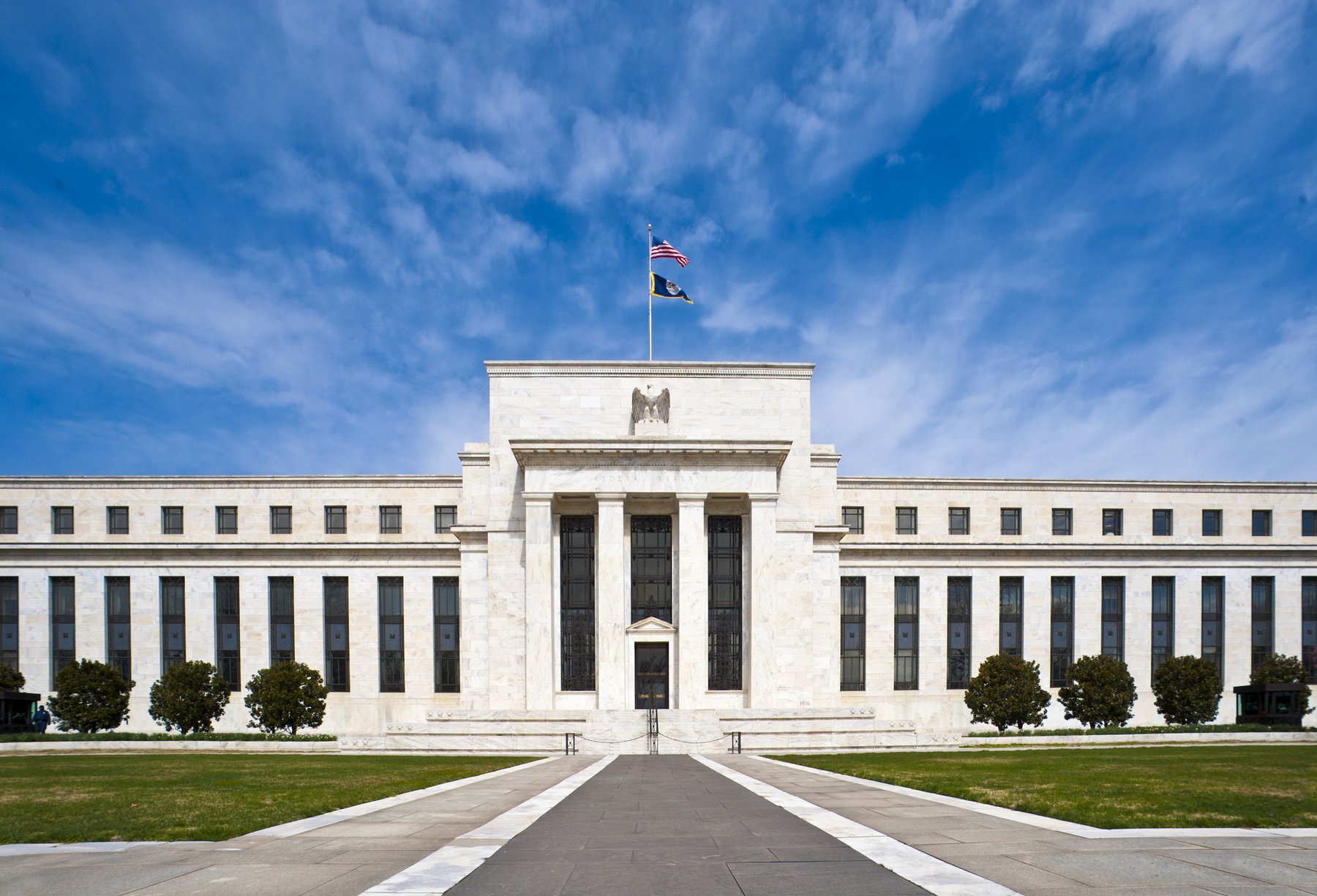
The Federal Reserve's Eccles Building in Washington, where the rate-setting committee raised its target range by a quarter point on September 16. (Federal Reserve photo, Wikimedia Commons, public domain)
What Another Hike Would Mean for Your Mortgage and Your Paycheck
Barkin's inflation diagnosis is serious and deserves a hearing. He noted that headline PCE inflation was 3.7 percent in July, that core PCE was 3.3 percent, and that "more than 60 percent of the PCE index is rising faster than 3 percent year over year." In other words, the problem is not only gas and tariffs. He also cited the Richmond Fed's own finding that growth in prices received has averaged 3.5 percent since late 2023, nearly double the pre-pandemic pace.
Markets are already pricing in more tightening. Fox Business reported that the CME FedWatch tool shows a 48.3 percent chance of one more quarter-point hike by year's end and a 40.7 percent chance of a second. Borrowers are paying for it now. Freddie Mac's weekly survey put the average 30-year fixed mortgage at 6.95 percent on September 17, up from 6.66 percent on August 27.
The Fed can raise rates to squeeze demand. It cannot bring down a factory's steel bill, a trucker's diesel costs or the price of beef. When plants face a 3-point cost squeeze and orders are already falling, higher borrowing costs hit the demand side first. Workers feel that in hours and hiring long before shoppers feel it at the register.
The Fed Should Show Its Own Data Before Asking for More
Barkin closed with a parenting line: "You have to ask a lot of questions, pay close attention to every signal." That is fair advice, and it points straight back at his own bank's survey. On the day he called conditions "firming," his survey had factory orders, shipments, backlogs and local business conditions all below zero, with input costs rising faster than at any point in the past three months.
Americans already trading ground beef for peanut butter deserve policymakers who read their own reports before deciding how many more hikes to hand out. The next Richmond Fed manufacturing survey comes out next month. That survey will be the first real test of whether "firming" was a forecast or wishful thinking.
Top photo: the Federal Reserve Bank of Richmond. Photo by Ben Schumin, Wikimedia Commons, CC BY-SA 2.0.