The Federal Reserve's rate-setting committee wraps up a two-day meeting Wednesday afternoon, and traders now put the odds of a rate hike at roughly 90 percent, according to CME's FedWatch tool. That would be the first increase in three years, and it would come from a Fed chairman Donald Trump himself picked for the job, over the president's own public objections just days before the vote.
Why Would Trump's Own Fed Chair Raise Rates on Him?
Kevin Warsh was sworn in as the 17th chairman of the Federal Reserve on May 22, after the Senate confirmed him in a bitterly divided 54-45 vote, replacing Jerome Powell. Trump spent years attacking Powell for refusing to cut rates fast enough. Warsh was supposed to be different.
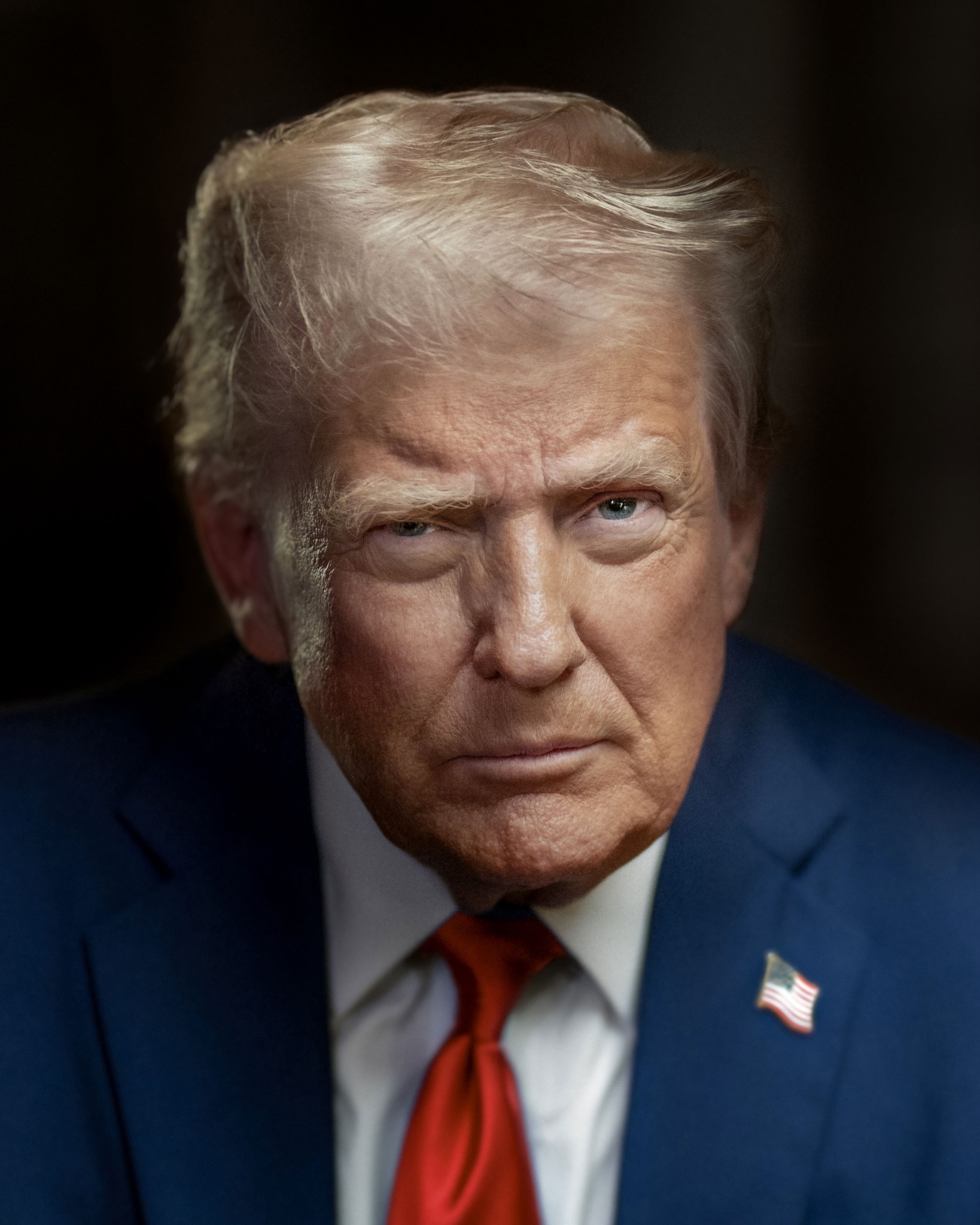
President Donald Trump. Official White House portrait, 2025, public domain, via Wikimedia Commons.
Instead, Warsh used his Jackson Hole speech on August 28 to tell the room that recent inflation readings "do not tell me that underlying trends have meaningfully improved," and warned that if things did not turn around soon, "we have work to do." That is about as close as a sitting Fed chairman gets to announcing a hike in advance.
What Does the Actual Inflation Data Show?
The Bureau of Labor Statistics released the August Consumer Price Index on September 11, and reading the primary release itself clears up something most coverage has blurred together. Headline prices rose 0.4 percent for the month, up sharply from July's 0.1 percent, while the annual rate held at 3.4 percent.
Core prices, which strip out food and energy, actually sped up on a monthly basis, rising 0.3 percent in August after 0.2 percent in July. The annual core rate ticked down to 2.4 percent from 2.5 percent. Both things are true at once: the yearly trend looks a little better, but the pace within the month is re-accelerating, which is exactly the kind of number that pushes an inflation-focused Fed toward action rather than patience. Gasoline alone, up 3.9 percent for the month, accounted for more than a third of the entire headline increase, and shelter costs rose 0.3 percent, the fastest pace since April, according to the BLS release.
What's Driving Prices That the Fed Cannot Fix by Itself?
Part of the problem sits outside the Fed's control entirely. Oil and gasoline prices have jumped as the Iran conflict has flared back up, and that kind of supply shock does not respond to interest rate policy the way domestic demand does. Kristin Forbes, an economist at MIT's Sloan School, told the Associated Press that "given what everyone has been through in the last few years of high inflation, consumers are more sensitive, companies are more sensitive, they raise prices faster," adding that the risk runs toward inflation staying elevated rather than fading quickly.
Separately, the AP reported that surging investment in AI data centers has been adding to inflationary pressure and pushing up longer-term interest rates on its own, even as some of the largest AI companies now discuss slowing the pace of development. That combination, a geopolitical oil shock plus a domestic investment boom, is part of why Warsh is not waiting for a cleaner data picture before acting.
How Hard Has Trump Pushed Back?
The administration has not been subtle. Ten days before the meeting, Trump posted on Truth Social that the Fed "must get smart" and declared, "BE PATRIOTS for a change." He added that "high interest rates put the U.S.A. at a very unfair disadvantage, and I won't allow that to happen," and threatened to cut off trade with countries that run a surplus with the United States if rates do not come down.
By Sunday, Trump was still at it, telling reporters "the United States is so strong we should be paying the lowest interest rate in the world," according to the Associated Press. Vice President JD Vance made the pocketbook case directly, saying the White House wants lower rates so more Americans can afford a home, and added, "it would be nice to have some help from the Federal Reserve."

The Marriner S. Eccles Federal Reserve Board building in Washington, D.C. Photo by AgnosticPreachersKid, Wikimedia Commons, CC BY-SA 3.0.
Is the Fed Staying Above Politics, or Wading Into It?
Kevin Hassett, Trump's top economic adviser, tried to have it both ways in one weekend of television. On CNN he said Trump "100% respects the independence" of Warsh. On Fox News he argued the opposite case for restraint: "I'd be wary of a rate hike... I think if you want an independent Fed, then one thing the Fed does is it stays out of the way of elections."
That argument cuts against Hassett's own boss. The meeting lands seven weeks before the midterms, in which affordability has become one of the defining issues on the ballot. A hike this close to an election is unusual by the Fed's own informal customs, and it is happening anyway because Warsh has staked his credibility on treating inflation, not the calendar, as the deciding factor.
What Would a Hike Actually Cost You?
A quarter-point move would take the federal funds rate from its current 3.50 to 3.75 percent range up to 3.75 to 4.00 percent, raising the floor under credit card APRs, auto loans, and small-business lines of credit almost immediately. Those are the loans ordinary households actually carry every day, and they reprice faster than a 30-year mortgage does.
Mortgage rates are the counterintuitive part of this story. Michael Feroli, chief U.S. economist at JPMorgan Chase, wrote in a preview of the meeting that "the Chair's repeated stern warnings on inflation intolerance risk institutional credibility absent some action to back it up." If Warsh holds instead of hiking, bond investors could read that as a loss of nerve on inflation and demand higher yields on long-term Treasurys, the same securities that set mortgage pricing. A hike delivered with a credible inflation message could, paradoxically, help keep a lid on the 30-year rate more than a hold would, which is exactly what happened after Warsh failed to convince markets he was serious following the Fed's July meeting.
Is This a One-Time Move or the Start of Something Bigger?
Matthew Luzzetti, chief U.S. economist at Deutsche Bank, told the Associated Press it is rare for the Fed to raise rates just once, since a single quarter-point move barely registers in the broader economy. Wall Street futures currently price in three separate hikes, spread across September, December, and next March.
How Warsh frames Wednesday's move will matter as much as the move itself. If he describes it as reversing the three rate cuts the Fed made in late 2025 over unemployment fears, Luzzetti said, that points toward two more hikes ahead. If he calls it "risk management," a hedge against inflation that the Fed still expects to cool on its own, that points toward a shorter campaign. Warsh has so far declined to say which one it is, and some members of the rate-setting committee reportedly still believe inflation outside food and energy will fade on its own without further hikes.
What This Means Heading Into the Midterms
Trump picked Warsh to be an inflation hawk who would eventually hand Republicans the rate relief that Powell never delivered. Instead, seven weeks before voters decide the midterms, that same hawkishness is producing a hike Trump publicly begged his own appointee not to make. Whatever Warsh announces Wednesday, the number that matters most to families is not the federal funds rate. It is the 3.4 percent inflation rate that got the Fed to this point in the first place, and whether the White House's tariff and energy policies bring that number down before voters render their own verdict in November.