Trump's Justice Department told the Supreme Court Monday that a Kentucky parish has a right to build its Lourdes prayer grotto. Park Hills' zoning board approved the shrine 4-1 back in 2021, and even a win in January would only send the case back to Kentucky.
What did the Justice Department tell the Supreme Court?
On Nov. 23, Solicitor General D. John Sauer filed a 39-page brief backing the Missionaries of Saint John the Baptist in Missionaries of Saint John the Baptist, Inc. v. Frederic, No. 25-1131. The Catholic group owns Our Lady of Lourdes Church in Park Hills, a small suburb of Cincinnati, and wants to build a grotto into the grassy hill next door.
The government's answer is blunt. Blocking the shrine on the lot beside the church "unquestionably" qualifies as a "substantial burden" on religious exercise under the Religious Land Use and Institutionalized Persons Act, the 2000 law known as RLUIPA. The brief says Kentucky's highest court used "an atextual four-factor test" to rule the other way.
Read the last page, though. The brief does not ask the justices to order the grotto built. Its conclusion asks only that the Kentucky judgment "be vacated and the case remanded for further proceedings."
What exactly does the parish want to build?
Per the DOJ brief, the plan is a roughly 16-foot by 39-foot grotto with a shrine to the Virgin Mary, a plaza, a walking path and a retaining wall, set into a small hill beside the church parking lot. It honors the 1858 apparition to Saint Bernadette at Lourdes, France, where the parish says Mary asked that "a chapel must be built" next to the grotto. That is why the parish insists the shrine must sit beside the church.
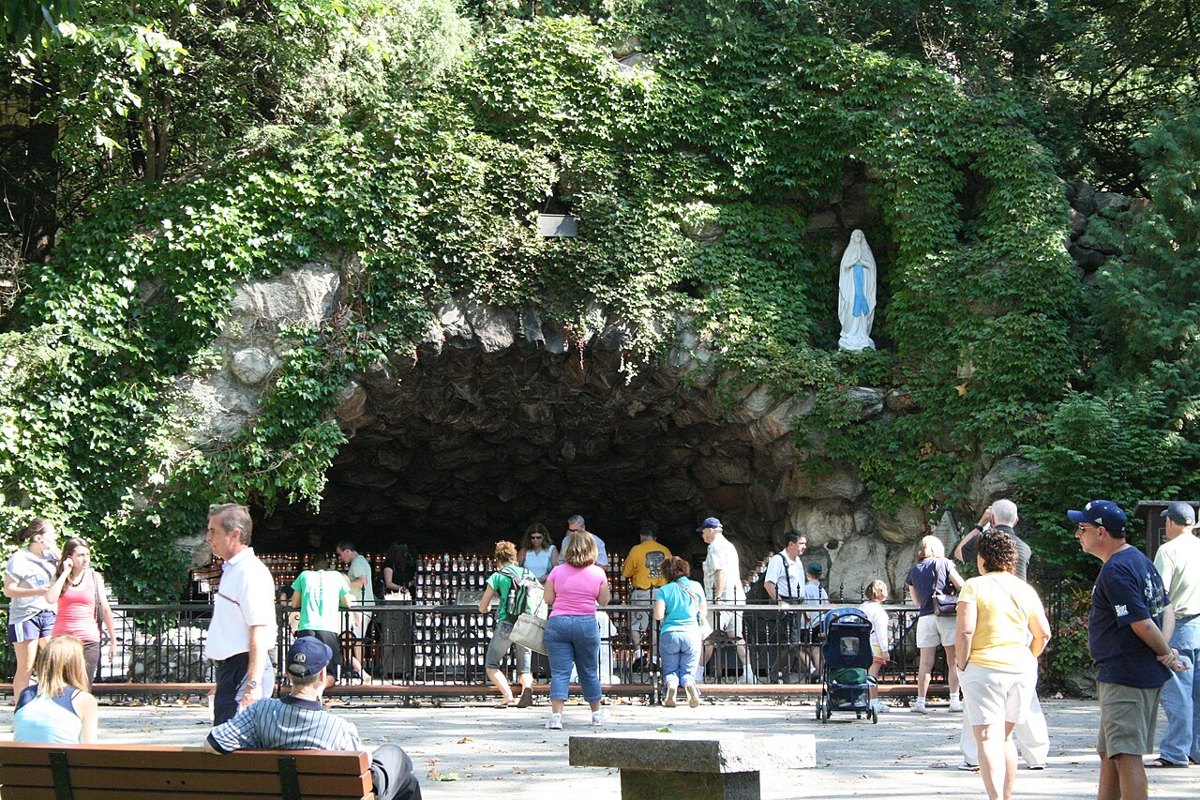
The Grotto of Our Lady of Lourdes at the University of Notre Dame in Indiana, one of the American grottos the Justice Department's brief cites as a model. Photo by Scott Gulbransen via Wikimedia Commons (CC BY 2.0).
The brief compares it to the grottos at the University of Notre Dame and Mount Saint Mary's University. Mark Cooper, a local resident, told Christian Citizen: "Every Catholic church in Northern Kentucky has a grotto. They're not asking anything out of the ordinary."
If the town said yes, who said no?
The neighbors. Park Hills zones the block residential, and its 1974 ordinance lets new churches in only next to an "arterial street." The church, there since 1930, is grandfathered. In April 2021 the city's Board of Adjustment voted 4-1 to grant the parish a conditional-use permit and variance anyway. The lone no vote, according to the DOJ brief, objected that "the church was not located on an arterial street."
Joel and Elizabeth Frederic, who live across the street, sued the board and the parish. Their brief in opposition says they were "concerned about increased community traffic" and that state law left the board with no power to grant the variance. A county court sided with the parish. The Kentucky Court of Appeals reversed.
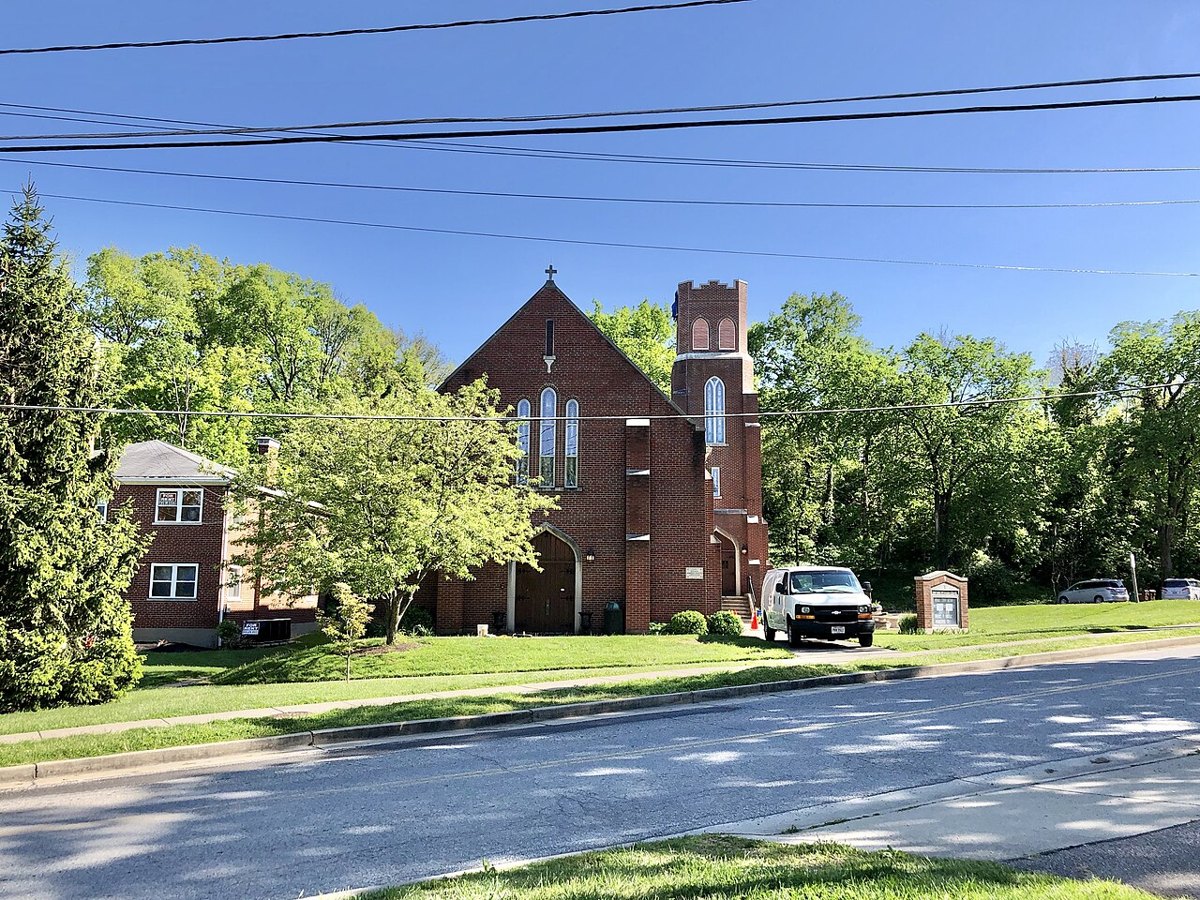
Our Lady of Lourdes Church in Park Hills, Kentucky, seen from across the street in May 2020. The church's address is on Amsterdam Road. Photo by w_lemay via Wikimedia Commons (CC0, public domain dedication).
On Dec. 18, 2025, the Kentucky Supreme Court affirmed, over a dissent from Justice Thompson. It said the parish never claimed it "could not construct a smaller grotto or shrine" on the land it already owned, and called that option "a mere inconvenience." It also said the burden was self-imposed, because the parish knew the zoning rules when it applied.
Official record
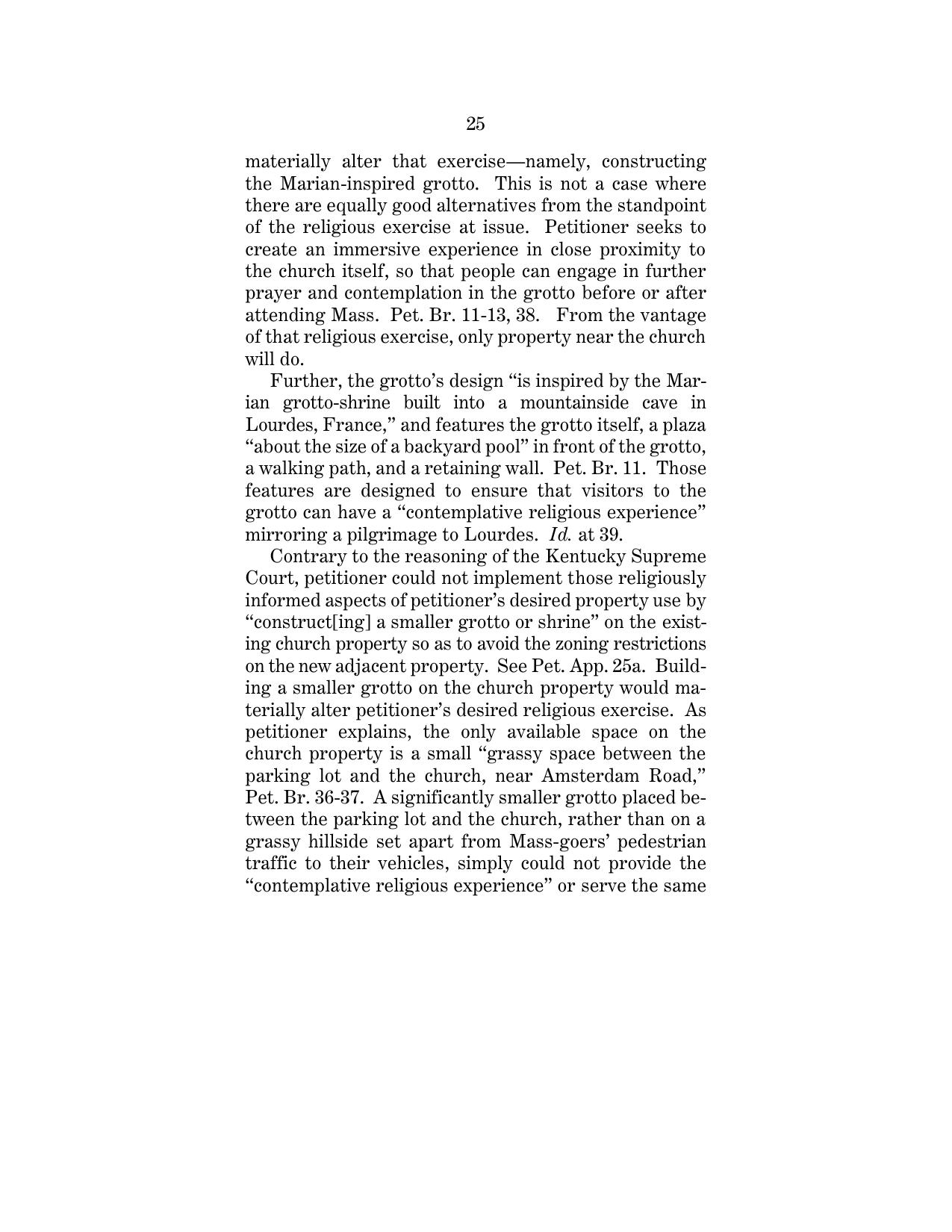
Brief for the United States as Amicus Curiae Supporting Petitioner, Missionaries of Saint John the Baptist, Inc. v. Frederic, No. 25-1131, filed Nov. 23, 2026 (Supreme Court docket). Brief page 25, where the government answers the "smaller grotto" argument, is shown below.
"Building a smaller grotto on the church property would materially alter petitioner's desired religious exercise." Brief for the United States, page 25
Read or download the full 39-page brief (PDF) or view it on SupremeCourt.gov.
Why does DOJ say the smaller grotto doesn't count?
Because of where it would have to go. The brief says the only open space on the church lot is a small "grassy space between the parking lot and the church," and a shrine squeezed in there "simply could not provide the 'contemplative religious experience'" of a hillside set apart from Mass-goers walking to their cars. A full-size grotto would fit only in the parking lot, and DOJ says forcing a parish to give up parking puts "substantial pressure" on its worship.
The government's rule has a limit. When a believer "has real, available alternatives that would equally allow for the religious exercise at issue, the law imposes no substantial burden," the brief says. DOJ's argument is that the parish has no such alternative here.
Who else lined up behind the parish?
A long list. The docket shows 27 friend-of-the-court briefs submitted Monday alone. They include the Sikh Coalition, the Muslim Public Affairs Council, the American Jewish Committee, and a joint brief from the Church of Jesus Christ of Latter-day Saints and the Orthodox Union. The American Planning Association filed in support of neither side.
Kentucky Attorney General Russell Coleman led the states. His brief is signed by 18 attorneys general, matching Fox News's count, though the docket entry Tuesday morning listed 20 states and left off Texas, which signed. "This fundamental American freedom cannot be brushed away simply by a heckler's veto," Coleman told Fox.
Sens. Ted Cruz, Chuck Grassley, Kevin Cramer and Mike Lee filed too, and their brief goes further than DOJ's. Religious liberty, they wrote, is "the freedom to worship in the places one chooses," and a government "does not eliminate the burden" just "by identifying another parcel, a smaller project, or a different means of worship."
What do the neighbors say, and what happens in January?
The Frederics' lawyers at Skadden argue the parish "knew that would violate" the zoning rules when it leased the lot, and "never shown it couldn't build a grotto on the Church Tract." They also say the parish asked the Kentucky Supreme Court to use the same test it now attacks. The justices agreed on Oct. 1 to hear only the substantial-burden question and set argument for Jan. 20, 2027. They passed on the parish's second claim, that the arterial-street rule treats churches worse than secular buildings.
Fox calls it the first time the Court has taken up RLUIPA's land-use protections, a case First Liberty's Ryan Gardner told Fox "has the potential to impact every single zoning law in this country." It would still not pour concrete. Under the statute, a substantial burden shifts the load to the government to prove a "compelling governmental interest" and the "least restrictive means," and that fight happens back in Kentucky. Five years after Park Hills' zoning board said yes, a statue of Mary is still waiting on the people across the street.
Top photo: Our Lady of Lourdes Catholic Church in Park Hills, Kentucky, in May 2020. Photo by w_lemay via Wikimedia Commons (CC0, public domain dedication).