President Trump told Republicans gathered in Dallas this week that every adult American citizen would get a $5,000 check if the GOP holds the House and Senate in November. He called it "the Trump dividend." Two days later, his own party is still arguing about whether that is smart politics, sound economics, or something closer to a bribe.
What exactly did Trump promise?
Trump made the pledge during his keynote address on the opening night of the Republican National Committee's first ever midterm convention at the American Airlines Center. "If the Republicans win the House of Representatives and the United States Senate, both of them, I will issue a dividend to every adult citizen in the United States of America for $5,000," he said, according to Fox News's report on the speech.
He attached one condition. "The only caveat I have is that the dividend that we're making must be spent in the United States of America. We don't want you going to Canada to spend the money," Trump said, comparing the payment to a company issuing a dividend to its shareholders. Vice President Vance backed him up the next day, telling reporters the idea was "fundamentally a dividend for American workers" funded by money "we're creating in the United States of America."
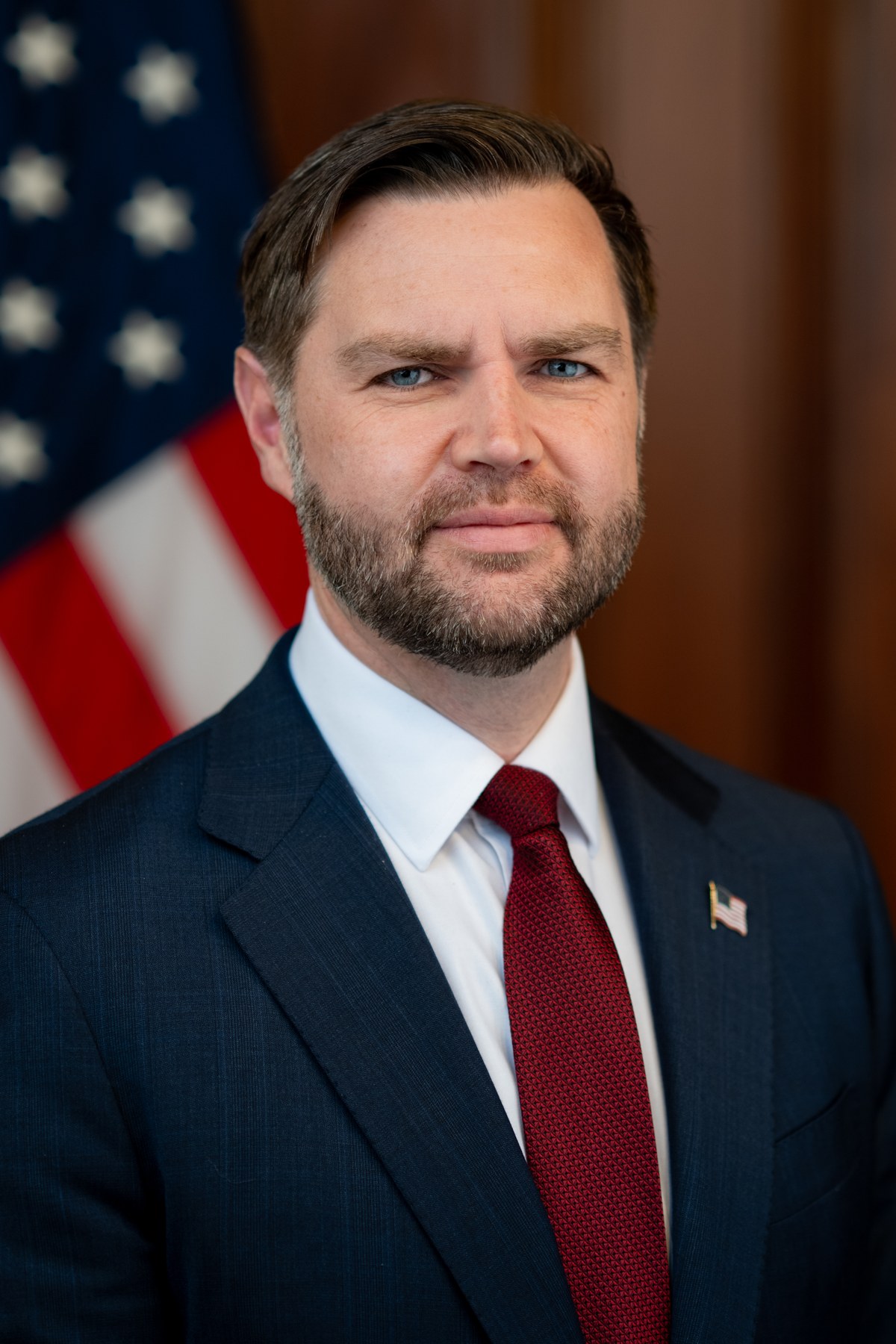
Vice President JD Vance, whose office defended the dividend proposal as a payout funded by tariff revenue, not new taxes. Official White House photo by Emily J. Higgins, March 2026, public domain.
Is this actually a new idea, or a bigger version of an old one?
It is the second act of a promise Trump first floated in July 2025, when he raised the idea of sending Americans a rebate funded by tariff revenue. By November 2025 he was talking about a $2,000 payment, telling reporters checks would probably arrive "in the middle of next year." Sen. Josh Hawley of Missouri even introduced a bill, the American Worker Rebate Act, to try to put that number into law.
The $2,000 version never shipped. By February 2026 Trump was telling NBC News he was still "looking into" dividend checks "very seriously" but had not committed, and the plan ran into a real obstacle after the Supreme Court struck down a large share of his tariff program under the emergency economic powers law, a ruling that left the government owing an estimated $166 billion in refunds to importers rather than collecting new revenue to hand out. Nine months and one Supreme Court ruling later, Trump has not scaled the idea back. He more than doubled it, from $2,000 to $5,000, and attached it directly to whether Republicans keep Congress.
Why are some Republicans calling it a bribe?
Former Virginia congressman Bob Good called it a "socialist vote-buying scheme" that would add to a national debt that has already topped $40 trillion. Conservative commentator Matt Walsh went further, calling it "flagrant bribery" and arguing Republicans should instead let workers keep more of their own money through tax cuts. "Holding it as a carrot on the stick for after the election is just shameless," Walsh wrote.
Rep. Chip Roy of Texas put a number on his objection. He estimated the plan would cost roughly $1.2 trillion in fiscal year 2027 alone and argued that money could instead eliminate taxes for married parents with dependents earning up to $200,000. When a venture capitalist pushed back on him online, Roy did not soften the point. He posted on X: "Or maybe some of us think dependency is evil and soul-sucking in all its forms." Investor Joe Lonsdale called the idea "bread and circus bribes." Former Arkansas Gov. Asa Hutchinson urged GOP leaders to reject it outright and focus on paying down the debt instead.
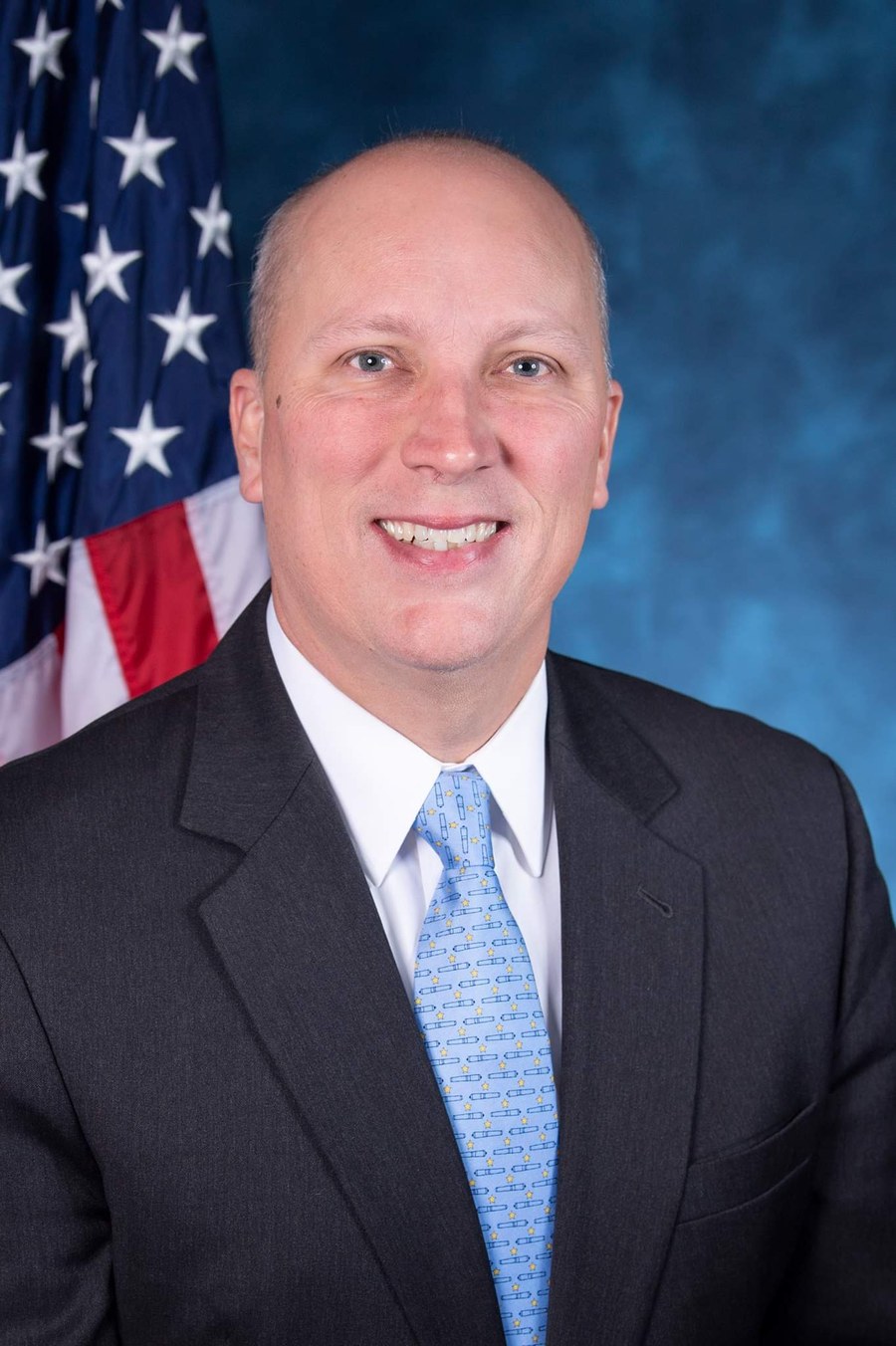
Rep. Chip Roy, R-Texas, who put the dividend's estimated price tag at $1.2 trillion and argued the money would be better spent on targeted tax relief. Official congressional portrait, public domain.
Who is actually trying to turn it into law?
Not every Republican is treating the idea as a liability. Sen. Bernie Moreno of Ohio told Fox News Digital he plans to introduce legislation making the dividend real once the midterms are over, funded not by taxpayer dollars but by what he called a "market access fee," a structural tariff any foreign company would pay to sell products in the United States. "If you're a company out there, anywhere in the world, you want to sell your products in America, you either make it here in the United States, or you pay a fee to enter our market," Moreno said. "That money goes to funding this one-time dividend."
House Freedom Caucus Chairman Andy Harris of Maryland, a fiscal hawk who rarely warms to new spending, gave the idea a surprisingly open hearing. "Hardworking American taxpayers probably deserve a tax rebate," Harris told Fox News Digital, while noting the plan would have to move through the party line budget reconciliation process to bypass Democratic opposition. Senate Majority Leader John Thune agreed it "smells very much like a reconciliation issue," and framed the split itself as a selling point. "It illustrates the clear contrast between us and the Democrats about how you want to, how you see government functioning," Thune said, one giving Americans more money and control, the other giving Washington more of both.
Do the numbers actually work?
Roughly 240 million American adults would qualify at $5,000 each, putting the total cost north of $1.2 trillion by most estimates. Treasury data show the federal government collected about $154.4 billion in customs duties between October 2025 and July 2026, enough to cover only about 13 percent of that price tag. The administration has not said what share of tariff revenue would actually fund the program, whether there would be an income cutoff, or where the rest of the money comes from. Vance has floated limiting the payment to middle class earners to bring the cost down, but nothing has been written into legislative text.
One more detail matters more than the debate over funding. Trump cannot simply order the Treasury to cut these checks. Congress has to pass a law authorizing the spending, which is exactly why Moreno, Harris and Thune are already talking about reconciliation votes rather than an executive order.
What are Democrats saying, and should it change anyone's mind?
Senate Minority Leader Chuck Schumer called the proposal "an insult to Americans, to democracy, and an admission of how absolutely screwed" the president is politically. Rep. Robert Garcia of California was blunter, telling Fox News Digital that Trump "promised a dividend on tariffs, that didn't happen. He promised a dividend on Doge, that didn't happen," and predicting this one would meet the same fate. None of that is surprising. Democrats built their midterm message around the argument that Trump's economy rewards "himself, his family, and his ultrarich elite donors," as the DNC's rapid response director put it, while working families deal with grocery and pump prices. A $5,000 check aimed directly at that complaint was never going to get a friendly reception from the party making the complaint in the first place.
What is this pledge actually for?
Strip away the arguing over funding mechanisms and the dividend is doing one specific job: giving MAGA voters, the ones a Fox News analysis noted have a real history of staying home when Trump himself is not on the ballot, a concrete personal reason to show up in November anyway. Trump made that pitch explicit in the same speech, asking supporters to "pretend I'm on the ballot" and warning the crowd, "You know what happens if you don't vote? You go to hell." Vance drew his own chants of "48," a reference to the next presidency, while staying focused on the nearer fight. "We've got to take care of business this November, then we'll worry about what comes next," he told the crowd.
That is the real shape of the dividend. It is a policy proposal that needs a Republican Congress to become law, offered as a reason to elect a Republican Congress. Whether Roy's fiscal objections or Moreno's funding plan wins out inside the party will get sorted out after Nov. 3, assuming Republicans hold both chambers at all. Until then, the $5,000 promise is doing exactly what a midterm convention speech is built to do: turning an abstract argument about the economy into a number every voter can picture landing in their own bank account.