

The Supreme Court on Monday refused to hear the challenge to Maryland's ban on carrying guns in parks, bars, museums, mass transit and near public protests, leaving the state's gun-free zones in force. The surprise is who explained it. Justice Clarence Thomas, the Court's most reliable Second Amendment vote, wrote that he is "skeptical" of Maryland's laws but agreed the case should be turned away because the challenge was too broad.
What did the Court actually do Monday?
The Court's Nov. 16 order list denied review in Novotny v. Moore, No. 25-1324, without a single noted dissent. Thomas attached a four-page statement respecting the denial, and no other justice joined it. A statement is not a dissent; it explains a vote rather than opposing the result.
AmmoLand ran the news under the headline "Supreme Court Rejects 22 Gun Rights Cases, Leaving Major Firearm Restrictions in Place." The order list itself does not sort petitions by subject, and we could not load AmmoLand's page to check its count. What the primary record does show is that Maryland's case is the only gun case on Monday's list that drew a written word from any justice.
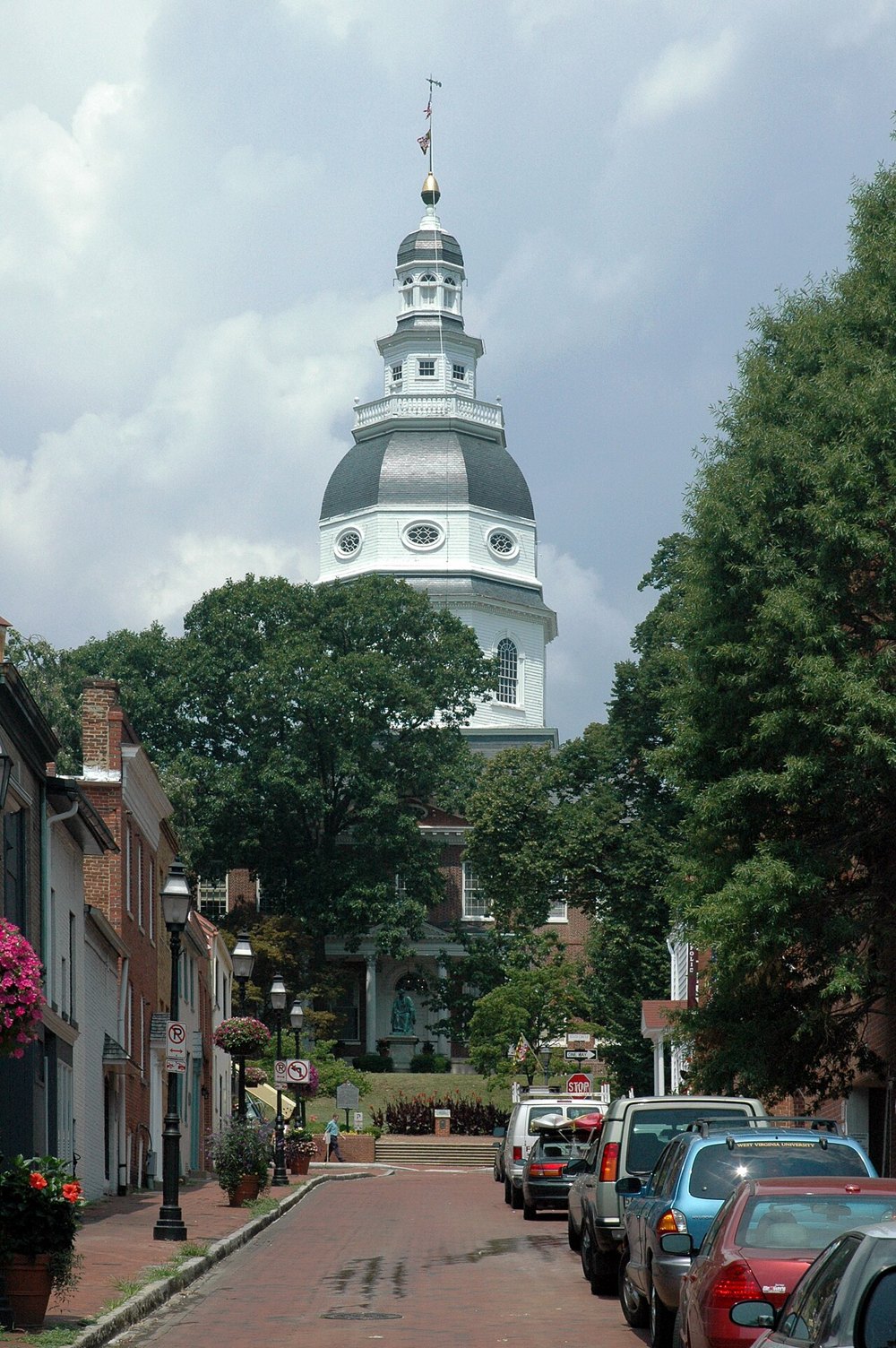
The Maryland State House in Annapolis, seen from Francis Street. Maryland's legislature wrote the location bans at issue. Photo by DimiTalen via Wikimedia Commons (CC0, public domain dedication).
What does Maryland ban, and what did the Fourth Circuit keep?
Thomas lists it: no carrying at public demonstrations, on mass transit, at places of amusement, in healthcare facilities, at places that sell alcohol for drinking on site, and across "tens of thousands of acres of state park and forest land." The plaintiffs, including Maryland Shall Issue, the Second Amendment Foundation, the Firearms Policy Coalition and the NRA-affiliated Maryland State Rifle and Pistol Association, also challenged bans in government buildings, schools and stadiums.
The Fourth Circuit's 94-page opinion in Kipke v. Moore, decided Jan. 20, 2026, upheld nearly all of it. Judge Roger Gregory, joined by Chief Judge Albert Diaz, struck only the rule that bars carry on private property open to the public unless the owner gives permission. The panel also reversed the trial judge's injunctions against the alcohol ban and the ban within 1,000 feet of a public demonstration, so Maryland can enforce both again. Judge G. Steven Agee dissented on most of the list, writing that the majority "simply fails to follow" the Supreme Court's history test.
Official record
Novotny v. Moore, No. 25-1324, Statement of Justice Thomas respecting the denial of certiorari, U.S. Supreme Court, decided Nov. 16, 2026. Page 1 is shown below.
"I am skeptical that each of these laws 'is consistent with this Nation's historical tradition of firearm regulation' in 'sensitive places.' Still, I agree with the Court's decision not to grant certiorari." Justice Clarence Thomas
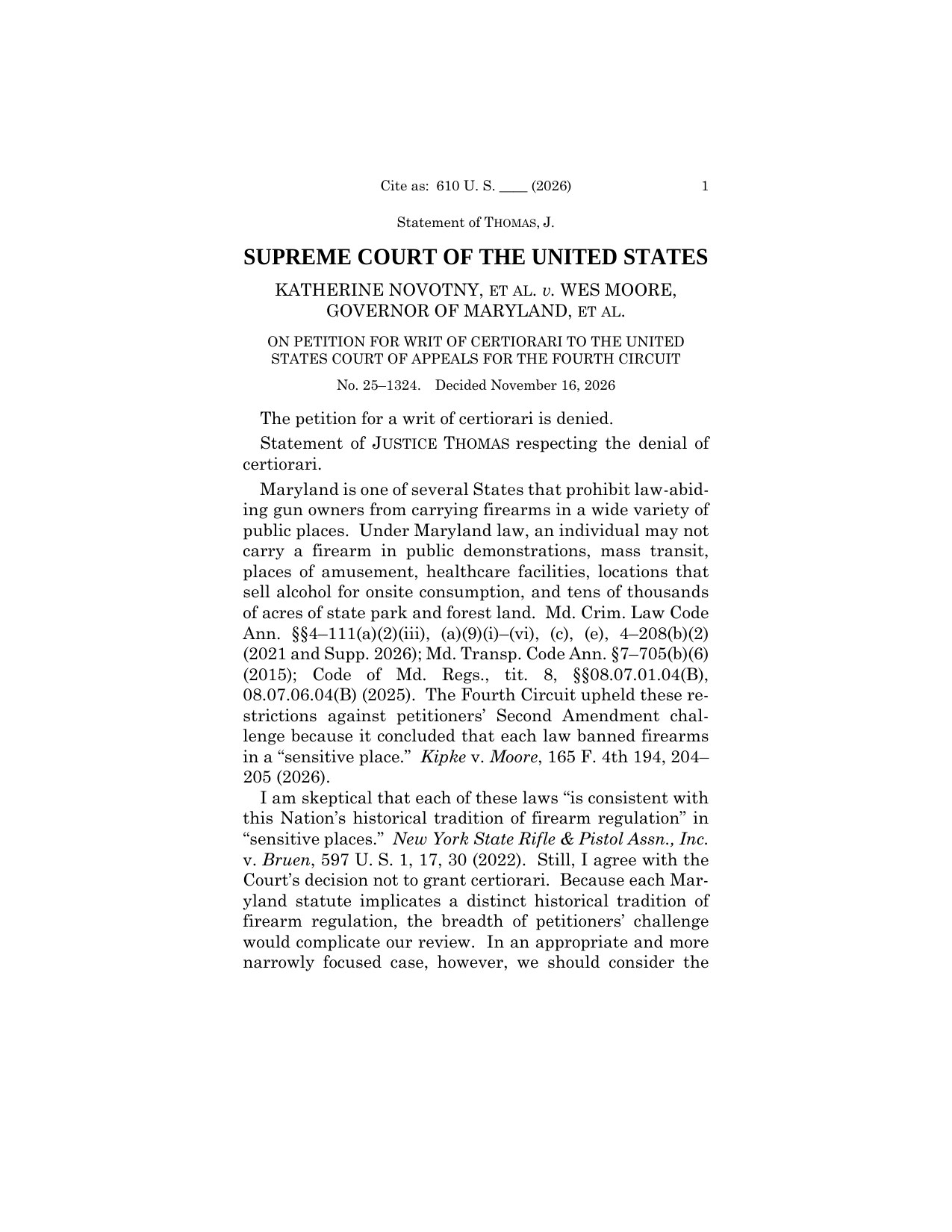
Read or download the full 4-page statement (PDF) or view the official docket.
Why would Thomas vote to let it go?
His reason is about the shape of the case, not its merits. "Because each Maryland statute implicates a distinct historical tradition of firearm regulation, the breadth of petitioners' challenge would complicate our review," he wrote. Put plainly, a park ban, a bar ban and a protest ban each need their own set of 18th and 19th century comparisons, and taking all of them at once would turn one case into a dozen.
The petition, filed by Cooper and Kirk, called sensitive-place bans "among the most critical questions facing the judiciary," CBS News reported. Maryland answered that there are "vast areas of shared consensus" among lower courts, according to SCOTUSblog. The justices did not decide quickly. The docket shows the case was first set for the Sept. 28 conference, rescheduled three times, and distributed for conferences on Nov. 6 and Nov. 13 before Monday's denial.
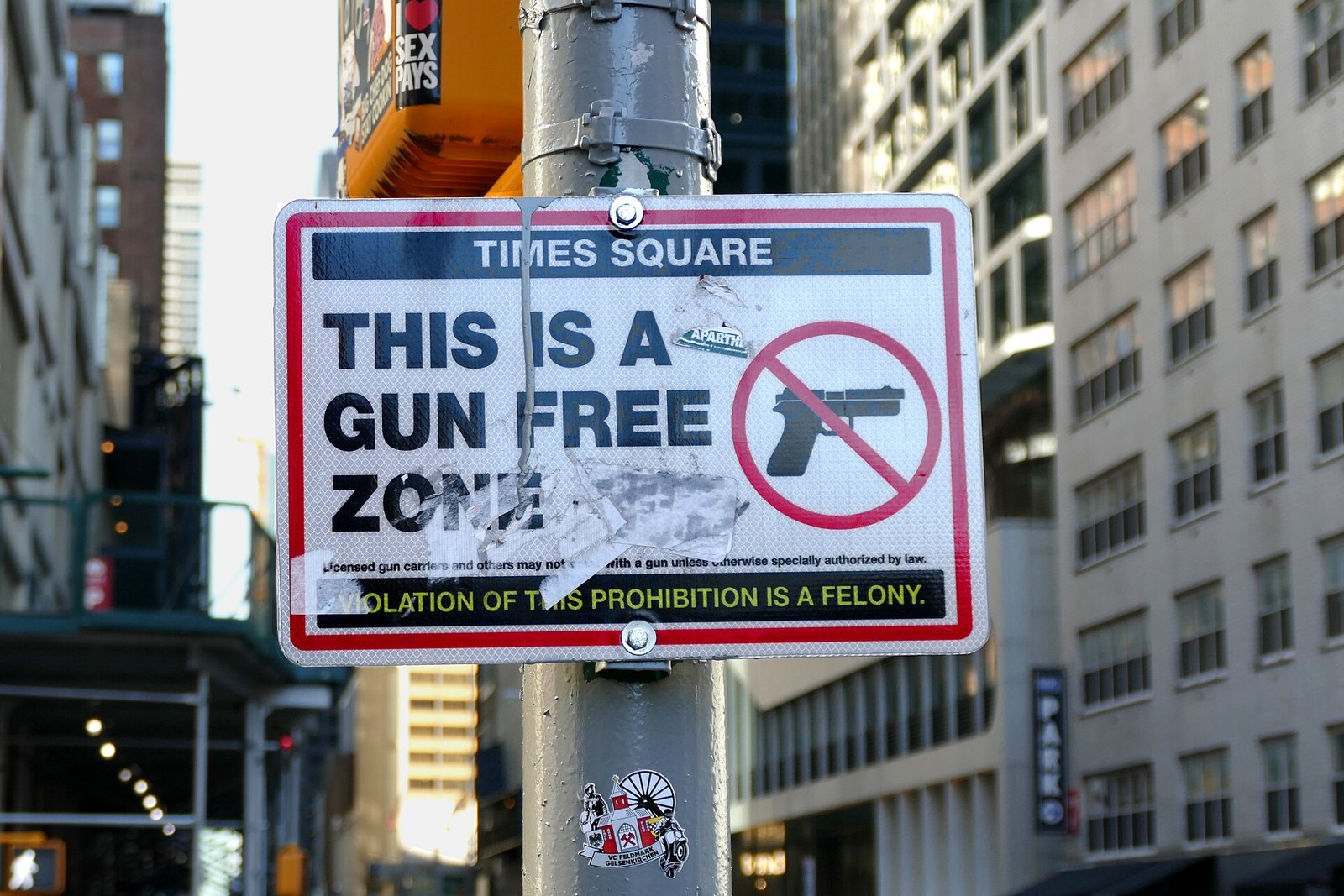
A "Gun Free Zone" sign in Times Square. Thomas's statement notes New York has designated 20 locations as "sensitive." Photo by Kritzolina via Wikimedia Commons (CC BY-SA 4.0).
Is this a loss for gun owners or a road map?
Both, and the second half of Thomas's statement reads like instructions. Quoting the Court's 2022 Bruen decision, he says the historical record shows "relatively few" places where guns were banned outright, mainly legislatures, polling places and courthouses, and that stretching the category to every crowded spot "would eviscerate the general right to publicly carry arms for self-defense." He then names names: New Jersey bans guns in at least 25 locations, New York in 20, and California in 29, including banks and any permitted "public gathering or special event."
The cumulative effect, he wrote, is to ban guns "wherever people gather for eating, drinking, recreation, amusement, and free speech," which he called "an affront" to the right of law-abiding citizens to carry for self-defense. He closes: "In an appropriate case, this Court should consider whether particular sensitive-place laws are consistent with the right to public carry." The key word is "particular." Gun-rights lawyers now have a justice telling them to bring one location at a time.
Where could the next case come from?
New Jersey is the obvious candidate. Thomas notes that a Third Circuit panel decision upholding many of that state's location bans, Koons v. Attorney General, has been vacated for rehearing by the full court. The en banc court heard argument on Feb. 11, 2026, Stephen Halbrook wrote at the Volokh Conspiracy, on bans covering zoos, parks, libraries, museums, bars and restaurants.
Meanwhile, the Court has not stepped back from guns altogether. It is set to hear the AR-15 ban cases from Cook County and Connecticut on Dec. 2, according to the docket in Viramontes v. Cook County. For Marylanders, though, the practical result is simple. A permit holder still cannot carry into a state park, a stadium or a restaurant that serves beer, and the one rule that fell, the private-property permission requirement, was struck by the Fourth Circuit in January, not by the justices on Monday.
Top photo: Justice Clarence Thomas, official Supreme Court portrait by Steve Petteway, Collection of the Supreme Court of the United States (public domain, via Wikimedia Commons).















